ENTERPRISE ANALYSIS
What is Enterprise Analysis?
• Identifies business needs, problems and
  opportunities
• Defines the nature of a solution
• Assesses impacts of change and business
  readiness to adopt a change
• Determines most feasible solution
  approach
• Justifies investment to deliver a solution
Enterprise Analysis Deliverables

•   Feasibility Study
•   Business Case
•   Business Need
•   Required Capabilities
•   Risk Assessment
•   Solution Scope
•   Solution Approach
The BA Should Know…
•   Business vision, values, mission, goals and objectives
•   Organizational structure
•   Business functions
•   Business systems
•   Business processes
•   Business roles
•   Regulatory environment
•   Information requirements
•   Competition
•   History
•   Others?
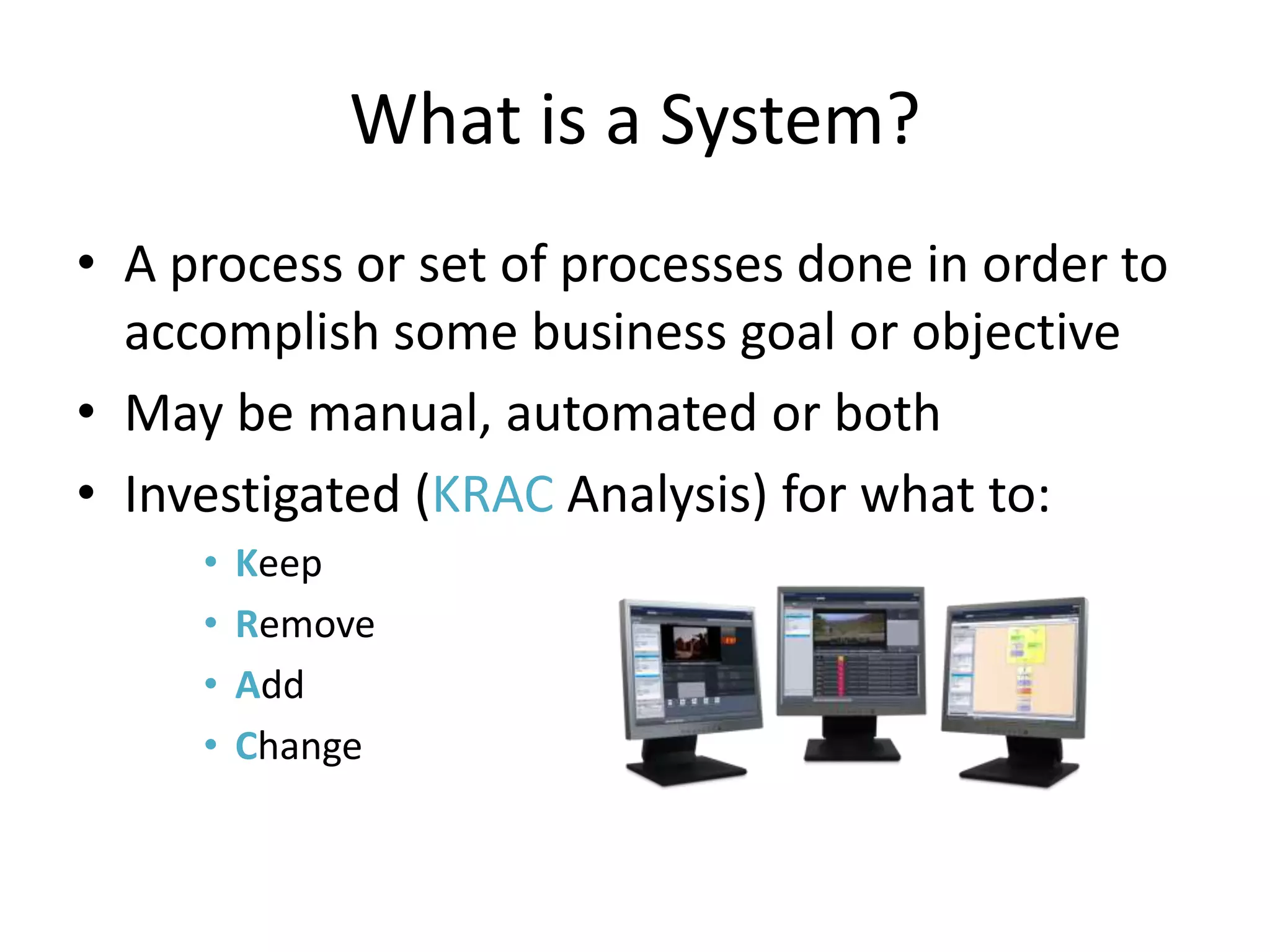
What is a System?
• A process or set of processes done in order to
  accomplish some business goal or objective
• May be manual, automated or both
• Investigated (KRAC Analysis) for what to:
     •   Keep
     •   Remove
     •   Add
     •   Change
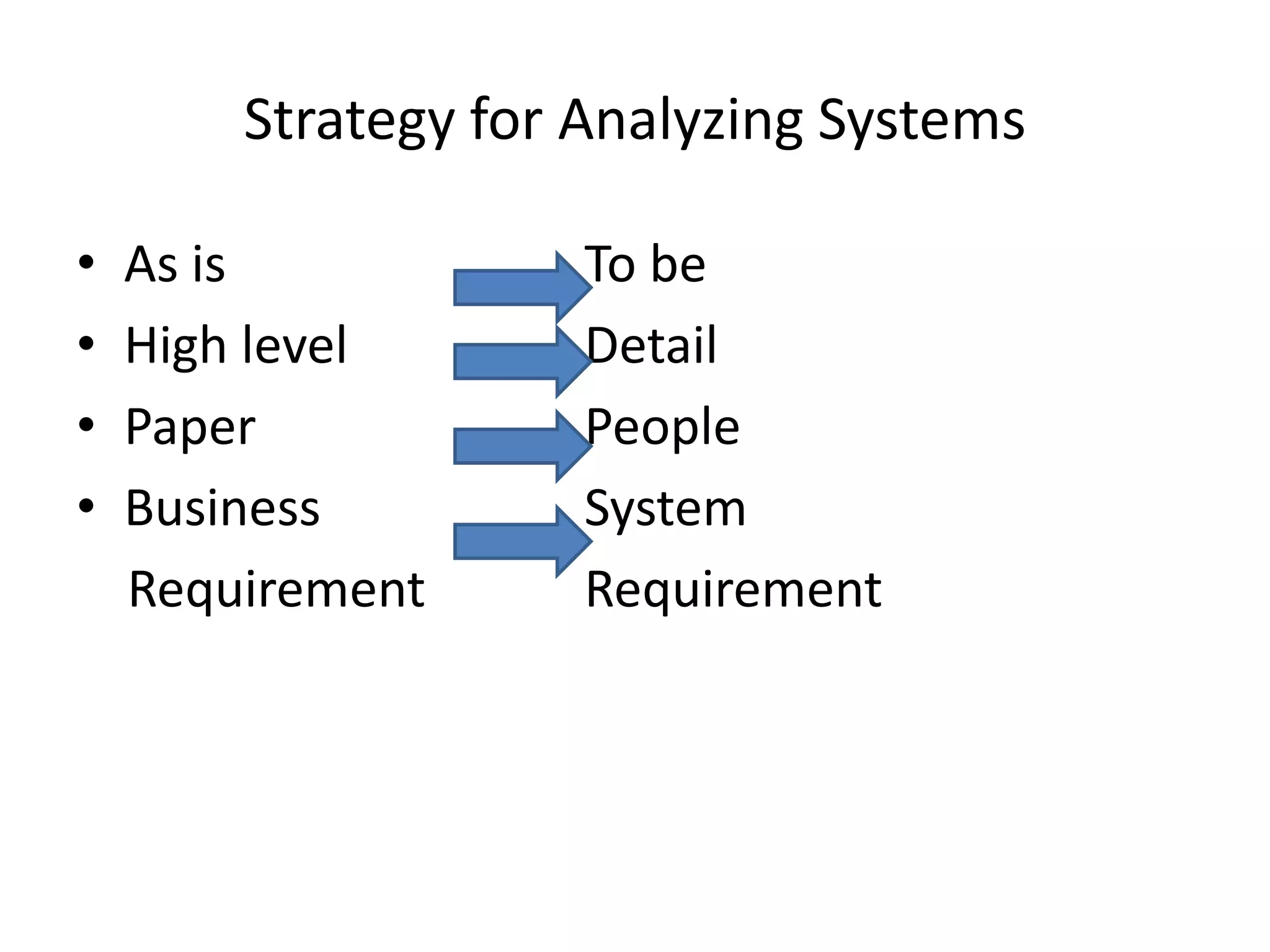
Strategy for Analyzing Systems

•   As is            To be
•   High level       Detail
•   Paper            People
•   Business         System
    Requirement      Requirement
Enterprise Analysis Steps
1.   Define Business Need
2.   Assess Capability Gaps
3.   Determine Solution Approach
4.   Define Solution Scope
5.   Define Business Case
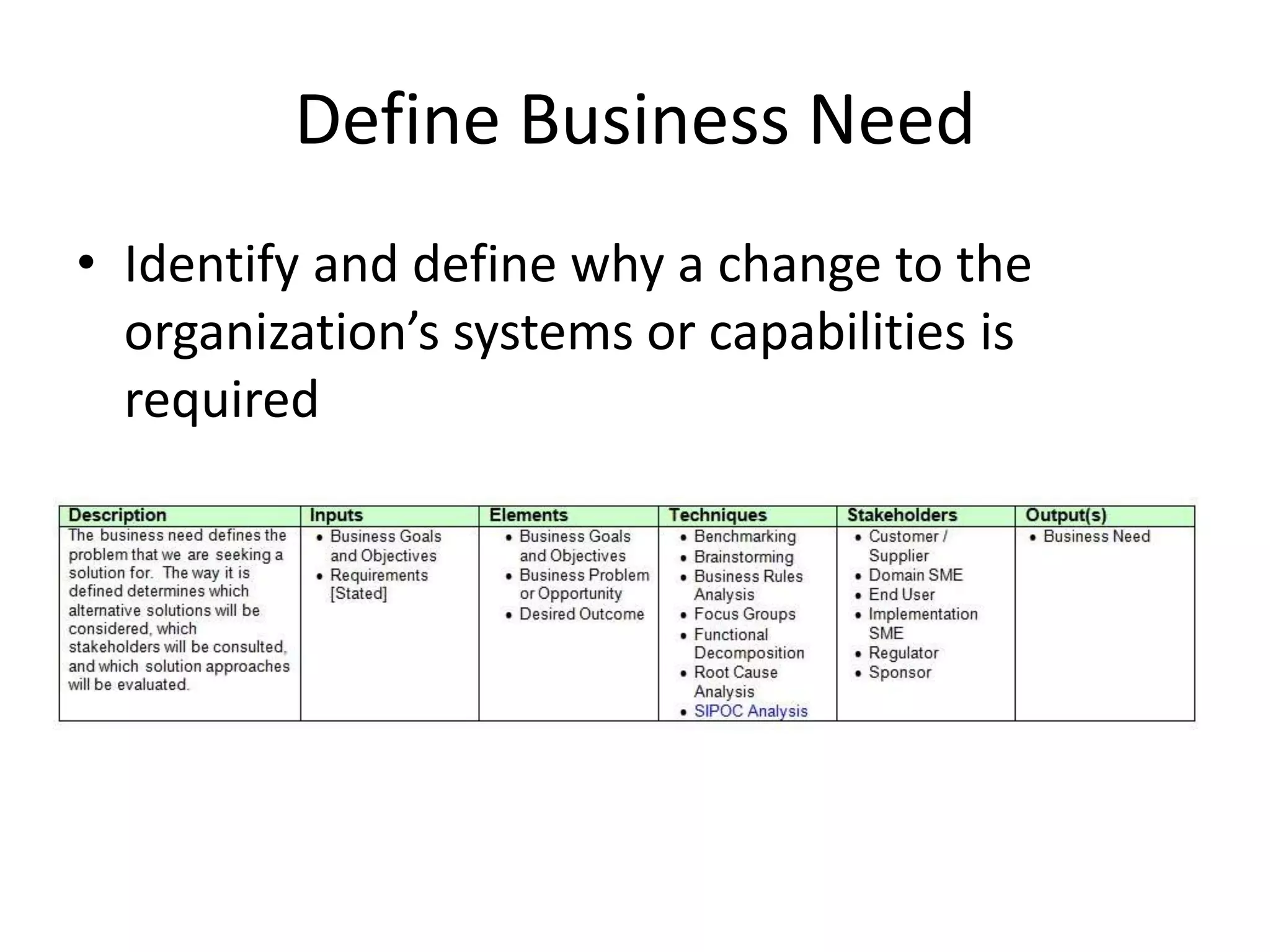
Define Business Need
• Identify and define why a change to the
  organization’s systems or capabilities is
  required
Assess Capability Gaps
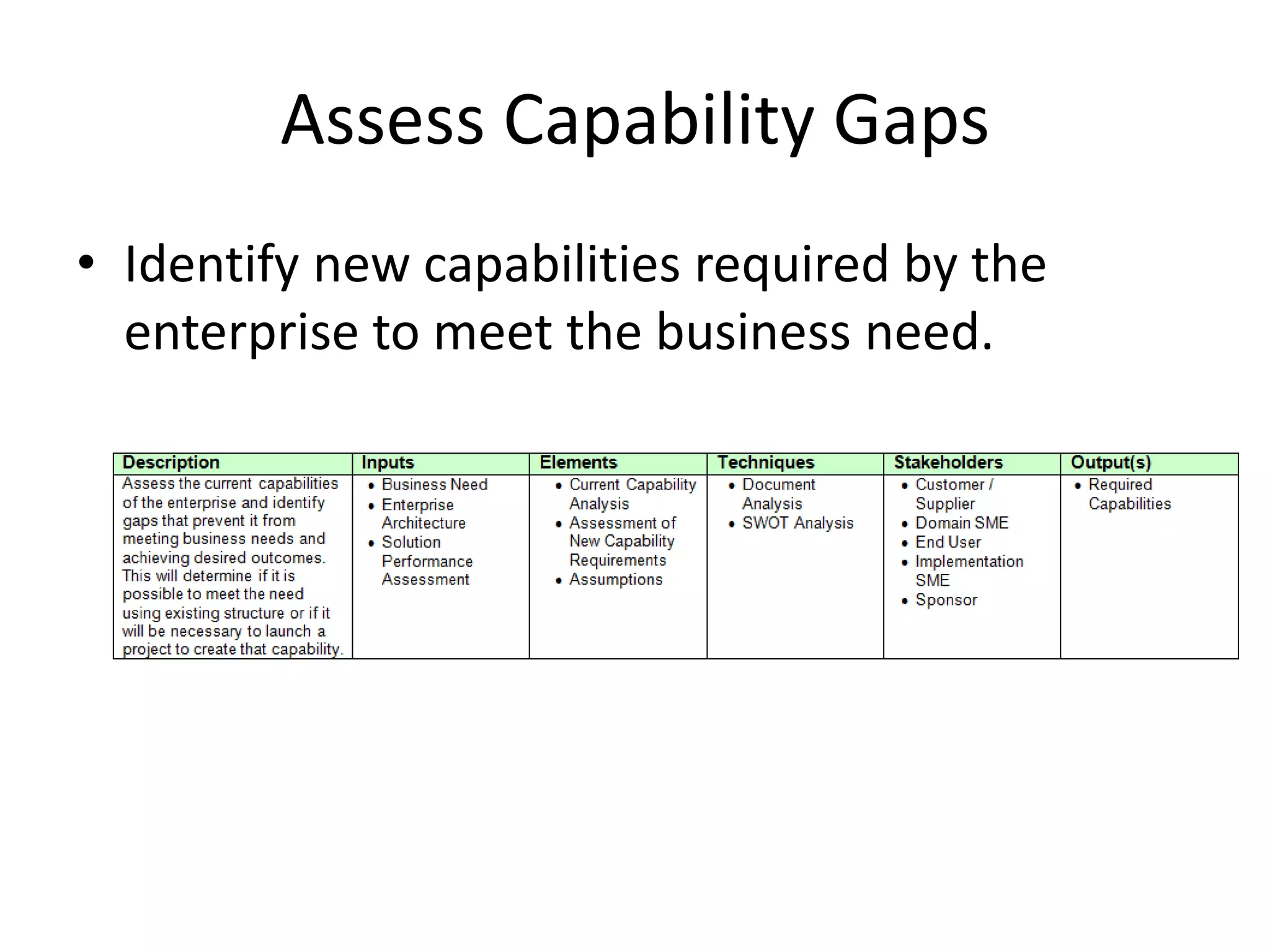
• Identify new capabilities required by the
  enterprise to meet the business need.
Determine Solution Approach
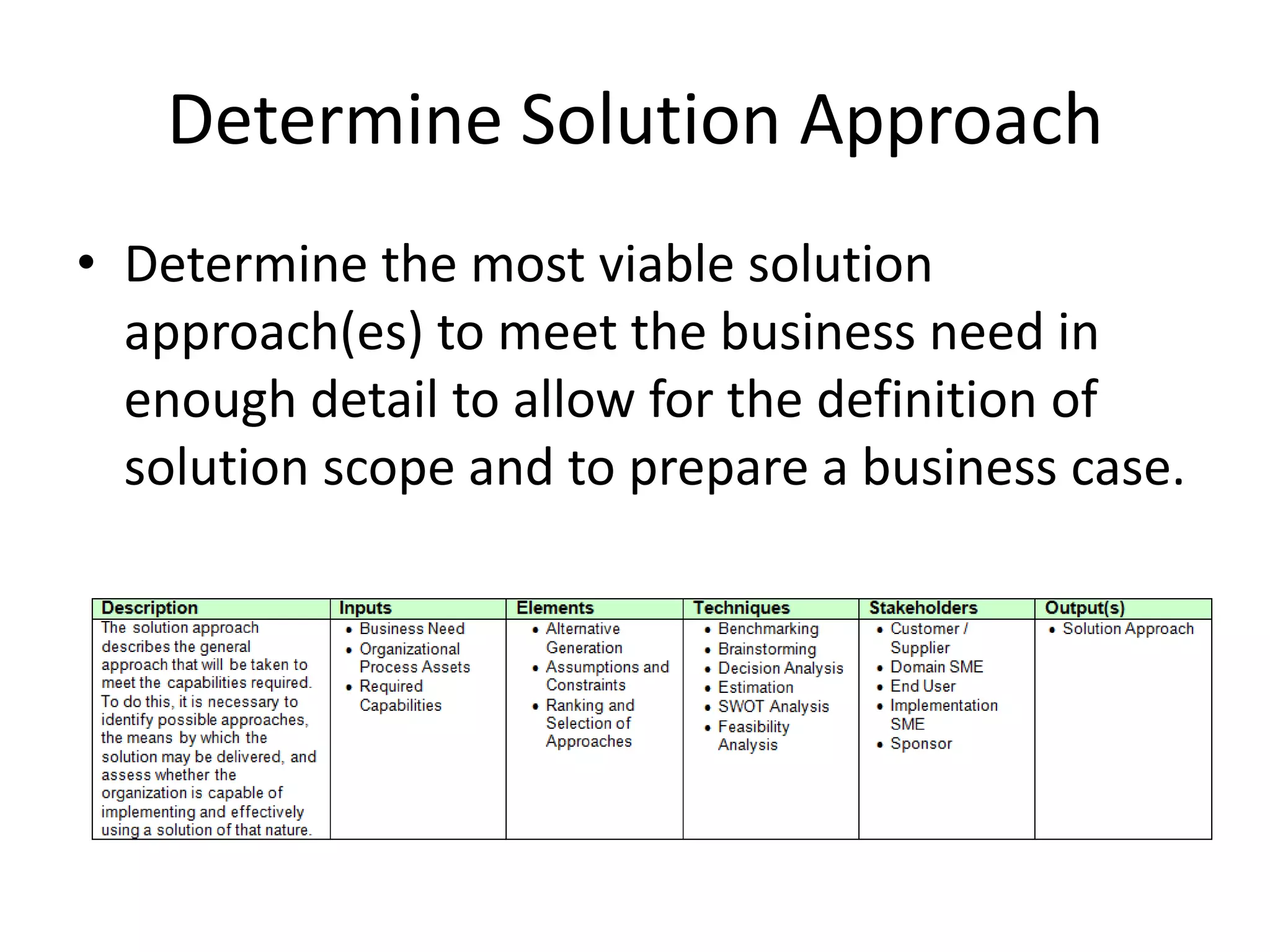
• Determine the most viable solution
  approach(es) to meet the business need in
  enough detail to allow for the definition of
  solution scope and to prepare a business case.
Define Solution Scope
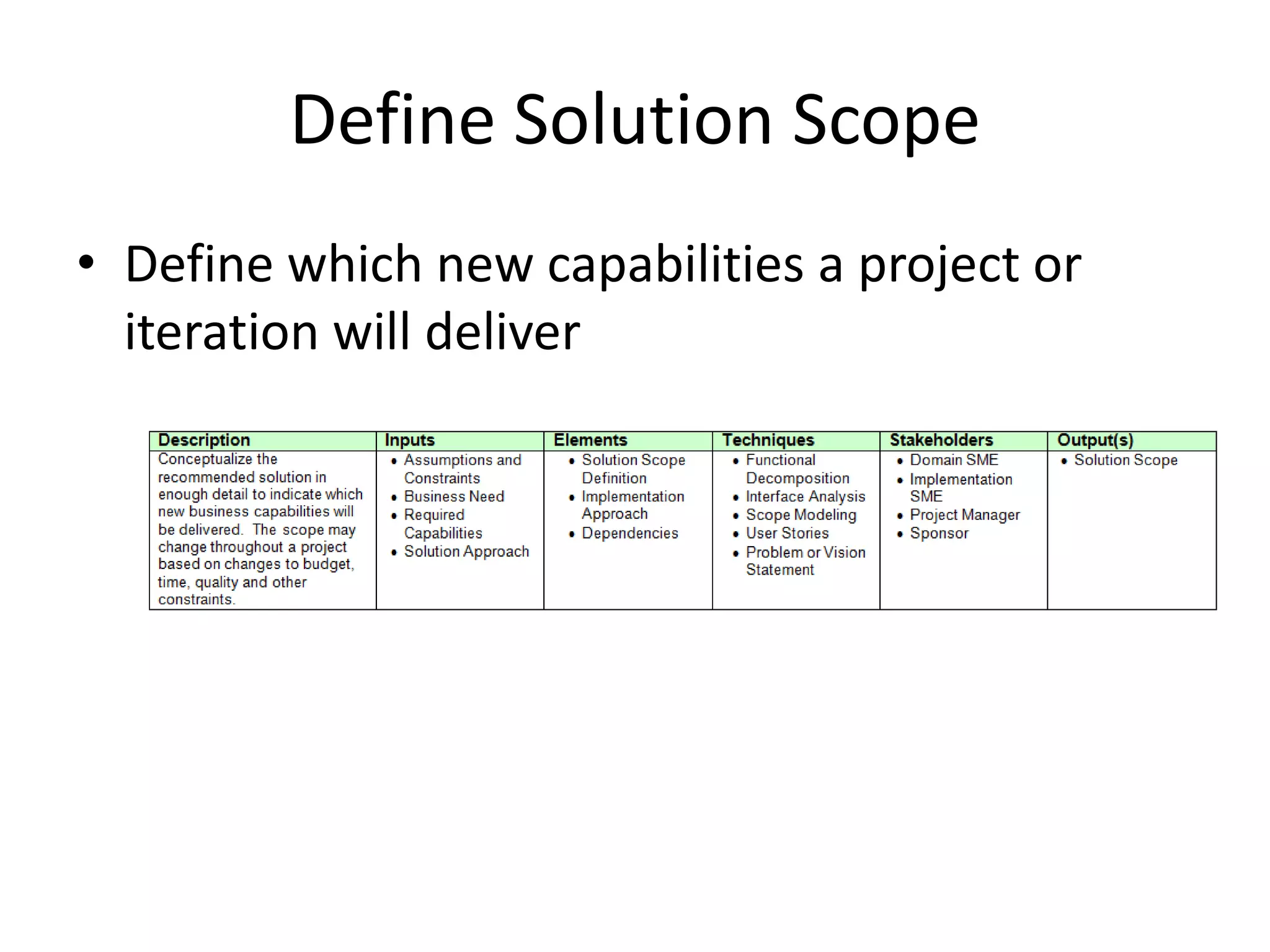
• Define which new capabilities a project or
  iteration will deliver
Define Business Case
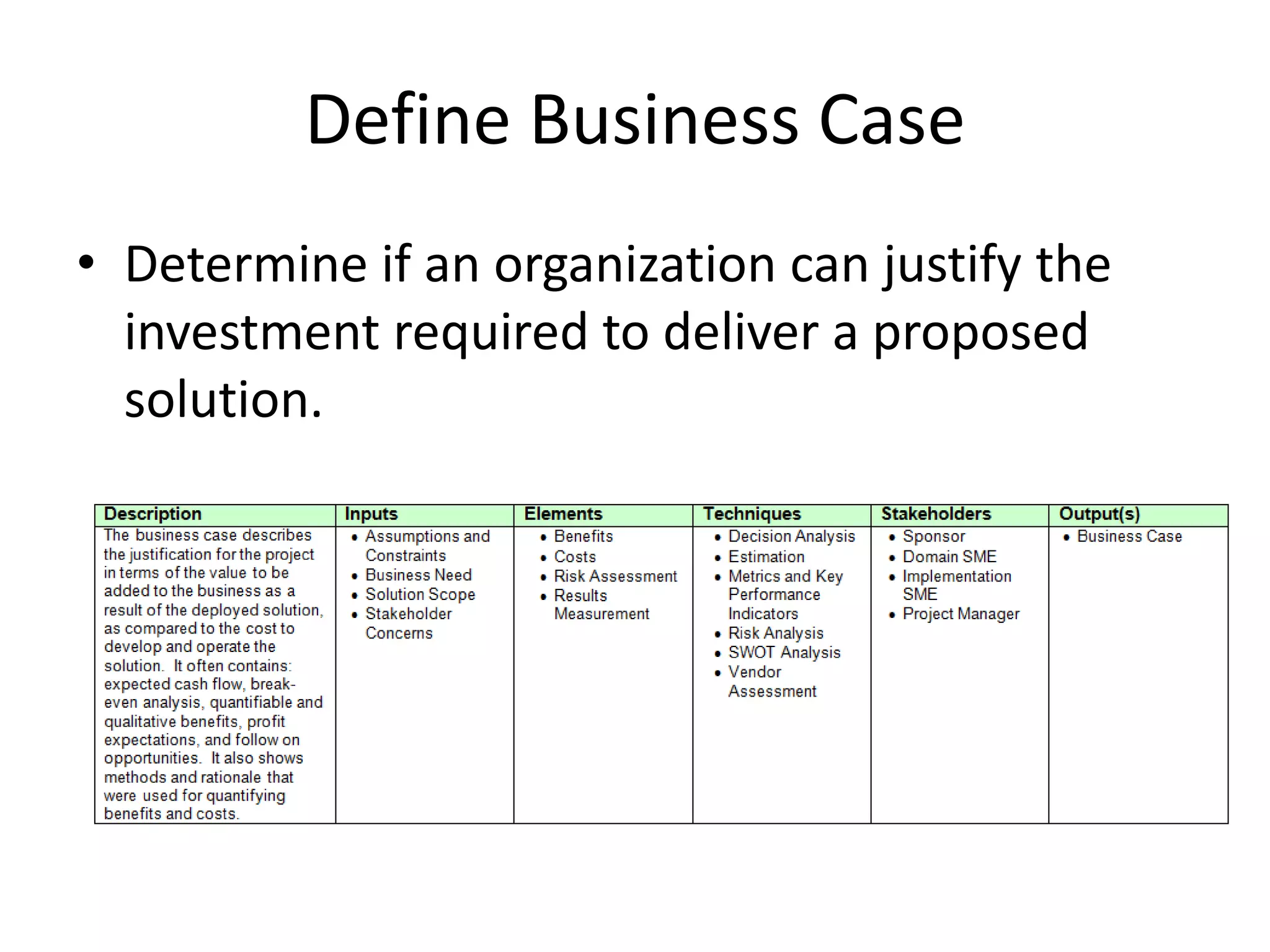
• Determine if an organization can justify the
  investment required to deliver a proposed
  solution.

Enterprise analysis

  • 1.
  • 2.
    What is EnterpriseAnalysis? • Identifies business needs, problems and opportunities • Defines the nature of a solution • Assesses impacts of change and business readiness to adopt a change • Determines most feasible solution approach • Justifies investment to deliver a solution
  • 3.
    Enterprise Analysis Deliverables • Feasibility Study • Business Case • Business Need • Required Capabilities • Risk Assessment • Solution Scope • Solution Approach
  • 4.
    The BA ShouldKnow… • Business vision, values, mission, goals and objectives • Organizational structure • Business functions • Business systems • Business processes • Business roles • Regulatory environment • Information requirements • Competition • History • Others?
  • 5.
    What is aSystem? • A process or set of processes done in order to accomplish some business goal or objective • May be manual, automated or both • Investigated (KRAC Analysis) for what to: • Keep • Remove • Add • Change
  • 6.
    Strategy for AnalyzingSystems • As is To be • High level Detail • Paper People • Business System Requirement Requirement
  • 7.
    Enterprise Analysis Steps 1. Define Business Need 2. Assess Capability Gaps 3. Determine Solution Approach 4. Define Solution Scope 5. Define Business Case
  • 8.
    Define Business Need •Identify and define why a change to the organization’s systems or capabilities is required
  • 9.
    Assess Capability Gaps •Identify new capabilities required by the enterprise to meet the business need.
  • 10.
    Determine Solution Approach •Determine the most viable solution approach(es) to meet the business need in enough detail to allow for the definition of solution scope and to prepare a business case.
  • 11.
    Define Solution Scope •Define which new capabilities a project or iteration will deliver
  • 12.
    Define Business Case •Determine if an organization can justify the investment required to deliver a proposed solution.

Editor's Notes

  • #3 Whats the point? Create a Business Case. What’s a Business Case? A document that helps executives make decisions about business problems/opportunities and whether or not to justify a project that will address those problems/opportunities.
  • #4 See BABOK Outputs
  • #5 Get/Make an org chart for your departments.Find out what each of these people are accountable for doing.Find out what technology they are already using. Dig here. They are using technology we don’t know about. Vendor websites.
  • #6 You’re on KRAC!
  • #7 This will help flesh out your enterprise architecture. Understanding the current state of the business environment so that you can understand the change requests or problems to be solved.
  • #8 These tasks may or may not all be needed. They do not have to be performed in order, but usually are.
  • #9 Once you know the “Elements” and have documented them, then this task is done.
  • #10 You might not need a project to create the desired capability. Maybe all you need to do is train out existing / underutilized organizational process assets. (TM1 example for Tax/Planning dept)
  • #11 Brainstorm multiple solutions to a problem. Develop evaluation criteria. Apply the criteria to the solutions. One solution is always “do nothing”. An example would be the problem FSMs have with contract management. One solution could be to add features to contract generator. Another solution could be to implement DocuSign.
  • #12 One way to define the scope, is to figure out what the solution does NOT include. Example: HRIS system has a payroll component. Should the solution reach out into Treasury/Cash Management to ensure funds exist in the correct account prior to checks being cut to employees?Another way to define the scope is to trace the new business capabilities back to the vision or goals. Is the goal to automate HR tasks only? Is the goal to help HR and Treasury together better?
  • #13 Do executives have the information they need in order to make an informed decision about implementing a new project?Sometimes a Business Case is generated to support a decision an executive has already made. (bad idea) Example, is qualtrics integration. Example, Facilities buying tablet PCs for FSMs.