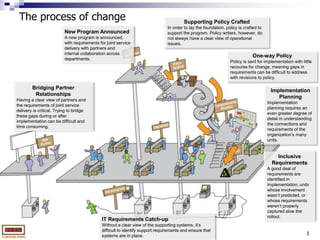
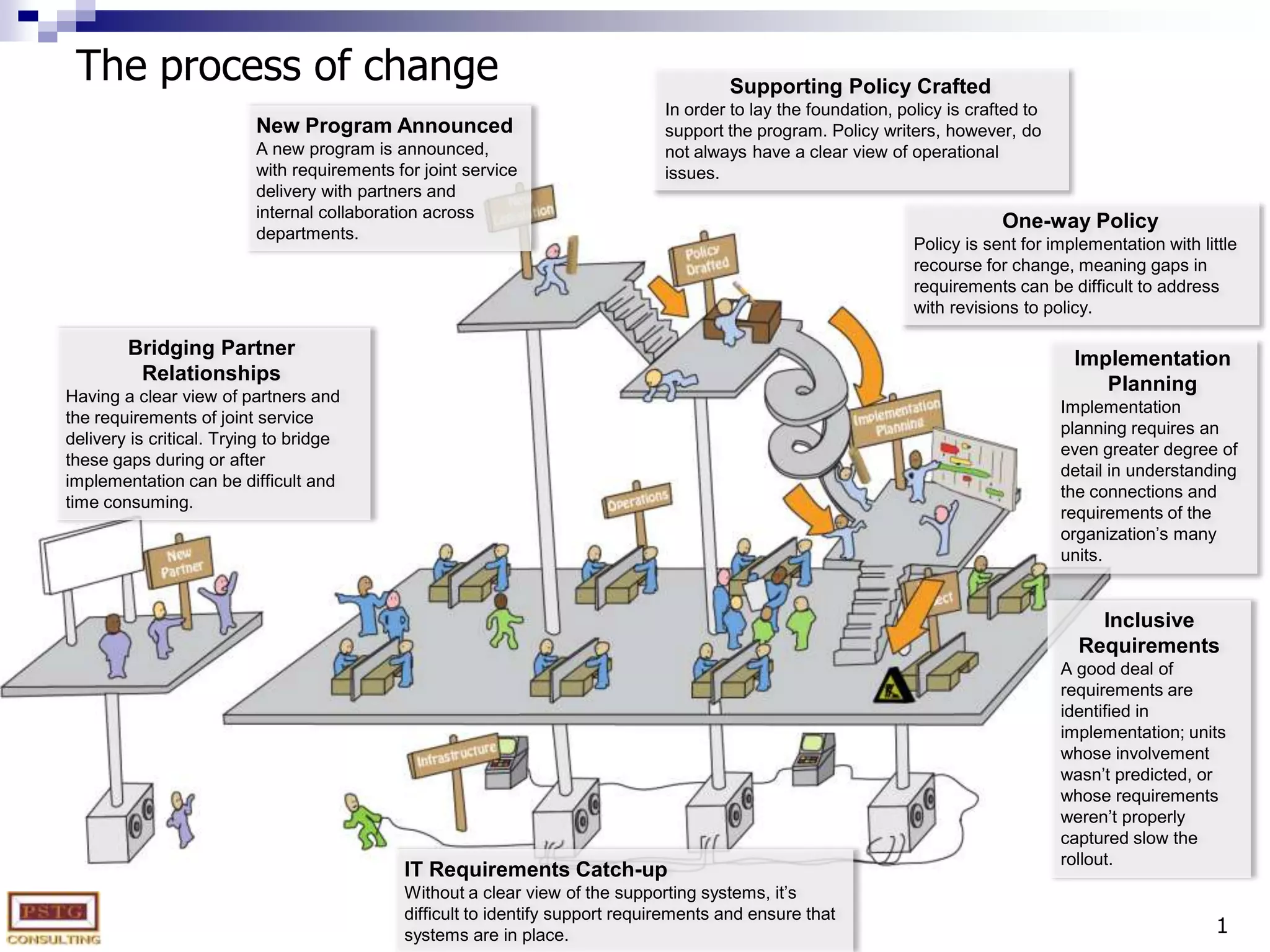
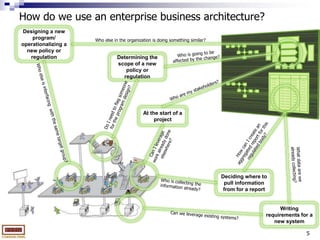
1The process of changeSupporting Policy CraftedIn order to lay the foundation, policy is crafted to support the program. Policy writers, however, do not always have a clear view of operational issues.New Program AnnouncedA new program is announced, with requirements for joint service delivery with partners and internal collaboration across departments.One-way PolicyPolicy is sent for implementation with little recourse for change, meaning gaps in requirements can be difficult to address with revisions to policy.Bridging Partner RelationshipsHaving a clear view of partners and the requirements of joint service delivery is critical. Trying to bridge these gaps during or after implementation can be difficult and time consuming.Implementation PlanningImplementation planning requires an even greater degree of detail in understanding the connections and requirements of the organization’s many units.Inclusive RequirementsA good deal of requirements are identified in implementation; units whose involvement wasn’t predicted, or whose requirements weren’t properly captured slow the rollout. IT Requirements Catch-upWithout a clear view of the supporting systems, it’s difficult to identify support requirements and ensure that systems are in place.
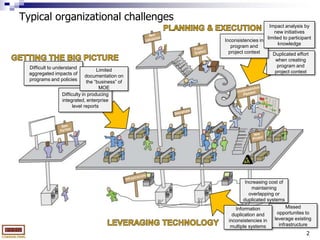
2Typical organizational challengesImpact analysis by new initiatives limited to participant knowledgePLANNING & EXECUTIONInconsistencies in program and project contextDuplicated effort when creating program and project contextGETTING THE BIG PICTUREDifficult to understand aggregated impacts of programs and policiesLimited documentation on the “business” of MOEDifficulty in producing integrated, enterprise level reportsIncreasing cost of maintaining overlapping or duplicated systemsMissed opportunites to leverage existing infrastructureInformation duplication and inconsistencies in multiple systemsLEVERAGING TECHNOLOGY
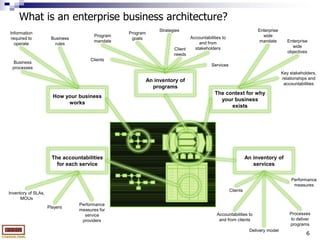
3What is an enterprise business architecture?“Business architecture (BA) is a business driven disciplined process that decomposes the enterprise’s business goals and strategies, the assets and processes required to execute them, as well asidentify their impact  on business goals.”(EA Glossary V1.0)
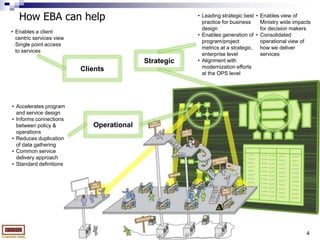
4How EBA can helpLeading strategic best practice for business design
Enables generation of program/project metrics at a strategic, enterprise level
Alignment with modernization efforts at the OPS level

Business Architecture Explained

  • 1.
    1The process ofchangeSupporting Policy CraftedIn order to lay the foundation, policy is crafted to support the program. Policy writers, however, do not always have a clear view of operational issues.New Program AnnouncedA new program is announced, with requirements for joint service delivery with partners and internal collaboration across departments.One-way PolicyPolicy is sent for implementation with little recourse for change, meaning gaps in requirements can be difficult to address with revisions to policy.Bridging Partner RelationshipsHaving a clear view of partners and the requirements of joint service delivery is critical. Trying to bridge these gaps during or after implementation can be difficult and time consuming.Implementation PlanningImplementation planning requires an even greater degree of detail in understanding the connections and requirements of the organization’s many units.Inclusive RequirementsA good deal of requirements are identified in implementation; units whose involvement wasn’t predicted, or whose requirements weren’t properly captured slow the rollout. IT Requirements Catch-upWithout a clear view of the supporting systems, it’s difficult to identify support requirements and ensure that systems are in place.
  • 2.
    2Typical organizational challengesImpactanalysis by new initiatives limited to participant knowledgePLANNING & EXECUTIONInconsistencies in program and project contextDuplicated effort when creating program and project contextGETTING THE BIG PICTUREDifficult to understand aggregated impacts of programs and policiesLimited documentation on the “business” of MOEDifficulty in producing integrated, enterprise level reportsIncreasing cost of maintaining overlapping or duplicated systemsMissed opportunites to leverage existing infrastructureInformation duplication and inconsistencies in multiple systemsLEVERAGING TECHNOLOGY
  • 3.
    3What is anenterprise business architecture?“Business architecture (BA) is a business driven disciplined process that decomposes the enterprise’s business goals and strategies, the assets and processes required to execute them, as well asidentify their impact on business goals.”(EA Glossary V1.0)
  • 4.
    4How EBA canhelpLeading strategic best practice for business design
  • 5.
    Enables generation ofprogram/project metrics at a strategic, enterprise level
  • 6.
    Alignment with modernizationefforts at the OPS level