TODAY
1)Icebreaker
2)Check-in
3)Before the reading: Rhetorical Truth
4)The Reading
5)The Activity
6)The Homework
Icebreaker
It’s week four… hopefully we’re starting to
know each other. So here’s how this will
work. We’re going to start with someone.
That person will say his or her
name, then the next person will say the
first person’s name and their own name…
until we go all the way around the room
back to the last person who will say
everyone’s name.

If you need help, ask a classmate to
assist.
Check in
With any luck, I will have your papers
back to you this time next week. I had a
bit of a “fail” moment this week end.

When you get your papers back you’ll
get your grade to this point. That means
that any problems with Tumblr or the
forums need to be sorted out by the end
of this week. NO EXCEPTIONS.

If you need to talk to me about either of
those things, see me after class.
Rhetorical Truth
An interesting factor to consider in
rhetorical analysis is “truth.” As we talked
about earlier in the term, “rhetoric” is
often used in popular media as a sort of
synonym for “lying.”

But rhetoric, dating back to our close
personal friend Aristotle, was about
moving toward the truth. For Aristotle, in
all his Greek wisdom, said:
“Rhetoric is useful because things
that are true and things that are just
have a natural tendency to prevail
over their opposites, so that if the
decisions of judges are not what
they aught to be, the defeat must
be due to the speakers
themselves, and they must be
blamed accordingly.”
-Aristotle, Rhetoric
Join that belief with this.

Robert L. Scott argues that truth is not a
central, objective set of facts but that truth is based
on the situation at hand (e.g. rhetorical). Scott goes
as far as stating that if a man believes in an ultimate
truth and argues it, he is only fooling himself by
convincing himself of one argument among many
possible options. Ultimately, truth is relative to
situated experiences, and rhetoric is necessary to
give meaning to individual circumstance.

*paraphrased from the Wikipedia summary of “On Viewing
Rhetoric as Epistemic”
So, basically…
Rhetoric itself is a tool, but the
presumed ends of the tool is to find and
explicate “truth,” because as Aristotle
claims truth will win out over lies (it’s
more solid) and as Scott says, truth is
situated rhetorically, so we need to see
the situation and the circumstances that
surround a “truth.”

Crazy, right?

That’s the basis for our legal system.
Law and the Hunger Games
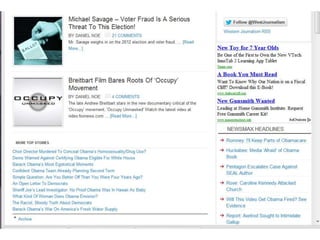
So for today, I had you read this piece
about The Hunger Games movie.

I’d like to talk about the movie itself, but I
also hope you did a little bit of critical
analysis of the article/the site housing it.

Just incase you didn’t…
The source…
Part of this exercise was to look at this
particular source and to consider its
motivations.

The Western Center for Journalism is
headed by a man named Floyd Brown.
You might have heard of “Citizens United,”
which Brown is part of, and you may know
a little bit about this Tea Party thing he’s
dabbled a bit with.

Do you see any perhaps biased positions
taken in the analysis of the movie?
TRANSITION SLIDE
the Hunger Games
And now, then, let’s actually look at The
Hunger Games.

It shares something of its origin with a
short story by Shirley Jackson entitled
“The Lottery.” In said story, everyone in a
village of 300 must draw a slip from a
large communal bucket; the person with
the marked slip must be stoned to death.
The ritual is meant to insure a good
harvest, and is repeated each year (in
“The Lottery” universe)
What, then…
…are we to make of a story like this?

Jackson related that after the publication of
“the Lottery” she received letters with one of
three sorts of response:
1) Curiosity about where such a lottery ever
    happened or could be seen
2) Anger at the use of the subject matter
3) Desire to know “What it means”

The Hunger Games also bears a striking
resemblance to the Japanese novel/movie
Battle Royale, where school kids are forced to
fight to the death.
New tropes to consider
As we enter into the discussion of The
Hunger Games, remember everything
we’ve talked about so far in terms of
rhetoric. But today, I want to add three
more concepts to your toolset:

Simile, Metaphor & Allegory
Simile
A simile is a comparison that uses the
word “like” or “as” (e.g. “I got them moves
like Jagger.”)

These are actually quite commonplace in
everyday English. If you look at your text
messages right now (well, don’t– but if you
did), you would probably find at least one
example of a simile in a recent
conversation.

They’re commonplace, like dandelions in
spring grass.
Metaphor
A metaphor is a comparison that doesn’t
use like or as. (e.g. “Life is a highway.”)

Metaphors are also quite common in
conversational English, as we as humans
like to compare things to other things.
Just as our ancestors told stories to teach
us right from wrong, we too depend on
the use of comparisons and contrasts to
keep us from simply describing
everything we see in strictly empirical
terms.
Allegory
An allegory is a story or other piece of
writing which contains people, places and
ideas that are meant to indicate something
else. Think of them sort of an extended
metaphor, or a written large extended case
of symbolism.

One of the most famous allegories in literary
and rhetorical history is Plato’s Allegory of the
Cave, which is a story about a man who lives
his life in a cave and is then blinded by the
light when taken outside– but the allegory is
really about how those who are deceived react
to the truth.
Sooooo…
I’m just going to let you in on the secret that
The Hunger Games, like “The Lottery” is an
allegory. :)

In it you have poor people and rich
people, set apart in zones. You have pairs of
children chosen from the poor zones and set
to fight against each other to the death in a
woodland massacre, so that the winner can
take food and riches home to their zone.

What might this be meant to serve as an
allegory for?
Activity
Here’s what I’d like you to do. Let’s pair up
for this. I want you to think of something
both of you know that is allegorical (a
story, a TV show, a song…whatever you
can think of). Then I want you to explain
how the allegory works.

In a few minutes, you’ll share with all of us.
Homework
Read “Judging Rhetoric” by Booth. It’s on
Niihka under resources.

In-class we will watch a video and talk about the
rhetorical risks and rewards of live television.

Tumblr question: what questions do you have
about the inquiry 2 assignment?

Tumblr prompt: I’ve posted 3 videos on my
Tumblr. Pick one, watch it, then write a short
practice rhetorical analysis of it.

English 111, September 11, 2012

  • 2.
    TODAY 1)Icebreaker 2)Check-in 3)Before the reading:Rhetorical Truth 4)The Reading 5)The Activity 6)The Homework
  • 3.
    Icebreaker It’s week four…hopefully we’re starting to know each other. So here’s how this will work. We’re going to start with someone. That person will say his or her name, then the next person will say the first person’s name and their own name… until we go all the way around the room back to the last person who will say everyone’s name. If you need help, ask a classmate to assist.
  • 4.
    Check in With anyluck, I will have your papers back to you this time next week. I had a bit of a “fail” moment this week end. When you get your papers back you’ll get your grade to this point. That means that any problems with Tumblr or the forums need to be sorted out by the end of this week. NO EXCEPTIONS. If you need to talk to me about either of those things, see me after class.
  • 5.
    Rhetorical Truth An interestingfactor to consider in rhetorical analysis is “truth.” As we talked about earlier in the term, “rhetoric” is often used in popular media as a sort of synonym for “lying.” But rhetoric, dating back to our close personal friend Aristotle, was about moving toward the truth. For Aristotle, in all his Greek wisdom, said:
  • 6.
    “Rhetoric is usefulbecause things that are true and things that are just have a natural tendency to prevail over their opposites, so that if the decisions of judges are not what they aught to be, the defeat must be due to the speakers themselves, and they must be blamed accordingly.” -Aristotle, Rhetoric
  • 7.
    Join that beliefwith this. Robert L. Scott argues that truth is not a central, objective set of facts but that truth is based on the situation at hand (e.g. rhetorical). Scott goes as far as stating that if a man believes in an ultimate truth and argues it, he is only fooling himself by convincing himself of one argument among many possible options. Ultimately, truth is relative to situated experiences, and rhetoric is necessary to give meaning to individual circumstance. *paraphrased from the Wikipedia summary of “On Viewing Rhetoric as Epistemic”
  • 8.
    So, basically… Rhetoric itselfis a tool, but the presumed ends of the tool is to find and explicate “truth,” because as Aristotle claims truth will win out over lies (it’s more solid) and as Scott says, truth is situated rhetorically, so we need to see the situation and the circumstances that surround a “truth.” Crazy, right? That’s the basis for our legal system.
  • 9.
    Law and theHunger Games So for today, I had you read this piece about The Hunger Games movie. I’d like to talk about the movie itself, but I also hope you did a little bit of critical analysis of the article/the site housing it. Just incase you didn’t…
  • 11.
    The source… Part ofthis exercise was to look at this particular source and to consider its motivations. The Western Center for Journalism is headed by a man named Floyd Brown. You might have heard of “Citizens United,” which Brown is part of, and you may know a little bit about this Tea Party thing he’s dabbled a bit with. Do you see any perhaps biased positions taken in the analysis of the movie?
  • 12.
  • 13.
    the Hunger Games Andnow, then, let’s actually look at The Hunger Games. It shares something of its origin with a short story by Shirley Jackson entitled “The Lottery.” In said story, everyone in a village of 300 must draw a slip from a large communal bucket; the person with the marked slip must be stoned to death. The ritual is meant to insure a good harvest, and is repeated each year (in “The Lottery” universe)
  • 14.
    What, then… …are weto make of a story like this? Jackson related that after the publication of “the Lottery” she received letters with one of three sorts of response: 1) Curiosity about where such a lottery ever happened or could be seen 2) Anger at the use of the subject matter 3) Desire to know “What it means” The Hunger Games also bears a striking resemblance to the Japanese novel/movie Battle Royale, where school kids are forced to fight to the death.
  • 15.
    New tropes toconsider As we enter into the discussion of The Hunger Games, remember everything we’ve talked about so far in terms of rhetoric. But today, I want to add three more concepts to your toolset: Simile, Metaphor & Allegory
  • 16.
    Simile A simile isa comparison that uses the word “like” or “as” (e.g. “I got them moves like Jagger.”) These are actually quite commonplace in everyday English. If you look at your text messages right now (well, don’t– but if you did), you would probably find at least one example of a simile in a recent conversation. They’re commonplace, like dandelions in spring grass.
  • 17.
    Metaphor A metaphor isa comparison that doesn’t use like or as. (e.g. “Life is a highway.”) Metaphors are also quite common in conversational English, as we as humans like to compare things to other things. Just as our ancestors told stories to teach us right from wrong, we too depend on the use of comparisons and contrasts to keep us from simply describing everything we see in strictly empirical terms.
  • 18.
    Allegory An allegory isa story or other piece of writing which contains people, places and ideas that are meant to indicate something else. Think of them sort of an extended metaphor, or a written large extended case of symbolism. One of the most famous allegories in literary and rhetorical history is Plato’s Allegory of the Cave, which is a story about a man who lives his life in a cave and is then blinded by the light when taken outside– but the allegory is really about how those who are deceived react to the truth.
  • 20.
    Sooooo… I’m just goingto let you in on the secret that The Hunger Games, like “The Lottery” is an allegory. :) In it you have poor people and rich people, set apart in zones. You have pairs of children chosen from the poor zones and set to fight against each other to the death in a woodland massacre, so that the winner can take food and riches home to their zone. What might this be meant to serve as an allegory for?
  • 21.
    Activity Here’s what I’dlike you to do. Let’s pair up for this. I want you to think of something both of you know that is allegorical (a story, a TV show, a song…whatever you can think of). Then I want you to explain how the allegory works. In a few minutes, you’ll share with all of us.
  • 22.
    Homework Read “Judging Rhetoric”by Booth. It’s on Niihka under resources. In-class we will watch a video and talk about the rhetorical risks and rewards of live television. Tumblr question: what questions do you have about the inquiry 2 assignment? Tumblr prompt: I’ve posted 3 videos on my Tumblr. Pick one, watch it, then write a short practice rhetorical analysis of it.