Setting, Plot,
Conflict, and
Pacing
ESSENTIAL ELEMENTS IN FICTION
PART I
Elements
Setting
Time & Period
Place
Plot
Exposition
Rising Action
Climax
Falling Action
Resolution
Conflict
Internal
External
Pacing
Chronological
Fast forward
Flashback
Medias Res
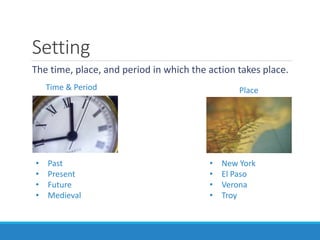
The time, place, and period in which the action takes place.
Time & Period
Setting
Place
• Past
• Present
• Future
• Medieval
• New York
• El Paso
• Verona
• Troy
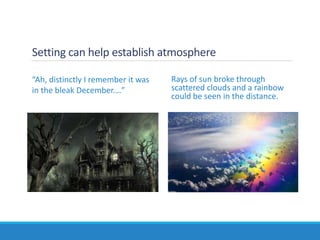
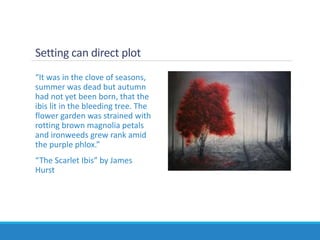
Setting can help establish atmosphere
Rays of sun broke through
scattered clouds and a rainbow
could be seen in the distance.
“Ah, distinctly I remember it was
in the bleak December.…”
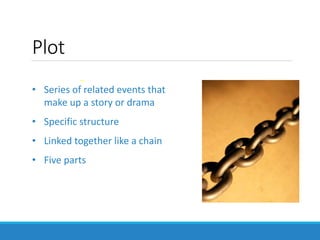
Setting can direct plot
“It was in the clove of seasons,
summer was dead but autumn
had not yet been born, that the
ibis lit in the bleeding tree. The
flower garden was strained with
rotting brown magnolia petals
and ironweeds grew rank amid
the purple phlox.”
“The Scarlet Ibis” by James
Hurst
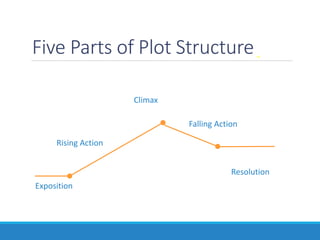
Plot
• Series of related events that
make up a story or drama
• Specific structure
• Linked together like a chain
• Five parts
Five Parts of Plot Structure
Exposition
Climax
Resolution
Rising Action
Falling Action
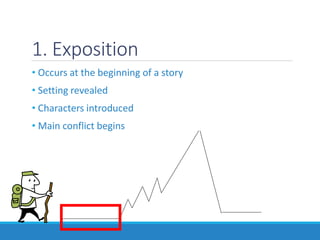
1. Exposition
• Occurs at the beginning of a story
• Setting revealed
• Characters introduced
• Main conflict begins
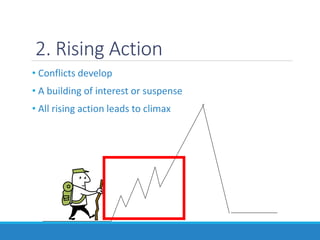
2. Rising Action
• Conflicts develop
• A building of interest or suspense
• All rising action leads to climax
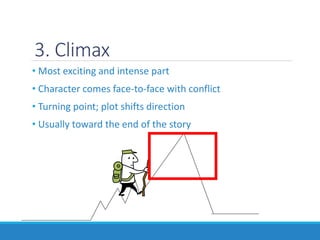
3. Climax
• Most exciting and intense part
• Character comes face-to-face with conflict
• Turning point; plot shifts direction
• Usually toward the end of the story
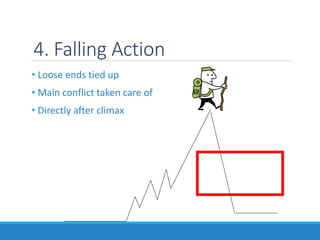
4. Falling Action
• Loose ends tied up
• Main conflict taken care of
• Directly after climax
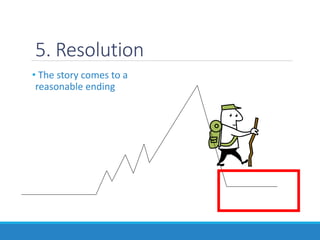
5. Resolution
• The story comes to a
reasonable ending
Which part of the plot?
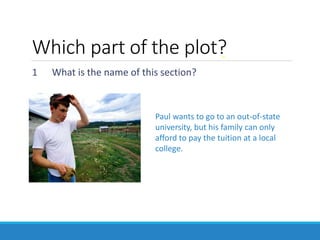
1 What is the name of this section?
Paul wants to go to an out-of-state
university, but his family can only
afford to pay the tuition at a local
college.
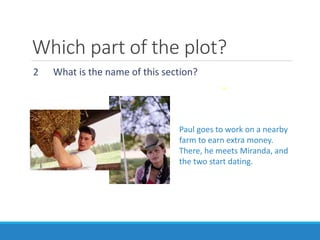
2 What is the name of this section?
Paul goes to work on a nearby
farm to earn extra money.
There, he meets Miranda, and
the two start dating.
Which part of the plot?
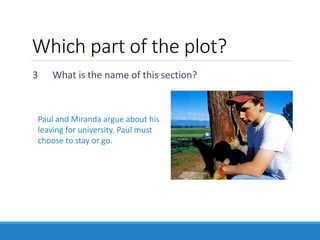
3 What is the name of this section?
Paul and Miranda argue about his
leaving for university. Paul must
choose to stay or go.
Which part of the plot?
4 What is the name of this section?
Paul visits his parents to get some
advice about what he should do.
Which part of the plot?
5 What is the name of this section
Paul decides to leave for university.
Miranda makes plans to visit him
and wishes him well.
Which part of the plot?
Conflict
• Conflict is the dramatic struggle
between two forces in a story
• Essential to plot progression
• Divided into two main categories
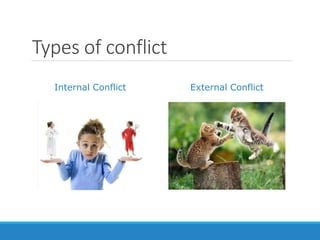
Types of conflict
Internal Conflict External Conflict
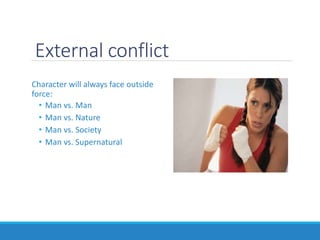
External conflict
Character will always face outside
force:
• Man vs. Man
• Man vs. Nature
• Man vs. Society
• Man vs. Supernatural
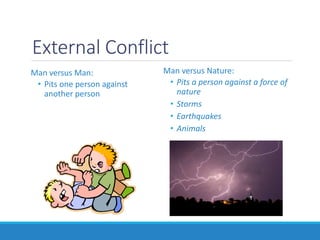
External Conflict
Man versus Man:
• Pits one person against
another person
Man versus Nature:
• Pits a person against a force of
nature
• Storms
• Earthquakes
• Animals
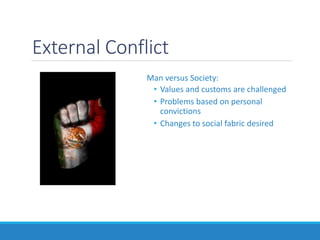
External Conflict
Man versus Society:
• Values and customs are challenged
• Problems based on personal
convictions
• Changes to social fabric desired
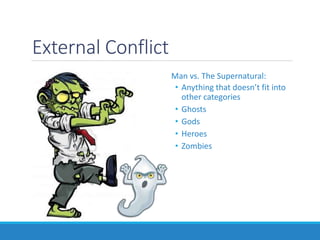
External Conflict
Man vs. The Supernatural:
• Anything that doesn’t fit into
other categories
• Ghosts
• Gods
• Heroes
• Zombies
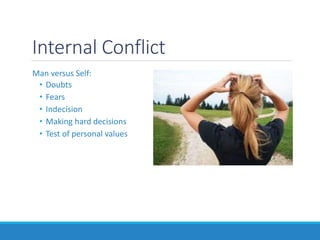
Internal Conflict
Man versus Self:
• Doubts
• Fears
• Indecision
• Making hard decisions
• Test of personal values
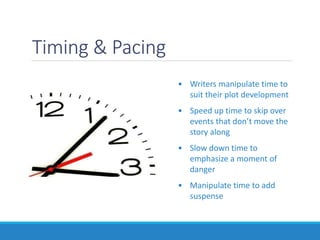
Timing & Pacing
• Writers manipulate time to
suit their plot development
• Speed up time to skip over
events that don’t move the
story along
• Slow down time to
emphasize a moment of
danger
• Manipulate time to add
suspense
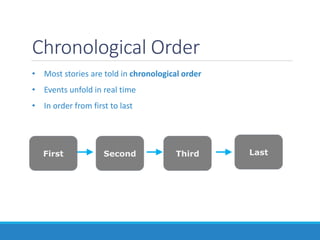
Chronological Order
• Most stories are told in chronological order
• Events unfold in real time
• In order from first to last
First Second Third Last
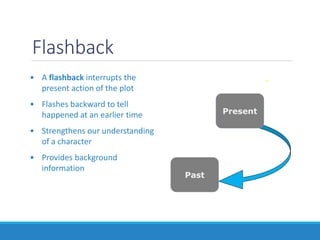
Flashback
• A flashback interrupts the
present action of the plot
• Flashes backward to tell
happened at an earlier time
• Strengthens our understanding
of a character
• Provides background
information
Past
Present
Flash-Forward
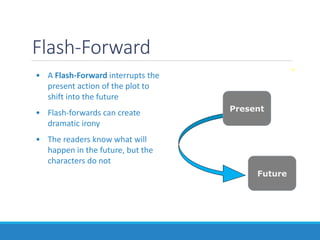
• A Flash-Forward interrupts the
present action of the plot to
shift into the future
• Flash-forwards can create
dramatic irony
• The readers know what will
happen in the future, but the
characters do not
Future
Present
Medias Res
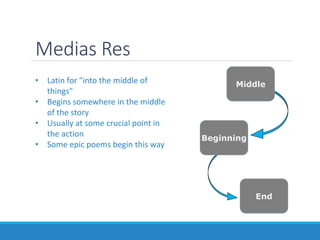
• Latin for "into the middle of
things"
• Begins somewhere in the middle
of the story
• Usually at some crucial point in
the action
• Some epic poems begin this way
Middle
Beginning
End
Practice
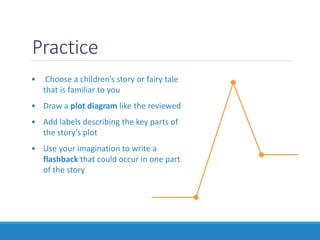
• Choose a children’s story or fairy tale
that is familiar to you
• Draw a plot diagram like the reviewed
• Add labels describing the key parts of
the story’s plot
• Use your imagination to write a
flashback that could occur in one part
of the story

Setting, plot, conflict, pacing

  • 1.
  • 2.
    Elements Setting Time & Period Place Plot Exposition RisingAction Climax Falling Action Resolution Conflict Internal External Pacing Chronological Fast forward Flashback Medias Res
  • 3.
    The time, place,and period in which the action takes place. Time & Period Setting Place • Past • Present • Future • Medieval • New York • El Paso • Verona • Troy
  • 4.
    Setting can helpestablish atmosphere Rays of sun broke through scattered clouds and a rainbow could be seen in the distance. “Ah, distinctly I remember it was in the bleak December.…”
  • 5.
    Setting can directplot “It was in the clove of seasons, summer was dead but autumn had not yet been born, that the ibis lit in the bleeding tree. The flower garden was strained with rotting brown magnolia petals and ironweeds grew rank amid the purple phlox.” “The Scarlet Ibis” by James Hurst
  • 6.
    Plot • Series ofrelated events that make up a story or drama • Specific structure • Linked together like a chain • Five parts
  • 7.
    Five Parts ofPlot Structure Exposition Climax Resolution Rising Action Falling Action
  • 8.
    1. Exposition • Occursat the beginning of a story • Setting revealed • Characters introduced • Main conflict begins
  • 9.
    2. Rising Action •Conflicts develop • A building of interest or suspense • All rising action leads to climax
  • 10.
    3. Climax • Mostexciting and intense part • Character comes face-to-face with conflict • Turning point; plot shifts direction • Usually toward the end of the story
  • 11.
    4. Falling Action •Loose ends tied up • Main conflict taken care of • Directly after climax
  • 12.
    5. Resolution • Thestory comes to a reasonable ending
  • 13.
    Which part ofthe plot? 1 What is the name of this section? Paul wants to go to an out-of-state university, but his family can only afford to pay the tuition at a local college.
  • 14.
    2 What isthe name of this section? Paul goes to work on a nearby farm to earn extra money. There, he meets Miranda, and the two start dating. Which part of the plot?
  • 15.
    3 What isthe name of this section? Paul and Miranda argue about his leaving for university. Paul must choose to stay or go. Which part of the plot?
  • 16.
    4 What isthe name of this section? Paul visits his parents to get some advice about what he should do. Which part of the plot?
  • 17.
    5 What isthe name of this section Paul decides to leave for university. Miranda makes plans to visit him and wishes him well. Which part of the plot?
  • 18.
    Conflict • Conflict isthe dramatic struggle between two forces in a story • Essential to plot progression • Divided into two main categories
  • 19.
    Types of conflict InternalConflict External Conflict
  • 20.
    External conflict Character willalways face outside force: • Man vs. Man • Man vs. Nature • Man vs. Society • Man vs. Supernatural
  • 21.
    External Conflict Man versusMan: • Pits one person against another person Man versus Nature: • Pits a person against a force of nature • Storms • Earthquakes • Animals
  • 22.
    External Conflict Man versusSociety: • Values and customs are challenged • Problems based on personal convictions • Changes to social fabric desired
  • 23.
    External Conflict Man vs.The Supernatural: • Anything that doesn’t fit into other categories • Ghosts • Gods • Heroes • Zombies
  • 24.
    Internal Conflict Man versusSelf: • Doubts • Fears • Indecision • Making hard decisions • Test of personal values
  • 25.
    Timing & Pacing •Writers manipulate time to suit their plot development • Speed up time to skip over events that don’t move the story along • Slow down time to emphasize a moment of danger • Manipulate time to add suspense
  • 26.
    Chronological Order • Moststories are told in chronological order • Events unfold in real time • In order from first to last First Second Third Last
  • 27.
    Flashback • A flashbackinterrupts the present action of the plot • Flashes backward to tell happened at an earlier time • Strengthens our understanding of a character • Provides background information Past Present
  • 28.
    Flash-Forward • A Flash-Forwardinterrupts the present action of the plot to shift into the future • Flash-forwards can create dramatic irony • The readers know what will happen in the future, but the characters do not Future Present
  • 29.
    Medias Res • Latinfor "into the middle of things" • Begins somewhere in the middle of the story • Usually at some crucial point in the action • Some epic poems begin this way Middle Beginning End
  • 30.
    Practice • Choose achildren’s story or fairy tale that is familiar to you • Draw a plot diagram like the reviewed • Add labels describing the key parts of the story’s plot • Use your imagination to write a flashback that could occur in one part of the story