Energy Expenditure &
Weight Management
Controlling the energy you use and the calories you
don’t.
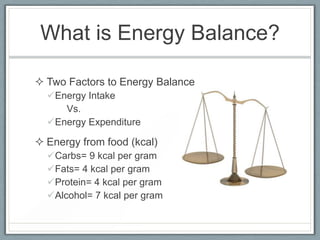
What is Energy Balance?
 Two Factors to Energy Balance
Energy Intake
Vs.
Energy Expenditure
 Energy from food (kcal)
Carbs= 9 kcal per gram
Fats= 4 kcal per gram
Protein= 4 kcal per gram
Alcohol= 7 kcal per gram
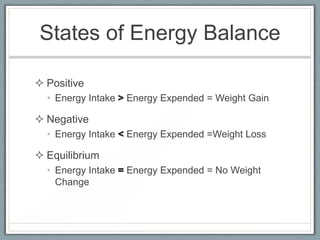
States of Energy Balance
 Positive
• Energy Intake Energy Expended = Weight Gain
 Negative
• Energy Intake Energy Expended =Weight Loss
 Equilibrium
• Energy Intake Energy Expended = No Weight
Change
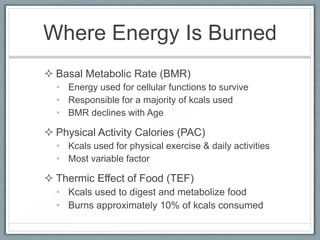
Where Energy Is Burned
 Basal Metabolic Rate (BMR)
• Energy used for cellular functions to survive
• Responsible for a majority of kcals used
• BMR declines with Age
 Physical Activity Calories (PAC)
• Kcals used for physical exercise & daily activities
• Most variable factor
 Thermic Effect of Food (TEF)
• Kcals used to digest and metabolize food
• Burns approximately 10% of kcals consumed
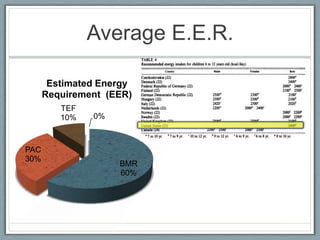
Average E.E.R.
BMR
60%
PAC
30%
TEF
10% 0%
Estimated Energy
Requirement (EER)
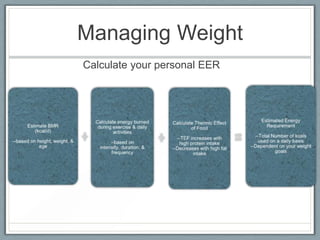
Managing Weight
Calculate your personal EER
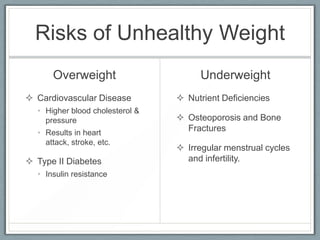
Risks of Unhealthy Weight
Overweight
 Cardiovascular Disease
• Higher blood cholesterol &
pressure
• Results in heart
attack, stroke, etc.
 Type II Diabetes
• Insulin resistance
Underweight
 Nutrient Deficiencies
 Osteoporosis and Bone
Fractures
 Irregular menstrual cycles
and infertility.

Energy expenditure & weight management

  • 1.
    Energy Expenditure & WeightManagement Controlling the energy you use and the calories you don’t.
  • 2.
    What is EnergyBalance?  Two Factors to Energy Balance Energy Intake Vs. Energy Expenditure  Energy from food (kcal) Carbs= 9 kcal per gram Fats= 4 kcal per gram Protein= 4 kcal per gram Alcohol= 7 kcal per gram
  • 3.
    States of EnergyBalance  Positive • Energy Intake Energy Expended = Weight Gain  Negative • Energy Intake Energy Expended =Weight Loss  Equilibrium • Energy Intake Energy Expended = No Weight Change
  • 4.
    Where Energy IsBurned  Basal Metabolic Rate (BMR) • Energy used for cellular functions to survive • Responsible for a majority of kcals used • BMR declines with Age  Physical Activity Calories (PAC) • Kcals used for physical exercise & daily activities • Most variable factor  Thermic Effect of Food (TEF) • Kcals used to digest and metabolize food • Burns approximately 10% of kcals consumed
  • 5.
  • 6.
  • 7.
    Risks of UnhealthyWeight Overweight  Cardiovascular Disease • Higher blood cholesterol & pressure • Results in heart attack, stroke, etc.  Type II Diabetes • Insulin resistance Underweight  Nutrient Deficiencies  Osteoporosis and Bone Fractures  Irregular menstrual cycles and infertility.

Editor's Notes

  • #2 By the end of the presentation, my hopes are that you have learned the basics about energy balance and controlling your weight.
  • #3 Energy balance is the ratio of calories consumed to calories burned. It may seem obvious but understanding this concept is a great way to keep weight under control. The number of calories per gram vary between the different macronutrients. When macronutrients are in the blood it tells our brains to stop eating, and vice versa.
  • #4 When you know the total amount of calories you consume as well as how many you are burning in a day, you can find out how many calories is too much or not enough, depending if you are trying to lose weight, gain weight, or just remain in a healthy weight zone.
  • #5 The main components of estimating energy requirements are BMR, PAC, and TEF. Adding these together will give you the total number of calories used every day.The BMR is the greatest contributor to your EER, using between 60-80% of calories consumed. Stays low while you sleep and is higher during the day.PAC is the most variable factor in energy expenditure. Can be effected by height, weight, muscle mass, age, gender, and most of all intensity and frequency of physical activity. TEF is approximately 10% of total calories burned just through the digestion, absorption, and metabolizing food.
  • #6 The pie graph represents the average distribution of energy expended in a persons body. While the table on the right shows results of a study on young children and the recommended amount of calories they should eat to stay at energy equilibrium.
  • #7 There are many formulas used that will help you to calculate the different EER factors specific to you. They are all different from person to person, because they are dependent on a number of different factors. However once the numbers are calculated it is simple to find the difference in calories consumed and calories burned. If you are looking to put on pounds you can calculate how many are needed to build lean muscle (which helps burn more calories at rest) without over eating. For trying to lose weight just make sure your energy balance is negative.
  • #8 There are many benefits to keeping a good control on your body weight and body composition. Many diseases and cancers can be avoided or chances greatly reduced with a healthy lifestyle and diet. Food & fitness are the best medicines and are key for keeping any medical problems from developing or appearing.