DACRYOCYSTORHINOSTOMY (DCR)
SURGERY
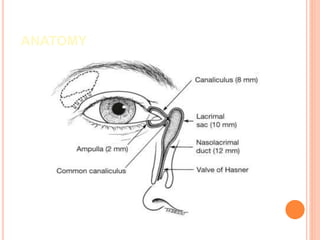
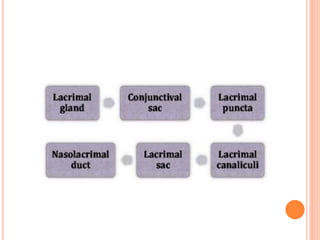
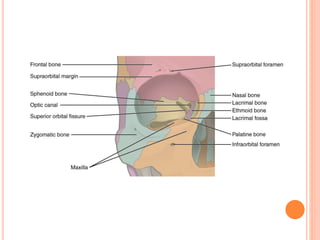
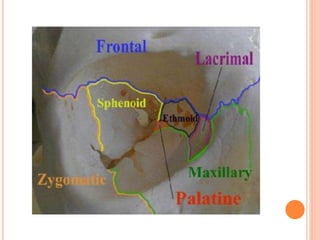
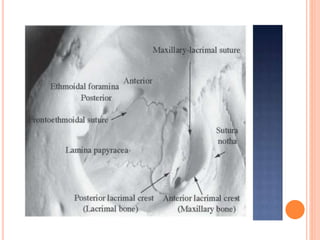
ANATOMY
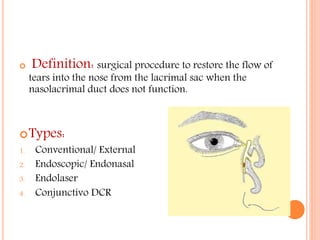
 Definition: surgical procedure to restore the flow of
tears into the nose from the lacrimal sac when the
nasolacrimal duct does not function.
Types:
1. Conventional/ External
2. Endoscopic/ Endonasal
3. Endolaser
4. Conjunctivo DCR
EXTERNAL DCR
Indications:
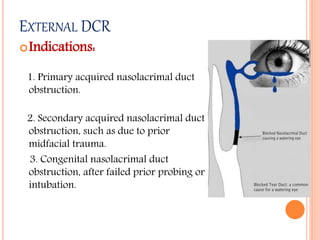
1. Primary acquired nasolacrimal duct
obstruction.
2. Secondary acquired nasolacrimal duct
obstruction, such as due to prior
midfacial trauma.
3. Congenital nasolacrimal duct
obstruction, after failed prior probing or
intubation.
PREOPERATIVE REQUISITES
 Confirmation of the diagnosis and clinical findings.
 Complete blood count: TLC, DLC, Hb, ESR.
 Bleeding and clotting times (BT and CT)
 Blood pressure measurement.
 Random blood sugars
 HIV
 HBsAg
 HCV
 ENT evaluation
 Additional general anesthesia investigations when required :
Chest X-ray, ECG in elderly
STEPS
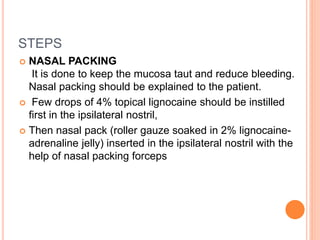
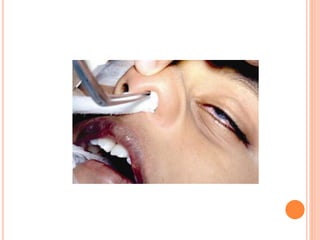
 NASAL PACKING
It is done to keep the mucosa taut and reduce bleeding.
Nasal packing should be explained to the patient.
 Few drops of 4% topical lignocaine should be instilled
first in the ipsilateral nostril,
 Then nasal pack (roller gauze soaked in 2% lignocaine-
adrenaline jelly) inserted in the ipsilateral nostril with the
help of nasal packing forceps
 ANAESTHESIA – General anaesthesia is preferred ,
however it may be performed with local anaesthesia in
adults
 Local anesthesia
POSITION
 Patient should be comfortably supine with head high 10-
20 degree.
 Surgeon should be at the head-end or side of the patient
in which DCR is going to be done.
 The table height should be adjusted depending upon
whether the surgeon is operating in standing or sitting
position.
 Light should have adequate illumination because of small
field of illumination. Headlight is used by the surgeon.
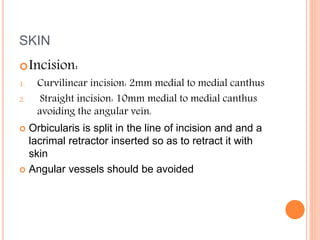
SKIN
Incision:
1. Curvilinear incision: 2mm medial to medial canthus
2. Straight incision: 10mm medial to medial canthus
avoiding the angular vein.
 Orbicularis is split in the line of incision and and a
lacrimal retractor inserted so as to retract it with
skin
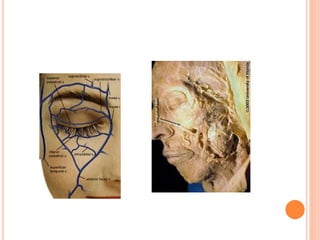
 Angular vessels should be avoided
EXPOSURE OF MPL AND ANTERIOR
LACRIMAL CREST
 Identification and exposure of MPL is a very
important step in DCR surgery
 Once MPL is exposed, the orbicularis fibers are
separated along the entire length of the incision.
 Dis-insertion of MPL is done at the anterior lacrimal
crest by cutting on the bone at insertion.
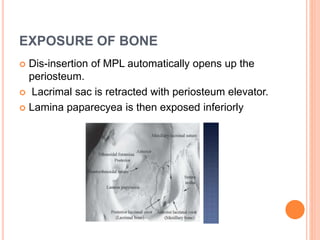
EXPOSURE OF BONE
 Dis-insertion of MPL automatically opens up the
periosteum.
 Lacrimal sac is retracted with periosteum elevator.
 Lamina paparecyea is then exposed inferiorly
EXPOSURE OF NASAL MUCOSA
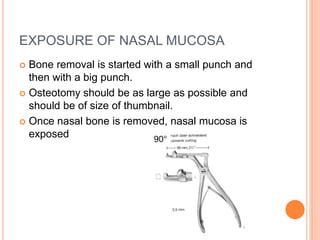
 Bone removal is started with a small punch and
then with a big punch.
 Osteotomy should be as large as possible and
should be of size of thumbnail.
 Once nasal bone is removed, nasal mucosa is
exposed
PREPARARTION OF FLAPS OF SAC
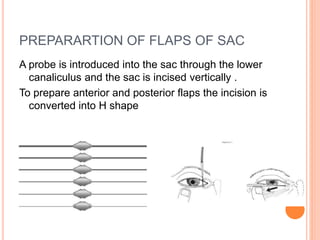
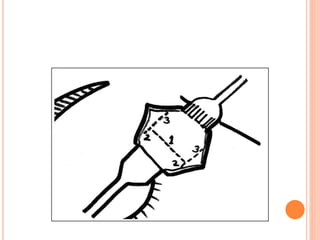
A probe is introduced into the sac through the lower
canaliculus and the sac is incised vertically .
To prepare anterior and posterior flaps the incision is
converted into H shape
FASHIONING OF NASAL MUCOSAL
FLAPS
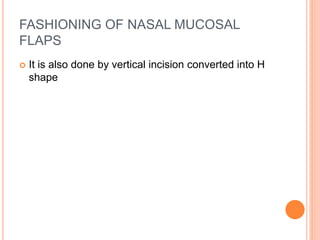
 It is also done by vertical incision converted into H
shape
SUTURING OF FLAPS
 Posterior flaps are sutured so that the posterior sac
flap does not block common canalicular ostium in
sac. (some surgeons don’t do it)
 One suture usually is sufficient for posterior flap.
 Anterior nasal flap is now sutured to the anterior
sac flap
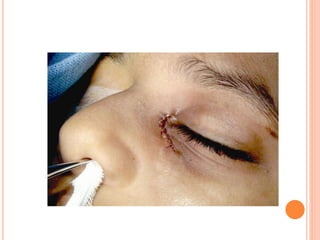
 Orbicularis oculi is closed with continuous suture
 Skin closure can be achieved with either interrupted
sutures.
 Anterior nasal packing done to avoid post operative
bleeding from remaining nasal mucosa
 pad on the eye should be applied.
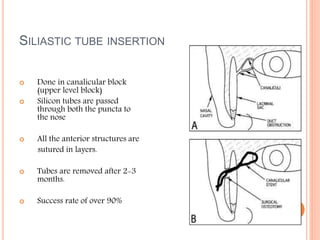
SILIASTIC TUBE INSERTION
 Done in canalicular block
(upper level block)
 Silicon tubes are passed
through both the puncta to
the nose
 All the anterior structures are
sutured in layers.
 Tubes are removed after 2-3
months.
 Success rate of over 90%
POST-OPERATIVE CARE
 Complete bed rest in propped up position and chin
extension is recommended for 24 hours.
 Patients should be told to avoid blowing of nose.
 Oral antibiotics, non-steroidal anti-inflammatory drug
(NSAID) - should be given routinely for five days.
 Dressing and nasal pack removal to be done after
24 hours.
 Local treatment includes oxymetazoline nasal drops
twice daily, antibiotic ointment on the wound twice
daily and antibiotic with steroid eye drop four times
daily.
 Sac syringing should be done after 1 week.
 Suture removal to be done after 1 week
CAUSES OF FAILURE
 Inadequate size and position of the ostium,
 Unrecognized common canalicular obstruction
 Scarring
 ‘Sump syndrome’, in which the surgical opening in
the lacrimal bone is too small and too high.
COMPLICATIONS
Complications following DCR surgery can be divided
as
early (1-4 weeks),
intermediate (1-3 months) and
late (>3 months).
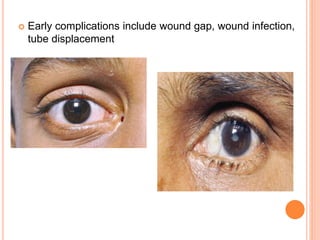
 Early complications include wound gap, wound infection,
tube displacement
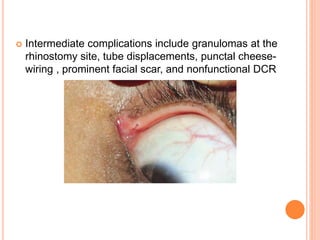
 Intermediate complications include granulomas at the
rhinostomy site, tube displacements, punctal cheese-
wiring , prominent facial scar, and nonfunctional DCR
 Late complications include rhinostomy fibrosis, and
failed DCR.

Dacryocystorhinostomy

  • 1.
  • 2.
  • 7.
     Definition: surgicalprocedure to restore the flow of tears into the nose from the lacrimal sac when the nasolacrimal duct does not function. Types: 1. Conventional/ External 2. Endoscopic/ Endonasal 3. Endolaser 4. Conjunctivo DCR
  • 8.
    EXTERNAL DCR Indications: 1. Primaryacquired nasolacrimal duct obstruction. 2. Secondary acquired nasolacrimal duct obstruction, such as due to prior midfacial trauma. 3. Congenital nasolacrimal duct obstruction, after failed prior probing or intubation.
  • 9.
    PREOPERATIVE REQUISITES  Confirmationof the diagnosis and clinical findings.  Complete blood count: TLC, DLC, Hb, ESR.  Bleeding and clotting times (BT and CT)  Blood pressure measurement.  Random blood sugars  HIV  HBsAg  HCV  ENT evaluation  Additional general anesthesia investigations when required : Chest X-ray, ECG in elderly
  • 10.
    STEPS  NASAL PACKING Itis done to keep the mucosa taut and reduce bleeding. Nasal packing should be explained to the patient.  Few drops of 4% topical lignocaine should be instilled first in the ipsilateral nostril,  Then nasal pack (roller gauze soaked in 2% lignocaine- adrenaline jelly) inserted in the ipsilateral nostril with the help of nasal packing forceps
  • 12.
     ANAESTHESIA –General anaesthesia is preferred , however it may be performed with local anaesthesia in adults  Local anesthesia
  • 13.
    POSITION  Patient shouldbe comfortably supine with head high 10- 20 degree.  Surgeon should be at the head-end or side of the patient in which DCR is going to be done.  The table height should be adjusted depending upon whether the surgeon is operating in standing or sitting position.  Light should have adequate illumination because of small field of illumination. Headlight is used by the surgeon.
  • 14.
    SKIN Incision: 1. Curvilinear incision:2mm medial to medial canthus 2. Straight incision: 10mm medial to medial canthus avoiding the angular vein.  Orbicularis is split in the line of incision and and a lacrimal retractor inserted so as to retract it with skin  Angular vessels should be avoided
  • 16.
    EXPOSURE OF MPLAND ANTERIOR LACRIMAL CREST  Identification and exposure of MPL is a very important step in DCR surgery  Once MPL is exposed, the orbicularis fibers are separated along the entire length of the incision.  Dis-insertion of MPL is done at the anterior lacrimal crest by cutting on the bone at insertion.
  • 17.
    EXPOSURE OF BONE Dis-insertion of MPL automatically opens up the periosteum.  Lacrimal sac is retracted with periosteum elevator.  Lamina paparecyea is then exposed inferiorly
  • 18.
    EXPOSURE OF NASALMUCOSA  Bone removal is started with a small punch and then with a big punch.  Osteotomy should be as large as possible and should be of size of thumbnail.  Once nasal bone is removed, nasal mucosa is exposed
  • 19.
    PREPARARTION OF FLAPSOF SAC A probe is introduced into the sac through the lower canaliculus and the sac is incised vertically . To prepare anterior and posterior flaps the incision is converted into H shape
  • 21.
    FASHIONING OF NASALMUCOSAL FLAPS  It is also done by vertical incision converted into H shape
  • 22.
    SUTURING OF FLAPS Posterior flaps are sutured so that the posterior sac flap does not block common canalicular ostium in sac. (some surgeons don’t do it)  One suture usually is sufficient for posterior flap.  Anterior nasal flap is now sutured to the anterior sac flap
  • 23.
     Orbicularis oculiis closed with continuous suture  Skin closure can be achieved with either interrupted sutures.  Anterior nasal packing done to avoid post operative bleeding from remaining nasal mucosa  pad on the eye should be applied.
  • 25.
    SILIASTIC TUBE INSERTION Done in canalicular block (upper level block)  Silicon tubes are passed through both the puncta to the nose  All the anterior structures are sutured in layers.  Tubes are removed after 2-3 months.  Success rate of over 90%
  • 26.
    POST-OPERATIVE CARE  Completebed rest in propped up position and chin extension is recommended for 24 hours.  Patients should be told to avoid blowing of nose.  Oral antibiotics, non-steroidal anti-inflammatory drug (NSAID) - should be given routinely for five days.
  • 27.
     Dressing andnasal pack removal to be done after 24 hours.  Local treatment includes oxymetazoline nasal drops twice daily, antibiotic ointment on the wound twice daily and antibiotic with steroid eye drop four times daily.  Sac syringing should be done after 1 week.  Suture removal to be done after 1 week
  • 28.
    CAUSES OF FAILURE Inadequate size and position of the ostium,  Unrecognized common canalicular obstruction  Scarring  ‘Sump syndrome’, in which the surgical opening in the lacrimal bone is too small and too high.
  • 29.
    COMPLICATIONS Complications following DCRsurgery can be divided as early (1-4 weeks), intermediate (1-3 months) and late (>3 months).
  • 30.
     Early complicationsinclude wound gap, wound infection, tube displacement
  • 31.
     Intermediate complicationsinclude granulomas at the rhinostomy site, tube displacements, punctal cheese- wiring , prominent facial scar, and nonfunctional DCR
  • 32.
     Late complicationsinclude rhinostomy fibrosis, and failed DCR.