Gastro esophageal Reflux Disease My room My mess ENT Central emergency
Gasroesophageal reflux disease (GERD)
 
Objectives Definition of GERD Epidemiology of GERD Pathophysiology of GERD Clinical Manisfestations Diagnostic Evaluation Treatment Complications
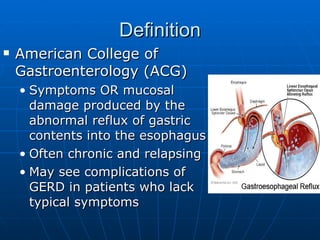
Definition American College of Gastroenterology (ACG) Symptoms OR mucosal damage produced by the abnormal reflux of gastric contents into the esophagus Often chronic and relapsing May see complications of GERD in patients who lack typical symptoms
Physiologic vs Pathologic Physiologic GERD Postprandial Short lived Asymptomatic No nocturnal sx Pathologic GERD Symptoms Mucosal injury Nocturnal sx
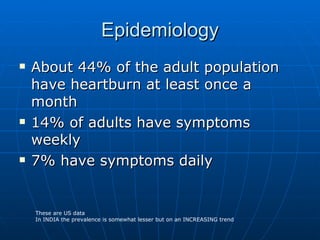
Epidemiology About 44% of the adult population have heartburn at least once a month 14% of adults have symptoms weekly 7% have symptoms daily These are US data In INDIA the prevalence is somewhat lesser but on an INCREASING trend
 
 
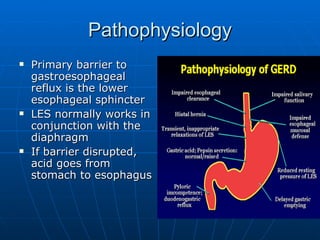
Pathophysiology Primary barrier to gastroesophageal reflux is the lower esophageal sphincter LES normally works in conjunction with the diaphragm If barrier disrupted, acid goes from stomach to esophagus
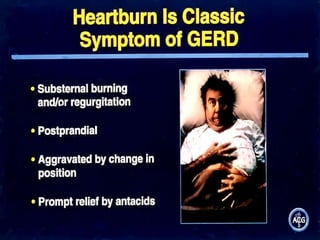
Clinical Manisfestations  Most common symptoms Heartburn—retrosternal burning discomfort Regurgitation—effortless return of gastric contents into the pharynx without nausea, retching, or abdominal contractions
 
Clinical Manisfestations Dysphagia—difficulty swallowing Other symptoms include: Chest pain, water brash, globus sensation, odynophagia, nausea Extraesophageal manifestations Asthma, laryngitis, chronic cough
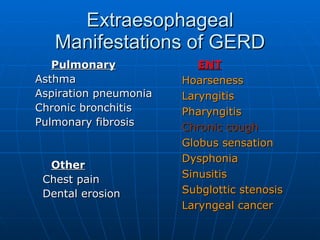
Extraesophageal Manifestations of GERD Pulmonary Asthma Aspiration pneumonia Chronic bronchitis Pulmonary fibrosis Other Chest pain Dental erosion ENT Hoarseness Laryngitis Pharyngitis Chronic cough Globus sensation Dysphonia Sinusitis Subglottic stenosis Laryngeal cancer
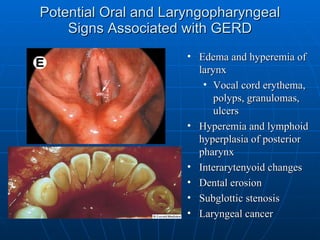
Potential Oral and Laryngopharyngeal Signs Associated with GERD Edema and hyperemia of larynx Vocal cord erythema, polyps, granulomas, ulcers Hyperemia and lymphoid hyperplasia of posterior pharynx  Interarytenyoid changes Dental erosion Subglottic stenosis Laryngeal cancer
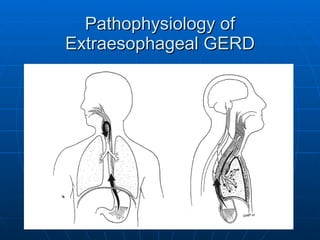
Pathophysiology of Extraesophageal GERD
 
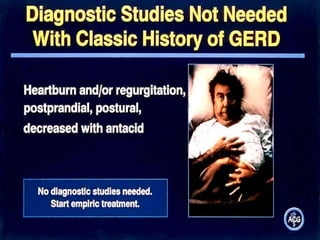
Diagnostic Evaluation If classic symptoms of heartburn and regurgitation exist in the absence of “alarm symptoms” the diagnosis of GERD can be made clinically and treatment can be initiated
Alarms Alarm Signs/Symptoms Dysphagia Early satiety GI bleeding Odynophagia Vomiting Weight loss Iron deficiency anemia
When to Perform Diagnostic Tests Uncertain diagnosis Atypical symptoms Symptoms associated with complications Inadequate response to therapy  Recurrent symptoms Prior to anti-reflux surgery
Diagnostic Tests for GERD Trial of H2RA/PPI Barium swallow Ambulatory pH monitoring Esophagogastroduodenoscopy(EGD) Esophageal manometry
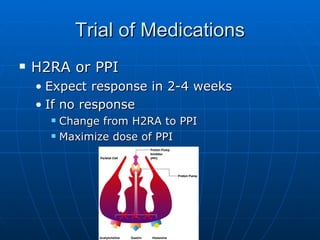
Trial of Medications H2RA or PPI Expect response in 2-4 weeks If no response Change from H2RA to PPI Maximize dose of PPI
Trial of Medications If PPI response inadequate despite maximal dosage  Confirm diagnosis EGD 24 hour pH monitor
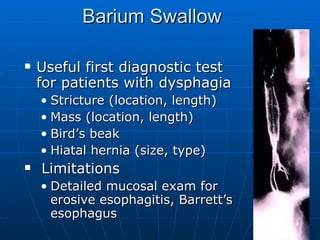
Barium Swallow Useful first diagnostic test for patients with dysphagia Stricture (location, length) Mass (location, length) Bird’s beak Hiatal hernia (size, type) Limitations Detailed mucosal exam for erosive esophagitis, Barrett’s esophagus
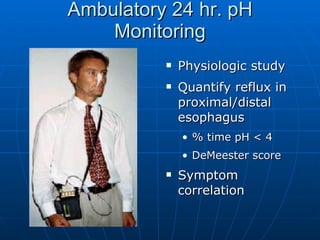
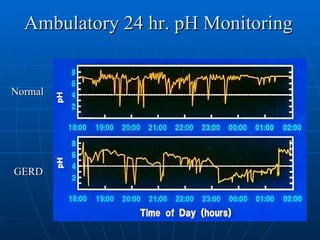
Ambulatory 24 hr. pH Monitoring Physiologic study Quantify reflux in proximal/distal esophagus % time pH < 4 DeMeester score Symptom correlation
Ambulatory 24 hr. pH Monitoring Normal GERD
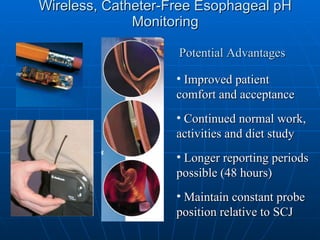
Wireless, Catheter-Free Esophageal pH Monitoring Improved patient comfort and acceptance Continued normal work, activities and diet study Longer reporting periods possible (48 hours) Maintain constant probe position relative to SCJ Potential Advantages
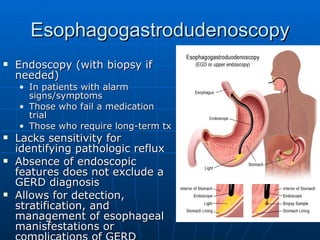
Esophagogastrodudenoscopy Endoscopy (with biopsy if needed) In patients with alarm signs/symptoms Those who fail a medication trial Those who require long-term tx Lacks sensitivity for identifying pathologic reflux Absence of endoscopic features does not exclude a GERD diagnosis Allows for detection, stratification, and management of esophageal manisfestations or complications of GERD
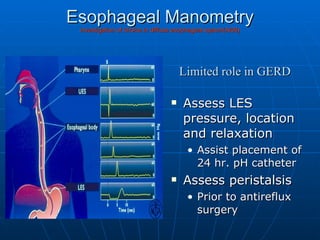
Esophageal Manometry investigation of choice in diffuse esophageal spasm(AI08) Assess LES pressure, location and relaxation Assist placement of 24 hr. pH catheter Assess peristalsis Prior to antireflux surgery  Limited role in GERD
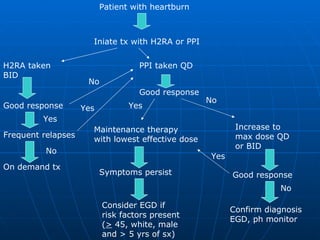
Patient with heartburn Iniate tx with H2RA or PPI H2RA taken  BID Good response Frequent relapses On demand tx PPI taken QD Good response Maintenance therapy with lowest effective dose Symptoms persist Consider EGD if  risk factors present ( >  45, white, male and > 5 yrs of sx) Increase to max dose QD  or BID Good response Confirm diagnosis EGD, ph monitor No Yes Yes No Yes Yes No No
Differential diagnosis Angina pectoris Gastritis Peptic ulcer disease Gallstones pancreatitis Achalasia cardia Carcinoma oesophagus
Treatment Goals of therapy Symptomatic relief Heal esophagitis Avoid complications
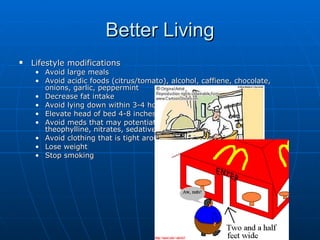
Better Living Lifestyle modifications Avoid large meals Avoid acidic foods (citrus/tomato), alcohol, caffiene, chocolate, onions, garlic, peppermint Decrease fat intake Avoid lying down within 3-4 hours after a meal Elevate head of bed 4-8 inches Avoid meds that may potentiate GERD (CCB, alpha agonists, theophylline, nitrates, sedatives, NSAIDS) Avoid clothing that is tight around the waist Lose weight Stop smoking
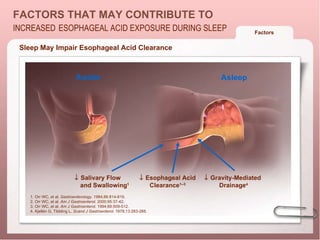
1. Orr WC, et al.  Gastroenterology . 1984;86:814-819. 2. Orr WC, et al.  Am J Gastroenterol . 2000;95:37-42. 3. Orr WC, et al.  Am J Gastroenterol . 1994;89:509-512. 4. Kjellén G, Tibbling L.  Scand J Gastroenterol . 1978;13:283-288.  Sleep May Impair Esophageal Acid Clearance    Gravity-Mediated Drainage 4    Esophageal Acid Clearance 1–3    Salivary Flow  and Swallowing 1 Asleep Awake Factors      FACTORS THAT MAY CONTRIBUTE TO INCREASED   ESOPHAGEAL ACID EXPOSURE DURING SLEEP
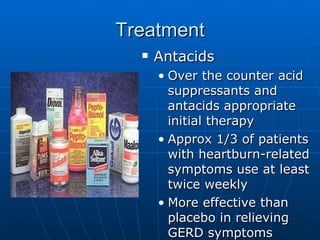
Treatment Antacids Over the counter acid suppressants and antacids appropriate initial therapy Approx 1/3 of patients with heartburn-related symptoms use at least twice weekly More effective than placebo in relieving GERD symptoms
Treatment Histamine H2-Receptor Antagonists More effective than placebo and antacids for relieving heartburn in patients with GERD Faster healing of erosive esophagitis when compared with placebo Can use regularly or on-demand
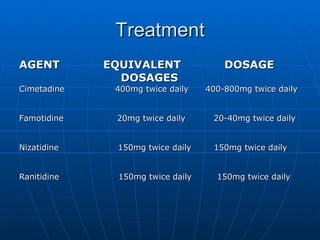
Treatment AGENT  EQUIVALENT  DOSAGE DOSAGES Cimetadine  400mg twice daily  400-800mg twice daily Famotidine  20mg twice daily  20-40mg twice daily Nizatidine  150mg twice daily  150mg twice daily Ranitidine  150mg twice daily  150mg twice daily
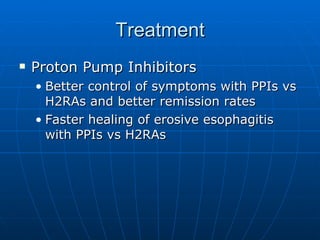
Treatment Proton Pump Inhibitors Better control of symptoms with PPIs vs H2RAs and better remission rates Faster healing of erosive esophagitis with PPIs vs H2RAs
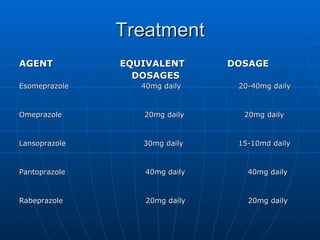
Treatment AGENT  EQUIVALENT  DOSAGE DOSAGES Esomeprazole  40mg daily  20-40mg daily Omeprazole  20mg daily  20mg daily Lansoprazole  30mg daily  15-10md daily Pantoprazole  40mg daily  40mg daily Rabeprazole  20mg daily  20mg daily
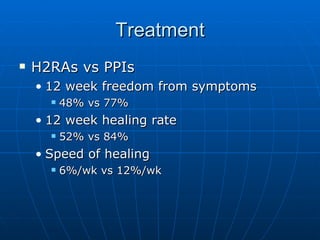
Treatment H2RAs vs PPIs 12 week freedom from symptoms 48% vs 77% 12 week healing rate 52% vs 84% Speed of healing 6%/wk vs 12%/wk
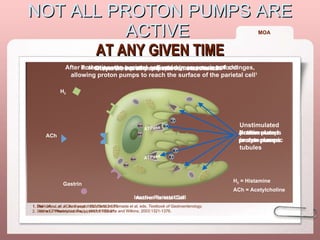
NOT ALL PROTON PUMPS ARE ACTIVE  AT ANY GIVEN TIME 1. Del Valle J, et al. Acid peptic disorders. In: Yamada et al, eds.  Textbook of Gastroenterology . 4th ed. Philadelphia, Pa: Lippincott Williams and Wilkins; 2003:1321-1376.  Unstimulated proton pumps Active  proton pumps Unstimulated proton pumps in cytoplasmic tubules 1. Blair JA, et al.  J Clin Invest.  1987;79:582-587. 2. Sachs G.  Pharmacotherapy . 1997;17:22-37.  H 2  = Histamine ACh = Acetylcholine Proton pumps become activated in response to food 1 Inactive Parietal Cell After activation, the parietal cell undergoes a series of changes, allowing proton pumps to reach the surface of the parietal cell 1 Active Parietal Cell Only active proton pumps can secrete acid 1 However, not all pumps become activated 1,2 ATPase ATPase MOA      Gastrin H 2 ACh H+ H+ H+ H+ K+ K+ K+ K+
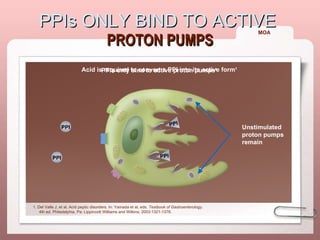
PPIs ONLY BIND TO ACTIVE  PROTON PUMPS Acid is required to convert a PPI into its active form 1 1. Del Valle J, et al. Acid peptic disorders. In: Yamada et al, eds.  Textbook of Gastroenterology . 4th ed. Philadelphia, Pa: Lippincott Williams and Wilkins; 2003:1321-1376.  PPIs only bind to active proton pumps 1 Unstimulated proton pumps remain MOA      PPI PPI PPI PPI
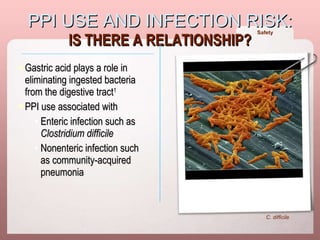
PPI USE AND INFECTION RISK: IS THERE A RELATIONSHIP? Gastric acid plays a role in eliminating ingested bacteria from the digestive tract 1 PPI use associated with Enteric infection such as Clostridium difficile Nonenteric infection such as community-acquired pneumonia C. difficile Safety    
Treatment Antireflux surgery Failed medical management Patient preference GERD complications Medical complications attributable to a large hiatal hernia Atypical symptoms with reflux documented on 24-hour pH monitoring
Treatment Antireflux surgery candidates EGD proven esophagitis Normal esophageal motility Partial response to acid suppression
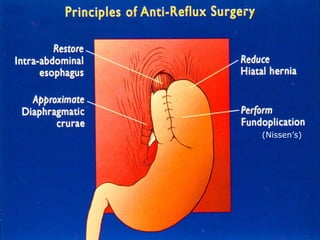
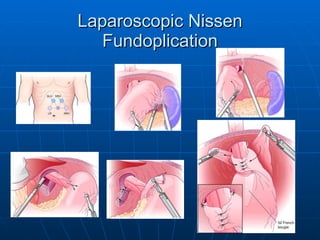
Treatment Antireflux surgery Tenets of surgery Reduce hiatal hernia Repair diaphragm Strengthen GE junction Strengthen antireflux barrier via gastric wrap 75-90% effective at alleviating symptoms of heartburn and regurgitation
 
(Nissen’s)
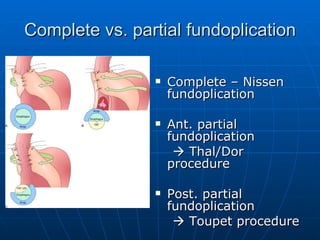
Complete vs. partial fundoplication Complete – Nissen fundoplication Ant. partial fundoplication    Thal/Dor procedure Post. partial fundoplication    Toupet procedure
Laparoscopic Nissen Fundoplication
Treatment Postsurgery 10% have solid food dysphagia 2-3% have permanent symptoms 7-10% have gas, bloating, diarrhea, nausea, early satiety Within 3-5 years 52% of patients back on antireflux medications
Treatment Endoscopic treatment Relatively new No definite indications Select well-informed patients with well-documented GERD responsive to PPI therapy may benefit Three categories Radiofrequency application to increase LES reflux barrier Endoscopic sewing devices Injection of a nonresorbable polymer into LES area
Complications Erosive esophagitis Stricture Barrett’s esophagus
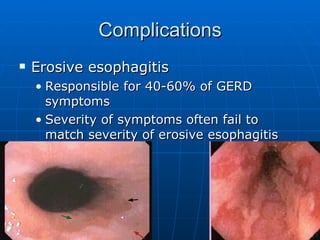
Complications Erosive esophagitis Responsible for 40-60% of GERD symptoms Severity of symptoms often fail to match severity of erosive esophagitis
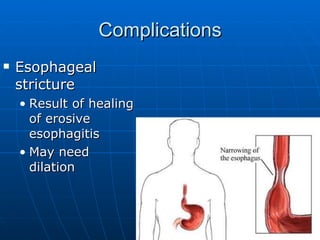
Complications Esophageal stricture Result of healing of erosive esophagitis May need dilation
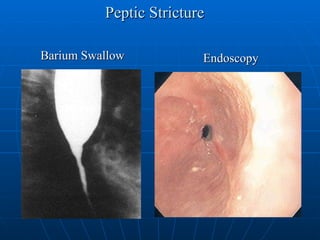
Peptic Stricture Barium Swallow Endoscopy
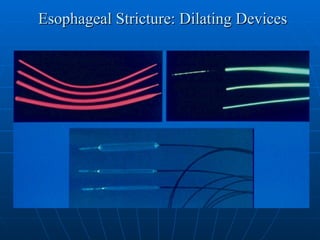
Esophageal Stricture: Dilating Devices
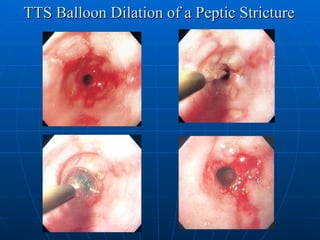
TTS Balloon Dilation of a Peptic Stricture
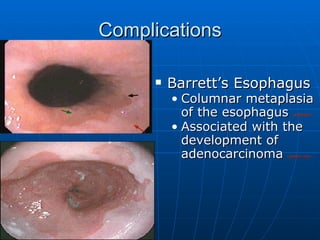
Complications Barrett’s Esophagus Columnar metaplasia of the esophagus  (AIIMS06) Associated with the development of adenocarcinoma  (AIMS97,06)
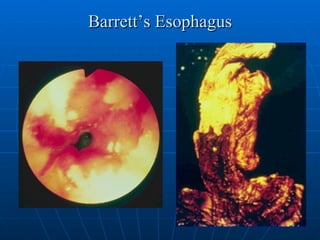
Barrett’s Esophagus
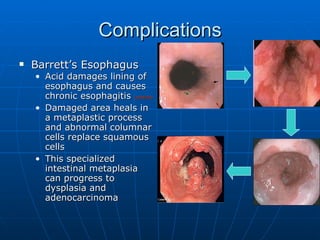
Complications Barrett’s Esophagus Acid damages lining of esophagus and causes chronic esophagitis  (AIIMS98) Damaged area heals in a metaplastic process and abnormal columnar cells replace squamous cells This specialized intestinal metaplasia can progress to dysplasia and adenocarcinoma
Complications Barrett’s Esophagus Manage in same manner as GERD EGD every 3 years in patient’s without dysplasia In patients with dysplasia annual to shorter interval surveillance
Complications Patient’s who need EGD Alarm symptoms Poor therapeutic response Long symptom duration “Once in a lifetime” EGD for patient’s with chronic GERD becoming accepted practice Many patients with Barrett’s are asymptomatic
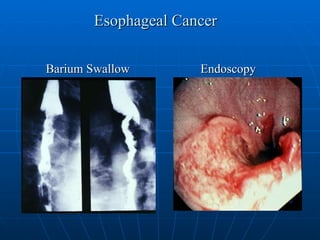
Esophageal Cancer Barium Swallow Endoscopy
MCQ’s Most prevalent esophageal cancer worldwide  (AI91) Most common site of Ca oesophagus  (AIIMS 97) Most common site for squamous cell Ca  (AI 01) Most common site of esophageal adenocarcinoma  (AIIMS 96,2000)
MCQ’s Most common site for Ca oesophagus in india Predisposing fators for Ca oesophagus are all except a-plummer vinson syn b-tulosis palmaris c-gerd d benzene therapy
MCQ’s Chemotherapy regimens for Ca oesophagus have improved with the use of  (AI96) Commonest adverse effect of cisplatin  (AIIMS01) Best substitute for esophagus after esophagectomy  (AI96)
Summary Definition of GERD Epidemiology of GERD Pathophysiology of GERD Clinical Manisfestations Diagnostic Evaluation Treatment Complications
?QUESTIONS?
A slideshow presentation  Prepared by Dr. ZEESHAN AHMAD under guidance of DR(Prof)CHANDRA SHEKHAR Head ENT deptt & DR MK VERMA Assoc prof ENT deptt THANK YOU

Zee ppt gerd

  • 1.
    Gastro esophageal RefluxDisease My room My mess ENT Central emergency
  • 2.
  • 3.
  • 4.
    Objectives Definition ofGERD Epidemiology of GERD Pathophysiology of GERD Clinical Manisfestations Diagnostic Evaluation Treatment Complications
  • 5.
    Definition American Collegeof Gastroenterology (ACG) Symptoms OR mucosal damage produced by the abnormal reflux of gastric contents into the esophagus Often chronic and relapsing May see complications of GERD in patients who lack typical symptoms
  • 6.
    Physiologic vs PathologicPhysiologic GERD Postprandial Short lived Asymptomatic No nocturnal sx Pathologic GERD Symptoms Mucosal injury Nocturnal sx
  • 7.
    Epidemiology About 44%of the adult population have heartburn at least once a month 14% of adults have symptoms weekly 7% have symptoms daily These are US data In INDIA the prevalence is somewhat lesser but on an INCREASING trend
  • 8.
  • 9.
  • 10.
    Pathophysiology Primary barrierto gastroesophageal reflux is the lower esophageal sphincter LES normally works in conjunction with the diaphragm If barrier disrupted, acid goes from stomach to esophagus
  • 11.
    Clinical Manisfestations Most common symptoms Heartburn—retrosternal burning discomfort Regurgitation—effortless return of gastric contents into the pharynx without nausea, retching, or abdominal contractions
  • 12.
  • 13.
    Clinical Manisfestations Dysphagia—difficultyswallowing Other symptoms include: Chest pain, water brash, globus sensation, odynophagia, nausea Extraesophageal manifestations Asthma, laryngitis, chronic cough
  • 14.
    Extraesophageal Manifestations ofGERD Pulmonary Asthma Aspiration pneumonia Chronic bronchitis Pulmonary fibrosis Other Chest pain Dental erosion ENT Hoarseness Laryngitis Pharyngitis Chronic cough Globus sensation Dysphonia Sinusitis Subglottic stenosis Laryngeal cancer
  • 15.
    Potential Oral andLaryngopharyngeal Signs Associated with GERD Edema and hyperemia of larynx Vocal cord erythema, polyps, granulomas, ulcers Hyperemia and lymphoid hyperplasia of posterior pharynx Interarytenyoid changes Dental erosion Subglottic stenosis Laryngeal cancer
  • 16.
  • 17.
  • 18.
    Diagnostic Evaluation Ifclassic symptoms of heartburn and regurgitation exist in the absence of “alarm symptoms” the diagnosis of GERD can be made clinically and treatment can be initiated
  • 19.
    Alarms Alarm Signs/SymptomsDysphagia Early satiety GI bleeding Odynophagia Vomiting Weight loss Iron deficiency anemia
  • 20.
    When to PerformDiagnostic Tests Uncertain diagnosis Atypical symptoms Symptoms associated with complications Inadequate response to therapy Recurrent symptoms Prior to anti-reflux surgery
  • 21.
    Diagnostic Tests forGERD Trial of H2RA/PPI Barium swallow Ambulatory pH monitoring Esophagogastroduodenoscopy(EGD) Esophageal manometry
  • 22.
    Trial of MedicationsH2RA or PPI Expect response in 2-4 weeks If no response Change from H2RA to PPI Maximize dose of PPI
  • 23.
    Trial of MedicationsIf PPI response inadequate despite maximal dosage Confirm diagnosis EGD 24 hour pH monitor
  • 24.
    Barium Swallow Usefulfirst diagnostic test for patients with dysphagia Stricture (location, length) Mass (location, length) Bird’s beak Hiatal hernia (size, type) Limitations Detailed mucosal exam for erosive esophagitis, Barrett’s esophagus
  • 25.
    Ambulatory 24 hr.pH Monitoring Physiologic study Quantify reflux in proximal/distal esophagus % time pH < 4 DeMeester score Symptom correlation
  • 26.
    Ambulatory 24 hr.pH Monitoring Normal GERD
  • 27.
    Wireless, Catheter-Free EsophagealpH Monitoring Improved patient comfort and acceptance Continued normal work, activities and diet study Longer reporting periods possible (48 hours) Maintain constant probe position relative to SCJ Potential Advantages
  • 28.
    Esophagogastrodudenoscopy Endoscopy (withbiopsy if needed) In patients with alarm signs/symptoms Those who fail a medication trial Those who require long-term tx Lacks sensitivity for identifying pathologic reflux Absence of endoscopic features does not exclude a GERD diagnosis Allows for detection, stratification, and management of esophageal manisfestations or complications of GERD
  • 29.
    Esophageal Manometry investigationof choice in diffuse esophageal spasm(AI08) Assess LES pressure, location and relaxation Assist placement of 24 hr. pH catheter Assess peristalsis Prior to antireflux surgery Limited role in GERD
  • 30.
    Patient with heartburnIniate tx with H2RA or PPI H2RA taken BID Good response Frequent relapses On demand tx PPI taken QD Good response Maintenance therapy with lowest effective dose Symptoms persist Consider EGD if risk factors present ( > 45, white, male and > 5 yrs of sx) Increase to max dose QD or BID Good response Confirm diagnosis EGD, ph monitor No Yes Yes No Yes Yes No No
  • 31.
    Differential diagnosis Anginapectoris Gastritis Peptic ulcer disease Gallstones pancreatitis Achalasia cardia Carcinoma oesophagus
  • 32.
    Treatment Goals oftherapy Symptomatic relief Heal esophagitis Avoid complications
  • 33.
    Better Living Lifestylemodifications Avoid large meals Avoid acidic foods (citrus/tomato), alcohol, caffiene, chocolate, onions, garlic, peppermint Decrease fat intake Avoid lying down within 3-4 hours after a meal Elevate head of bed 4-8 inches Avoid meds that may potentiate GERD (CCB, alpha agonists, theophylline, nitrates, sedatives, NSAIDS) Avoid clothing that is tight around the waist Lose weight Stop smoking
  • 34.
    1. Orr WC,et al. Gastroenterology . 1984;86:814-819. 2. Orr WC, et al. Am J Gastroenterol . 2000;95:37-42. 3. Orr WC, et al. Am J Gastroenterol . 1994;89:509-512. 4. Kjellén G, Tibbling L. Scand J Gastroenterol . 1978;13:283-288. Sleep May Impair Esophageal Acid Clearance  Gravity-Mediated Drainage 4  Esophageal Acid Clearance 1–3  Salivary Flow and Swallowing 1 Asleep Awake Factors     FACTORS THAT MAY CONTRIBUTE TO INCREASED ESOPHAGEAL ACID EXPOSURE DURING SLEEP
  • 35.
    Treatment Antacids Overthe counter acid suppressants and antacids appropriate initial therapy Approx 1/3 of patients with heartburn-related symptoms use at least twice weekly More effective than placebo in relieving GERD symptoms
  • 36.
    Treatment Histamine H2-ReceptorAntagonists More effective than placebo and antacids for relieving heartburn in patients with GERD Faster healing of erosive esophagitis when compared with placebo Can use regularly or on-demand
  • 37.
    Treatment AGENT EQUIVALENT DOSAGE DOSAGES Cimetadine 400mg twice daily 400-800mg twice daily Famotidine 20mg twice daily 20-40mg twice daily Nizatidine 150mg twice daily 150mg twice daily Ranitidine 150mg twice daily 150mg twice daily
  • 38.
    Treatment Proton PumpInhibitors Better control of symptoms with PPIs vs H2RAs and better remission rates Faster healing of erosive esophagitis with PPIs vs H2RAs
  • 39.
    Treatment AGENT EQUIVALENT DOSAGE DOSAGES Esomeprazole 40mg daily 20-40mg daily Omeprazole 20mg daily 20mg daily Lansoprazole 30mg daily 15-10md daily Pantoprazole 40mg daily 40mg daily Rabeprazole 20mg daily 20mg daily
  • 40.
    Treatment H2RAs vsPPIs 12 week freedom from symptoms 48% vs 77% 12 week healing rate 52% vs 84% Speed of healing 6%/wk vs 12%/wk
  • 41.
    NOT ALL PROTONPUMPS ARE ACTIVE AT ANY GIVEN TIME 1. Del Valle J, et al. Acid peptic disorders. In: Yamada et al, eds. Textbook of Gastroenterology . 4th ed. Philadelphia, Pa: Lippincott Williams and Wilkins; 2003:1321-1376. Unstimulated proton pumps Active proton pumps Unstimulated proton pumps in cytoplasmic tubules 1. Blair JA, et al. J Clin Invest. 1987;79:582-587. 2. Sachs G. Pharmacotherapy . 1997;17:22-37. H 2 = Histamine ACh = Acetylcholine Proton pumps become activated in response to food 1 Inactive Parietal Cell After activation, the parietal cell undergoes a series of changes, allowing proton pumps to reach the surface of the parietal cell 1 Active Parietal Cell Only active proton pumps can secrete acid 1 However, not all pumps become activated 1,2 ATPase ATPase MOA     Gastrin H 2 ACh H+ H+ H+ H+ K+ K+ K+ K+
  • 42.
    PPIs ONLY BINDTO ACTIVE PROTON PUMPS Acid is required to convert a PPI into its active form 1 1. Del Valle J, et al. Acid peptic disorders. In: Yamada et al, eds. Textbook of Gastroenterology . 4th ed. Philadelphia, Pa: Lippincott Williams and Wilkins; 2003:1321-1376. PPIs only bind to active proton pumps 1 Unstimulated proton pumps remain MOA     PPI PPI PPI PPI
  • 43.
    PPI USE ANDINFECTION RISK: IS THERE A RELATIONSHIP? Gastric acid plays a role in eliminating ingested bacteria from the digestive tract 1 PPI use associated with Enteric infection such as Clostridium difficile Nonenteric infection such as community-acquired pneumonia C. difficile Safety    
  • 44.
    Treatment Antireflux surgeryFailed medical management Patient preference GERD complications Medical complications attributable to a large hiatal hernia Atypical symptoms with reflux documented on 24-hour pH monitoring
  • 45.
    Treatment Antireflux surgerycandidates EGD proven esophagitis Normal esophageal motility Partial response to acid suppression
  • 46.
    Treatment Antireflux surgeryTenets of surgery Reduce hiatal hernia Repair diaphragm Strengthen GE junction Strengthen antireflux barrier via gastric wrap 75-90% effective at alleviating symptoms of heartburn and regurgitation
  • 47.
  • 48.
  • 49.
    Complete vs. partialfundoplication Complete – Nissen fundoplication Ant. partial fundoplication  Thal/Dor procedure Post. partial fundoplication  Toupet procedure
  • 50.
  • 51.
    Treatment Postsurgery 10%have solid food dysphagia 2-3% have permanent symptoms 7-10% have gas, bloating, diarrhea, nausea, early satiety Within 3-5 years 52% of patients back on antireflux medications
  • 52.
    Treatment Endoscopic treatmentRelatively new No definite indications Select well-informed patients with well-documented GERD responsive to PPI therapy may benefit Three categories Radiofrequency application to increase LES reflux barrier Endoscopic sewing devices Injection of a nonresorbable polymer into LES area
  • 53.
    Complications Erosive esophagitisStricture Barrett’s esophagus
  • 54.
    Complications Erosive esophagitisResponsible for 40-60% of GERD symptoms Severity of symptoms often fail to match severity of erosive esophagitis
  • 55.
    Complications Esophageal strictureResult of healing of erosive esophagitis May need dilation
  • 56.
    Peptic Stricture BariumSwallow Endoscopy
  • 57.
  • 58.
    TTS Balloon Dilationof a Peptic Stricture
  • 59.
    Complications Barrett’s EsophagusColumnar metaplasia of the esophagus (AIIMS06) Associated with the development of adenocarcinoma (AIMS97,06)
  • 60.
  • 61.
    Complications Barrett’s EsophagusAcid damages lining of esophagus and causes chronic esophagitis (AIIMS98) Damaged area heals in a metaplastic process and abnormal columnar cells replace squamous cells This specialized intestinal metaplasia can progress to dysplasia and adenocarcinoma
  • 62.
    Complications Barrett’s EsophagusManage in same manner as GERD EGD every 3 years in patient’s without dysplasia In patients with dysplasia annual to shorter interval surveillance
  • 63.
    Complications Patient’s whoneed EGD Alarm symptoms Poor therapeutic response Long symptom duration “Once in a lifetime” EGD for patient’s with chronic GERD becoming accepted practice Many patients with Barrett’s are asymptomatic
  • 64.
    Esophageal Cancer BariumSwallow Endoscopy
  • 65.
    MCQ’s Most prevalentesophageal cancer worldwide (AI91) Most common site of Ca oesophagus (AIIMS 97) Most common site for squamous cell Ca (AI 01) Most common site of esophageal adenocarcinoma (AIIMS 96,2000)
  • 66.
    MCQ’s Most commonsite for Ca oesophagus in india Predisposing fators for Ca oesophagus are all except a-plummer vinson syn b-tulosis palmaris c-gerd d benzene therapy
  • 67.
    MCQ’s Chemotherapy regimensfor Ca oesophagus have improved with the use of (AI96) Commonest adverse effect of cisplatin (AIIMS01) Best substitute for esophagus after esophagectomy (AI96)
  • 68.
    Summary Definition ofGERD Epidemiology of GERD Pathophysiology of GERD Clinical Manisfestations Diagnostic Evaluation Treatment Complications
  • 69.
  • 70.
    A slideshow presentation Prepared by Dr. ZEESHAN AHMAD under guidance of DR(Prof)CHANDRA SHEKHAR Head ENT deptt & DR MK VERMA Assoc prof ENT deptt THANK YOU

Editor's Notes

  • #7 --distinction between normal and GERD is blurred because some degree of reflux is physiologic is all folks Physiologic—postprandially, short lived, asymptomatic, not during sleep Pathologic—symptoms or mucosal injury and often with nocturnal symptoms
  • #11 --At level of diaphragmatic hiatus—main deterrant to reflux --disruption due to –review slide--multifactorial
  • #12 --gerd related chest pain may mimic angina—squeezing/burning, substernal, radiates to back, neck, jaw, arms. Minutes to hours. After meals, awakens patient from sleep, exacerbated by emotional stress --water brash—hypersalivation—heartburn and regurg of sour fluid or tasteless saliva into mouth --globus—lump in throat irrespective of swallowing --odynophagia—esophageal ulcer --nausea—infrequent --hrt burn 70-85%//regurg 60%//dysphagi 15-20%//angina 33%//asthma 15-20%
  • #19 --heartburn +/- regurgitation high specificity, low sensitivity
  • #20 --need further eval if any present—egd--
  • #23 Once established h&amp;p dx and no alarm symptoms can proceed with dx/therapeutic trial of tx.
  • #24 --if started with or changed to --prilo 40 qd x 14d as specific/sensitive as pH monitor --remember only works on active pumps. Take 30-60 min prior to eating
  • #29 --if trial of med did not work or if alarm symptoms or long term 5yrs need egd 1a evidence—dysphagia/early satiety/gi bleed/odynophagia/vomiting/wt loss/anemia --50-70% of patient’s with gerd will have a neg egd.
  • #35 A number of physiologic factors may contribute to increased esophageal acid exposure during sleep The esophageal response to acid was studied in 14 subjects without GERD while awake and during sleep (&lt;30% awake) 1 Acid caused a greater swallowing rate in awake subjects; this swallowing rate in response to acid decreased during the sleep period Calculated esophageal acid clearance was also found to be impaired compared to the awake condition, taking 180% longer to clear acid when asleep Another study evaluated the effects of different body positions on esophageal acid clearance in 21 healthy subjects 2 Gravity-mediated drainage was found to be more difficult to achieve in a supine position, as a greater number of swallows were needed to achieve a normal esophageal pH in the supine position compared to the upright position 1. Orr WC, et al. Gastroenterology . 1984;86:814-819. 2. Kjellén G, Tibbling L. Scand J Gastroenterol . 1978;13:283-288.
  • #36 --Tums, rolaids, maalox --$1 billion in yearly expenditures --aluminum/calcium—constipation Mag--diarrhea
  • #38 --otc dose uniformly half of standard lowest prescription dose --similar clinical efficacy
  • #40 --no significant differences in symptomatic tx of GERD or healing of erosive esophagitis 1a evidence --works only on active pumps—take 30-60min prior to meals --long-term tx generally benefits outweigh risks
  • #42 This animation depicts proton pump activation following stimulation with food.   The ingestion of food causes a series of biochemical events that ultimately allow proton pumps to reach the surface of the cell and secrete acid 1,2   Only active proton pumps can secrete acid; however not all pumps are stimulated at a given time; some pumps remain unstimulated 2-4   References: 1. Del Valle J, et al. Gastric secretion. In: Yamada et al, eds. Textbook of Gastroenterology . 4th ed. Philadelphia, Pa: Lippincott Williams and Wilkins; 2003:266-307. 2. Del Valle J, et al. Acid peptic disorders. In: Yamada et al, eds. Textbook of Gastroenterology . 4th ed. Philadelphia, Pa: Lippincott Williams and Wilkins; 2003:1321-1376. 3. Sachs G. Pharmacotherapy . 1997;17:22-37. 4. Blair JA, et al. J Clin Invest. 1987;79:582-587.
  • #43 PPIs are only activated in an acidic environment and PPIs only bind to and inhibit active proton pumps PPIs covalently bind to the H + /K + ATPase (proton pump) to inhibit the final step of gastric acid production   Reference: Del Valle J, et al. Acid peptic disorders. In: Yamada et al, eds. Textbook of Gastroenterology . 4th ed. Philadelphia, Pa: Lippincott Williams and Wilkins; 2003:1321-1376.
  • #44 Gastric acidity is a mechanism of protection against bacterial overgrowth, and PPI use reduces gastric acidity 1-3 In a controlled prospective study, 47 outpatients with peptic disease were examined by endoscopy before and after treatment with a 4-week course of a PPI or an H 2 RA 4 Before treatment only 8% of patients had gastric or duodenal bacterial overgrowth. After treatment 53% of patients treated with a PPI had overgrowth and 17% of those using the H 2 RA had overgrowth 4 Patients treated with the PPI had the highest gastric pH which positively correlated with bacterial count (r=.68; P &lt;0.001) 4   A systematic literature review (11 papers evaluating 126,999 patients on PPI therapy) showed a positive association between PPI use and the risk of developing Clostridium difficile infection 1 A combination cohort and case-control analysis of hospitalized patients (n=1187) linked PPI use with an increased risk of C difficile diarrhea 2   One cohort analysis also observed increased community-acquired pneumonia rates associated with PPI use (adjusted relative risk of current PPI use compared to those who stopped taking PPI=1.89) 3 The study population consisted of 364,638 subjects of whom 5551 developed a first occurrence of pneumonia A more recent study from the General Practice Research Database in the United Kingdom found that current, long-term PPI use did not increase risk of community-acquired pneumonia; however, recently starting PPI therapy (2, 7, or 14 days prior to index date) was found to increase risk 5 The study evaluated case patients (n=80,066) who received an incident diagnosis of community acquired pneumonia and matched controls (n=799,881) “ When we stratified the current PPI recipient group on the basis of duration of exposure before the index date, PPI use for fewer than 30 days was associated with moderately increased risk for CAP. Among current PPI recipients with longer periods of PPI exposure, risk for CAP did not increase. A close examination of the group with current PPI use for fewer than 30 days revealed that new PPI therapy started within the 30 days before the index date accounted for all of the increased risk for CAP in this group. In addition, increases in risk for CAP were progressively larger among recipients who started PPI or histamine-2–receptor antagonist therapy within 14, 7, or even 2 days before the index date.” 5 From Sarkar M, et al. Ann Intern Med. 2008;149:391-398.   References: 1. Leonard J, et al. Am J Gastroenterol . 2007;102:2047-2056. 2. Dial S, et al. CMAJ . 2004;171:33-38. 3. Laheij RJF, et al. JAMA . 2004;292:1955-1960. 4. Thorens J, et al. Gut . 1996;39:54-59. 5. Sarkar M, et al. Ann Intern Med. 2008;14
  • #45 candidacy --esophagitis—by egd --need normal manometry/motility --partial response to acid suppression --reduce hh, repair diaphragm, strengthen ge jxn—antireflux barrier --75-90% effective at alleviating hrtburn/regurg --better at helping with hrtburn/regurg than atypical sx
  • #54 --dysphagia, odynophagia, early satiety, gi bleed, anemia, vomit, wt loss
  • #55 --black arrow squamo-columnar jxn—Z-line --Z-line has undulating smooth contours --green arrow—gastric columnar epithelium above round black sphincter --red arow—pink white esophageal squamous epithelium --ulcerations in 2-7%
  • #56 4-20% of patients
  • #57 Figure 11-18. Endoscopic appearance of benign strictures. Acid-septic strictures and Schatzki&apos;s rings are the most common strictures requiring dilation. Although in most instances endoscopic examination allows obvious distinction between the two, variation in air insufflation and the differences in magnification over short distances between the lower esophageal sphincter and the endoscope can make the assessment of the lower esophagus difficult in some patients. A subtle peptic stricture may be missed endoscopically, or, more precisely, may be confused with a Schatzki&apos;s ring. Contrast radiology can be a more sensitive technique for demonstrating subtle rings and strictures and for calibrating the lumen more precisely. A–C, Endoscopic photographs of several Schatzki&apos;s rings. D–G, peptic strictures. Note the esophageal pseudodiverticula proximal to the peptic stricture in panels F and G. Their presence increases the risk of unguided dilatation of the esophagus and mandates the use of a guidewire technique. H, Tight anastomotic stricture (suture at 10 o&apos;clock) and “watermelon esophagus” viewed endoscopically. The watermelon seeds and kernel of corn provide a reference for the pinhole quality of this stricture.
  • #59 Figure 11-21. Types of dilators: balloons. Balloon dilators are an additional option for the endoscopist approaching an esophageal stricture. They may be placed over a guidewire or through the scope (TTS). Theoretically, balloons have the advantage of being safer because of the radial application of force, and elimination of the shearing effect of rigid dilators. Moreover, dilation can be performed under direct visualization using the TTS balloon. Recent balloon innovations facilitating their use include longer balloons that avoid the tendency for slippage with inflation, and high-pressure balloons that should provide a truer diameter for the dilation of more resistant strictures. In the limited number of randomized studies comparing Savory-type dilators with balloon dilators, they appeared equally safe. Efficacy, as assessed by symptom improvement and luminal patency, has been variably reported in the literature favoring either technique [18], [19], [20]. A, Range of available balloons and an inflation gun. B–E, A peptic stricture before and after balloon dilation, thus demonstrating the direct visualization that is possible with the TTS technique. References: [18]. Saeed ZA, Winchester CB, Ferro PA, et al. Prospective randomized comparison of polyvinyl bougies and through-the-scope balloons for dilation of peptic strictures of the esophagus. Gastrointest Endosc 1995 41 189-195 [19]. Cox JGC, Winter RK, Maslin SC, et al. Balloon or bougie for dilation of benign oesophageal stricture? An interim report of a randomized controlled trial. Gut 1988 29 1741-1747 [20]. Shemesh E, Czerniak A, Comparison between Savary-Gilliard and balloon dilatation of benign esophageal strictures. World J Surg 1990 14 518-522
  • #60 --1950—Norman Barrett --10-15% --black arrow squamo-columnar jxn—Z-line --Z-line has undulating smooth contours --green arrow—gastric columnar epithelium above round black sphincter --red arow—pink white esophageal squamous epithelium --RFs—male, smoker, age, obese
  • #62 Adenoca with barretts 0.5%/yr--------without barretts 0.07%/yr
  • #64 --alarm symptoms—dysphagia/early satiety/gi bleed/odynophagia/vomiting/wt loss/anemia