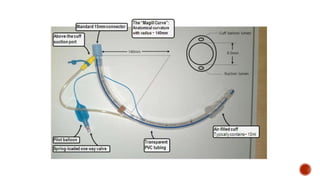
 An endotracheal tube is a flexible plastic tube that is placed through the mouth
into the trachea (windpipe) to help a patient breathe. The endotracheal tube is
then connected to a ventilator, which delivers oxygen to the lungs. The process of
inserting the tube is called endotracheal intubation
 Endotracheal intubation (EI) is often an emergency procedure that's performed on
people who are unconscious or who can't breathe on their own.
 It is recommended that the endotracheal tube tip be fixed at 5cm above the
carina, with the head in a neutral position. That way, it can move 2cm up and 2cm
down, without the risk of exiting the cords or going down the right main bronchus.
 Oesophageal intubation
 Obstruction of the tube (be it kinked by teeth or clogged with phlegm)
 Dislodgement above the glottis (tube falling out)
 Endobronchial intubation (tube falling in)
 Cuff rupture, pressure loss
 Trauma due to intubation (eg. tracheobronchial injury, even perforation)
 Mucosal ulceration and necrosis from prolonged intubation
Respiratory failureApnea / respiratory arrest
 Inadequate ventilation(acute vs chronic)
 Inadequate oxygenation
 Chronic respiratory insufficiency with FTT
 COPD
 Airway obstruction
 Hypoventilation
 Severe hypoxemia
Cardiac insufficiency
 Eliminate the work of breathing
 To reduce the oxygen consumption
Neurologic dysfunction
 Impaired cognitive impairment
 Central hypoventilation and frequent apnea
 Comatose patient with GCS < 8
 Inability to protect the airway
ABG Results
If the patient is under the following conditions:
 Multiple trauma
 Shock
 Multi-organ failure
 Drug overdose
 Thoracic or abdominal surgery
 A long period of surgery
 Neuromuscular disorders
 Inhalation injury
 Ensure that the required oxygen support indicated for the patient is provided.
 Assess the client’s respiratory status at least every 2 hours or frequently as
indicated. Note the lung sounds and presence of secretions.
 Ensure that adequate humidity is provided to avoid feeling of dryness in the
oropharynx.
 Suction secretions orally to prevent aspiration. This also decreases the risk for
infection.
 Assess nasal and oral mucosa for redness and irritation.
 Secure the endotracheal tube with tape or ET holder to prevent movement or deviation
of the tube in the trachea.
 Place the patient in a side-lying position or semi fowler’s if not contraindicated to
avoid aspiration. Reposition patient every 2 hours. This will allow the lungs to expand
better and prevent secretions stagnation.
 Ensure the ET for placement. Note lip line marking and compare it with the desired
placement (18cm, 20cm, and 22cm).
 Closely monitor cuff pressure, maintaining a pressure of 20 to 25 mmHg to minimize
the risk of tracheal necrosis.
 Move the oral endotracheal tube to the opposite of the mouth every 8 hours or
depending on the protocol of the hospital. This is to prevent irritation to the oral
mucosa.
 Provide oral care at least every 4 hours using an antibacterial or antiseptic solution.
Use a bite block to avoid patient from biting down. Frequent oral care in intubated
patients will decrease the risk of ventilator-acquired pneumonia.
 Use a bite block to avoid patient from biting down.
 Turn patient’s head to the side to reduce the risk for aspiration.
 Communicate frequently with the client. Give patient means to communicate using a
whiteboard or communication board.
 Nutritional Consideration
Oral feeding is contraindicated. Enteral feeding is the route for nutritional support.
The most common route for enteral feeding is through a nasogastric tube.
 Do steps in preventing aspiration during feeding. Check the placing of the nasogastric
tube. Place patient in high Fowler’s position.
 Ensure patient’s comfort during suctioning and other procedure that involves
manipulating the endotracheal tube

Endortracheal tube ppt

  • 2.
     An endotrachealtube is a flexible plastic tube that is placed through the mouth into the trachea (windpipe) to help a patient breathe. The endotracheal tube is then connected to a ventilator, which delivers oxygen to the lungs. The process of inserting the tube is called endotracheal intubation  Endotracheal intubation (EI) is often an emergency procedure that's performed on people who are unconscious or who can't breathe on their own.  It is recommended that the endotracheal tube tip be fixed at 5cm above the carina, with the head in a neutral position. That way, it can move 2cm up and 2cm down, without the risk of exiting the cords or going down the right main bronchus.
  • 4.
     Oesophageal intubation Obstruction of the tube (be it kinked by teeth or clogged with phlegm)  Dislodgement above the glottis (tube falling out)  Endobronchial intubation (tube falling in)  Cuff rupture, pressure loss  Trauma due to intubation (eg. tracheobronchial injury, even perforation)  Mucosal ulceration and necrosis from prolonged intubation
  • 5.
    Respiratory failureApnea /respiratory arrest  Inadequate ventilation(acute vs chronic)  Inadequate oxygenation  Chronic respiratory insufficiency with FTT  COPD  Airway obstruction  Hypoventilation  Severe hypoxemia
  • 6.
    Cardiac insufficiency  Eliminatethe work of breathing  To reduce the oxygen consumption Neurologic dysfunction  Impaired cognitive impairment  Central hypoventilation and frequent apnea  Comatose patient with GCS < 8  Inability to protect the airway
  • 7.
    ABG Results If thepatient is under the following conditions:  Multiple trauma  Shock  Multi-organ failure  Drug overdose  Thoracic or abdominal surgery  A long period of surgery  Neuromuscular disorders  Inhalation injury
  • 8.
     Ensure thatthe required oxygen support indicated for the patient is provided.  Assess the client’s respiratory status at least every 2 hours or frequently as indicated. Note the lung sounds and presence of secretions.  Ensure that adequate humidity is provided to avoid feeling of dryness in the oropharynx.  Suction secretions orally to prevent aspiration. This also decreases the risk for infection.  Assess nasal and oral mucosa for redness and irritation.  Secure the endotracheal tube with tape or ET holder to prevent movement or deviation of the tube in the trachea.  Place the patient in a side-lying position or semi fowler’s if not contraindicated to avoid aspiration. Reposition patient every 2 hours. This will allow the lungs to expand better and prevent secretions stagnation.
  • 9.
     Ensure theET for placement. Note lip line marking and compare it with the desired placement (18cm, 20cm, and 22cm).  Closely monitor cuff pressure, maintaining a pressure of 20 to 25 mmHg to minimize the risk of tracheal necrosis.  Move the oral endotracheal tube to the opposite of the mouth every 8 hours or depending on the protocol of the hospital. This is to prevent irritation to the oral mucosa.  Provide oral care at least every 4 hours using an antibacterial or antiseptic solution. Use a bite block to avoid patient from biting down. Frequent oral care in intubated patients will decrease the risk of ventilator-acquired pneumonia.  Use a bite block to avoid patient from biting down.  Turn patient’s head to the side to reduce the risk for aspiration.  Communicate frequently with the client. Give patient means to communicate using a whiteboard or communication board.
  • 10.
     Nutritional Consideration Oralfeeding is contraindicated. Enteral feeding is the route for nutritional support. The most common route for enteral feeding is through a nasogastric tube.  Do steps in preventing aspiration during feeding. Check the placing of the nasogastric tube. Place patient in high Fowler’s position.  Ensure patient’s comfort during suctioning and other procedure that involves manipulating the endotracheal tube