Hypopituitarism
&
Hyperpituitarism
Muhammad Abbas
BS MLT (Medical Lab Technology)
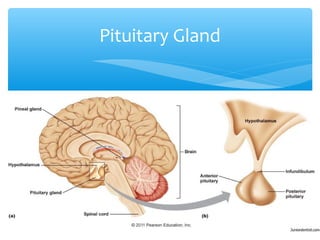
It is the major endocrine gland, a pea-sized body attached to the
base of the brain that is important in controlling growth and
development and the functioning of the other endocrine glands.
That’s why it is also called master gland or hypopises .
it is located in the hypophyseal fossa of the sphenoid bone.
Attached with the hypothalamus by a stalk. weighted about 500
mg.
Pituitary Gland
Pituitary Gland
∗ There are some conditions in which there is the disturbance
of pituitary gland mainly occur i-e
∗ Either there is increase secretion of pituitary which is called
Hypopituitarism or the decrease production which is called
Hypopituitarism
Hyperpituitarism
∗ The increase secretion of pituitary
∗ What two hormones are affected with
hyperpituitarism?
∗ GH
∗ ADH
Hyperpituitarism
 GH (Growth Hormones)
∗ Adult
∗ Acromegaly
∗ abnormal growth of the hands, feet, and face, caused by
overproduction of growth hormone by the pituitary
gland.
∗ Child
∗ Gigantism
 ADH (Antidiuretic Hormones)
∗ Syndrome of Inappropriate Antidiuretic Hormone
(SIADH)
Syndrome of Inappropriate Antidiuretic
Hormone (SIADH)
∗ Definition
∗ The syndrome of inappropriate antidiuretic hormone (ADH)
secretion (SIADH) is defined by the hyponatremia and hypo-
osmolality resulting from inappropriate, continued secretion or
action of the hormone despite normal or increased plasma volume,
which results in impaired water excretion.
∗ What does ADH do?
∗ Causes kidneys to reabsorb water 
∗  urine output 
∗ fluid volume
SIADH – Sign & Symptoms
∗ Water retention
∗ Edema
∗ Weight gain
∗ Urine
∗ Concentrated
∗ increase Sp. gravity
Hypopituitarism
∗ Definition
∗  secretion of pituitary hormones is called
Hypopituitarism
∗ Etiology
∗ #1 Tumor
∗ Congenital defects
∗ Pituitary infarction
∗ Pituitary surgery
Hypopituitarism
∗ Clinical manifestations are slow to appear & are not
really apparent until 75% of the pituitary is
destroyed……
Hypopituitarism Causes
∗ Primary
∗ Trouble with the Pituitary
∗  Pituitary hormone
∗ Secondary
∗ Trouble somewhere else (not pituitary)
∗  pituitary hormone
∗ Usually hypothalmus
Hypopituitarism: Growth hormone
∗ Dx:
∗ Dwarfism
∗ Sign & Symptoms of  GH
∗ Apparent by 6 months
∗ Delayed puberty
∗ Growth rate ½ unto 4 ft.
∗ Body proportions = normal
∗ Accel. aging
Hypopituitarism: FSH & LH
∗ Female
∗ Amenorrhea
∗ Infertility
∗  libido
∗ Breast atrophy
∗ Male
∗ Weakness
∗ Impotence
∗  libido
∗ Testicles soften &
shrink
Hypopituitarism: TSH
∗ Sign & Symptoms of  TSH
∗ Severe growth retardation
∗ Think slow
∗ Lethargy
∗ Bradycardia
∗ Slow thoughts
∗ Cold intolerance
Hypopituitarism: ACTH
∗ ACTH
∗ Handle stress
∗ Sign & Symptoms of  ACTH
∗ Fatigue
∗ Weight loss
∗ Anorexia
∗ Depigmentation of skin
∗ Fever
∗ Hypotension
Hypopituitarism:
Simmond’s Disease
Panhypopituitarism
∗It is the Total absence of all pituitary
hormones,refferd as PANHYPOPITUITARISM
∗ Etiology
∗Surgery
∗Infection(Infectious: TBC, syphilis, mycotic infections)
∗Injury
∗Tumor
Hypopituitarism:
Simmond’s Disease
∗ Clinical Manifestations
∗ Weight loss
∗ Weakness
∗  libido
∗ Cold intolerance
∗ Treatment:
∗ Administration of all Pitutary hormones
Hypopituitarism &   hyperpituitarism   Chemical Pathology

Hypopituitarism & hyperpituitarism Chemical Pathology

  • 1.
  • 2.
    It is themajor endocrine gland, a pea-sized body attached to the base of the brain that is important in controlling growth and development and the functioning of the other endocrine glands. That’s why it is also called master gland or hypopises . it is located in the hypophyseal fossa of the sphenoid bone. Attached with the hypothalamus by a stalk. weighted about 500 mg. Pituitary Gland
  • 3.
  • 4.
    ∗ There aresome conditions in which there is the disturbance of pituitary gland mainly occur i-e ∗ Either there is increase secretion of pituitary which is called Hypopituitarism or the decrease production which is called Hypopituitarism
  • 5.
    Hyperpituitarism ∗ The increasesecretion of pituitary ∗ What two hormones are affected with hyperpituitarism? ∗ GH ∗ ADH
  • 6.
    Hyperpituitarism  GH (GrowthHormones) ∗ Adult ∗ Acromegaly ∗ abnormal growth of the hands, feet, and face, caused by overproduction of growth hormone by the pituitary gland. ∗ Child ∗ Gigantism  ADH (Antidiuretic Hormones) ∗ Syndrome of Inappropriate Antidiuretic Hormone (SIADH)
  • 7.
    Syndrome of InappropriateAntidiuretic Hormone (SIADH) ∗ Definition ∗ The syndrome of inappropriate antidiuretic hormone (ADH) secretion (SIADH) is defined by the hyponatremia and hypo- osmolality resulting from inappropriate, continued secretion or action of the hormone despite normal or increased plasma volume, which results in impaired water excretion. ∗ What does ADH do? ∗ Causes kidneys to reabsorb water  ∗  urine output  ∗ fluid volume
  • 8.
    SIADH – Sign& Symptoms ∗ Water retention ∗ Edema ∗ Weight gain ∗ Urine ∗ Concentrated ∗ increase Sp. gravity
  • 9.
    Hypopituitarism ∗ Definition ∗ secretion of pituitary hormones is called Hypopituitarism ∗ Etiology ∗ #1 Tumor ∗ Congenital defects ∗ Pituitary infarction ∗ Pituitary surgery
  • 10.
    Hypopituitarism ∗ Clinical manifestationsare slow to appear & are not really apparent until 75% of the pituitary is destroyed……
  • 11.
    Hypopituitarism Causes ∗ Primary ∗Trouble with the Pituitary ∗  Pituitary hormone ∗ Secondary ∗ Trouble somewhere else (not pituitary) ∗  pituitary hormone ∗ Usually hypothalmus
  • 12.
    Hypopituitarism: Growth hormone ∗Dx: ∗ Dwarfism ∗ Sign & Symptoms of  GH ∗ Apparent by 6 months ∗ Delayed puberty ∗ Growth rate ½ unto 4 ft. ∗ Body proportions = normal ∗ Accel. aging
  • 13.
    Hypopituitarism: FSH &LH ∗ Female ∗ Amenorrhea ∗ Infertility ∗  libido ∗ Breast atrophy ∗ Male ∗ Weakness ∗ Impotence ∗  libido ∗ Testicles soften & shrink
  • 14.
    Hypopituitarism: TSH ∗ Sign& Symptoms of  TSH ∗ Severe growth retardation ∗ Think slow ∗ Lethargy ∗ Bradycardia ∗ Slow thoughts ∗ Cold intolerance
  • 15.
    Hypopituitarism: ACTH ∗ ACTH ∗Handle stress ∗ Sign & Symptoms of  ACTH ∗ Fatigue ∗ Weight loss ∗ Anorexia ∗ Depigmentation of skin ∗ Fever ∗ Hypotension
  • 16.
    Hypopituitarism: Simmond’s Disease Panhypopituitarism ∗It isthe Total absence of all pituitary hormones,refferd as PANHYPOPITUITARISM ∗ Etiology ∗Surgery ∗Infection(Infectious: TBC, syphilis, mycotic infections) ∗Injury ∗Tumor
  • 17.
    Hypopituitarism: Simmond’s Disease ∗ ClinicalManifestations ∗ Weight loss ∗ Weakness ∗  libido ∗ Cold intolerance ∗ Treatment: ∗ Administration of all Pitutary hormones