HYPOPITUITARISM
Dr.Aadhar harshana
JR-2 GEN. MEDICINE
IMS, BHU VARANASI ,INDIA
Pituitary gland introduction
• Situated within the bony sella tursica&overlain by dural diaphrgma
sella,through stalk connects to median eminence of hypothalamus.
• 600mg, pregnancy upto 1g.
• Pituitary together with hypothalamus orchestrates the structural
integrity & function of endocrine glands- Thyroid ,Adrenal
gland,Gonads & target tissue-cartilage,breast.
• Preservation of hypothalamo-pituitary unit is critical for integretion
of anterior pituitary control of sexual function,fertility,linear &organ
growth,lactation,stress responses,energy,appetite& temprature
regulation.
• Posterior pituitary gland-directly innervated by supraoptic
hypophyseal & tuberohypophyseal nerve tract of posterior stalk.
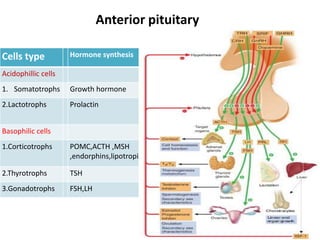
Anterior pituitary
Cells type Hormone synthesis
Acidophillic cells
1. Somatotrophs Growth hormone
2.Lactotrophs Prolactin
Basophilic cells
1.Corticotrophs POMC,ACTH ,MSH
,endorphins,lipotropin
2.Thyrotrophs TSH
3.Gonadotrophs FSH,LH
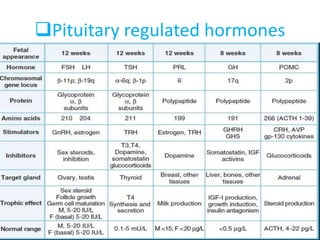
Pituitary regulated hormones
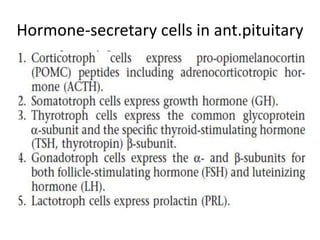
Hormone-secretary cells in ant.pituitary
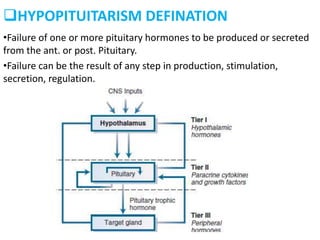
HYP0THALMO-PITUITARY- TARGET ORGAN
AXES REGULATION
HYPOPITUITARISM DEFINATION
•Failure of one or more pituitary hormones to be produced or secreted
from the ant. or post. Pituitary.
•Failure can be the result of any step in production, stimulation,
secretion, regulation.
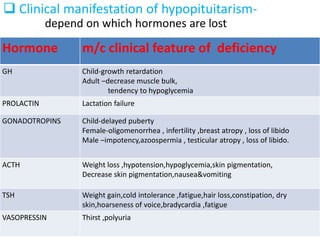
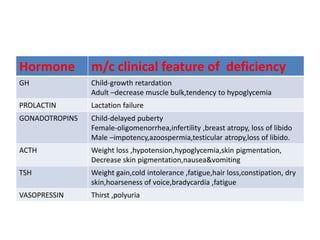
Hormone m/c clinical feature of deficiency
GH Child-growth retardation
Adult –decrease muscle bulk,
tendency to hypoglycemia
PROLACTIN Lactation failure
GONADOTROPINS Child-delayed puberty
Female-oligomenorrhea , infertility ,breast atropy , loss of libido
Male –impotency,azoospermia , testicular atropy , loss of libido.
ACTH Weight loss ,hypotension,hypoglycemia,skin pigmentation,
Decrease skin pigmentation,nausea&vomiting
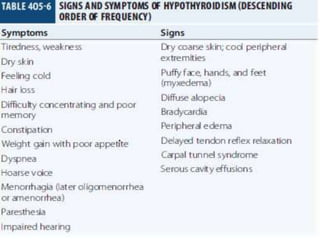
TSH Weight gain,cold intolerance ,fatigue,hair loss,constipation, dry
skin,hoarseness of voice,bradycardia ,fatigue
VASOPRESSIN Thirst ,polyuria
 Clinical manifestation of hypopituitarism-
depend on which hormones are lost
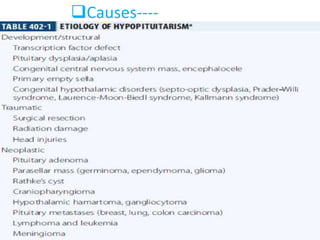
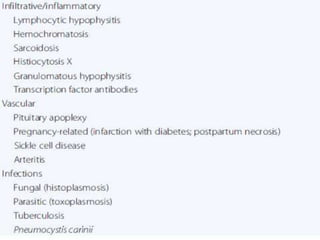
Causes----
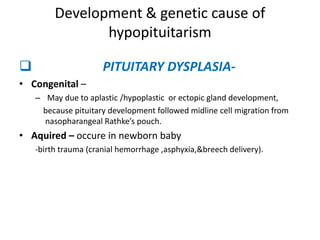
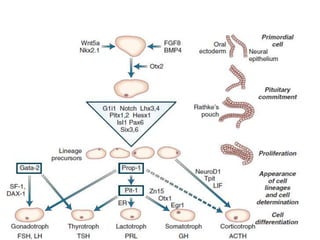
Development & genetic cause of
hypopituitarism
 PITUITARY DYSPLASIA-
• Congenital –
– May due to aplastic /hypoplastic or ectopic gland development,
because pituitary development followed midline cell migration from
nasopharangeal Rathke’s pouch.
• Aquired – occure in newborn baby
-birth trauma (cranial hemorrhage ,asphyxia,&breech delivery).
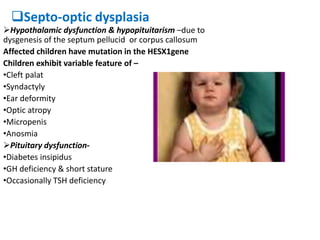
Septo-optic dysplasia
Hypothalamic dysfunction & hypopituitarism –due to
dysgenesis of the septum pellucid or corpus callosum
Affected children have mutation in the HESX1gene
Children exhibit variable feature of –
•Cleft palat
•Syndactyly
•Ear deformity
•Optic atropy
•Micropenis
•Anosmia
Pituitary dysfunction-
•Diabetes insipidus
•GH deficiency & short stature
•Occasionally TSH deficiency
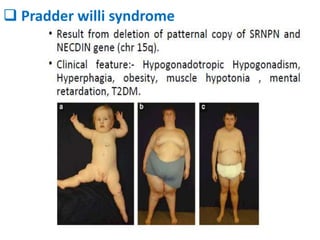
 Pradder willi syndrome
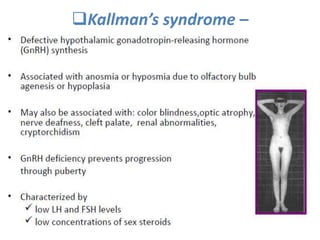
Kallman’s syndrome –
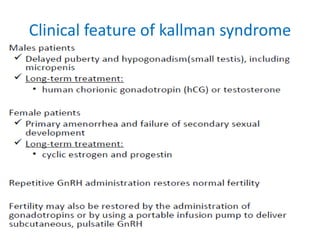
Clinical feature of kallman syndrome
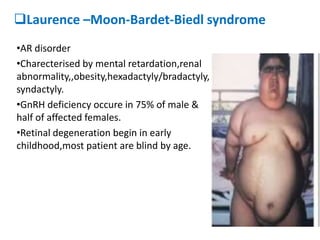
Laurence –Moon-Bardet-Biedl syndrome
•AR disorder
•Charecterised by mental retardation,renal
abnormality,,obesity,hexadactyly/bradactyly,
syndactyly.
•GnRH deficiency occure in 75% of male &
half of affected females.
•Retinal degeneration begin in early
childhood,most patient are blind by age.
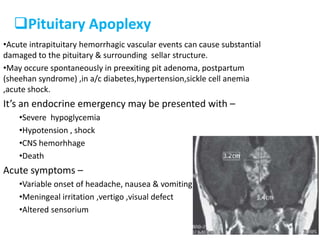
Pituitary Apoplexy
•Acute intrapituitary hemorrhagic vascular events can cause substantial
damaged to the pituitary & surrounding sellar structure.
•May occure spontaneously in preexiting pit adenoma, postpartum
(sheehan syndrome) ,in a/c diabetes,hypertension,sickle cell anemia
,acute shock.
It’s an endocrine emergency may be presented with –
•Severe hypoglycemia
•Hypotension , shock
•CNS hemorhhage
•Death
Acute symptoms –
•Variable onset of headache, nausea & vomiting,
•Meningeal irritation ,vertigo ,visual defect
•Altered sensorium
Sheehan syndrome
• Infarction of pituitary after substantial blood loss during
childbirth.
• No correletion b/w severity of hemorrhage & symptoms.
• Severe recognised months to years postpartum period—
- lethargy,anorexia,weight loss,unable to breast feeding .
• 50% permanent amenorrhea,rest had scanty amenorrhea,
mostly lactation was poor to absent
Lymphophysitis hypophysitis-
• This happened most often in postpartum women.
• It usually present with hyperpractinemia & MRI
evidence of pituitary mass (adenoma).
• Pituitary failure causes by diffuse lymphocytic
infiltration.
• Isolated pituitary hormone deficiency s/o selective
autoimmune process target to specific cell types.
• Clinically – progressive mass effect with headache &
visual disturbance.
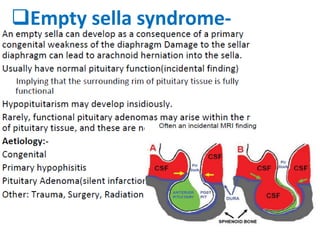
Empty sella syndrome-
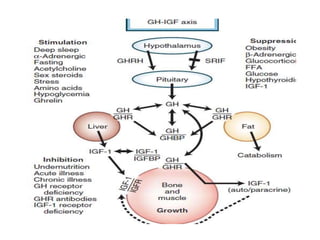
GROWTH HORMONE
• at night triggered by the onset of slow-wave sleep (70% 1st episode
of slow-wave sleep cycle).
• The ultradian rhythm of GH secretion is generated by coordinated
interaction of many factors. “Jet lag” transiently increases GH peak
amplitude, resulting in a transient increase of 24-hour GH secretion.
• Exercise and physical stress, including trauma with hypovolemic
shock and sepsis, increase GH levels.
• Emotional deprivation and endogenous depression suppresses GH
secretion.
• Nutrition plays a major role in GH regulation. Malnutrition increases
GH secretion, whereas obesity decreases GH secretion.
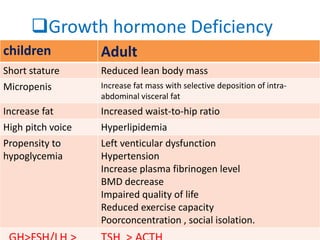
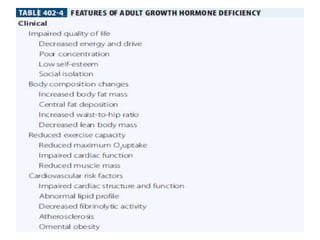
Growth hormone Deficiency
children Adult
Short stature Reduced lean body mass
Micropenis Increase fat mass with selective deposition of intra-
abdominal visceral fat
Increase fat Increased waist-to-hip ratio
High pitch voice Hyperlipidemia
Propensity to
hypoglycemia
Left venticular dysfunction
Hypertension
Increase plasma fibrinogen level
BMD decrease
Impaired quality of life
Reduced exercise capacity
Poorconcentration , social isolation.
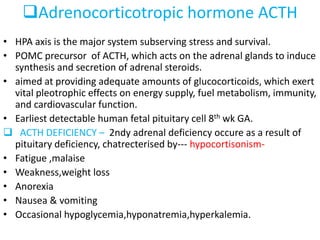
Adrenocorticotropic hormone ACTH
• HPA axis is the major system subserving stress and survival.
• POMC precursor of ACTH, which acts on the adrenal glands to induce
synthesis and secretion of adrenal steroids.
• aimed at providing adequate amounts of glucocorticoids, which exert
vital pleotrophic effects on energy supply, fuel metabolism, immunity,
and cardiovascular function.
• Earliest detectable human fetal pituitary cell 8th wk GA.
 ACTH DEFICIENCY – 2ndy adrenal deficiency occure as a result of
pituitary deficiency, chatrecterised by--- hypocortisonism-
• Fatigue ,malaise
• Weakness,weight loss
• Anorexia
• Nausea & vomiting
• Occasional hypoglycemia,hyponatremia,hyperkalemia.
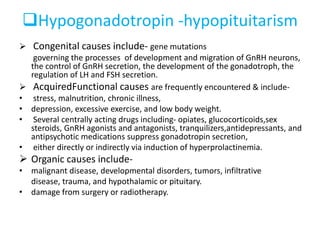
Hypogonadotropin -hypopituitarism
 Congenital causes include- gene mutations
governing the processes of development and migration of GnRH neurons,
the control of GnRH secretion, the development of the gonadotroph, the
regulation of LH and FSH secretion.
 AcquiredFunctional causes are frequently encountered & include-
• stress, malnutrition, chronic illness,
• depression, excessive exercise, and low body weight.
• Several centrally acting drugs including- opiates, glucocorticoids,sex
steroids, GnRH agonists and antagonists, tranquilizers,antidepressants, and
antipsychotic medications suppress gonadotropin secretion,
• either directly or indirectly via induction of hyperprolactinemia.
 Organic causes include-
• malignant disease, developmental disorders, tumors, infiltrative
disease, trauma, and hypothalamic or pituitary.
• damage from surgery or radiotherapy.
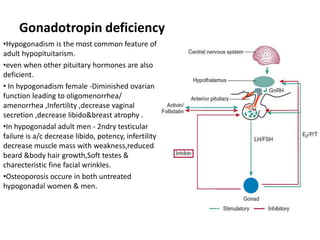
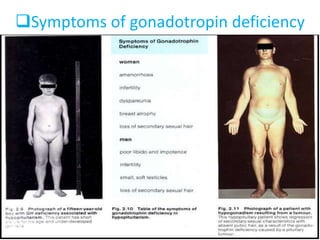
Gonadotropin deficiency
•Hypogonadism is the most common feature of
adult hypopituitarism.
•even when other pituitary hormones are also
deficient.
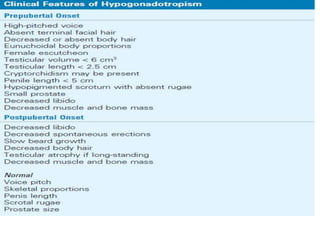
• In hypogonadism female -Diminished ovarian
function leading to oligomenorrhea/
amenorrhea ,Infertility ,decrease vaginal
secretion ,decrease libido&breast atrophy .
•In hypogonadal adult men - 2ndry testicular
failure is a/c decrease libido, potency, infertility,
decrease muscle mass with weakness,reduced
beard &body hair growth,Soft testes &
charecteristic fine facial wrinkles.
•Osteoporosis occure in both untreated
hypogonadal women & men.
Symptoms of gonadotropin deficiency
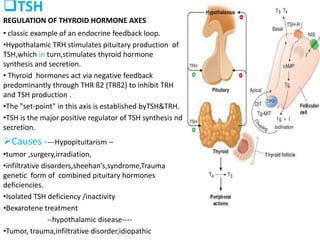
TSH
REGULATION OF THYROID HORMONE AXES
• classic example of an endocrine feedback loop.
•Hypothalamic TRH stimulates pituitary production of
TSH,which in turn,stimulates thyroid hormone
synthesis and secretion.
• Thyroid hormones act via negative feedback
predominantly through THR ß2 (TRß2) to inhibit TRH
and TSH production .
•The "set-point" in this axis is established byTSH&TRH.
•TSH is the major positive regulator of TSH synthesis nd
secretion.
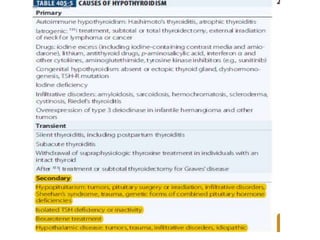
Causes ----Hypopituitarism –
•tumor ,surgery,irradiation,
•infiltrative disorders,sheehan’s,syndrome,Trauma
genetic form of combined pituitary hormones
deficiencies.
•Isolated TSH deficiency /inactivity
•Bexarotene treatment
--hypothalamic disease----
•Tumor, trauma,infiltrative disorder,idiopathic
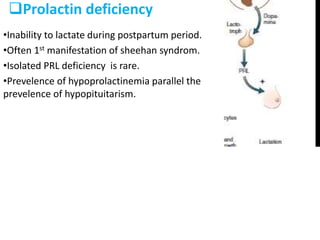
Prolactin deficiency
•Inability to lactate during postpartum period.
•Often 1st manifestation of sheehan syndrom.
•Isolated PRL deficiency is rare.
•Prevelence of hypoprolactinemia parallel the
prevelence of hypopituitarism.
THANK YOU
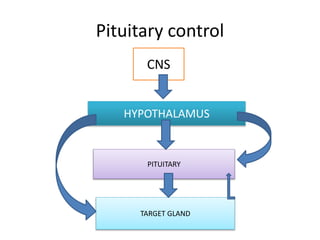
Pituitary control
HYPOTHALAMUS
CNS
PITUITARY
TARGET GLAND
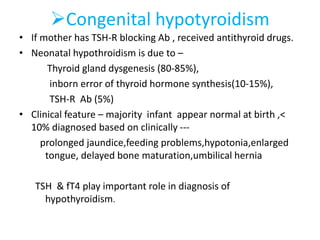
Congenital hypotyroidism
• If mother has TSH-R blocking Ab , received antithyroid drugs.
• Neonatal hypothroidism is due to –
Thyroid gland dysgenesis (80-85%),
inborn error of thyroid hormone synthesis(10-15%),
TSH-R Ab (5%)
• Clinical feature – majority infant appear normal at birth ,<
10% diagnosed based on clinically ---
prolonged jaundice,feeding problems,hypotonia,enlarged
tongue, delayed bone maturation,umbilical hernia
TSH & fT4 play important role in diagnosis of
hypothyroidism.
Hormone m/c clinical feature of deficiency
GH Child-growth retardation
Adult –decrease muscle bulk,tendency to hypoglycemia
PROLACTIN Lactation failure
GONADOTROPINS Child-delayed puberty
Female-oligomenorrhea,infertility ,breast atropy, loss of libido
Male –impotency,azoospermia,testicular atropy,loss of libido.
ACTH Weight loss ,hypotension,hypoglycemia,skin pigmentation,
Decrease skin pigmentation,nausea&vomiting
TSH Weight gain,cold intolerance ,fatigue,hair loss,constipation, dry
skin,hoarseness of voice,bradycardia ,fatigue
VASOPRESSIN Thirst ,polyuria
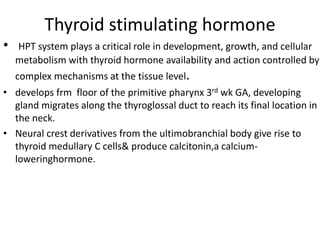
Thyroid stimulating hormone
• HPT system plays a critical role in development, growth, and cellular
metabolism with thyroid hormone availability and action controlled by
complex mechanisms at the tissue level.
• develops frm floor of the primitive pharynx 3rd wk GA, developing
gland migrates along the thyroglossal duct to reach its final location in
the neck.
• Neural crest derivatives from the ultimobranchial body give rise to
thyroid medullary C cells& produce calcitonin,a calcium-
loweringhormone.
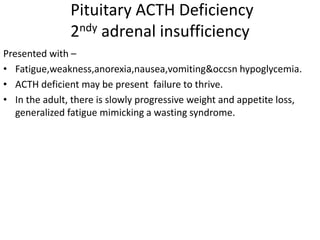
Pituitary ACTH Deficiency
2ndy adrenal insufficiency
Presented with –
• Fatigue,weakness,anorexia,nausea,vomiting&occsn hypoglycemia.
• ACTH deficient may be present failure to thrive.
• In the adult, there is slowly progressive weight and appetite loss,
generalized fatigue mimicking a wasting syndrome.
Hypopituitarism

Hypopituitarism

  • 1.
    HYPOPITUITARISM Dr.Aadhar harshana JR-2 GEN.MEDICINE IMS, BHU VARANASI ,INDIA
  • 2.
    Pituitary gland introduction •Situated within the bony sella tursica&overlain by dural diaphrgma sella,through stalk connects to median eminence of hypothalamus. • 600mg, pregnancy upto 1g. • Pituitary together with hypothalamus orchestrates the structural integrity & function of endocrine glands- Thyroid ,Adrenal gland,Gonads & target tissue-cartilage,breast. • Preservation of hypothalamo-pituitary unit is critical for integretion of anterior pituitary control of sexual function,fertility,linear &organ growth,lactation,stress responses,energy,appetite& temprature regulation. • Posterior pituitary gland-directly innervated by supraoptic hypophyseal & tuberohypophyseal nerve tract of posterior stalk.
  • 3.
    Anterior pituitary Cells typeHormone synthesis Acidophillic cells 1. Somatotrophs Growth hormone 2.Lactotrophs Prolactin Basophilic cells 1.Corticotrophs POMC,ACTH ,MSH ,endorphins,lipotropin 2.Thyrotrophs TSH 3.Gonadotrophs FSH,LH
  • 4.
  • 5.
  • 6.
  • 7.
    HYPOPITUITARISM DEFINATION •Failure ofone or more pituitary hormones to be produced or secreted from the ant. or post. Pituitary. •Failure can be the result of any step in production, stimulation, secretion, regulation.
  • 8.
    Hormone m/c clinicalfeature of deficiency GH Child-growth retardation Adult –decrease muscle bulk, tendency to hypoglycemia PROLACTIN Lactation failure GONADOTROPINS Child-delayed puberty Female-oligomenorrhea , infertility ,breast atropy , loss of libido Male –impotency,azoospermia , testicular atropy , loss of libido. ACTH Weight loss ,hypotension,hypoglycemia,skin pigmentation, Decrease skin pigmentation,nausea&vomiting TSH Weight gain,cold intolerance ,fatigue,hair loss,constipation, dry skin,hoarseness of voice,bradycardia ,fatigue VASOPRESSIN Thirst ,polyuria  Clinical manifestation of hypopituitarism- depend on which hormones are lost
  • 9.
  • 11.
    Development & geneticcause of hypopituitarism  PITUITARY DYSPLASIA- • Congenital – – May due to aplastic /hypoplastic or ectopic gland development, because pituitary development followed midline cell migration from nasopharangeal Rathke’s pouch. • Aquired – occure in newborn baby -birth trauma (cranial hemorrhage ,asphyxia,&breech delivery).
  • 12.
    Septo-optic dysplasia Hypothalamic dysfunction& hypopituitarism –due to dysgenesis of the septum pellucid or corpus callosum Affected children have mutation in the HESX1gene Children exhibit variable feature of – •Cleft palat •Syndactyly •Ear deformity •Optic atropy •Micropenis •Anosmia Pituitary dysfunction- •Diabetes insipidus •GH deficiency & short stature •Occasionally TSH deficiency
  • 13.
  • 14.
  • 15.
    Clinical feature ofkallman syndrome
  • 16.
    Laurence –Moon-Bardet-Biedl syndrome •ARdisorder •Charecterised by mental retardation,renal abnormality,,obesity,hexadactyly/bradactyly, syndactyly. •GnRH deficiency occure in 75% of male & half of affected females. •Retinal degeneration begin in early childhood,most patient are blind by age.
  • 17.
    Pituitary Apoplexy •Acute intrapituitaryhemorrhagic vascular events can cause substantial damaged to the pituitary & surrounding sellar structure. •May occure spontaneously in preexiting pit adenoma, postpartum (sheehan syndrome) ,in a/c diabetes,hypertension,sickle cell anemia ,acute shock. It’s an endocrine emergency may be presented with – •Severe hypoglycemia •Hypotension , shock •CNS hemorhhage •Death Acute symptoms – •Variable onset of headache, nausea & vomiting, •Meningeal irritation ,vertigo ,visual defect •Altered sensorium
  • 18.
    Sheehan syndrome • Infarctionof pituitary after substantial blood loss during childbirth. • No correletion b/w severity of hemorrhage & symptoms. • Severe recognised months to years postpartum period— - lethargy,anorexia,weight loss,unable to breast feeding . • 50% permanent amenorrhea,rest had scanty amenorrhea, mostly lactation was poor to absent
  • 19.
    Lymphophysitis hypophysitis- • Thishappened most often in postpartum women. • It usually present with hyperpractinemia & MRI evidence of pituitary mass (adenoma). • Pituitary failure causes by diffuse lymphocytic infiltration. • Isolated pituitary hormone deficiency s/o selective autoimmune process target to specific cell types. • Clinically – progressive mass effect with headache & visual disturbance.
  • 20.
  • 21.
    GROWTH HORMONE • atnight triggered by the onset of slow-wave sleep (70% 1st episode of slow-wave sleep cycle). • The ultradian rhythm of GH secretion is generated by coordinated interaction of many factors. “Jet lag” transiently increases GH peak amplitude, resulting in a transient increase of 24-hour GH secretion. • Exercise and physical stress, including trauma with hypovolemic shock and sepsis, increase GH levels. • Emotional deprivation and endogenous depression suppresses GH secretion. • Nutrition plays a major role in GH regulation. Malnutrition increases GH secretion, whereas obesity decreases GH secretion.
  • 23.
    Growth hormone Deficiency childrenAdult Short stature Reduced lean body mass Micropenis Increase fat mass with selective deposition of intra- abdominal visceral fat Increase fat Increased waist-to-hip ratio High pitch voice Hyperlipidemia Propensity to hypoglycemia Left venticular dysfunction Hypertension Increase plasma fibrinogen level BMD decrease Impaired quality of life Reduced exercise capacity Poorconcentration , social isolation.
  • 25.
    Adrenocorticotropic hormone ACTH •HPA axis is the major system subserving stress and survival. • POMC precursor of ACTH, which acts on the adrenal glands to induce synthesis and secretion of adrenal steroids. • aimed at providing adequate amounts of glucocorticoids, which exert vital pleotrophic effects on energy supply, fuel metabolism, immunity, and cardiovascular function. • Earliest detectable human fetal pituitary cell 8th wk GA.  ACTH DEFICIENCY – 2ndy adrenal deficiency occure as a result of pituitary deficiency, chatrecterised by--- hypocortisonism- • Fatigue ,malaise • Weakness,weight loss • Anorexia • Nausea & vomiting • Occasional hypoglycemia,hyponatremia,hyperkalemia.
  • 26.
    Hypogonadotropin -hypopituitarism  Congenitalcauses include- gene mutations governing the processes of development and migration of GnRH neurons, the control of GnRH secretion, the development of the gonadotroph, the regulation of LH and FSH secretion.  AcquiredFunctional causes are frequently encountered & include- • stress, malnutrition, chronic illness, • depression, excessive exercise, and low body weight. • Several centrally acting drugs including- opiates, glucocorticoids,sex steroids, GnRH agonists and antagonists, tranquilizers,antidepressants, and antipsychotic medications suppress gonadotropin secretion, • either directly or indirectly via induction of hyperprolactinemia.  Organic causes include- • malignant disease, developmental disorders, tumors, infiltrative disease, trauma, and hypothalamic or pituitary. • damage from surgery or radiotherapy.
  • 27.
    Gonadotropin deficiency •Hypogonadism isthe most common feature of adult hypopituitarism. •even when other pituitary hormones are also deficient. • In hypogonadism female -Diminished ovarian function leading to oligomenorrhea/ amenorrhea ,Infertility ,decrease vaginal secretion ,decrease libido&breast atrophy . •In hypogonadal adult men - 2ndry testicular failure is a/c decrease libido, potency, infertility, decrease muscle mass with weakness,reduced beard &body hair growth,Soft testes & charecteristic fine facial wrinkles. •Osteoporosis occure in both untreated hypogonadal women & men.
  • 28.
  • 30.
    TSH REGULATION OF THYROIDHORMONE AXES • classic example of an endocrine feedback loop. •Hypothalamic TRH stimulates pituitary production of TSH,which in turn,stimulates thyroid hormone synthesis and secretion. • Thyroid hormones act via negative feedback predominantly through THR ß2 (TRß2) to inhibit TRH and TSH production . •The "set-point" in this axis is established byTSH&TRH. •TSH is the major positive regulator of TSH synthesis nd secretion. Causes ----Hypopituitarism – •tumor ,surgery,irradiation, •infiltrative disorders,sheehan’s,syndrome,Trauma genetic form of combined pituitary hormones deficiencies. •Isolated TSH deficiency /inactivity •Bexarotene treatment --hypothalamic disease---- •Tumor, trauma,infiltrative disorder,idiopathic
  • 32.
    Prolactin deficiency •Inability tolactate during postpartum period. •Often 1st manifestation of sheehan syndrom. •Isolated PRL deficiency is rare. •Prevelence of hypoprolactinemia parallel the prevelence of hypopituitarism.
  • 33.
  • 36.
  • 38.
    Congenital hypotyroidism • Ifmother has TSH-R blocking Ab , received antithyroid drugs. • Neonatal hypothroidism is due to – Thyroid gland dysgenesis (80-85%), inborn error of thyroid hormone synthesis(10-15%), TSH-R Ab (5%) • Clinical feature – majority infant appear normal at birth ,< 10% diagnosed based on clinically --- prolonged jaundice,feeding problems,hypotonia,enlarged tongue, delayed bone maturation,umbilical hernia TSH & fT4 play important role in diagnosis of hypothyroidism.
  • 39.
    Hormone m/c clinicalfeature of deficiency GH Child-growth retardation Adult –decrease muscle bulk,tendency to hypoglycemia PROLACTIN Lactation failure GONADOTROPINS Child-delayed puberty Female-oligomenorrhea,infertility ,breast atropy, loss of libido Male –impotency,azoospermia,testicular atropy,loss of libido. ACTH Weight loss ,hypotension,hypoglycemia,skin pigmentation, Decrease skin pigmentation,nausea&vomiting TSH Weight gain,cold intolerance ,fatigue,hair loss,constipation, dry skin,hoarseness of voice,bradycardia ,fatigue VASOPRESSIN Thirst ,polyuria
  • 41.
    Thyroid stimulating hormone •HPT system plays a critical role in development, growth, and cellular metabolism with thyroid hormone availability and action controlled by complex mechanisms at the tissue level. • develops frm floor of the primitive pharynx 3rd wk GA, developing gland migrates along the thyroglossal duct to reach its final location in the neck. • Neural crest derivatives from the ultimobranchial body give rise to thyroid medullary C cells& produce calcitonin,a calcium- loweringhormone.
  • 43.
    Pituitary ACTH Deficiency 2ndyadrenal insufficiency Presented with – • Fatigue,weakness,anorexia,nausea,vomiting&occsn hypoglycemia. • ACTH deficient may be present failure to thrive. • In the adult, there is slowly progressive weight and appetite loss, generalized fatigue mimicking a wasting syndrome.

Editor's Notes

  • #11 HARRISON’S PRINCIPLE OF INTERNAL MEDICINE 19th EDITION