End of the Cold WarFall of the Soviet Union
DestalinizationAfter Stalin’s death in 1953 many individuals who had been afraid to speak out against him began to speak openly.Nikita Khrushchev, leader of the Soviet Union publicly denounced Stalin.This began an era of more openness in the Soviet Union.
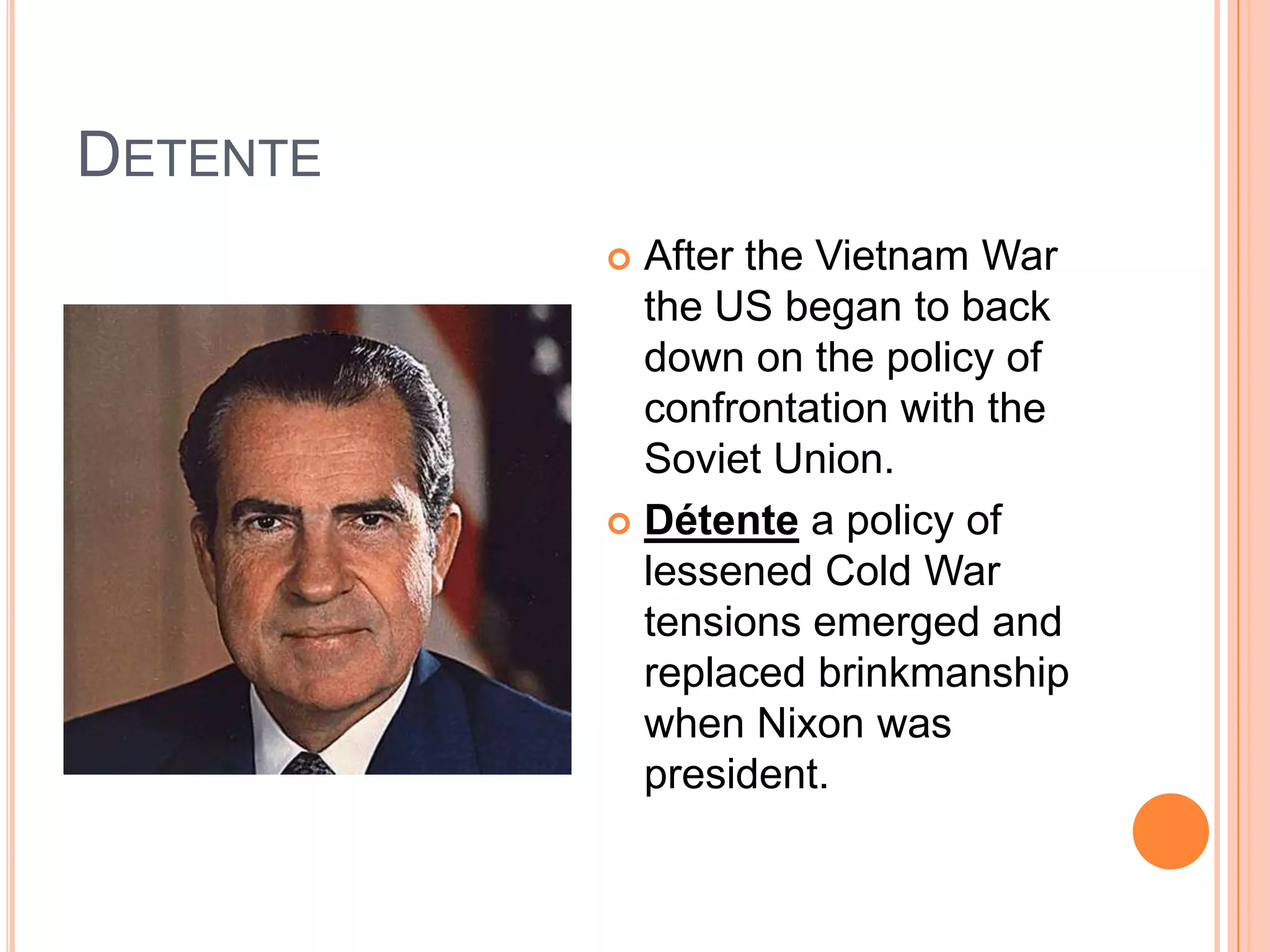
DetenteAfter the Vietnam War the US began to back down on the policy of confrontation with the Soviet Union.Détente a policy of lessened Cold War tensions emerged and replaced brinkmanship when Nixon was president.
SALTIn February 1972 Nixon became the first American president to visit the Soviet Union.Nixon met with Leonid Brezhnev the Soviet Premier and began a series of meetings called the Strategic Arms Limitation Talks (SALT).These talks set limits on the amounts of weapons each country could have.
Détente cools downIn 1981 Ronald Reagan became president and he took a strong stand against communism.He refused to continue talks, and in 1983 began a program called the Strategic Defense Initiative (SDI) to protect America from enemy missiles.The program was known as Star Wars.  It was never put into effect, but made things tense between the US and Soviets.
Strategic defense initiative (star wars)
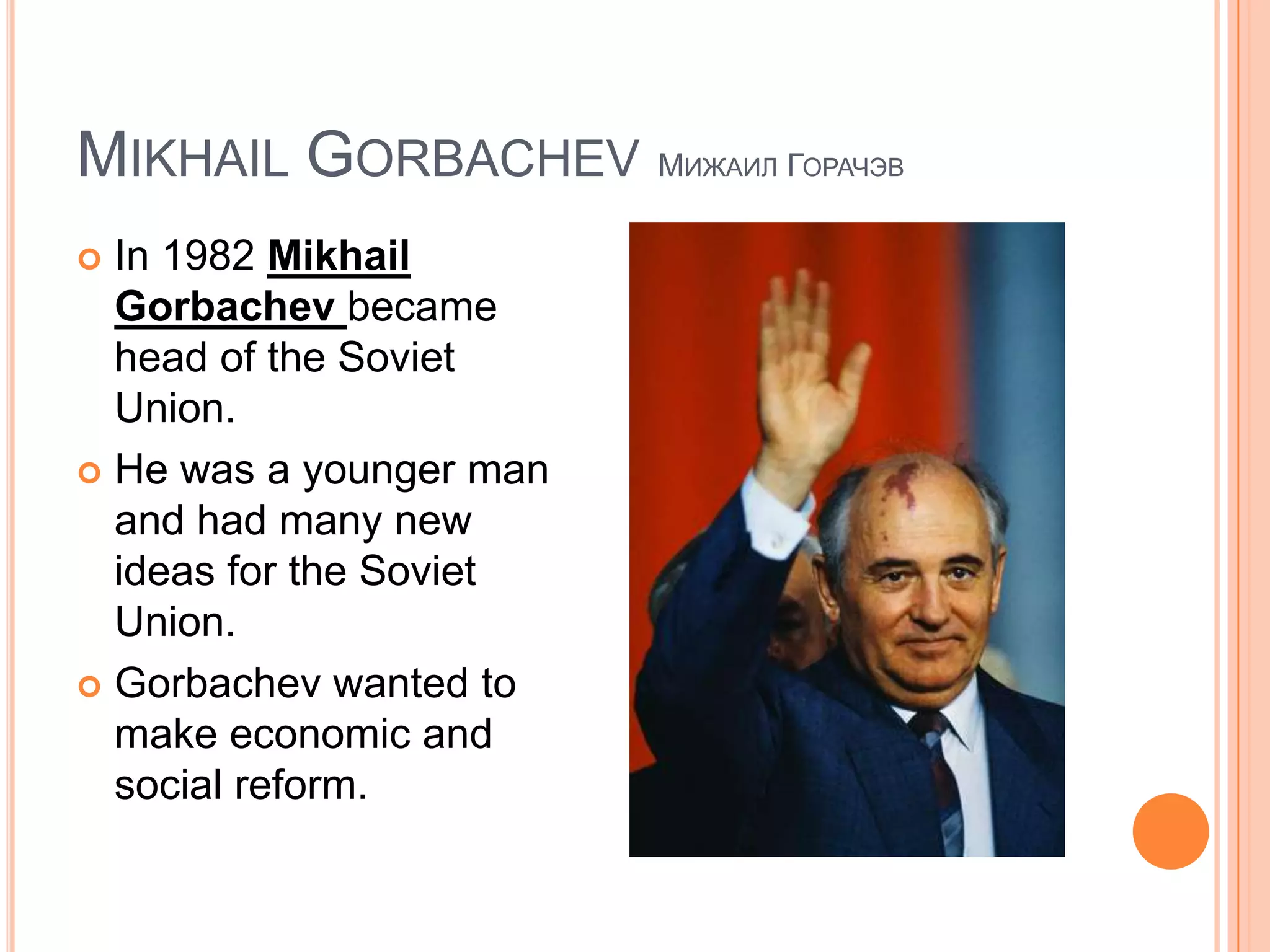
Mikhail Gorbachev МижаилГорачэвIn 1982 Mikhail Gorbachevbecame head of the Soviet Union.He was a younger man and had many new ideas for the Soviet Union.Gorbachev wanted to make economic and social reform.
GlasnostIn order to get new ideas to help the economy in 1985 Gorbachev announced glasnost or openness.He encouraged citizens to discuss issues.He released political prisoners and lifted censorship.  People could now openly criticize the government.
PerestroikaGorbachev realized the Soviet economy was not very effective.In 1985 he introduced the idea ofperestroika– economic restructuring.He began making changes to communism such as allowing people to own property, small businesses and have greater authority.
Mr. Gorbachev tear down this wallhttp://www.youtube.com/watch?v=YtYdjbpBk6A&feature=related
East Germany FallsIn response to the openness in the Soviet Union many satellite nations began stretching their boundaries.East Germans began demanding permission to travel outside of the Berlin Wall.The leader of East Germany decided the only way to maintain control was to allow this.The Berlin Wall stood from 1961 – 1989.  Berliners from the east and west celebrated.By the end of 1989 communism in East Germany ended.
Fall of the Berlin Wallhttp://www.youtube.com/watch?v=s5JdY8ENfVg&feature=related
Germany is ReunifiedGermans began to speak of reunification – joining both east and west.Many people all over the world feared that Germany would try to dominate Europe again.West German chancellor assured this won’t happen and that Germany was committed to democracy and human rights.Germany officially reunited on October 3, 1990.
Boris Yeltsin БорисЙелтсинDespite Gorbachev’s movements towards openness there were some actions he took that the Soviets didn’t like.As Gorbachev’s popularity was declining more and more people began to support Boris Yeltsin.In 1991 the people voted for Boris Yeltsin by a large majority.In August 1991 Gorbachev was detained at his home.  Gorbachev supporters brought in tanks and soldiers to break up the coup, but it the people refused to back down.Yeltsin supported the people.  When the state ordered the soldiers to attack Yeltsin and the people they refused.  The military withdrew and Gorbachev stepped down.
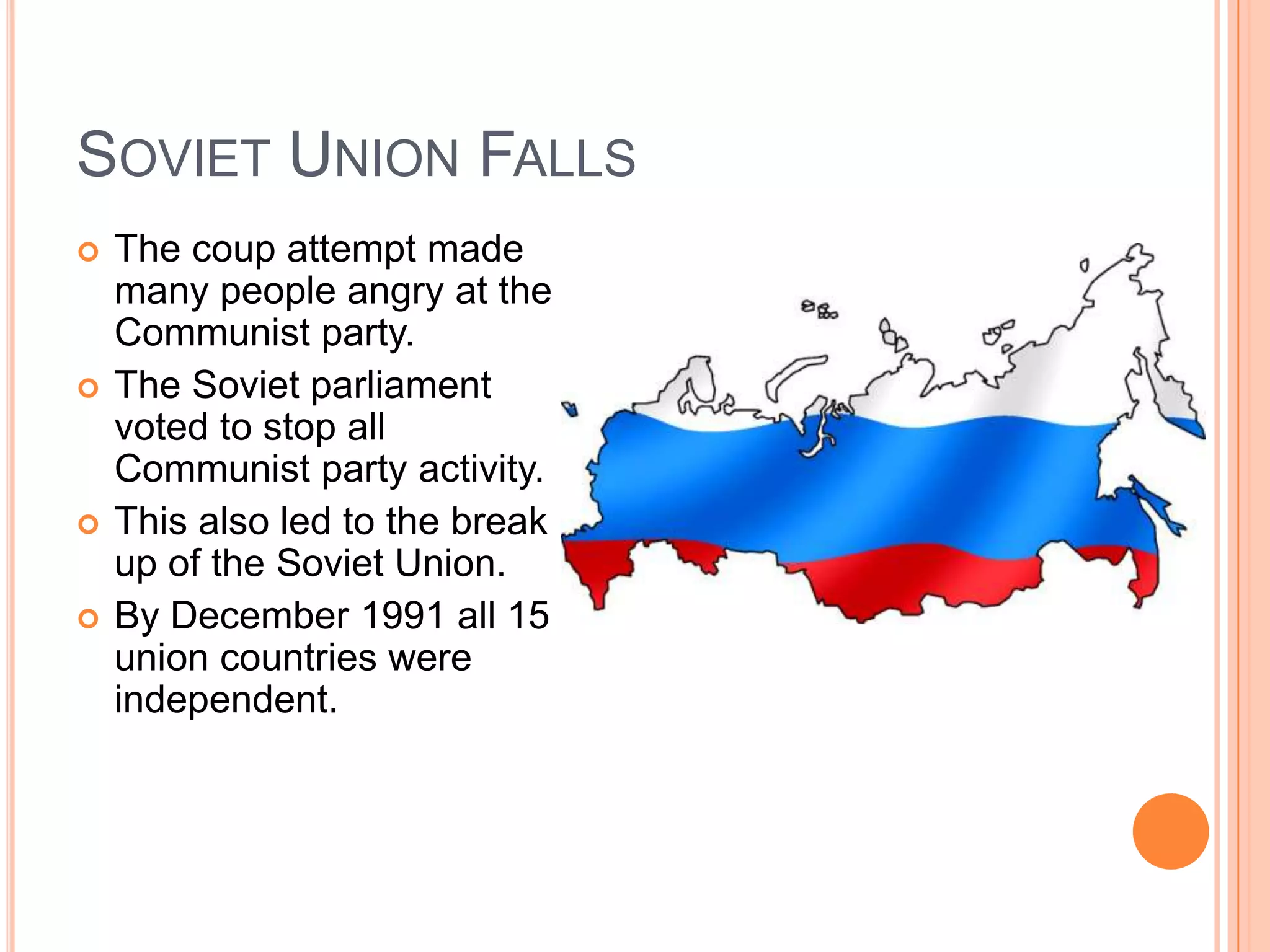
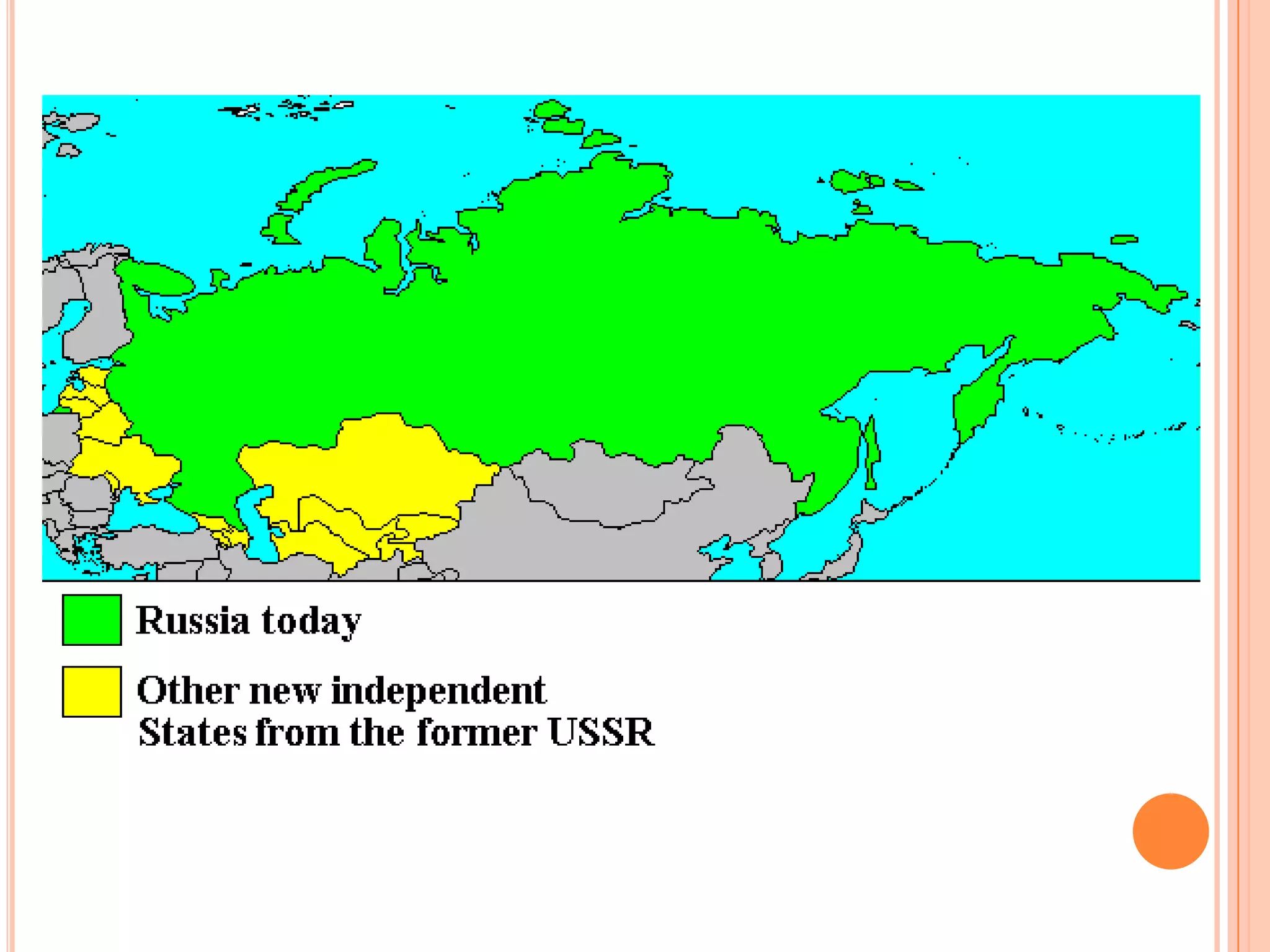
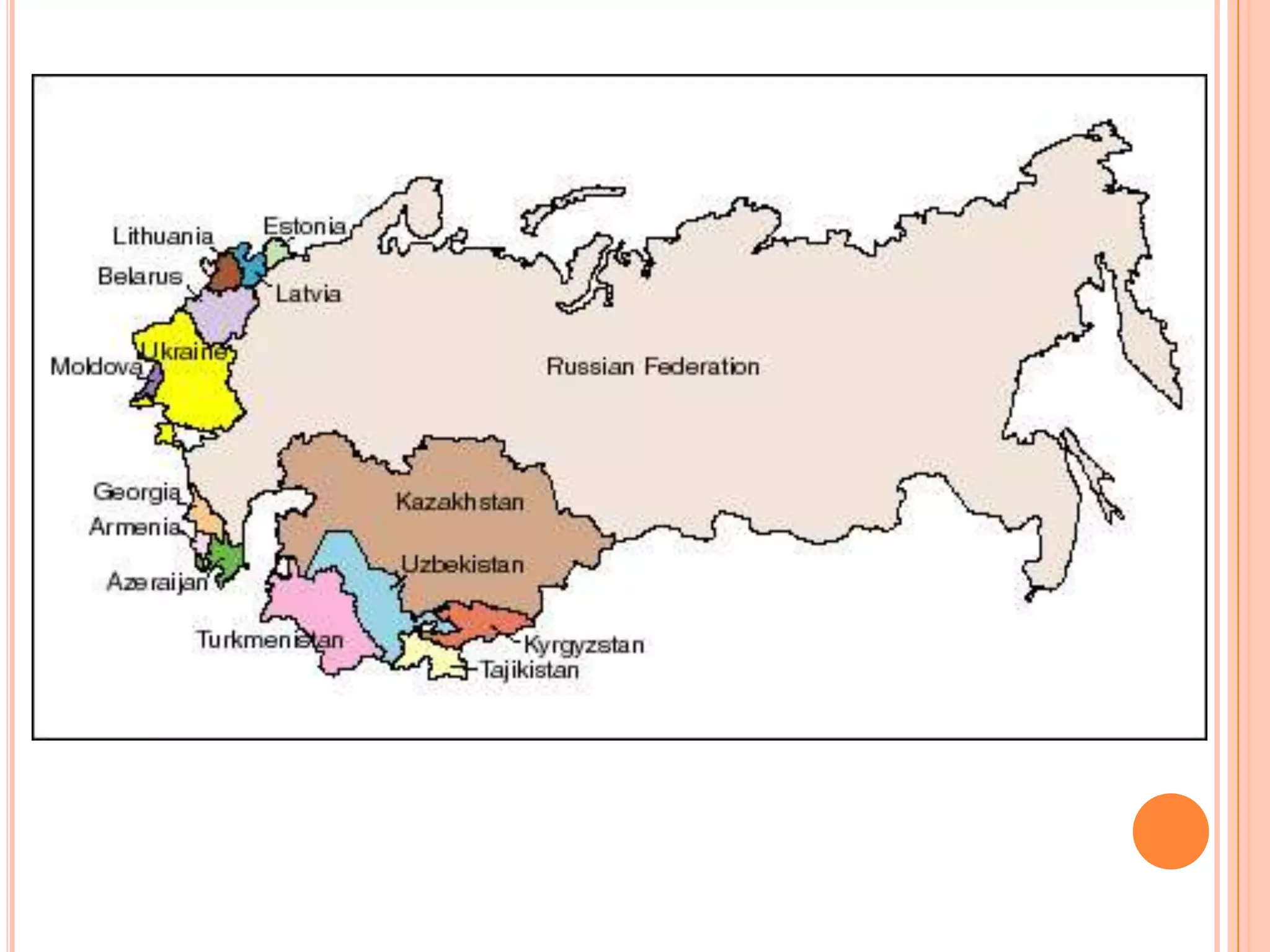
Soviet Union FallsThe coup attempt made many people angry at the Communist party.The Soviet parliament voted to stop all Communist party activity.This also led to the break up of the Soviet Union.By December 1991 all 15 union countries were independent.
End of the cold war
End of the cold war

End of the cold war

  • 1.
    End of theCold WarFall of the Soviet Union
  • 2.
    DestalinizationAfter Stalin’s deathin 1953 many individuals who had been afraid to speak out against him began to speak openly.Nikita Khrushchev, leader of the Soviet Union publicly denounced Stalin.This began an era of more openness in the Soviet Union.
  • 3.
    DetenteAfter the VietnamWar the US began to back down on the policy of confrontation with the Soviet Union.Détente a policy of lessened Cold War tensions emerged and replaced brinkmanship when Nixon was president.
  • 4.
    SALTIn February 1972Nixon became the first American president to visit the Soviet Union.Nixon met with Leonid Brezhnev the Soviet Premier and began a series of meetings called the Strategic Arms Limitation Talks (SALT).These talks set limits on the amounts of weapons each country could have.
  • 5.
    Détente cools downIn1981 Ronald Reagan became president and he took a strong stand against communism.He refused to continue talks, and in 1983 began a program called the Strategic Defense Initiative (SDI) to protect America from enemy missiles.The program was known as Star Wars. It was never put into effect, but made things tense between the US and Soviets.
  • 6.
  • 7.
    Mikhail Gorbachev МижаилГорачэвIn1982 Mikhail Gorbachevbecame head of the Soviet Union.He was a younger man and had many new ideas for the Soviet Union.Gorbachev wanted to make economic and social reform.
  • 8.
    GlasnostIn order toget new ideas to help the economy in 1985 Gorbachev announced glasnost or openness.He encouraged citizens to discuss issues.He released political prisoners and lifted censorship. People could now openly criticize the government.
  • 9.
    PerestroikaGorbachev realized theSoviet economy was not very effective.In 1985 he introduced the idea ofperestroika– economic restructuring.He began making changes to communism such as allowing people to own property, small businesses and have greater authority.
  • 10.
    Mr. Gorbachev teardown this wallhttp://www.youtube.com/watch?v=YtYdjbpBk6A&feature=related
  • 11.
    East Germany FallsInresponse to the openness in the Soviet Union many satellite nations began stretching their boundaries.East Germans began demanding permission to travel outside of the Berlin Wall.The leader of East Germany decided the only way to maintain control was to allow this.The Berlin Wall stood from 1961 – 1989. Berliners from the east and west celebrated.By the end of 1989 communism in East Germany ended.
  • 12.
    Fall of theBerlin Wallhttp://www.youtube.com/watch?v=s5JdY8ENfVg&feature=related
  • 13.
    Germany is ReunifiedGermansbegan to speak of reunification – joining both east and west.Many people all over the world feared that Germany would try to dominate Europe again.West German chancellor assured this won’t happen and that Germany was committed to democracy and human rights.Germany officially reunited on October 3, 1990.
  • 14.
    Boris Yeltsin БорисЙелтсинDespiteGorbachev’s movements towards openness there were some actions he took that the Soviets didn’t like.As Gorbachev’s popularity was declining more and more people began to support Boris Yeltsin.In 1991 the people voted for Boris Yeltsin by a large majority.In August 1991 Gorbachev was detained at his home. Gorbachev supporters brought in tanks and soldiers to break up the coup, but it the people refused to back down.Yeltsin supported the people. When the state ordered the soldiers to attack Yeltsin and the people they refused. The military withdrew and Gorbachev stepped down.
  • 15.
    Soviet Union FallsThecoup attempt made many people angry at the Communist party.The Soviet parliament voted to stop all Communist party activity.This also led to the break up of the Soviet Union.By December 1991 all 15 union countries were independent.