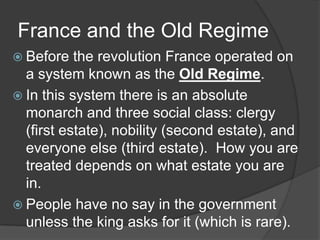
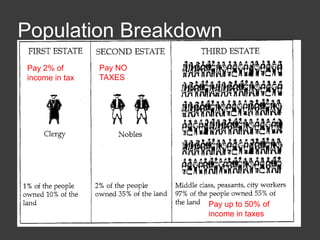
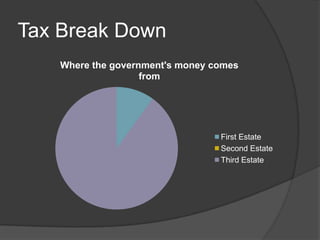
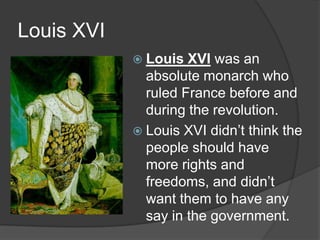
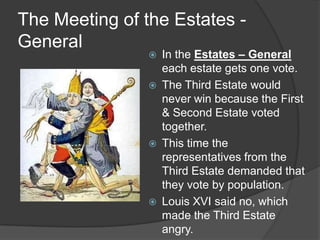
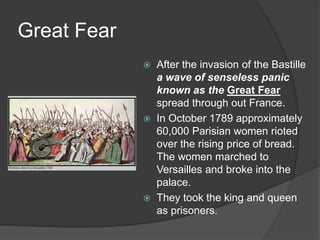
Under the Old Regime system in France, there were three estates - clergy, nobility, and commoners. The king had absolute power and the estates system meant commoners (Third Estate) faced heavy taxes and had no political rights. As Enlightenment ideas spread and economic troubles grew, resentment toward the monarchy and inequality increased. The meeting of the Estates-General in 1789 failed to address these issues, fueling the revolution as the Third Estate formed the National Assembly and commoners stormed the Bastille prison in Paris, marking the start of the French Revolution.






![[Pearson IAL HISTORY]France in revolution part 2.pptx](https://cdn.slidesharecdn.com/ss_thumbnails/week2-260130090349-b5745d65-thumbnail.jpg?width=640&height=640&fit=bounds)


