{
The Berlin Blockade
Why did it occur and
how was it a crisis?
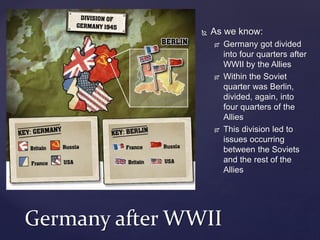
 As we know:
 Germany got divided
into four quarters after
WWII by the Allies
 Within the Soviet
quarter was Berlin,
divided, again, into
four quarters of the
Allies
 This division led to
issues occurring
between the Soviets
and the rest of the
Allies
Germany after WWII
 How did this affect
Germany?
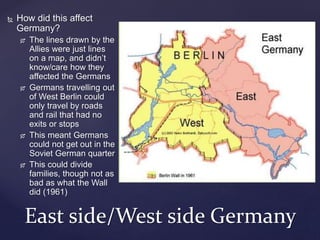
 The lines drawn by the
Allies were just lines
on a map, and didn’t
know/care how they
affected the Germans
 Germans travelling out
of West Berlin could
only travel by roads
and rail that had no
exits or stops
 This meant Germans
could not get out in the
Soviet German quarter
 This could divide
families, though not as
bad as what the Wall
did (1961)
East side/West side Germany
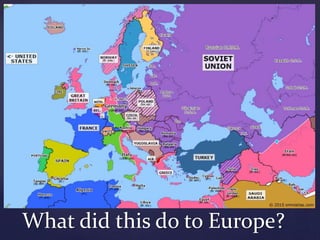
What did this do to Europe?
 By 1948:
 There had been conferences to try and decide how Germany was
going to be reunified and governed; noticeably to do with policies
on running the occupied zones and keep them ‘equal’/fair
 Russia had not committed to these conferences, and the Western
Allies were starting to want to ‘tie up’ the German issue
 January 1st, 1947, the US and UK zones had joined to become
one (Bizonia); caused tension to rise between East and West
 Truman Doctrine and Marshall Plan only added to the tensions
 Seen as an act against communist control, etc.
 The UK, USA and France were drawing up plans of a unified
Western Germany
 This was secret, and when the USSR found out they withdrew from
further discussions about reunification and policy making.
How does this link to the Blockade
and Airlift of 1948/1949?
 How to make the USSR really annoyed in (June) 1948:
 Introduce a new currency to West Germany (and, therefore,
West Berlin), called the new Deutschemark
 And don’t tell them you’re doing this
 Retaliation:
 Introduce your own currency into your own occupied area,
including East Berlin, called the Ostmark
 Block off all major road, rail and canal links into West Berlin,
starving the area of electricity, and essential food and coal
supplies
 Thereby, create what became known as the Berlin Blockade
Tensions mount even further
 It was agreed by all: there weren’t enough troops to start a
forceful lift of the blockade – the Red Army far outweighed the
West Allied troops remaining in Germany
 West Berlin became a symbol of democratic, capitalist ideas
and freedoms, so should be retained by the West – no giving
in to the Soviets
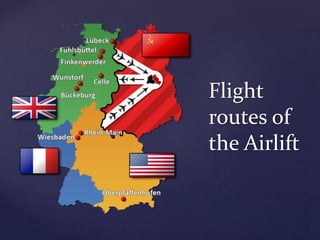
 Therefore, start an airlift of supplies to West Berlin
 If the Soviets opposed the airlift by force (shot down planes
flying in on the routes allocated by the Soviets) then the onus of
any confrontation would be on the aggressor (the USSR)
What to do…what to do…?
Flight
routes of
the Airlift
 At the beginning:
 The airlift proved difficult in the beginning (26th June, 1948);
diplomacy seemed a better option
 However, the US stationed B-29 bombers (capable of dropping
nuclear weapons) in the zone…just to be safe
 The Soviet solution:
 Remove the Deutschemark out of West Berlin; refused by the
Allies
 Consequence: September, 1948: the Socialist Unity Party of
Germany (SED), the communist party of Germany, marched on
the Berlin City Council, forcing it to adjourn
 Response: 300 000 West Berliners gathered at the Reichstag
(government building) to demonstrate opposition of Soviet
domination – the Allies could not back out; the West Berliners
needed their help
Peaceful Resolution?
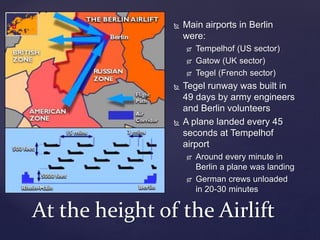
 Main airports in Berlin
were:
 Tempelhof (US sector)
 Gatow (UK sector)
 Tegel (French sector)
 Tegel runway was built in
49 days by army engineers
and Berlin volunteers
 A plane landed every 45
seconds at Tempelhof
airport
 Around every minute in
Berlin a plane was landing
 German crews unloaded
in 20-30 minutes
At the height of the Airlift
 The Blockade was lifted on 11 May, 1949
 The USSR realised they couldn’t starve West Berlin into
submission
 The Allies had proven they could sustain the blockade
indefinitely
 The Eastern counter-blockade by the Allies was proving difficult
for the Soviets to alleviate
 They weren’t going to start a confrontation
 Due to their side being blockaded, the USSR were worried
about political upheaval in East Berlin
 There had been no diplomatic discussions that resolved the
issue
In the end…
 Consequences:
 The Berlin Crisis (1948-1949) solidified the two opposing sides
in Europe
 NATO (North Atlantic Treaty Organisation) was created just
before the end of the blockade
 The state of West Germany was created two weeks after the
end of the blockade, followed shortly by the creation of East
Germany
 It was virtually the only place on Earth where US and USSR
troops were facing each other, literally
 Berlin became a symbol of democracy and freedom in the fight
against Communism
Wrap Up…

The Berlin Blockade

  • 1.
    { The Berlin Blockade Whydid it occur and how was it a crisis?
  • 2.
     As weknow:  Germany got divided into four quarters after WWII by the Allies  Within the Soviet quarter was Berlin, divided, again, into four quarters of the Allies  This division led to issues occurring between the Soviets and the rest of the Allies Germany after WWII
  • 3.
     How didthis affect Germany?  The lines drawn by the Allies were just lines on a map, and didn’t know/care how they affected the Germans  Germans travelling out of West Berlin could only travel by roads and rail that had no exits or stops  This meant Germans could not get out in the Soviet German quarter  This could divide families, though not as bad as what the Wall did (1961) East side/West side Germany
  • 4.
    What did thisdo to Europe?
  • 5.
     By 1948: There had been conferences to try and decide how Germany was going to be reunified and governed; noticeably to do with policies on running the occupied zones and keep them ‘equal’/fair  Russia had not committed to these conferences, and the Western Allies were starting to want to ‘tie up’ the German issue  January 1st, 1947, the US and UK zones had joined to become one (Bizonia); caused tension to rise between East and West  Truman Doctrine and Marshall Plan only added to the tensions  Seen as an act against communist control, etc.  The UK, USA and France were drawing up plans of a unified Western Germany  This was secret, and when the USSR found out they withdrew from further discussions about reunification and policy making. How does this link to the Blockade and Airlift of 1948/1949?
  • 6.
     How tomake the USSR really annoyed in (June) 1948:  Introduce a new currency to West Germany (and, therefore, West Berlin), called the new Deutschemark  And don’t tell them you’re doing this  Retaliation:  Introduce your own currency into your own occupied area, including East Berlin, called the Ostmark  Block off all major road, rail and canal links into West Berlin, starving the area of electricity, and essential food and coal supplies  Thereby, create what became known as the Berlin Blockade Tensions mount even further
  • 7.
     It wasagreed by all: there weren’t enough troops to start a forceful lift of the blockade – the Red Army far outweighed the West Allied troops remaining in Germany  West Berlin became a symbol of democratic, capitalist ideas and freedoms, so should be retained by the West – no giving in to the Soviets  Therefore, start an airlift of supplies to West Berlin  If the Soviets opposed the airlift by force (shot down planes flying in on the routes allocated by the Soviets) then the onus of any confrontation would be on the aggressor (the USSR) What to do…what to do…?
  • 8.
  • 9.
     At thebeginning:  The airlift proved difficult in the beginning (26th June, 1948); diplomacy seemed a better option  However, the US stationed B-29 bombers (capable of dropping nuclear weapons) in the zone…just to be safe  The Soviet solution:  Remove the Deutschemark out of West Berlin; refused by the Allies  Consequence: September, 1948: the Socialist Unity Party of Germany (SED), the communist party of Germany, marched on the Berlin City Council, forcing it to adjourn  Response: 300 000 West Berliners gathered at the Reichstag (government building) to demonstrate opposition of Soviet domination – the Allies could not back out; the West Berliners needed their help Peaceful Resolution?
  • 10.
     Main airportsin Berlin were:  Tempelhof (US sector)  Gatow (UK sector)  Tegel (French sector)  Tegel runway was built in 49 days by army engineers and Berlin volunteers  A plane landed every 45 seconds at Tempelhof airport  Around every minute in Berlin a plane was landing  German crews unloaded in 20-30 minutes At the height of the Airlift
  • 11.
     The Blockadewas lifted on 11 May, 1949  The USSR realised they couldn’t starve West Berlin into submission  The Allies had proven they could sustain the blockade indefinitely  The Eastern counter-blockade by the Allies was proving difficult for the Soviets to alleviate  They weren’t going to start a confrontation  Due to their side being blockaded, the USSR were worried about political upheaval in East Berlin  There had been no diplomatic discussions that resolved the issue In the end…
  • 12.
     Consequences:  TheBerlin Crisis (1948-1949) solidified the two opposing sides in Europe  NATO (North Atlantic Treaty Organisation) was created just before the end of the blockade  The state of West Germany was created two weeks after the end of the blockade, followed shortly by the creation of East Germany  It was virtually the only place on Earth where US and USSR troops were facing each other, literally  Berlin became a symbol of democracy and freedom in the fight against Communism Wrap Up…