NEW DEMOCRACIES
AND DEPRESSION
THE WORLD AFTER WORLD WAR I
Only the United States and Japan emerged
from the war in a better financial position
than they had been in before.
Most European countries (even the Allies)
were suffering from economic problems.
Many European countries began to lose their
standing as world powers and were trying to
rebuild their land, economies, and
government.
1919 – 1939 was a time of great uncertainty
for the world.
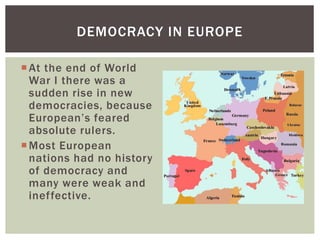
DEMOCRACY IN EUROPE
 At the end of World
War I there was a
sudden rise in new
democracies, because
European’s feared
absolute rulers.
 Most European
nations had no history
of democracy and
many were weak and
ineffective.
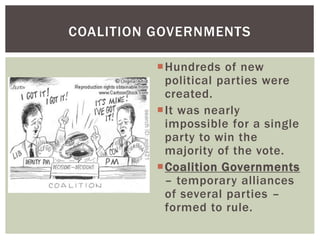
COALITION GOVERNMENTS
Hundreds of new
political parties were
created.
It was nearly
impossible for a single
party to win the
majority of the vote.
Coalition Governments
– temporary alliances
of several parties –
formed to rule.
QUESTIONS TO CONSIDER

Do you think coalition governments
are an effective form of
government?
How do the people feel about
coalition governments (how would
you feel about a coalition
government running your country)?
NEW GOVERNMENTS IN EUROPE
Russia/USSR – went through two revolutions
and became communist
Britain – a new coalition government came to
power and was able to preserve democracy
and help stabilize the economy
France - economic instability led to political
instability and France went through multiple
coalition governments
Denmark, Norway, Sweden – used a form of
socialism in combination with democracy to
keep their economy going
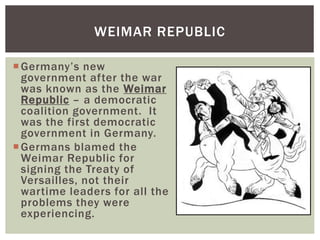
WEIMAR REPUBLIC
 Germany’s new
government after the war
was known as the Weimar
Republic – a democratic
coalition government. It
was the first democratic
government in Germany.
 Germans blamed the
Weimar Republic for
signing the Treaty of
Versailles, not their
wartime leaders for all the
problems they were
experiencing.
DEPRESSION AND INFLATION
After World War I many countries suffered from
economic depression and inflation. Germany was
hit the hardest.
Depression – a long term decline in the economy
during which there is a lower level of production,
and a higher level of unemployment and failing
businesses.
Inflation – a rise in the price of goods while your
income (or the amount of money you have)
remains the same, resulting in people feeling as
though they are poor and money having less
value.

New democracies and depression

  • 1.
  • 2.
    THE WORLD AFTERWORLD WAR I Only the United States and Japan emerged from the war in a better financial position than they had been in before. Most European countries (even the Allies) were suffering from economic problems. Many European countries began to lose their standing as world powers and were trying to rebuild their land, economies, and government. 1919 – 1939 was a time of great uncertainty for the world.
  • 3.
    DEMOCRACY IN EUROPE At the end of World War I there was a sudden rise in new democracies, because European’s feared absolute rulers.  Most European nations had no history of democracy and many were weak and ineffective.
  • 4.
    COALITION GOVERNMENTS Hundreds ofnew political parties were created. It was nearly impossible for a single party to win the majority of the vote. Coalition Governments – temporary alliances of several parties – formed to rule.
  • 5.
    QUESTIONS TO CONSIDER Doyou think coalition governments are an effective form of government? How do the people feel about coalition governments (how would you feel about a coalition government running your country)?
  • 6.
    NEW GOVERNMENTS INEUROPE Russia/USSR – went through two revolutions and became communist Britain – a new coalition government came to power and was able to preserve democracy and help stabilize the economy France - economic instability led to political instability and France went through multiple coalition governments Denmark, Norway, Sweden – used a form of socialism in combination with democracy to keep their economy going
  • 7.
    WEIMAR REPUBLIC  Germany’snew government after the war was known as the Weimar Republic – a democratic coalition government. It was the first democratic government in Germany.  Germans blamed the Weimar Republic for signing the Treaty of Versailles, not their wartime leaders for all the problems they were experiencing.
  • 8.
    DEPRESSION AND INFLATION AfterWorld War I many countries suffered from economic depression and inflation. Germany was hit the hardest. Depression – a long term decline in the economy during which there is a lower level of production, and a higher level of unemployment and failing businesses. Inflation – a rise in the price of goods while your income (or the amount of money you have) remains the same, resulting in people feeling as though they are poor and money having less value.