What is empathy?
 Sympathy – feeling for someone. Your
emotional reaction to their feeling
 Compassion – concern for the
misfortune or suffering of others
 The ability to
understand and
experience
another person’s
feelings
Why is empathy good?
 Empathy makes us care about other
people because their pain and joy
become our pain and joy.
Empathy in scripture
 Islam
Qur’an: Chapter 9, Verse 128 – There
has certainly come to you a Messenger
from among yourselves. Grievous to
him is what you suffer.
Empathy in scripture
 Judaism
Exodus 23:9 – You shall not oppress a
resident alien; you know the heart of an
alien, for you were aliens in the land of
Egypt.
[Another translation “you yourselves
know how it feels to be aliens.”]
Empathy in scripture
 Christianity
- Romans 12:15 – Paul said we should
“rejoice with those who rejoice; mourn
with those who mourn.”
- 1 Corinthians 12:26 – Paul says that
“If one member suffers, all suffer
together; if one member is honored, all
rejoice together.”
Empathy in scripture
 John 11: 33-35
“When Jesus saw
Lazarus’ sister, Mary,
weeping, and the
Jews who had come
along with her also
weeping, he was
deeply moved in
spirit and troubled. . .
(35) “Jesus wept.”
Empathy in scripture
 Buddhism
- “Sentimental compassion” (empathy)
- “Great compassion” - love for others without
empathetic attachment or distress.
Teaching: “Sentimental compassion
(empathy) is to be avoided, as it exhausts
you. Whereas great compassion, which is
more distanced and reserved, and can be
sustained indefinitely.”
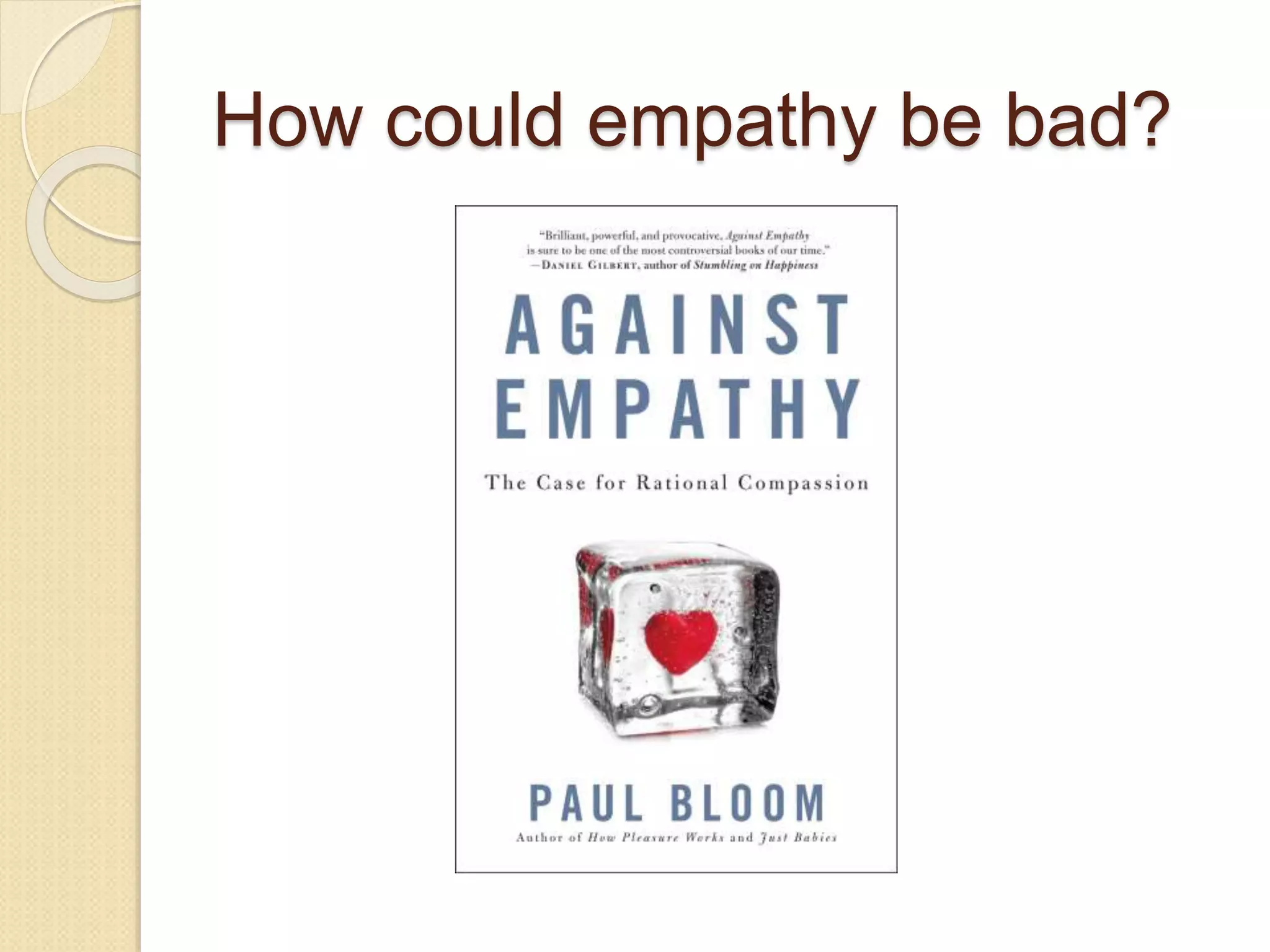
How could empathy be bad?
1) Empathy reflects our
prejudices
 Sandy Hook Elementary School
(2012)
◦ 21 kids and 6 adults killed
1) Empathy reflects our
prejudices
 MRI - electric shock study
2) Empathy focuses us on
whoever is in front of us and
visible
 Quality-Life Foundation test
◦ High empathy group vs. low empathy
group
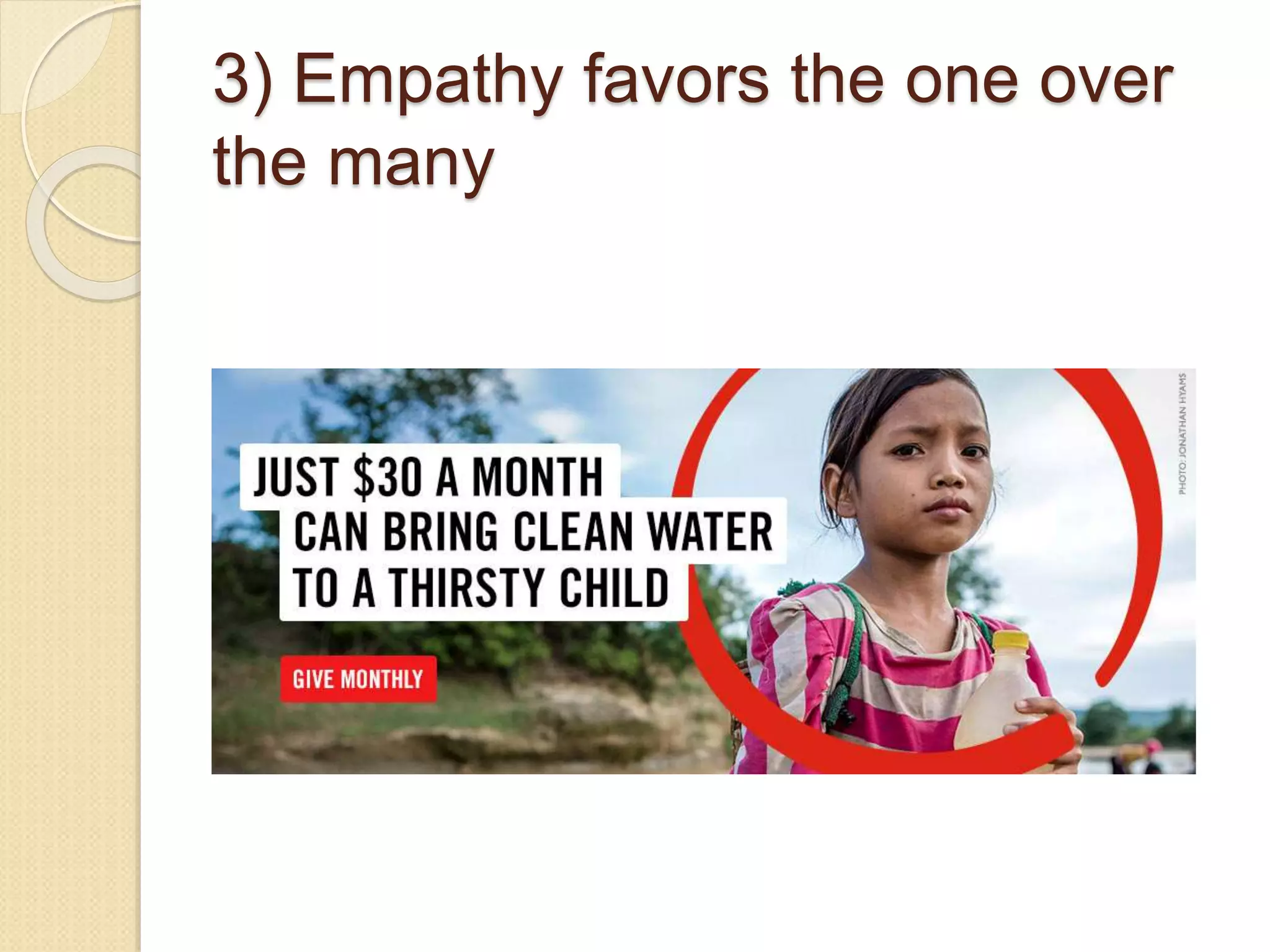
3) Empathy favors the one over
the many
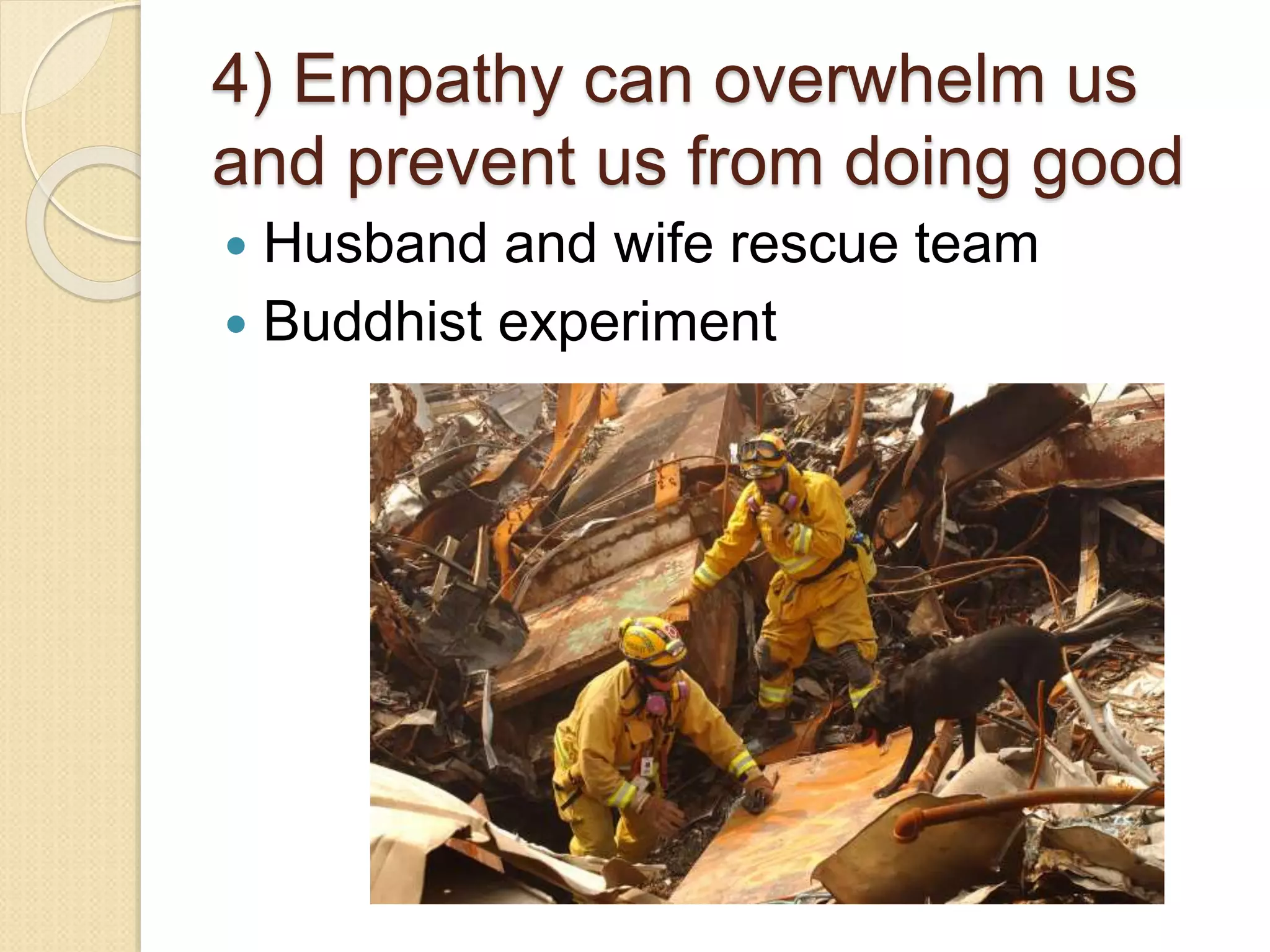
4) Empathy can overwhelm us
and prevent us from doing good
 Husband and wife rescue team
 Buddhist experiment
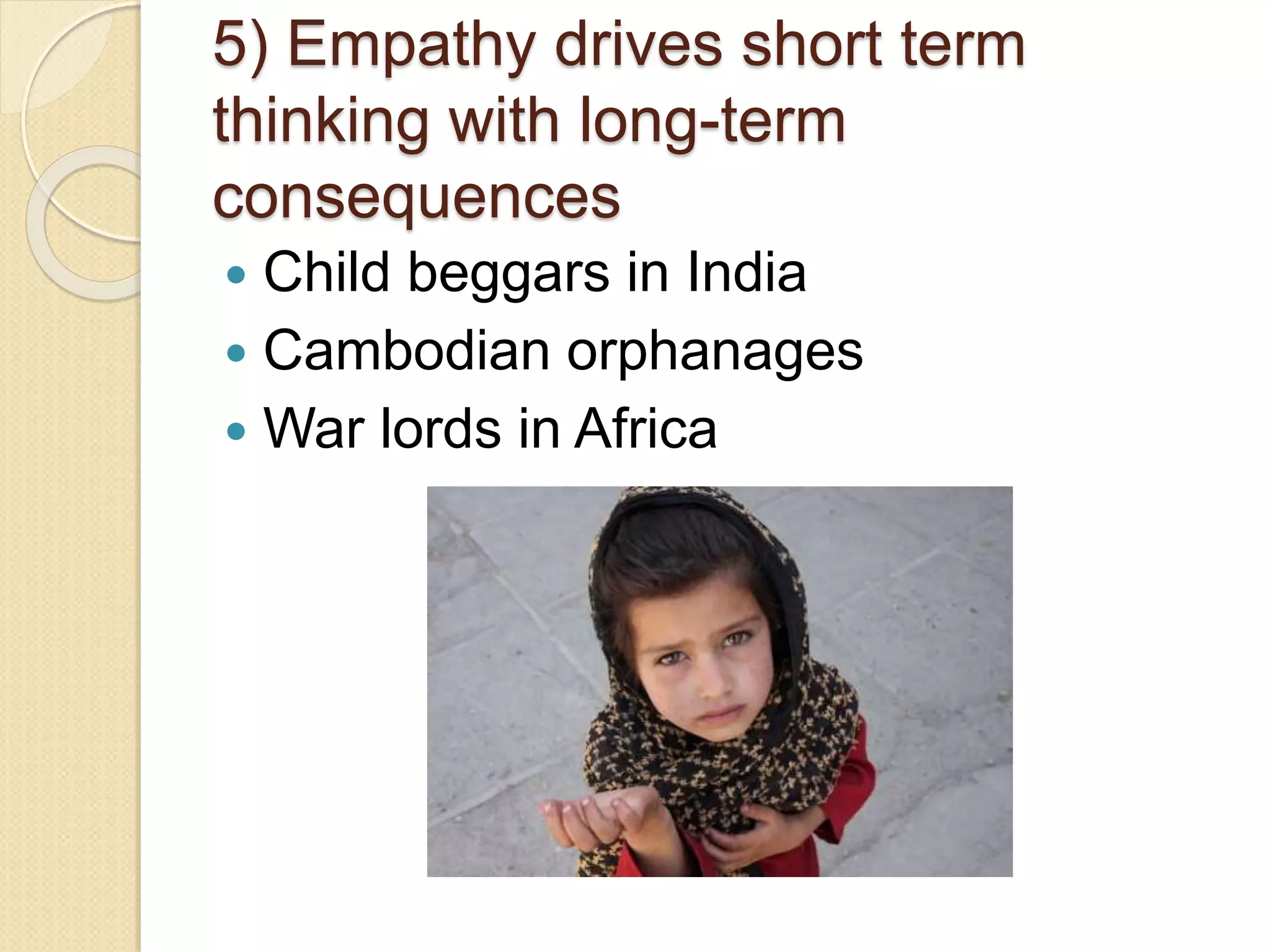
5) Empathy drives short term
thinking with long-term
consequences
 Child beggars in India
 Cambodian orphanages
 War lords in Africa
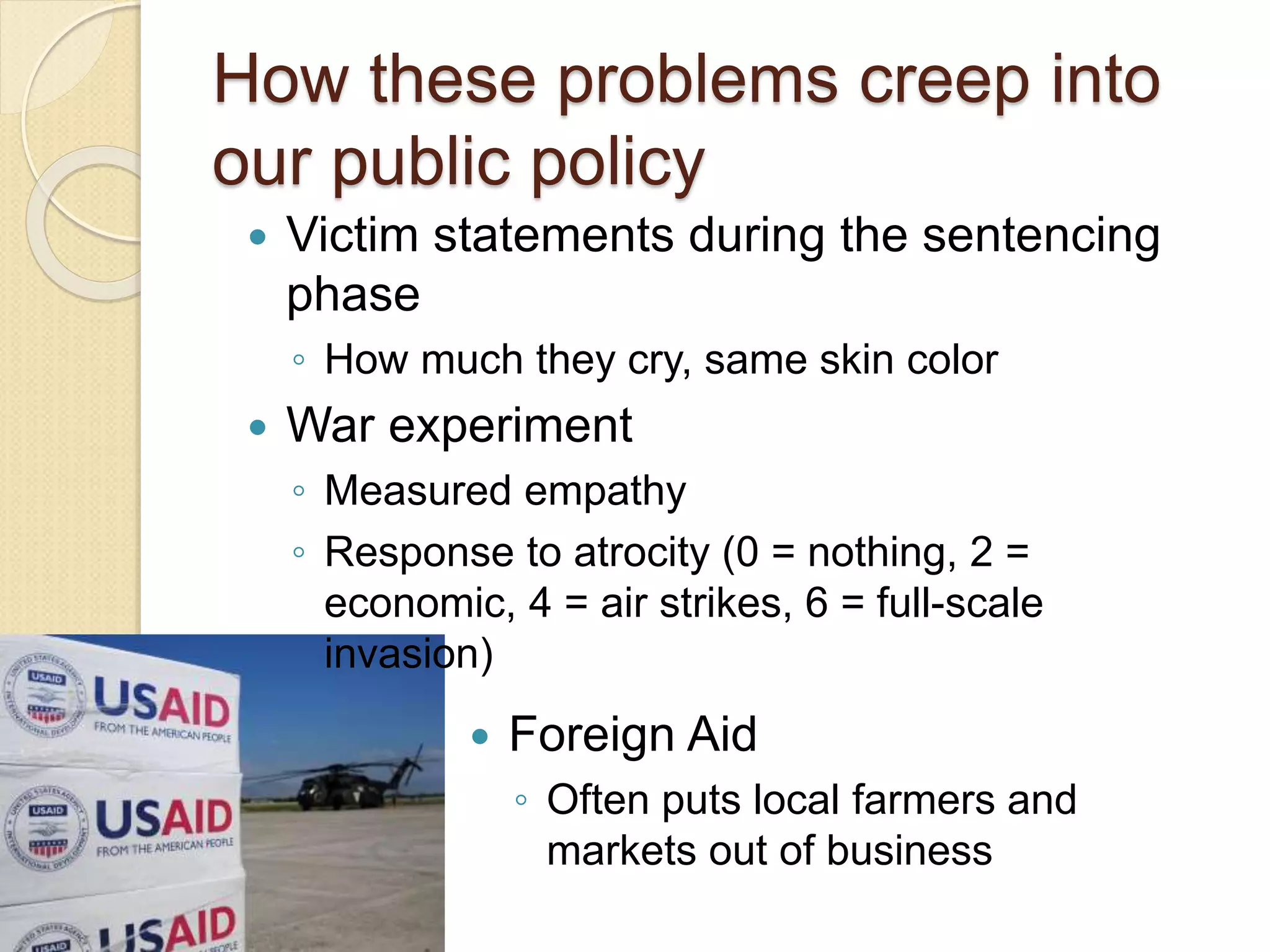
How these problems creep into
our public policy
 Victim statements during the sentencing
phase
◦ How much they cry, same skin color
 War experiment
◦ Measured empathy
◦ Response to atrocity (0 = nothing, 2 =
economic, 4 = air strikes, 6 = full-scale
invasion)
 Foreign Aid
◦ Often puts local farmers and
markets out of business
Action Items
 Listen to your head, not your heart
when making moral, charity, fairness, and justice
decisions
 Visit effectivealtruism.org – “Rather than
just doing what feels right, we use evidence and
careful analysis to find the very best causes to
work on.”
 Use givewell.org – monitor the efficacy of
charities to determine which ones make the most
difference
Discussion Questions
1. Do you find any of the arguments against
empathy compelling? Which ones and why?
2. Describe a recent decision that you made out
of empathy that you might want to rethink.
3. What are some parts of your life that you
think would be better if you were more
empathetic?
4. What are some strategies you could use to
keep yourself from making poor decisions
based on empathetic appeals?
Closing Quote
“Perhaps empathy is like milk. Adults
don’t need milk; we do fine without it. But
babies need milk to grow. [Perhaps
empathy is] the developmental core of
morality. . . but ultimately we develop
caring without having to step into other
people’s shoes.”
-- Paul Bloom

Empathy: Too Little, or Too Much?

  • 1.
    What is empathy? Sympathy – feeling for someone. Your emotional reaction to their feeling  Compassion – concern for the misfortune or suffering of others  The ability to understand and experience another person’s feelings
  • 2.
    Why is empathygood?  Empathy makes us care about other people because their pain and joy become our pain and joy.
  • 3.
    Empathy in scripture Islam Qur’an: Chapter 9, Verse 128 – There has certainly come to you a Messenger from among yourselves. Grievous to him is what you suffer.
  • 4.
    Empathy in scripture Judaism Exodus 23:9 – You shall not oppress a resident alien; you know the heart of an alien, for you were aliens in the land of Egypt. [Another translation “you yourselves know how it feels to be aliens.”]
  • 5.
    Empathy in scripture Christianity - Romans 12:15 – Paul said we should “rejoice with those who rejoice; mourn with those who mourn.” - 1 Corinthians 12:26 – Paul says that “If one member suffers, all suffer together; if one member is honored, all rejoice together.”
  • 6.
    Empathy in scripture John 11: 33-35 “When Jesus saw Lazarus’ sister, Mary, weeping, and the Jews who had come along with her also weeping, he was deeply moved in spirit and troubled. . . (35) “Jesus wept.”
  • 7.
    Empathy in scripture Buddhism - “Sentimental compassion” (empathy) - “Great compassion” - love for others without empathetic attachment or distress. Teaching: “Sentimental compassion (empathy) is to be avoided, as it exhausts you. Whereas great compassion, which is more distanced and reserved, and can be sustained indefinitely.”
  • 8.
  • 9.
    1) Empathy reflectsour prejudices  Sandy Hook Elementary School (2012) ◦ 21 kids and 6 adults killed
  • 10.
    1) Empathy reflectsour prejudices  MRI - electric shock study
  • 11.
    2) Empathy focusesus on whoever is in front of us and visible  Quality-Life Foundation test ◦ High empathy group vs. low empathy group
  • 12.
    3) Empathy favorsthe one over the many
  • 13.
    4) Empathy canoverwhelm us and prevent us from doing good  Husband and wife rescue team  Buddhist experiment
  • 14.
    5) Empathy drivesshort term thinking with long-term consequences  Child beggars in India  Cambodian orphanages  War lords in Africa
  • 15.
    How these problemscreep into our public policy  Victim statements during the sentencing phase ◦ How much they cry, same skin color  War experiment ◦ Measured empathy ◦ Response to atrocity (0 = nothing, 2 = economic, 4 = air strikes, 6 = full-scale invasion)  Foreign Aid ◦ Often puts local farmers and markets out of business
  • 16.
    Action Items  Listento your head, not your heart when making moral, charity, fairness, and justice decisions  Visit effectivealtruism.org – “Rather than just doing what feels right, we use evidence and careful analysis to find the very best causes to work on.”  Use givewell.org – monitor the efficacy of charities to determine which ones make the most difference
  • 17.
    Discussion Questions 1. Doyou find any of the arguments against empathy compelling? Which ones and why? 2. Describe a recent decision that you made out of empathy that you might want to rethink. 3. What are some parts of your life that you think would be better if you were more empathetic? 4. What are some strategies you could use to keep yourself from making poor decisions based on empathetic appeals?
  • 18.
    Closing Quote “Perhaps empathyis like milk. Adults don’t need milk; we do fine without it. But babies need milk to grow. [Perhaps empathy is] the developmental core of morality. . . but ultimately we develop caring without having to step into other people’s shoes.” -- Paul Bloom