Unit 6: Self and Emotions
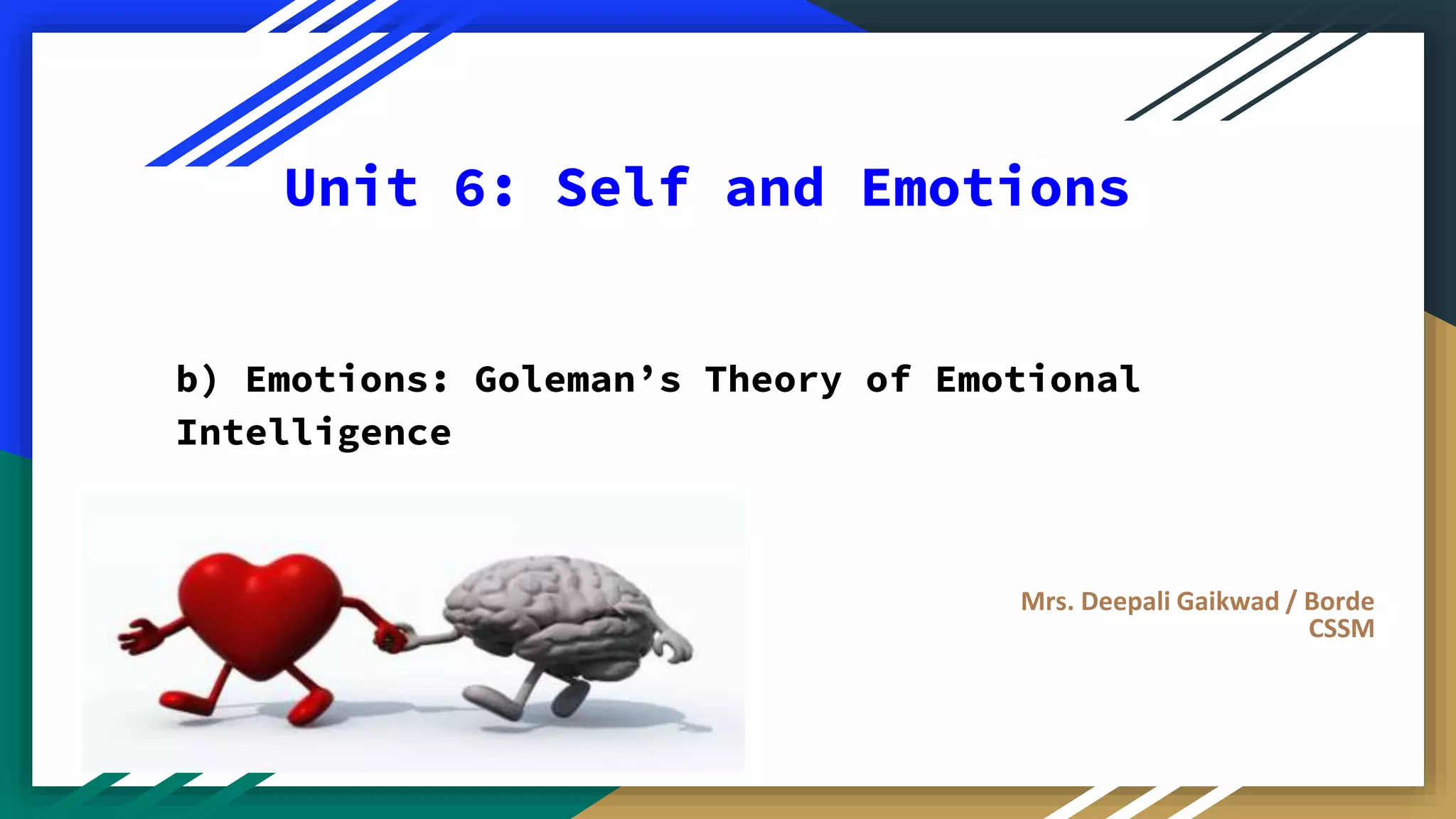
b) Emotions: Goleman’s Theory of Emotional
Intelligence
Mrs. Deepali Gaikwad / Borde
CSSM
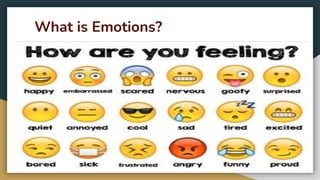
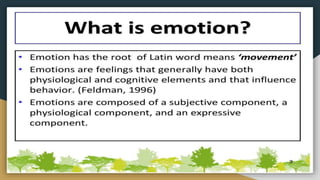
What is Emotions?
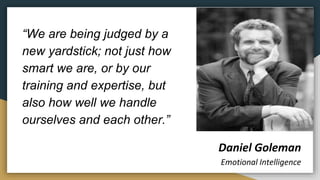
“We are being judged by a
new yardstick; not just how
smart we are, or by our
training and expertise, but
also how well we handle
ourselves and each other.”
Daniel Goleman
Emotional Intelligence
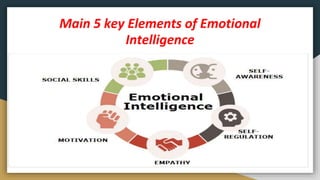
Main 5 key Elements of Emotional
Intelligence
SELF AWARENESS
● Self-awareness is the ability to see
yourself clearly and objectively through
reflection and introspection.
● Self-Awareness is the ability to
understand your own emotions and their
effects on your performance. You know
what you are feeling and why—and how it
helps or hurts what you are trying to do.
You sense how others see you and so
align your self-image with a larger
reality.
- Emotional awareness
- Accurate self-assessment
- Self-confidence
SKILL INDICATORS :
➢ Know when you are thinking negatively
➢ Know when your self talk is helpful
➢ Know when you are becoming angry
➢ Know what senses you are currently using
➢ Know how to communicate accurately what you are
experience
➢ Know the moments your mood shifts
➢ Know the impact your behaviour has on others
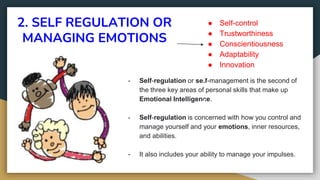
2. SELF REGULATION OR
MANAGING EMOTIONS
- Self-regulation or self-management is the second of
the three key areas of personal skills that make up
Emotional Intelligence.
- Self-regulation is concerned with how you control and
manage yourself and your emotions, inner resources,
and abilities.
- It also includes your ability to manage your impulses.
● Self-control
● Trustworthiness
● Conscientiousness
● Adaptability
● Innovation
SKILL INDICATORS:
❏ Be able to relax in pressure situation
❏ Act productively in anxiety-arousing situation
❏ Calm itself quickly when angry
❏ Use self talk to affect emotional states
❏ Communicate feelings effectively
❏ Reflect on negative feelings without being distress
❏ Stay calm when you are the target of anger from
others
3. EMPATHY
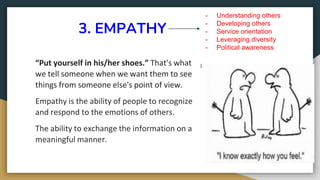
“Put yourself in his/her shoes.” That's what
we tell someone when we want them to see
things from someone else's point of view.
Empathy is the ability of people to recognize
and respond to the emotions of others.
The ability to exchange the information on a
meaningful manner.
- Understanding others
- Developing others
- Service orientation
- Leveraging diversity
- Political awareness
l
KEY INDICATORS
➔ Work out conflicts
➔ Mediate conflicts between other
➔ Exhibit effective personal communication skill
➔ Able to influence others directly or indirectly
➔ Build trust
➔ Build support teams
➔ Make others feel good
➔ Sought out by others for advice and support
4. MOTIVATION
This is having an interest in learning and self-
improvement.
It is having the strength to keep going when there are
obstacles in life.
It is setting goals and following through with them.
People with high emotional intelligence are also very good
at motivating themselves without needing external
support.
This means that they have a high quality standard for
themselves and others.
- Achievement drive
- Commitment
- Initiative
- Optimism
SKILL INDICATORS
● Able to ‘gear up’ at will
● Able to regroup quickly after a setback
● Able to complete long term task in designated time frames
● Able to produce high energy in the context of low
enjoyment work
● Able to change and stop ineffective habits
● Able to develop new and productive patterns of behaviour
● Able to follow through words with actions
5. SOCIAL SKILL
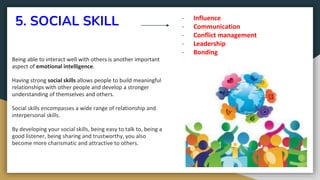
Being able to interact well with others is another important
aspect of emotional intelligence.
Having strong social skills allows people to build meaningful
relationships with other people and develop a stronger
understanding of themselves and others.
Social skills encompasses a wide range of relationship and
interpersonal skills.
By developing your social skills, being easy to talk to, being a
good listener, being sharing and trustworthy, you also
become more charismatic and attractive to others.
- Influence
- Communication
- Conflict management
- Leadership
- Bonding
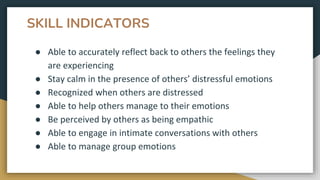
SKILL INDICATORS
● Able to accurately reflect back to others the feelings they
are experiencing
● Stay calm in the presence of others’ distressful emotions
● Recognized when others are distressed
● Able to help others manage to their emotions
● Be perceived by others as being empathic
● Able to engage in intimate conversations with others
● Able to manage group emotions
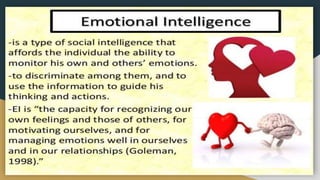
 Emotional intelligence
 Emotional intelligence

Emotional intelligence

  • 1.
    Unit 6: Selfand Emotions b) Emotions: Goleman’s Theory of Emotional Intelligence Mrs. Deepali Gaikwad / Borde CSSM
  • 4.
  • 7.
    “We are beingjudged by a new yardstick; not just how smart we are, or by our training and expertise, but also how well we handle ourselves and each other.” Daniel Goleman Emotional Intelligence
  • 8.
    Main 5 keyElements of Emotional Intelligence
  • 9.
    SELF AWARENESS ● Self-awarenessis the ability to see yourself clearly and objectively through reflection and introspection. ● Self-Awareness is the ability to understand your own emotions and their effects on your performance. You know what you are feeling and why—and how it helps or hurts what you are trying to do. You sense how others see you and so align your self-image with a larger reality. - Emotional awareness - Accurate self-assessment - Self-confidence
  • 10.
    SKILL INDICATORS : ➢Know when you are thinking negatively ➢ Know when your self talk is helpful ➢ Know when you are becoming angry ➢ Know what senses you are currently using ➢ Know how to communicate accurately what you are experience ➢ Know the moments your mood shifts ➢ Know the impact your behaviour has on others
  • 11.
    2. SELF REGULATIONOR MANAGING EMOTIONS - Self-regulation or self-management is the second of the three key areas of personal skills that make up Emotional Intelligence. - Self-regulation is concerned with how you control and manage yourself and your emotions, inner resources, and abilities. - It also includes your ability to manage your impulses. ● Self-control ● Trustworthiness ● Conscientiousness ● Adaptability ● Innovation
  • 12.
    SKILL INDICATORS: ❏ Beable to relax in pressure situation ❏ Act productively in anxiety-arousing situation ❏ Calm itself quickly when angry ❏ Use self talk to affect emotional states ❏ Communicate feelings effectively ❏ Reflect on negative feelings without being distress ❏ Stay calm when you are the target of anger from others
  • 13.
    3. EMPATHY “Put yourselfin his/her shoes.” That's what we tell someone when we want them to see things from someone else's point of view. Empathy is the ability of people to recognize and respond to the emotions of others. The ability to exchange the information on a meaningful manner. - Understanding others - Developing others - Service orientation - Leveraging diversity - Political awareness l
  • 14.
    KEY INDICATORS ➔ Workout conflicts ➔ Mediate conflicts between other ➔ Exhibit effective personal communication skill ➔ Able to influence others directly or indirectly ➔ Build trust ➔ Build support teams ➔ Make others feel good ➔ Sought out by others for advice and support
  • 15.
    4. MOTIVATION This ishaving an interest in learning and self- improvement. It is having the strength to keep going when there are obstacles in life. It is setting goals and following through with them. People with high emotional intelligence are also very good at motivating themselves without needing external support. This means that they have a high quality standard for themselves and others. - Achievement drive - Commitment - Initiative - Optimism
  • 16.
    SKILL INDICATORS ● Ableto ‘gear up’ at will ● Able to regroup quickly after a setback ● Able to complete long term task in designated time frames ● Able to produce high energy in the context of low enjoyment work ● Able to change and stop ineffective habits ● Able to develop new and productive patterns of behaviour ● Able to follow through words with actions
  • 17.
    5. SOCIAL SKILL Beingable to interact well with others is another important aspect of emotional intelligence. Having strong social skills allows people to build meaningful relationships with other people and develop a stronger understanding of themselves and others. Social skills encompasses a wide range of relationship and interpersonal skills. By developing your social skills, being easy to talk to, being a good listener, being sharing and trustworthy, you also become more charismatic and attractive to others. - Influence - Communication - Conflict management - Leadership - Bonding
  • 18.
    SKILL INDICATORS ● Ableto accurately reflect back to others the feelings they are experiencing ● Stay calm in the presence of others’ distressful emotions ● Recognized when others are distressed ● Able to help others manage to their emotions ● Be perceived by others as being empathic ● Able to engage in intimate conversations with others ● Able to manage group emotions