The Emotional Development
Emotion is part of a 
person’s character that 
consists of their feelings as 
opposed to their thoughts.
Emotional development during 
adolescence involves 
establishing a realistic and 
coherent sense of identity in 
the context of relating to others 
and learning to cope with 
stress and manage emotions. 
Santrock, 2001
Developing a SENSE OF 
IDENTITY 
Self-concept 
The COGNITIVE ASPECT in which 
individuals have a perception about 
themselves, such as “I’m good at Math.” 
Self-esteem 
The AFFECTIVE ASPECT in which an 
individual evaluates components of 
him/herself, such as “I feel good about my 
math skills.”
Global Self-Esteem 
How much we like or approve 
of our perceived selves as a 
whole. 
Specific Self-Esteem 
How much we feel about 
certain parts of ourselves.
Dealing with 
LOW SELF-ESTEEM
Feeling depressed. 
Lacking energy. 
Disliking one’s appearance and rejecting 
compliments. 
Having unrealistic expectations of oneself.
Having serious doubts about the future. 
Being excessively shy and rarely expressing 
one’s own point of view. 
Conforming to what others want and 
assuming a submissive stance in most 
situations.
Raising SELF-ESTEEM 
LOW SELF-ESTEEM 
develops if there is a 
gap between one’s self-concept 
and what one 
believes one “should” 
be like. 
Harter, 1990b
Tips for TALKING with 
adolescents
Engage adolescents 
with nonthreatening 
questions.
Listen non-judgmentally 
and listen more than 
you speak. 
Forgatch & Patterson, 1989
Ask open-ended 
questions. 
Hill & O’Brien, 1999
Avoid “why” questions. 
Plutchik, 2000
Match the adolescent’s 
emotional state, unless 
it is hostile. 
Forgatch & Patterson, 1989
Casually model rational 
decision-making. 
Keating, 1990
Discuss ethical and 
moral problems that are 
in the news. 
Santilli & Hudson, 1992
Daniel 
Goleman 
Dimensions of Emotional Intelligence 
Self-Awareness 
Self-Regulation 
Motivation 
Empathy 
Social Skills
Self-Awareness 
(Emotional Understanding) 
High Emotional 
Intelligence 
• Can openly identify and 
express feelings. 
• Reads nonverbal 
language effectively. 
• Can identify the feelings 
of others. 
Low Emotional 
Intelligence 
• Cannot share feelings 
verbally. 
• Is oblivious to nonverbal 
communication. 
• Is not perceptive with 
regard to other’s feelings.
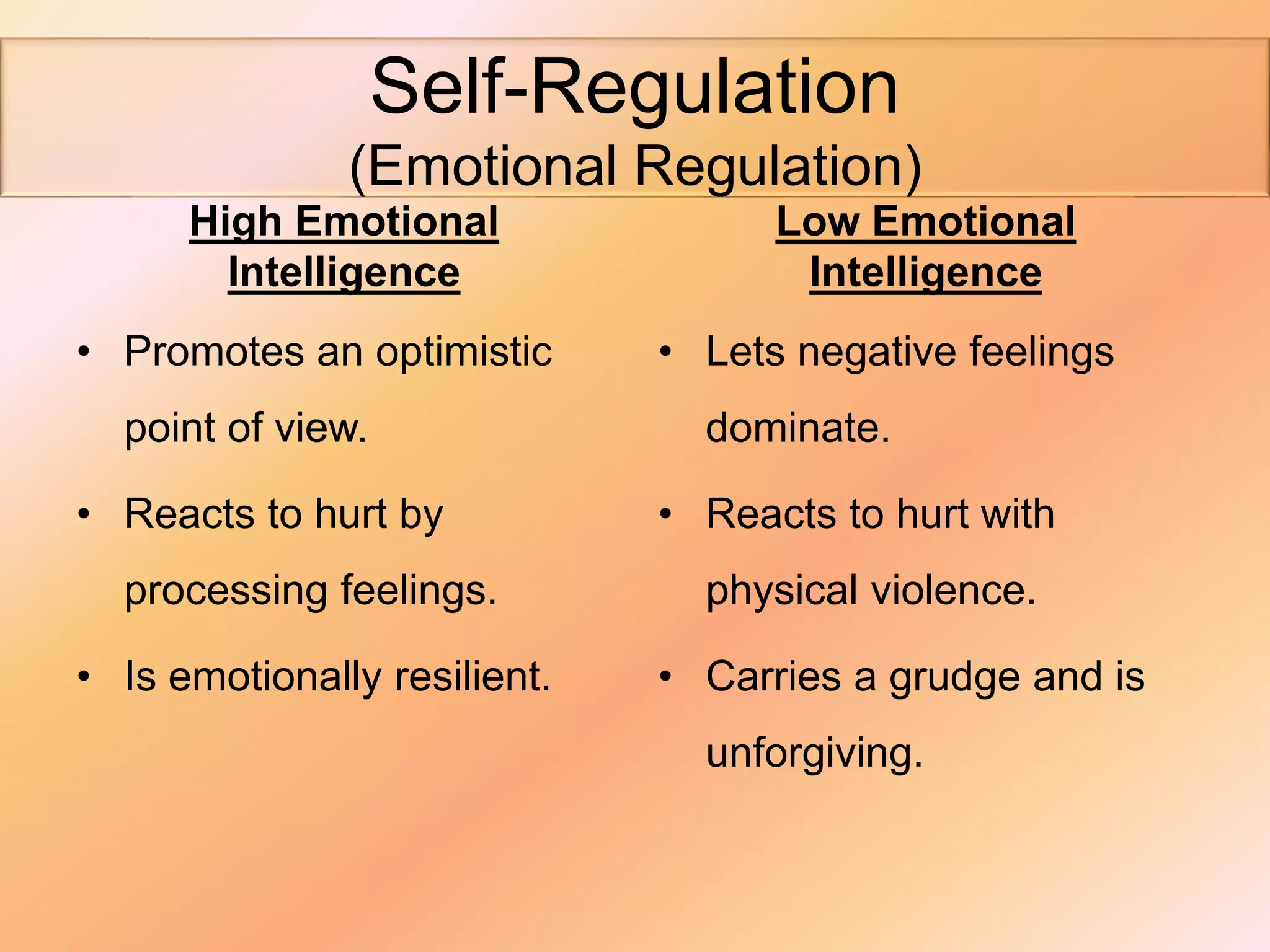
Self-Regulation 
(Emotional Regulation) 
High Emotional 
Intelligence 
• Promotes an optimistic 
point of view. 
• Reacts to hurt by 
processing feelings. 
• Is emotionally resilient. 
Low Emotional 
Intelligence 
• Lets negative feelings 
dominate. 
• Reacts to hurt with 
physical violence. 
• Carries a grudge and is 
unforgiving.
Motivation 
(Self-Motivation) 
High Emotional 
Intelligence 
• Usually feels respected 
and competent. 
• Is motivated by personal 
meaning. 
Low Emotional 
Intelligence 
• Usually feels inadequate 
and defensive. 
• Is motivated by rewards 
and instant gratification.
Empathy 
(Responding to Other’s Emotion) 
High Emotional 
Intelligence 
• Accepts self and others. 
• Can communicate 
assertively. 
• Displays empathy. 
Low Emotional 
Intelligence 
• Is not accepting to self 
and others. 
• Uses passive or 
aggressive 
communication. 
• Lacks empathy.
Social Skills 
(Emotions in Relationships) 
High Emotional 
Intelligence 
• Says “I feel…” (“I” 
message). 
• Is a good listener. 
• Talks out problems with 
others. 
Low Emotional 
Intelligence 
• Says “you always…” 
(blame statement) 
• Is a poor listener. 
• Acts out against others 
when there is a problem 
or miscommunication.
The emotional brain 
develops to an event 
more quickly than the 
thinking brain. 
Daniel Goleman
Teachers need to be 
comfortable talking 
about feelings. 
Daniel Goleman
THANK YOU! 
Child and Adolescent Development 
Adolescent’s Emotional Development 
Presented by: 
Talaboc, Clarice Anne D. 
II-6 AB/BSE Literature

Emotional Development in Adolescents

  • 1.
  • 2.
    Emotion is partof a person’s character that consists of their feelings as opposed to their thoughts.
  • 3.
    Emotional development during adolescence involves establishing a realistic and coherent sense of identity in the context of relating to others and learning to cope with stress and manage emotions. Santrock, 2001
  • 4.
    Developing a SENSEOF IDENTITY Self-concept The COGNITIVE ASPECT in which individuals have a perception about themselves, such as “I’m good at Math.” Self-esteem The AFFECTIVE ASPECT in which an individual evaluates components of him/herself, such as “I feel good about my math skills.”
  • 5.
    Global Self-Esteem Howmuch we like or approve of our perceived selves as a whole. Specific Self-Esteem How much we feel about certain parts of ourselves.
  • 6.
    Dealing with LOWSELF-ESTEEM
  • 7.
    Feeling depressed. Lackingenergy. Disliking one’s appearance and rejecting compliments. Having unrealistic expectations of oneself.
  • 8.
    Having serious doubtsabout the future. Being excessively shy and rarely expressing one’s own point of view. Conforming to what others want and assuming a submissive stance in most situations.
  • 9.
    Raising SELF-ESTEEM LOWSELF-ESTEEM develops if there is a gap between one’s self-concept and what one believes one “should” be like. Harter, 1990b
  • 10.
    Tips for TALKINGwith adolescents
  • 11.
    Engage adolescents withnonthreatening questions.
  • 12.
    Listen non-judgmentally andlisten more than you speak. Forgatch & Patterson, 1989
  • 13.
    Ask open-ended questions. Hill & O’Brien, 1999
  • 14.
  • 15.
    Match the adolescent’s emotional state, unless it is hostile. Forgatch & Patterson, 1989
  • 16.
    Casually model rational decision-making. Keating, 1990
  • 17.
    Discuss ethical and moral problems that are in the news. Santilli & Hudson, 1992
  • 18.
    Daniel Goleman Dimensionsof Emotional Intelligence Self-Awareness Self-Regulation Motivation Empathy Social Skills
  • 19.
    Self-Awareness (Emotional Understanding) High Emotional Intelligence • Can openly identify and express feelings. • Reads nonverbal language effectively. • Can identify the feelings of others. Low Emotional Intelligence • Cannot share feelings verbally. • Is oblivious to nonverbal communication. • Is not perceptive with regard to other’s feelings.
  • 20.
    Self-Regulation (Emotional Regulation) High Emotional Intelligence • Promotes an optimistic point of view. • Reacts to hurt by processing feelings. • Is emotionally resilient. Low Emotional Intelligence • Lets negative feelings dominate. • Reacts to hurt with physical violence. • Carries a grudge and is unforgiving.
  • 21.
    Motivation (Self-Motivation) HighEmotional Intelligence • Usually feels respected and competent. • Is motivated by personal meaning. Low Emotional Intelligence • Usually feels inadequate and defensive. • Is motivated by rewards and instant gratification.
  • 22.
    Empathy (Responding toOther’s Emotion) High Emotional Intelligence • Accepts self and others. • Can communicate assertively. • Displays empathy. Low Emotional Intelligence • Is not accepting to self and others. • Uses passive or aggressive communication. • Lacks empathy.
  • 23.
    Social Skills (Emotionsin Relationships) High Emotional Intelligence • Says “I feel…” (“I” message). • Is a good listener. • Talks out problems with others. Low Emotional Intelligence • Says “you always…” (blame statement) • Is a poor listener. • Acts out against others when there is a problem or miscommunication.
  • 24.
    The emotional brain develops to an event more quickly than the thinking brain. Daniel Goleman
  • 25.
    Teachers need tobe comfortable talking about feelings. Daniel Goleman
  • 26.
    THANK YOU! Childand Adolescent Development Adolescent’s Emotional Development Presented by: Talaboc, Clarice Anne D. II-6 AB/BSE Literature