+


Emerging Technology


       Cami Case
       Walden University
       EDUC - 6715I - 5
       Instructor: Rachel Bordelon
       October 17, 2012
+
    ―Students are eager to learn in the
    context of real world
    issues. Authentic learning
    increases their engagement and
    the depth of learning (Newmann, Bryk, &Nagaoka,
    2001).‖


    Lemke and Coughlin (2009, p. 56)
+
    Benefits of Emerging Technology
    •Students can continue learning outside the
    classroom.

    •Digital-Natives are being fostered in a 21st century
    learning environment.
    • Parents can be more involved in their child’s
    schooling.

    •Online Grades allow for no surprises at the end of
    the term.
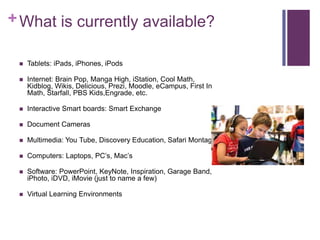
+ What is currently available?

    Tablets: iPads, iPhones, iPods

    Internet: Brain Pop, Manga High, iStation, Cool Math,
     Kidblog, Wikis, Delicious, Prezi, Moodle, eCampus, First In
     Math, Starfall, PBS Kids,Engrade, etc.

    Interactive Smart boards: Smart Exchange

    Document Cameras

    Multimedia: You Tube, Discovery Education, Safari Montage

    Computers: Laptops, PC’s, Mac’s

    Software: PowerPoint, KeyNote, Inspiration, Garage Band,
     iPhoto, iDVD, iMovie (just to name a few)

    Virtual Learning Environments
+
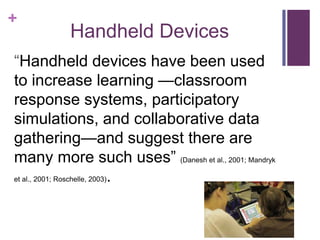
          Handheld Devices
―Handheld devices have been used
to increase learning —classroom
response systems, participatory
simulations, and collaborative data
gathering—and suggest there are
many more such uses‖ (Danesh et al., 2001; Mandryk
et al., 2001; Roschelle, 2003).
+
           Online Learning
    ―Implementing online learning
    environments in K-12 classrooms,
    requires schools to cultivate new
    approaches in how we handle
    teaching, learning, and leading in
    schools‖        .
            Guhlin, M., 2009
+
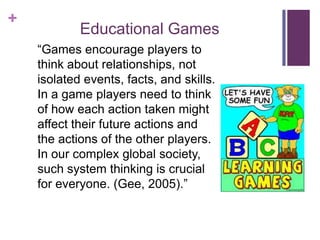
            Educational Games
    ―Games encourage players to
    think about relationships, not
    isolated events, facts, and skills.
    In a game players need to think
    of how each action taken might
    affect their future actions and
    the actions of the other players.
    In our complex global society,
    such system thinking is crucial
    for everyone. (Gee, 2005).‖
+             Educational Games Have
      Positive Impact on Student Achievement
     ―Research    has begun to show that games
     can have a positive effect on students by
     stimulating their imaginations and
     curiosities, and promote exploration of
     difficult issues and concepts‖ (Hoffman, 2009).
     Websites such as Manga High, First In
     Math, PBS Kids, Brain Pop, IXL Math,
     McMillan – McGraw Hill’s math, iStation, or
     other appropriate websites, keep our
     students interested in learning.
+
                    Resources
       Danesh, A., Inkpen, K., Lau, F., Shu, K., & Booth, K. (2001). Geney:
        Designinga collaborative activity for the Palm handheld computer. Proceedings
        ofCHI, Conference on Human Factors in Computing Systems. Seattle: WA.

       Gee, J. P. (2005). Good video games and good learning. Phi Kappa Phi Forum,
        85(2), 33–37

       Guhlin, M. (2009). Moodle-izing your education enterprise.
        EducationWorld.com. Retrieved September 23, 2012, from
        http://www.education-world.com/a_tech/columnists/guhlin/guhlin012.shtml.

       Hoffman, L. (2009). Learning through games. Communication of the ACM,
        52(8), 21–22.

       Kratcoski, A, Swan, K., V’T Van Hooft, M., A. (2005). Uses and Effects of
        Mobile Computing Devices in K–8 Classrooms. In Kent State. Retrieved
        October 19, 2012, from
        https://umdrive.memphis.edu/payers/public/KarenSwan/17.pdf.

       Lemke, C &Couglin, E. (2009). The Change Agents. Educational Leadership,
        67(1), pg. 54-59

Emerging Technologies Updated

  • 1.
    + Emerging Technology Cami Case Walden University EDUC - 6715I - 5 Instructor: Rachel Bordelon October 17, 2012
  • 2.
    + ―Students are eager to learn in the context of real world issues. Authentic learning increases their engagement and the depth of learning (Newmann, Bryk, &Nagaoka, 2001).‖ Lemke and Coughlin (2009, p. 56)
  • 3.
    + Benefits of Emerging Technology •Students can continue learning outside the classroom. •Digital-Natives are being fostered in a 21st century learning environment. • Parents can be more involved in their child’s schooling. •Online Grades allow for no surprises at the end of the term.
  • 4.
    + What iscurrently available?  Tablets: iPads, iPhones, iPods  Internet: Brain Pop, Manga High, iStation, Cool Math, Kidblog, Wikis, Delicious, Prezi, Moodle, eCampus, First In Math, Starfall, PBS Kids,Engrade, etc.  Interactive Smart boards: Smart Exchange  Document Cameras  Multimedia: You Tube, Discovery Education, Safari Montage  Computers: Laptops, PC’s, Mac’s  Software: PowerPoint, KeyNote, Inspiration, Garage Band, iPhoto, iDVD, iMovie (just to name a few)  Virtual Learning Environments
  • 5.
    + Handheld Devices ―Handheld devices have been used to increase learning —classroom response systems, participatory simulations, and collaborative data gathering—and suggest there are many more such uses‖ (Danesh et al., 2001; Mandryk et al., 2001; Roschelle, 2003).
  • 6.
    + Online Learning ―Implementing online learning environments in K-12 classrooms, requires schools to cultivate new approaches in how we handle teaching, learning, and leading in schools‖ . Guhlin, M., 2009
  • 7.
    + Educational Games ―Games encourage players to think about relationships, not isolated events, facts, and skills. In a game players need to think of how each action taken might affect their future actions and the actions of the other players. In our complex global society, such system thinking is crucial for everyone. (Gee, 2005).‖
  • 8.
    + Educational Games Have Positive Impact on Student Achievement  ―Research has begun to show that games can have a positive effect on students by stimulating their imaginations and curiosities, and promote exploration of difficult issues and concepts‖ (Hoffman, 2009).  Websites such as Manga High, First In Math, PBS Kids, Brain Pop, IXL Math, McMillan – McGraw Hill’s math, iStation, or other appropriate websites, keep our students interested in learning.
  • 9.
    + Resources  Danesh, A., Inkpen, K., Lau, F., Shu, K., & Booth, K. (2001). Geney: Designinga collaborative activity for the Palm handheld computer. Proceedings ofCHI, Conference on Human Factors in Computing Systems. Seattle: WA.  Gee, J. P. (2005). Good video games and good learning. Phi Kappa Phi Forum, 85(2), 33–37  Guhlin, M. (2009). Moodle-izing your education enterprise. EducationWorld.com. Retrieved September 23, 2012, from http://www.education-world.com/a_tech/columnists/guhlin/guhlin012.shtml.  Hoffman, L. (2009). Learning through games. Communication of the ACM, 52(8), 21–22.  Kratcoski, A, Swan, K., V’T Van Hooft, M., A. (2005). Uses and Effects of Mobile Computing Devices in K–8 Classrooms. In Kent State. Retrieved October 19, 2012, from https://umdrive.memphis.edu/payers/public/KarenSwan/17.pdf.  Lemke, C &Couglin, E. (2009). The Change Agents. Educational Leadership, 67(1), pg. 54-59