Downloaded 257 times
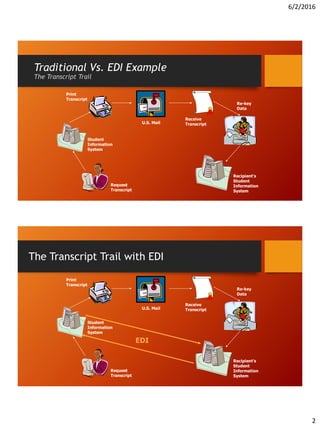
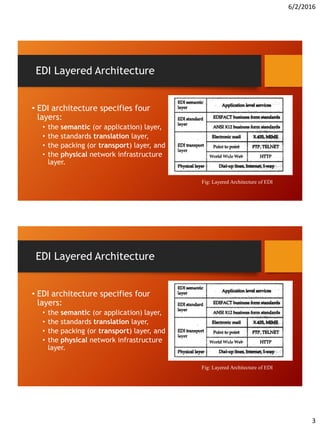
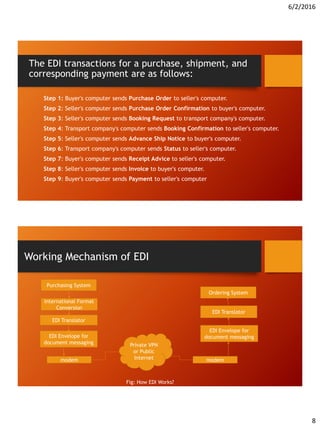
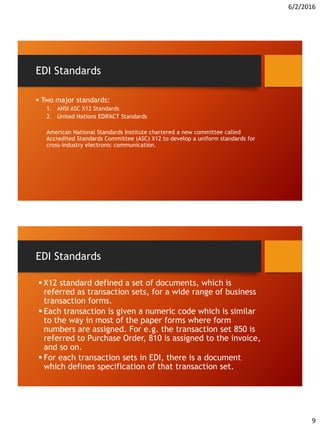
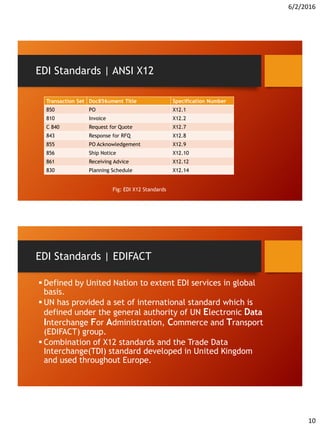
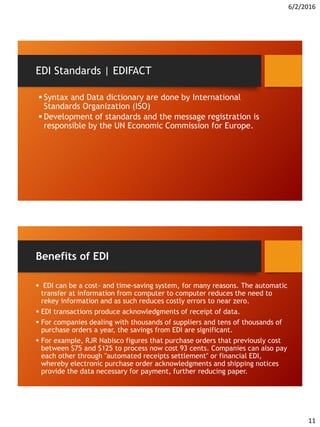
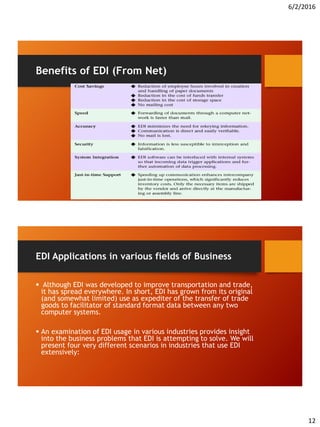
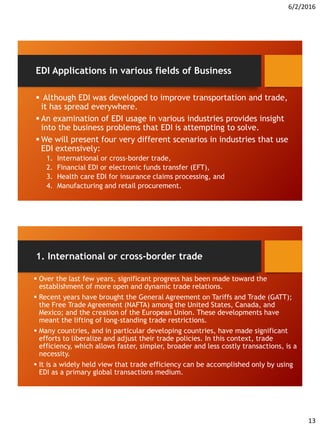
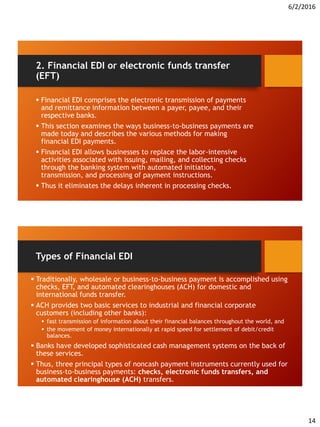
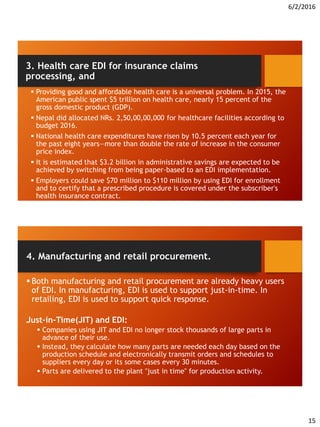
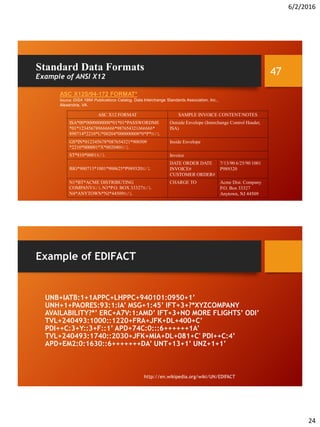
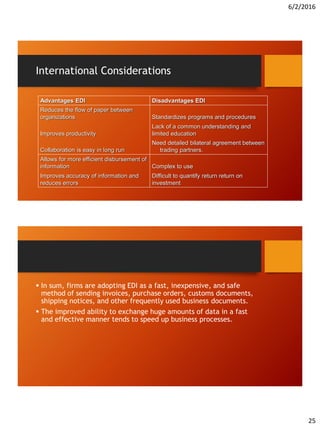

This document discusses Electronic Data Interchange (EDI) and how it works. It explains the layered architecture of EDI including the semantic, standards translation, packing, and physical network layers. It provides examples of how EDI streamlines business processes like ordering and payment between organizations by transferring data electronically instead of using paper. The document also outlines EDI standards like X12 and EDIFACT and provides examples of EDI applications in industries like international trade, finance, healthcare, and manufacturing. Overall benefits of EDI like reduced costs, errors and time delays are highlighted.


