Warm Up
Warm Up
1. What is energy?
1. What is energy?
2. What is kinetic energy? How do you
2. What is kinetic energy? How do you
calculate it?
calculate it?
3. What is potential energy?
3. What is potential energy?
4. What is a transverse wave? Draw and
4. What is a transverse wave? Draw and
label.
label.
5. What is a longitudinal wave? Draw and
5. What is a longitudinal wave? Draw and
label.
label.
Waves… a review
Waves…a review
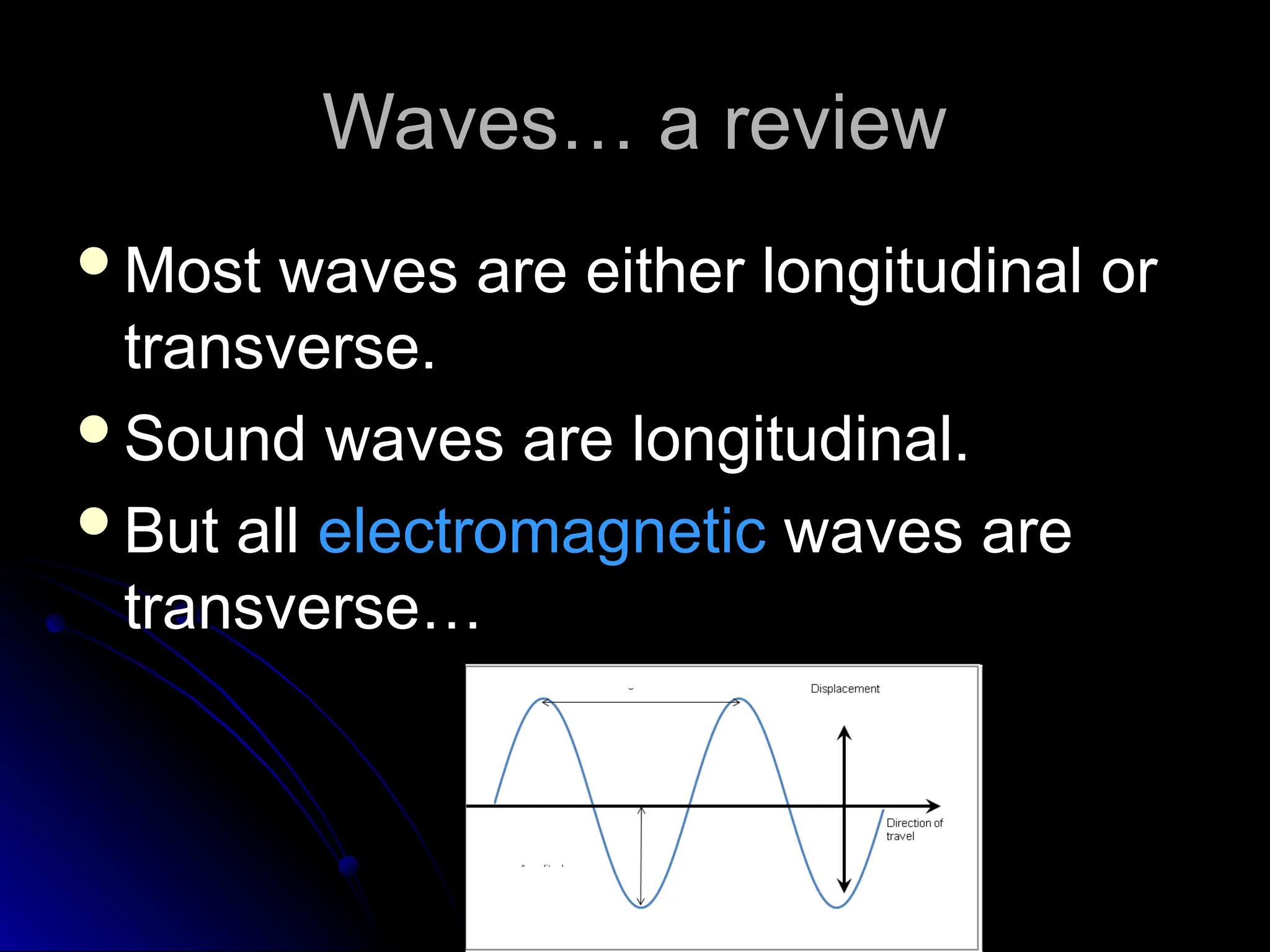
Most waves are either longitudinal or
Most waves are either longitudinal or
transverse.
transverse.
Sound waves are longitudinal.
Sound waves are longitudinal.
But all
But all electromagnetic
electromagnetic waves are
waves are
transverse…
transverse…
Nature of ElectromagneticWaves
Nature of Electromagnetic Waves
They are
They are Transverse waves without a
Transverse waves without a
medium.
medium. (They can travel through
(They can travel through empty
empty
space
space)
)
They travel as
They travel as vibrations in electrical and
vibrations in electrical and
magnetic fields.
magnetic fields.
Speed of electromagnetic waves = speed of
Speed of electromagnetic waves = speed of
light: 300,000,000 meters/second
light: 300,000,000 meters/second
(Takes light 8 minutes to move from the sun to earth {150 million miles} at
(Takes light 8 minutes to move from the sun to earth {150 million miles} at
this speed.)
this speed.)
6.
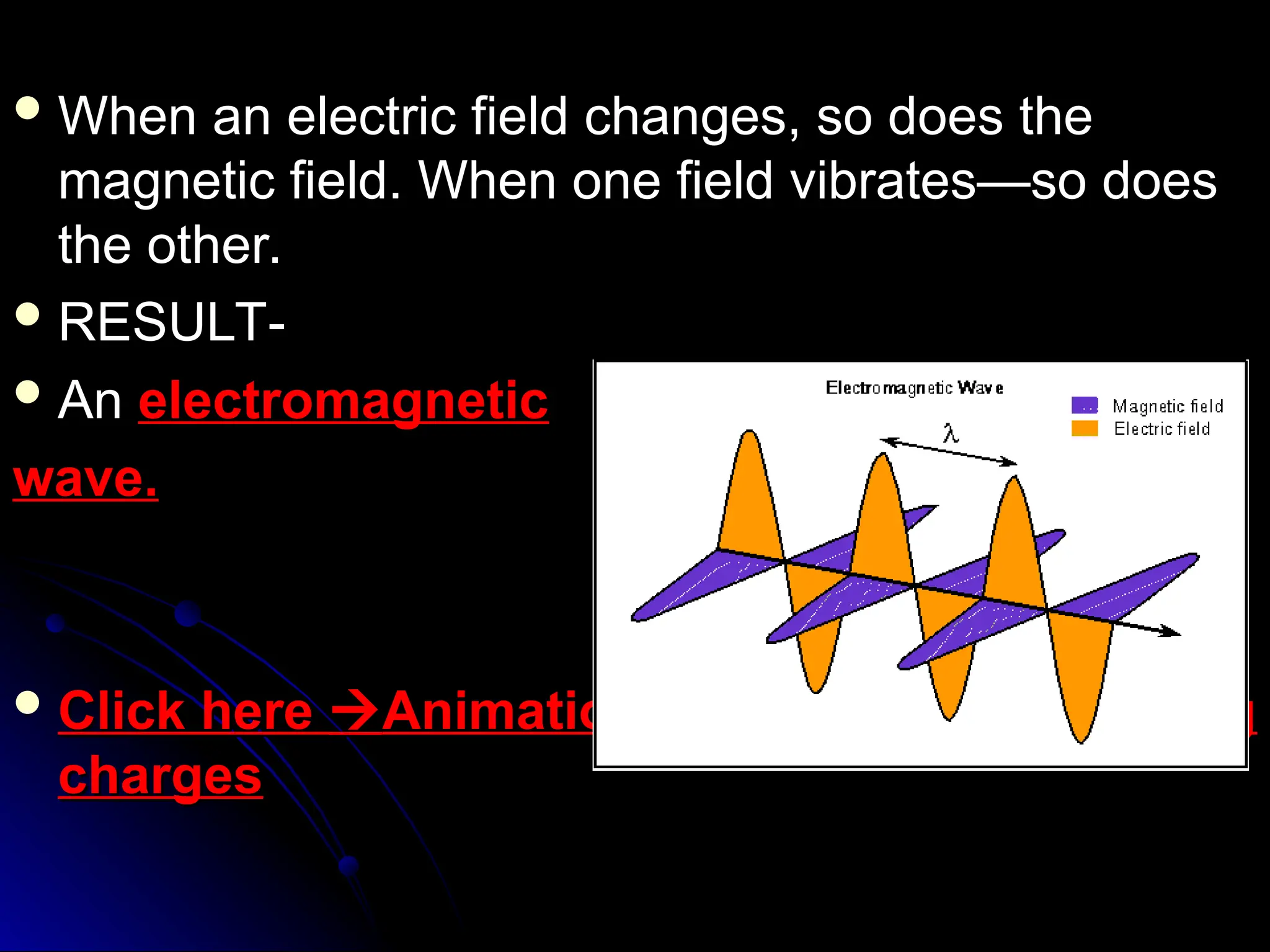
When anelectric field changes, so does the
When an electric field changes, so does the
magnetic field. When one field vibrates—so does
magnetic field. When one field vibrates—so does
the other.
the other.
RESULT-
RESULT-
An
An electromagnetic
electromagnetic
wave.
wave.
Click here
Click here
Animation: Interaction of vibrating
Animation: Interaction of vibrating
charges
charges
7.
Waves or Particles
Wavesor Particles
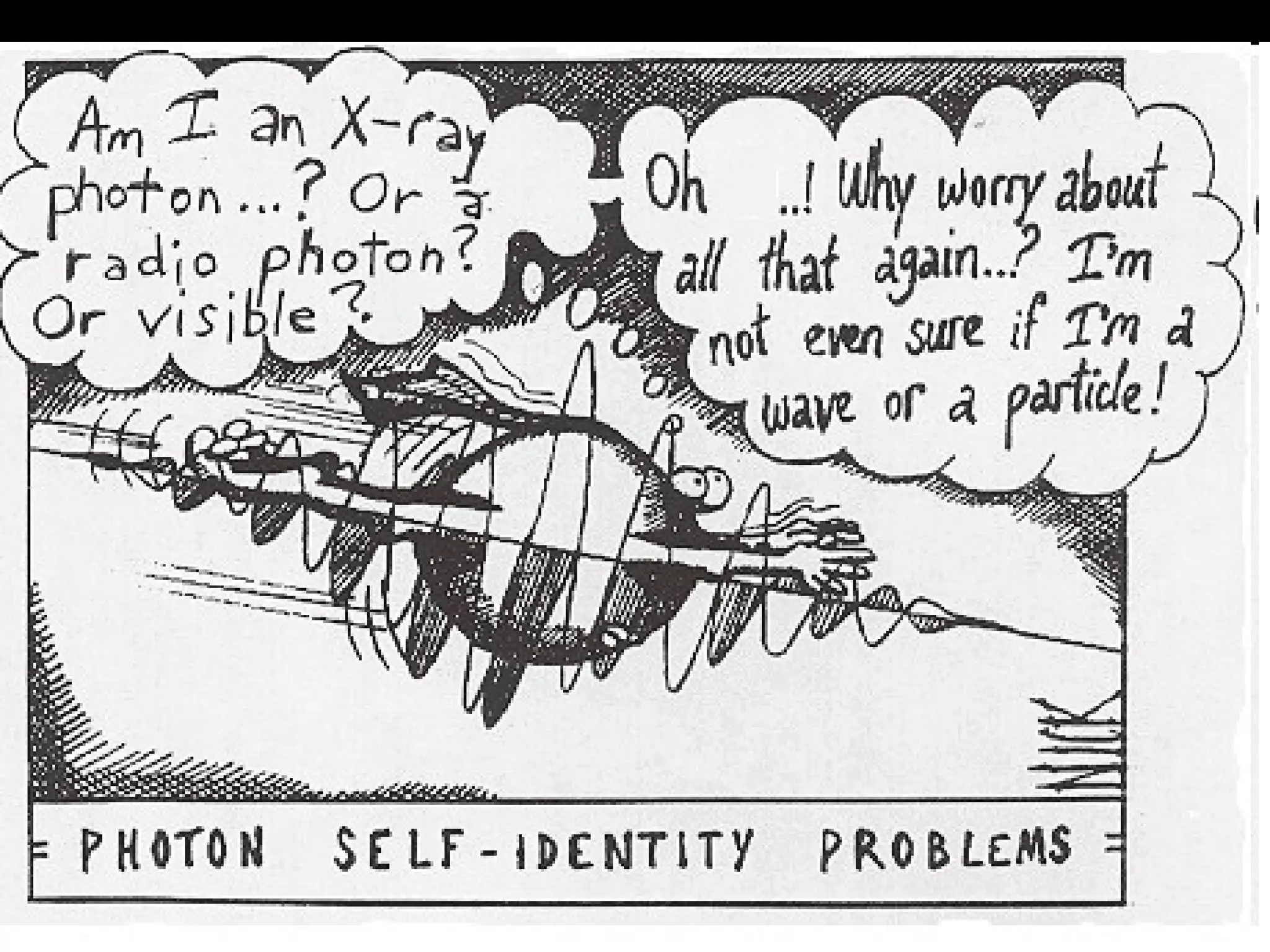
Electromagnetic radiation has properties of waves
Electromagnetic radiation has properties of waves
but also can be thought of as a
but also can be thought of as a stream of
stream of
particles.
particles.
Example: Light
Example: Light
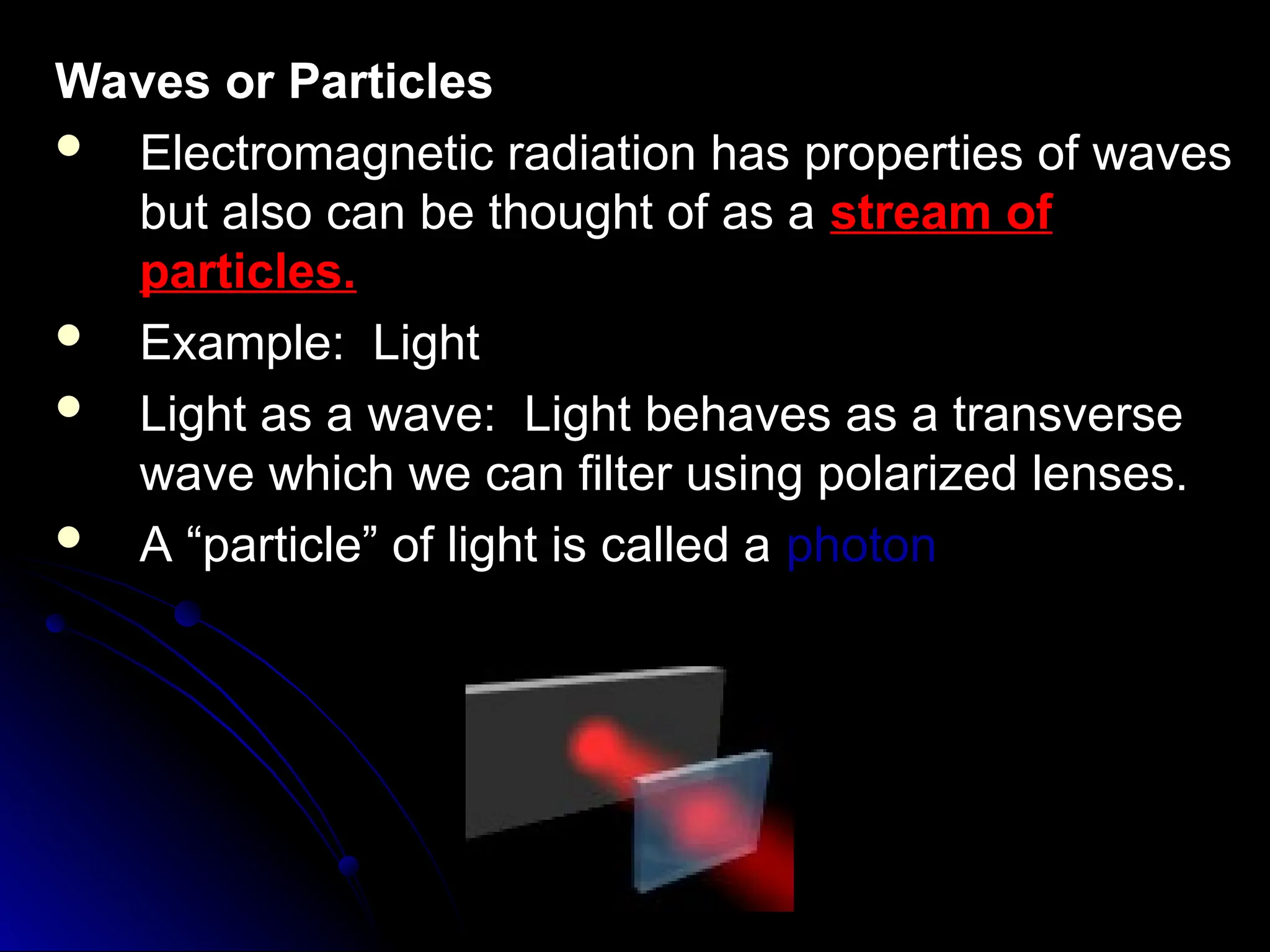
Light as a wave: Light behaves as a transverse
Light as a wave: Light behaves as a transverse
wave which we can filter using polarized lenses.
wave which we can filter using polarized lenses.
A “particle” of light is called a
A “particle” of light is called a photon
photon
9.
Waves of theElectromagnetic Spectrum
Waves of the Electromagnetic Spectrum
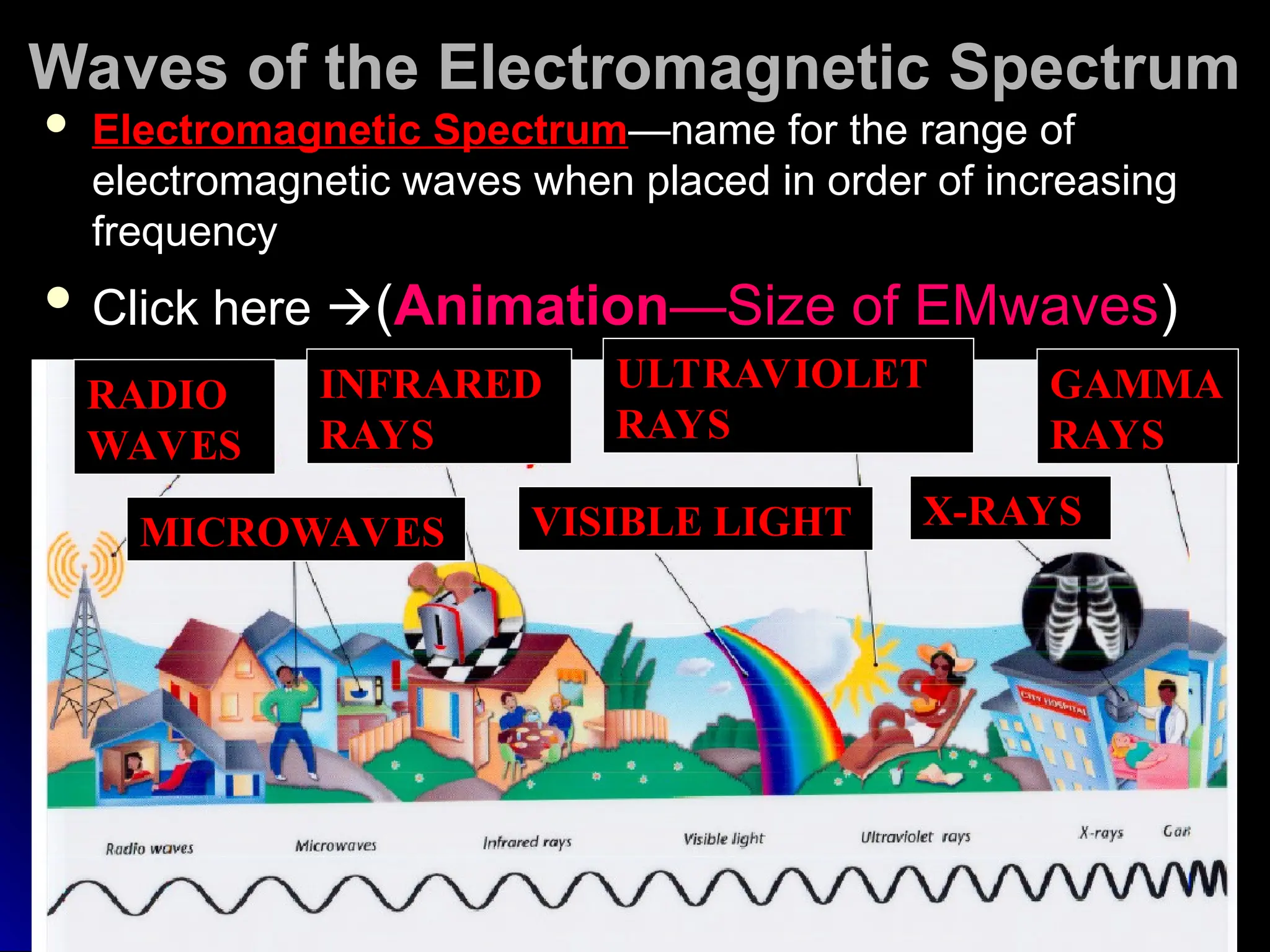
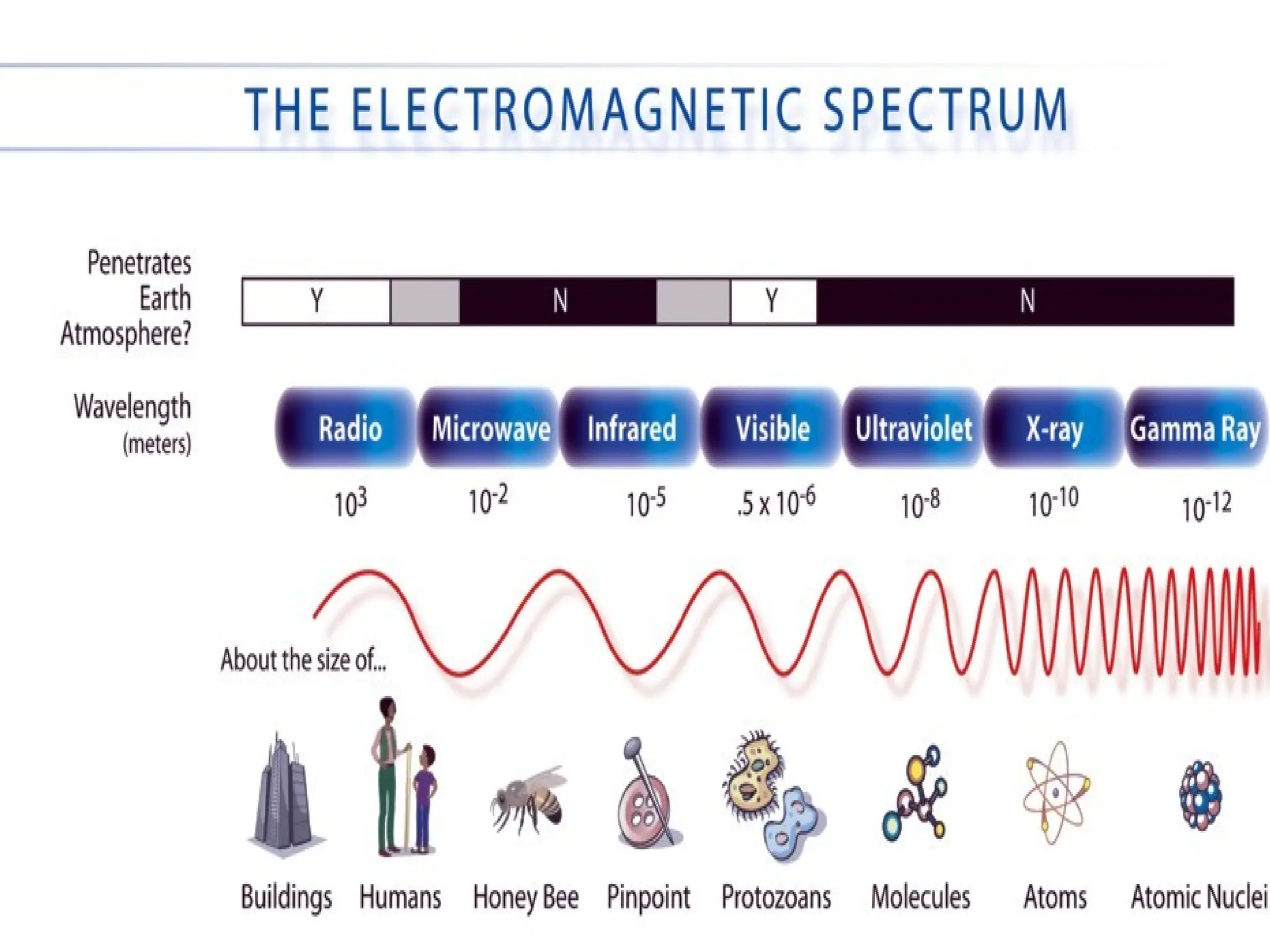
Electromagnetic Spectrum
Electromagnetic Spectrum—name for the range of
—name for the range of
electromagnetic waves when placed in order of increasing
electromagnetic waves when placed in order of increasing
frequency
frequency
Click here
Click here
(
(Animation
Animation—Size of EMwaves
—Size of EMwaves)
)
RADIO
WAVES
MICROWAVES
INFRARED
RAYS
VISIBLE LIGHT
ULTRAVIOLET
RAYS
X-RAYS
GAMMA
RAYS
11.
RADIO WAVES
RADIO WAVES
A. Have the
A. Have the longest
longest wavelengths and
wavelengths and
lowest
lowest frequencies of all the
frequencies of all the
electromagnetic waves.
electromagnetic waves.
B. A radio picks up radio waves through an
B. A radio picks up radio waves through an
antenna and converts it to
antenna and converts it to sound waves.
sound waves.
C. Each radio station in an area broadcasts
C. Each radio station in an area broadcasts
at a different frequency. # on radio dial tells
at a different frequency. # on radio dial tells
frequency.
frequency.
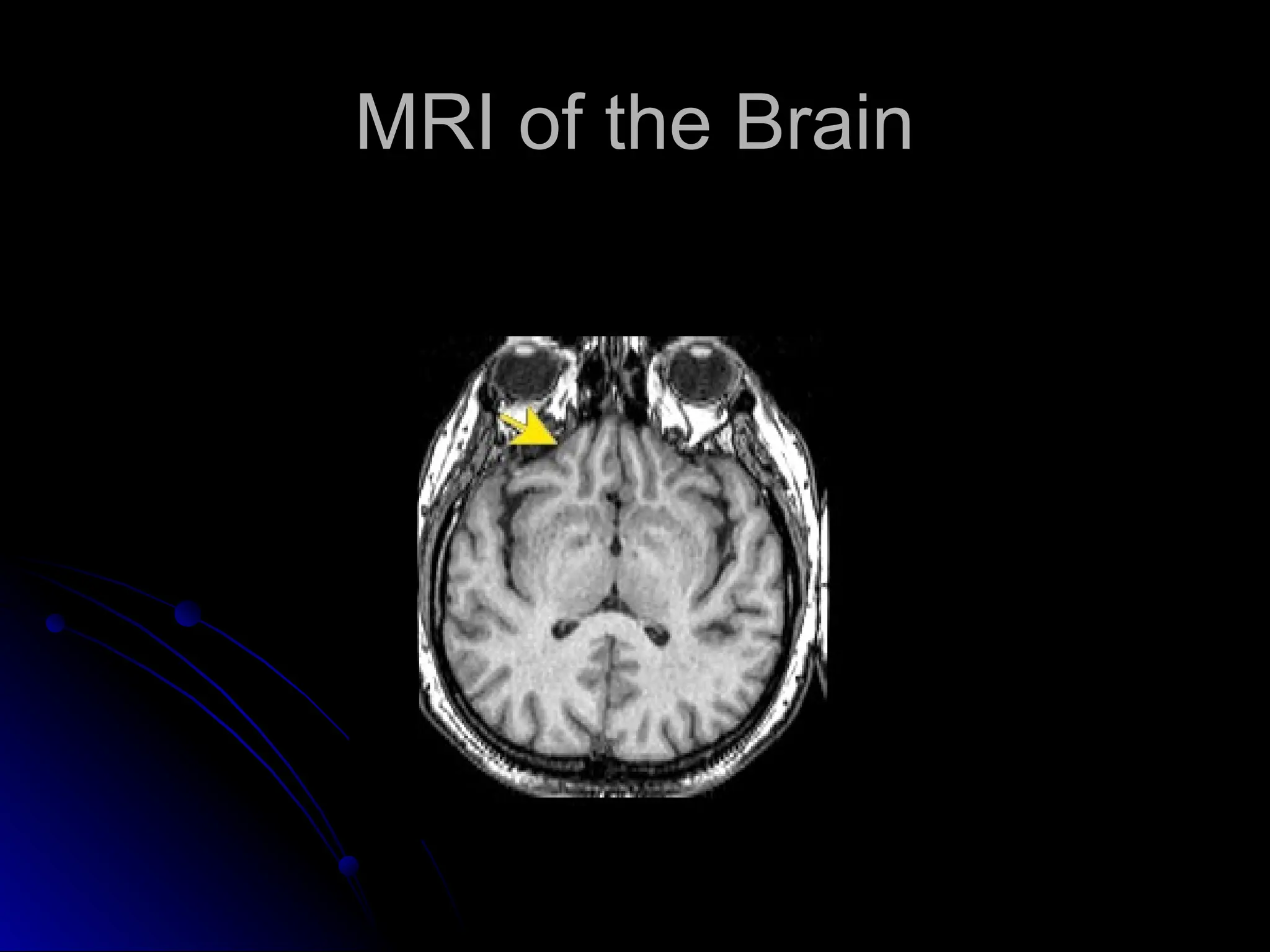
D. MRI (MAGNETIC RESONACE IMAGING)
D. MRI (MAGNETIC RESONACE IMAGING)
Uses Short wave radio waves with a magnet to
Uses Short wave radio waves with a magnet to
create an image
create an image
MICROWAVES
MICROWAVES
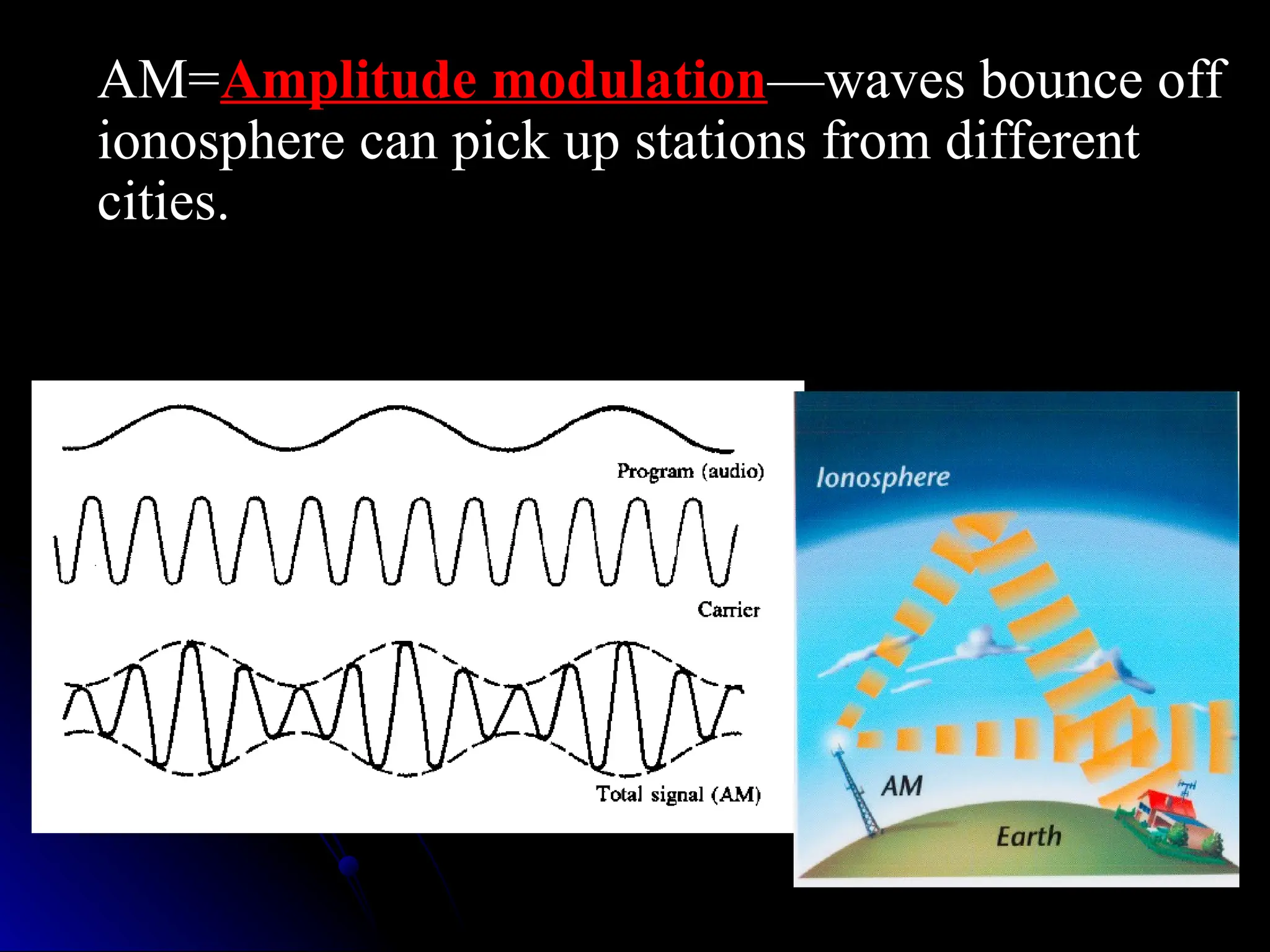
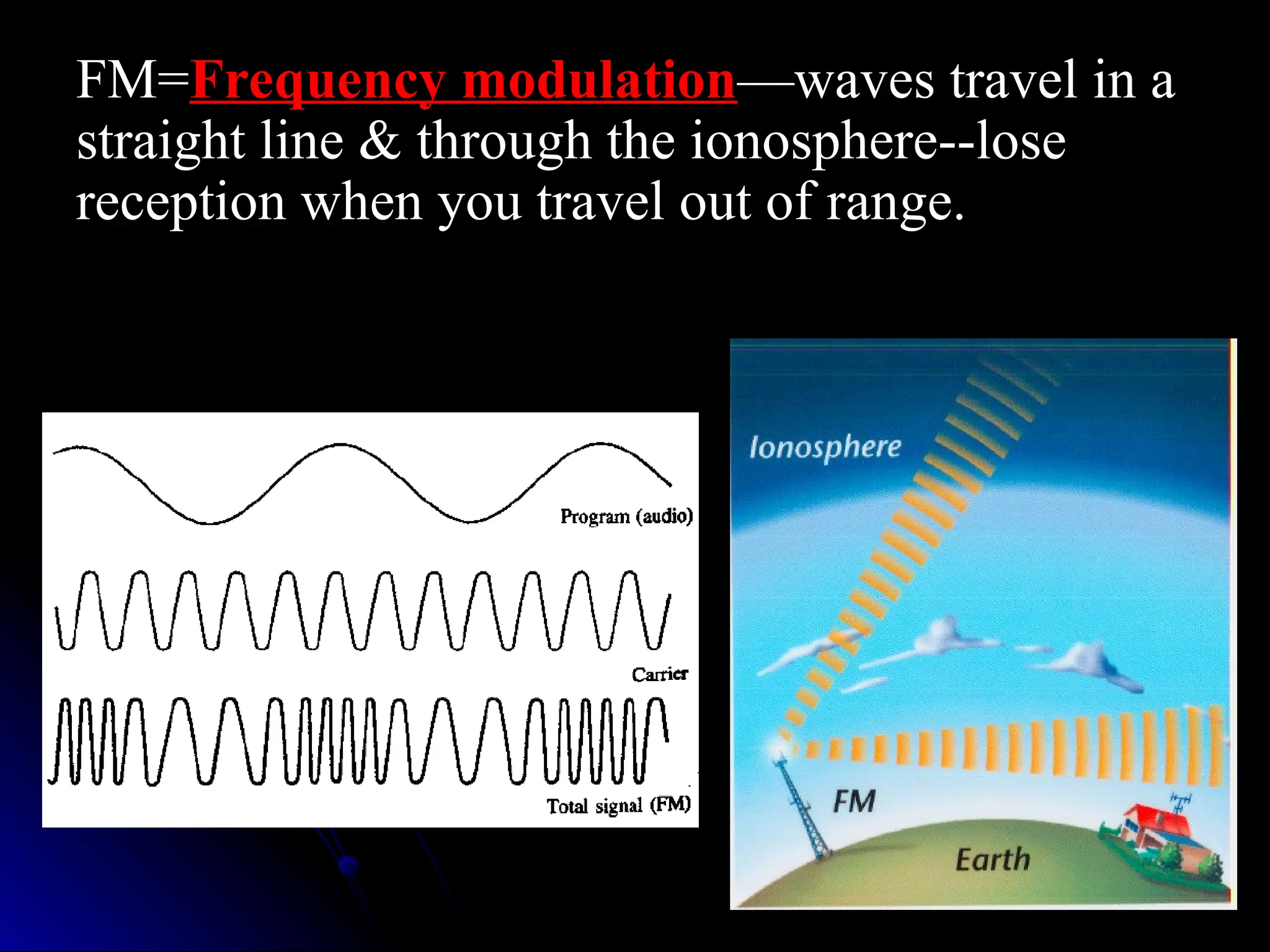
Microwaves
Microwaves—have theshortest wavelengths
—have the shortest wavelengths
and the highest frequency of the
and the highest frequency of the radio waves.
radio waves.
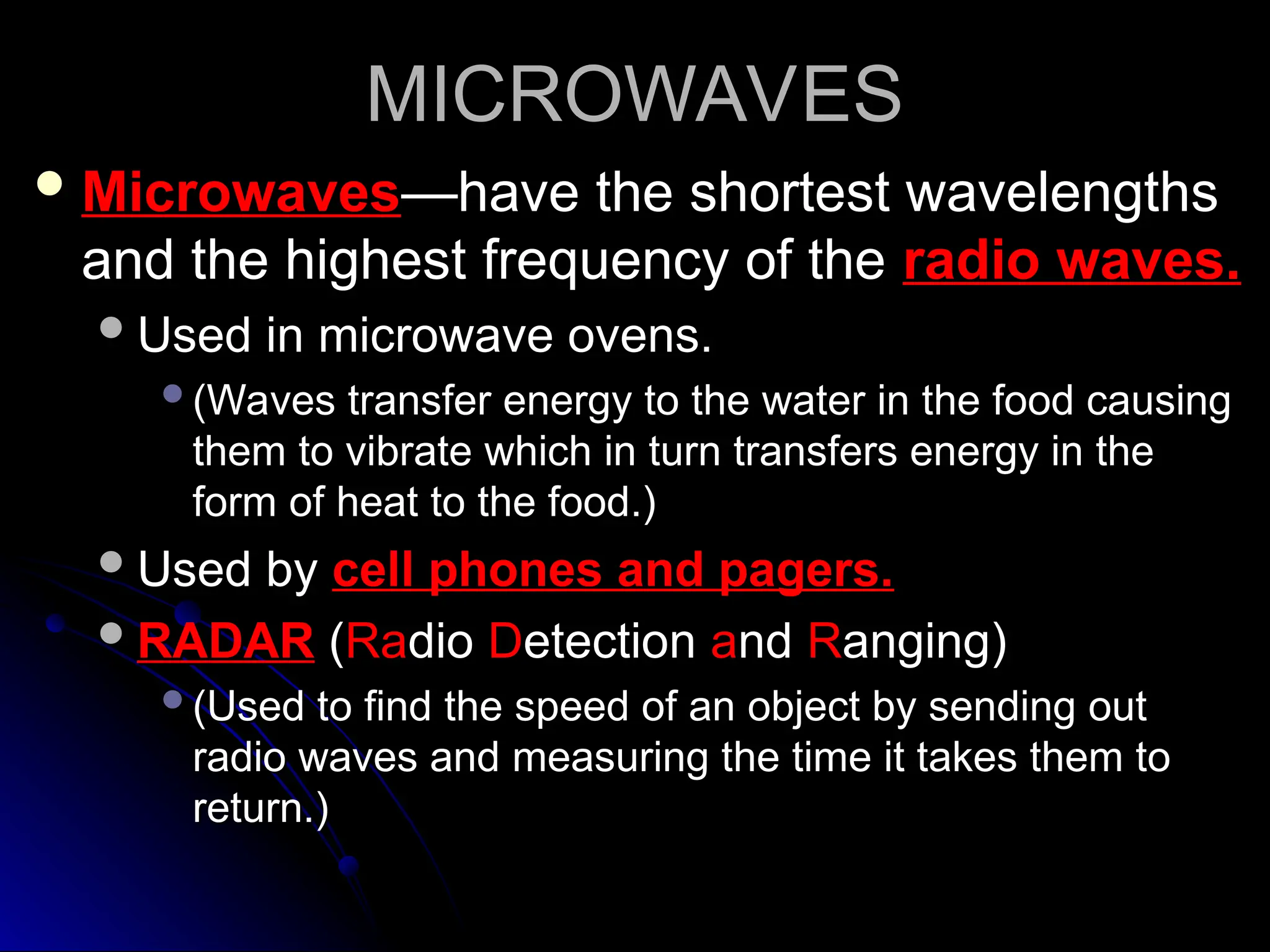
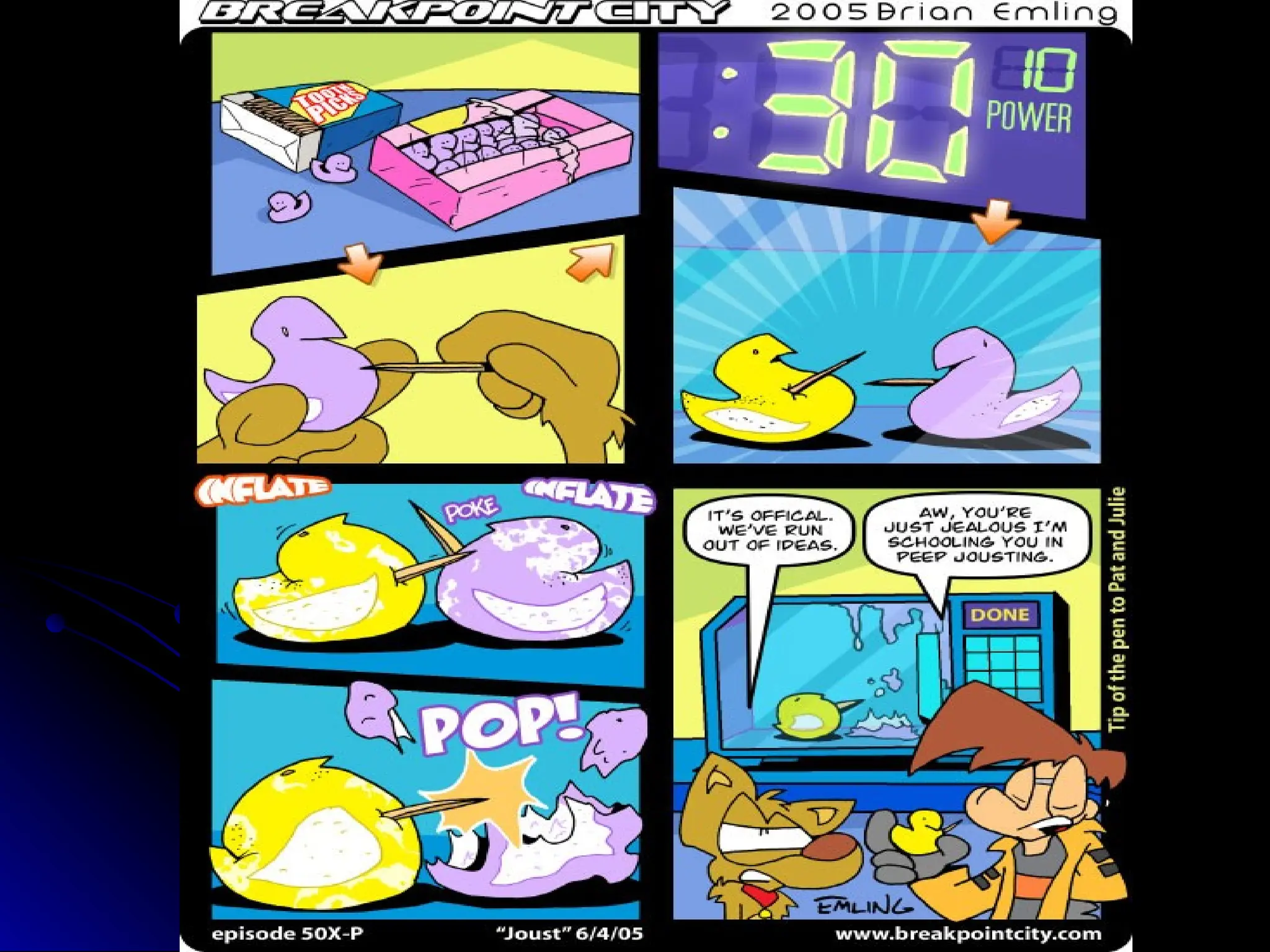
Used in microwave ovens.
Used in microwave ovens.
(Waves transfer energy to the water in the food causing
(Waves transfer energy to the water in the food causing
them to vibrate which in turn transfers energy in the
them to vibrate which in turn transfers energy in the
form of heat to the food.)
form of heat to the food.)
Used by
Used by cell phones and pagers.
cell phones and pagers.
RADAR
RADAR (
(Ra
Radio
dio D
Detection
etection a
and
nd R
Ranging)
anging)
(Used to find the speed of an object by sending out
(Used to find the speed of an object by sending out
radio waves and measuring the time it takes them to
radio waves and measuring the time it takes them to
return.)
return.)
17.
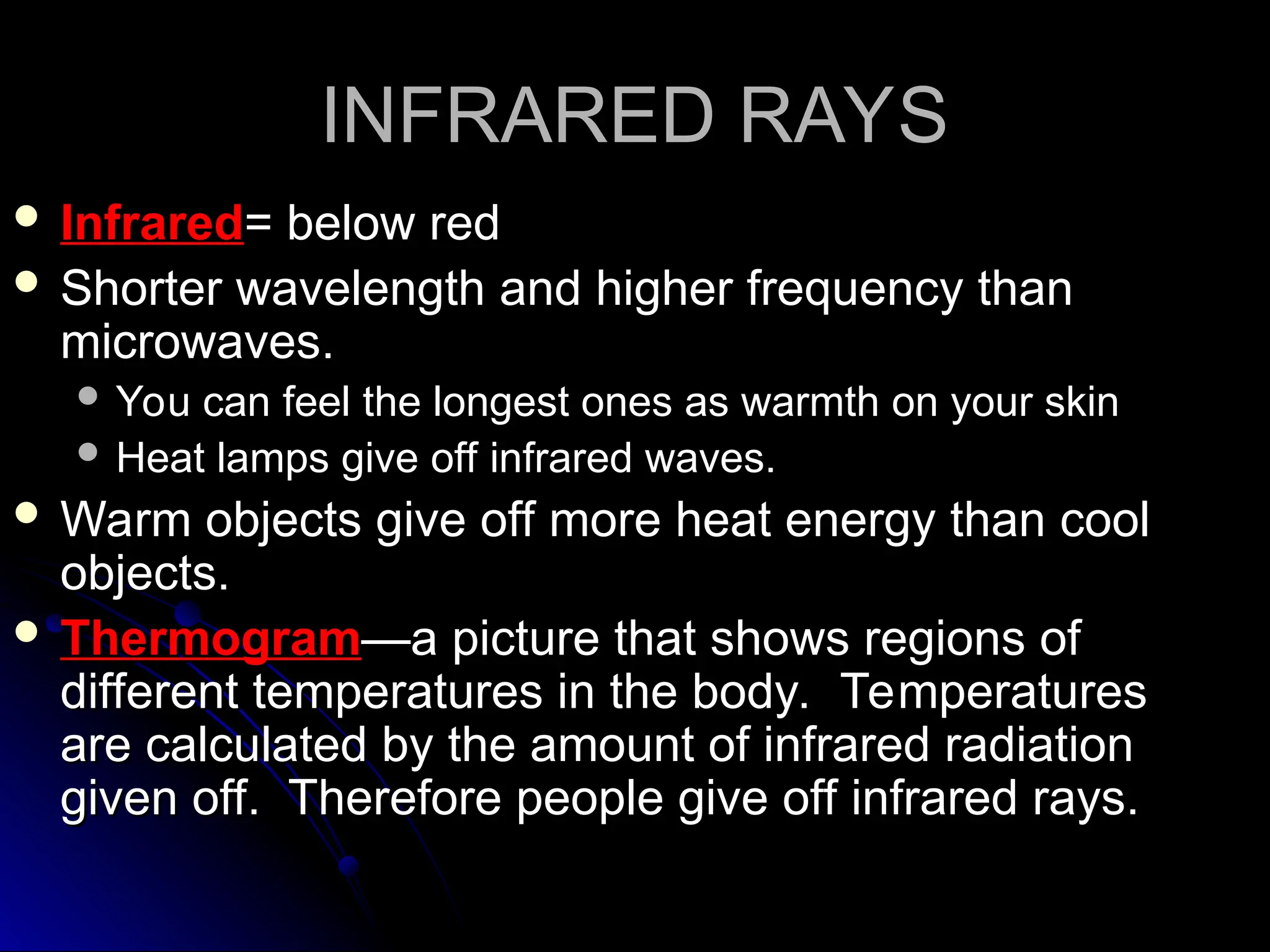
INFRARED RAYS
INFRARED RAYS
Infrared
Infrared= below red
= below red
Shorter wavelength and higher frequency than
Shorter wavelength and higher frequency than
microwaves.
microwaves.
You can feel the longest ones as warmth on your skin
You can feel the longest ones as warmth on your skin
Heat lamps give off infrared waves.
Heat lamps give off infrared waves.
Warm objects give off more heat energy than cool
Warm objects give off more heat energy than cool
objects.
objects.
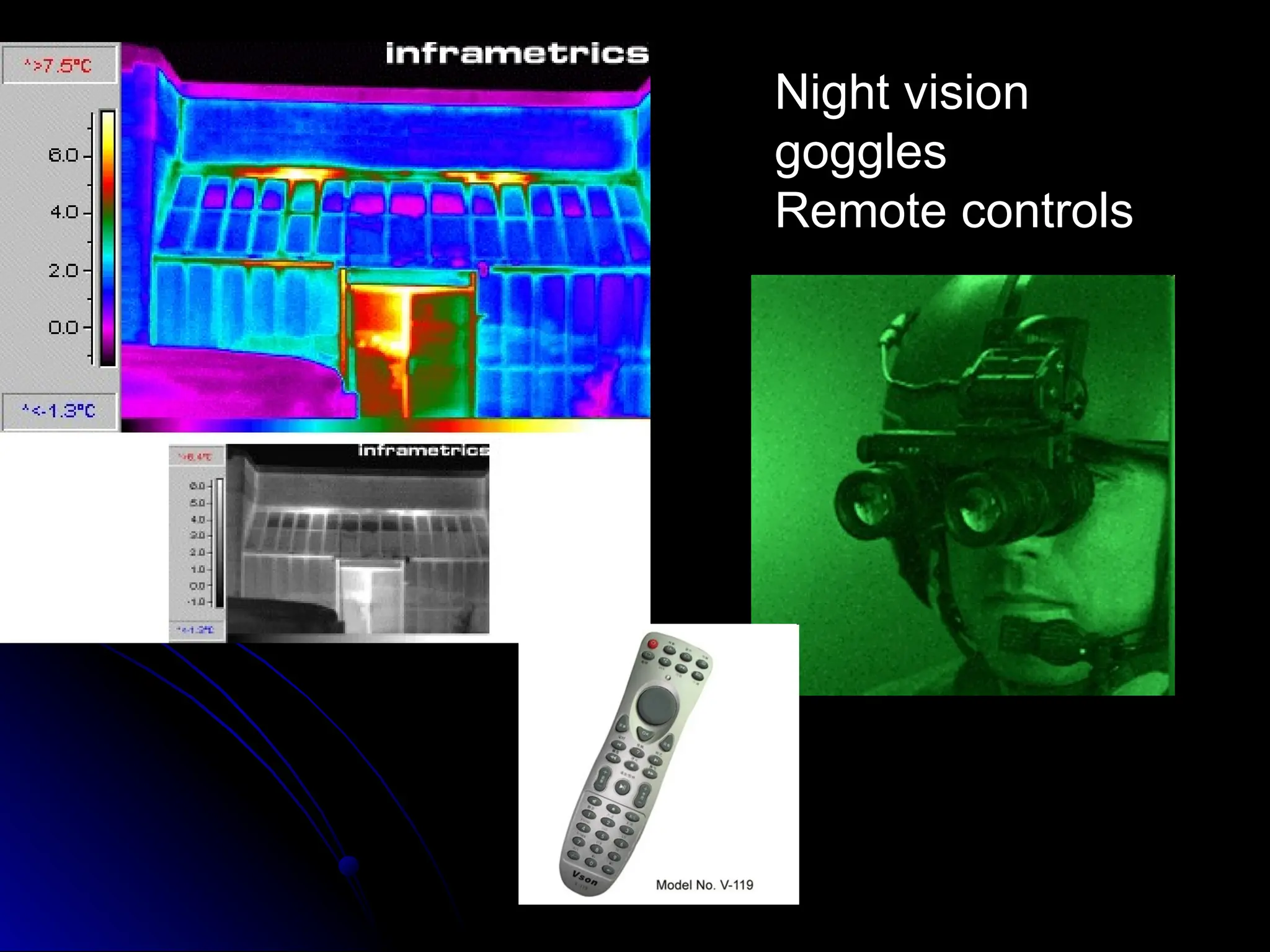
Thermogram
Thermogram—a picture that shows regions of
—a picture that shows regions of
different temperatures in the body. Temperatures
different temperatures in the body. Temperatures
are calculated by the amount of infrared radiation
are calculated by the amount of infrared radiation
given off. Therefore people give off infrared rays.
given off. Therefore people give off infrared rays.
Warm Up
Warm Up
1. Draw the EM spectrum.
1. Draw the EM spectrum.
2. What is a medium?
2. What is a medium?
3. Do EM waves need a medium to travel?
3. Do EM waves need a medium to travel?
4. What is a “vacuum”?
4. What is a “vacuum”?
5. What is a niche? Give an example.
5. What is a niche? Give an example.
6. What is ecology?
6. What is ecology?
20.
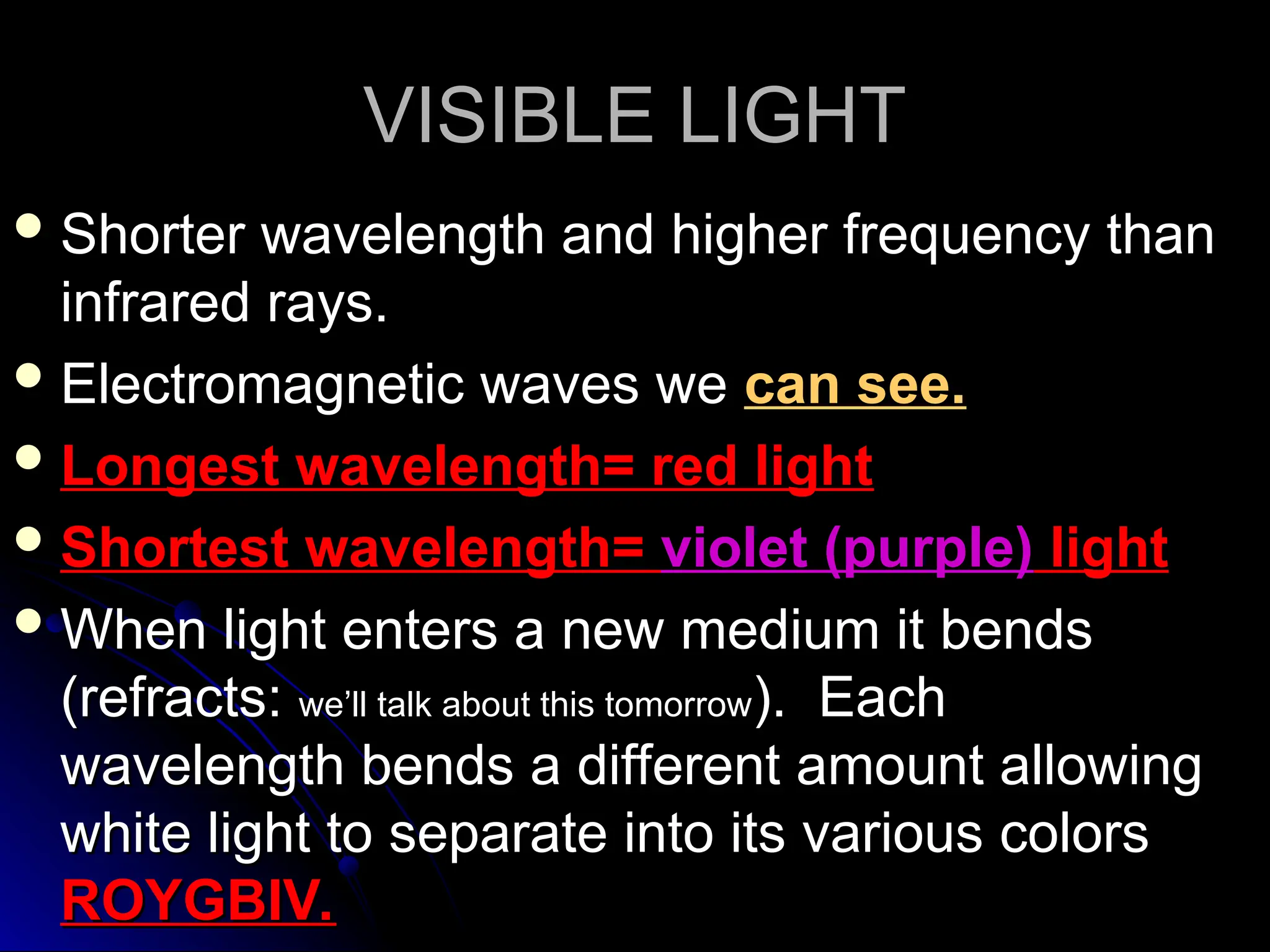
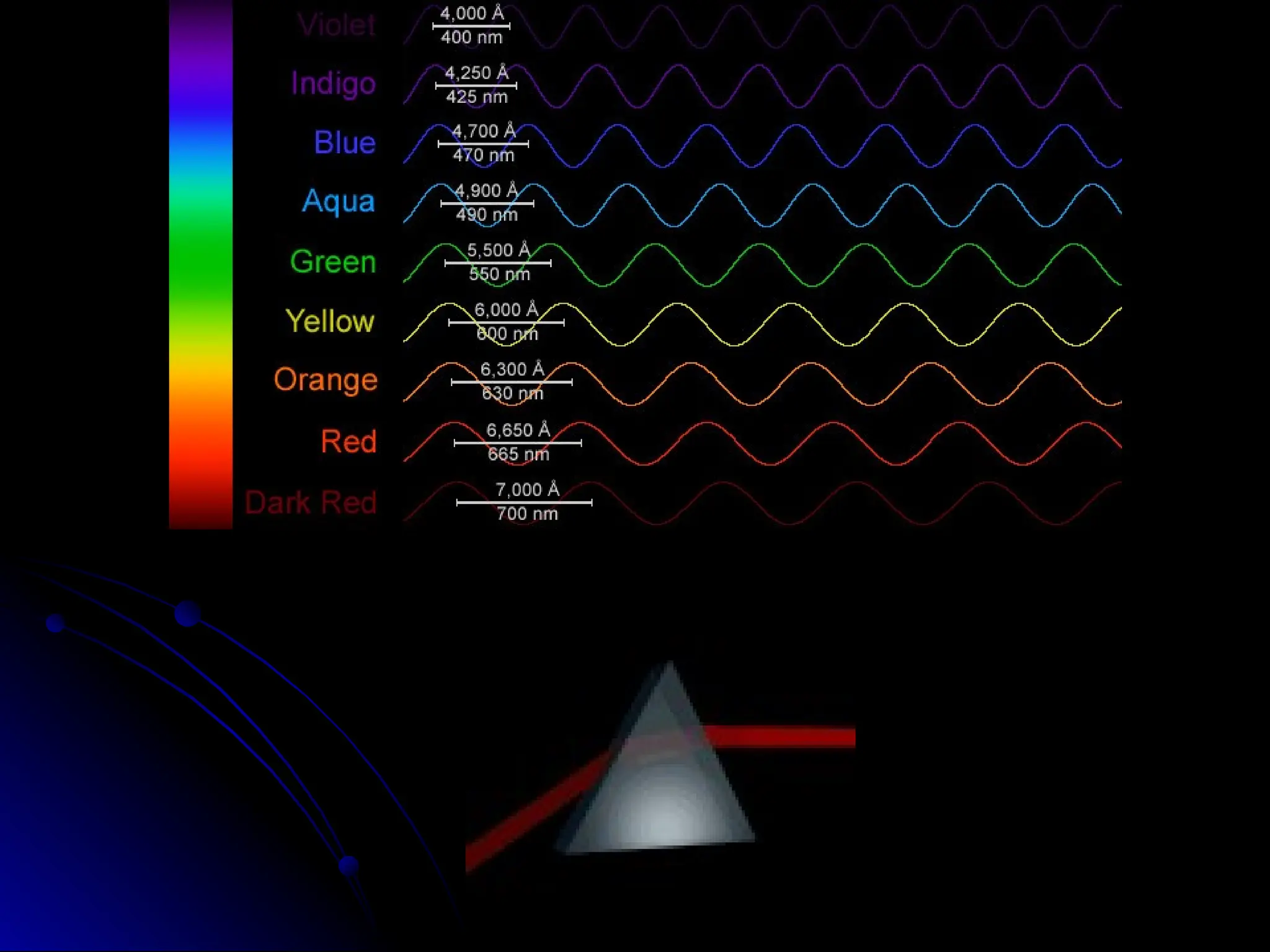
VISIBLE LIGHT
VISIBLE LIGHT
Shorter wavelength and higher frequency than
Shorter wavelength and higher frequency than
infrared rays.
infrared rays.
Electromagnetic waves we
Electromagnetic waves we can see.
can see.
Longest wavelength= red light
Longest wavelength= red light
Shortest wavelength=
Shortest wavelength= violet (purple)
violet (purple) light
light
When light enters a new medium it bends
When light enters a new medium it bends
(refracts:
(refracts: we’ll talk about this tomorrow
we’ll talk about this tomorrow). Each
). Each
wavelength bends a different amount allowing
wavelength bends a different amount allowing
white light to separate into its various colors
white light to separate into its various colors
ROYGBIV.
ROYGBIV.
22.
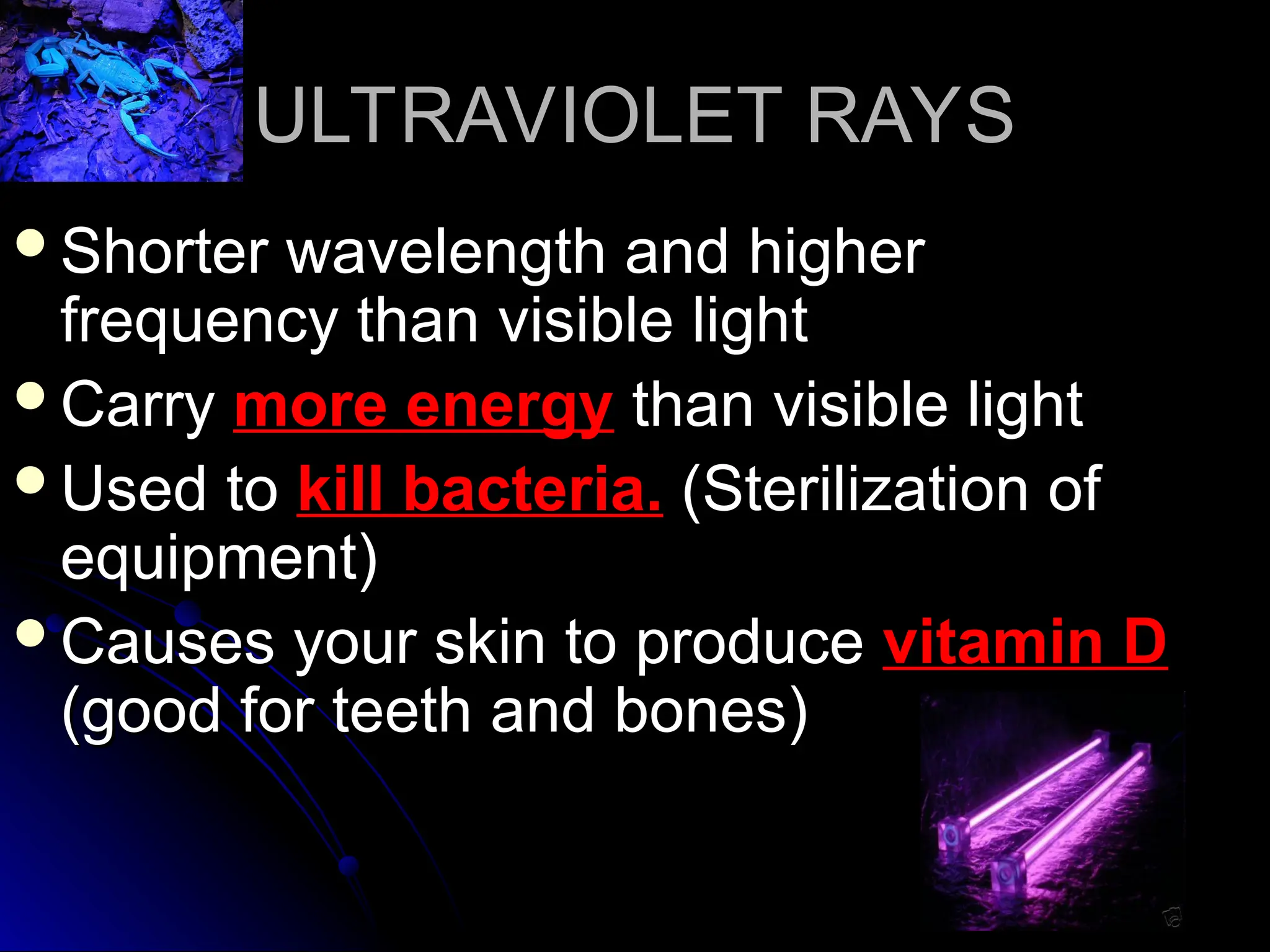
ULTRAVIOLET RAYS
ULTRAVIOLET RAYS
Shorterwavelength and higher
Shorter wavelength and higher
frequency than visible light
frequency than visible light
Carry
Carry more energy
more energy than visible light
than visible light
Used to
Used to kill bacteria.
kill bacteria. (Sterilization of
(Sterilization of
equipment)
equipment)
Causes your skin to produce
Causes your skin to produce vitamin D
vitamin D
(good for teeth and bones)
(good for teeth and bones)
23.
Ultraviolet (cont.)
Ultraviolet (cont.)
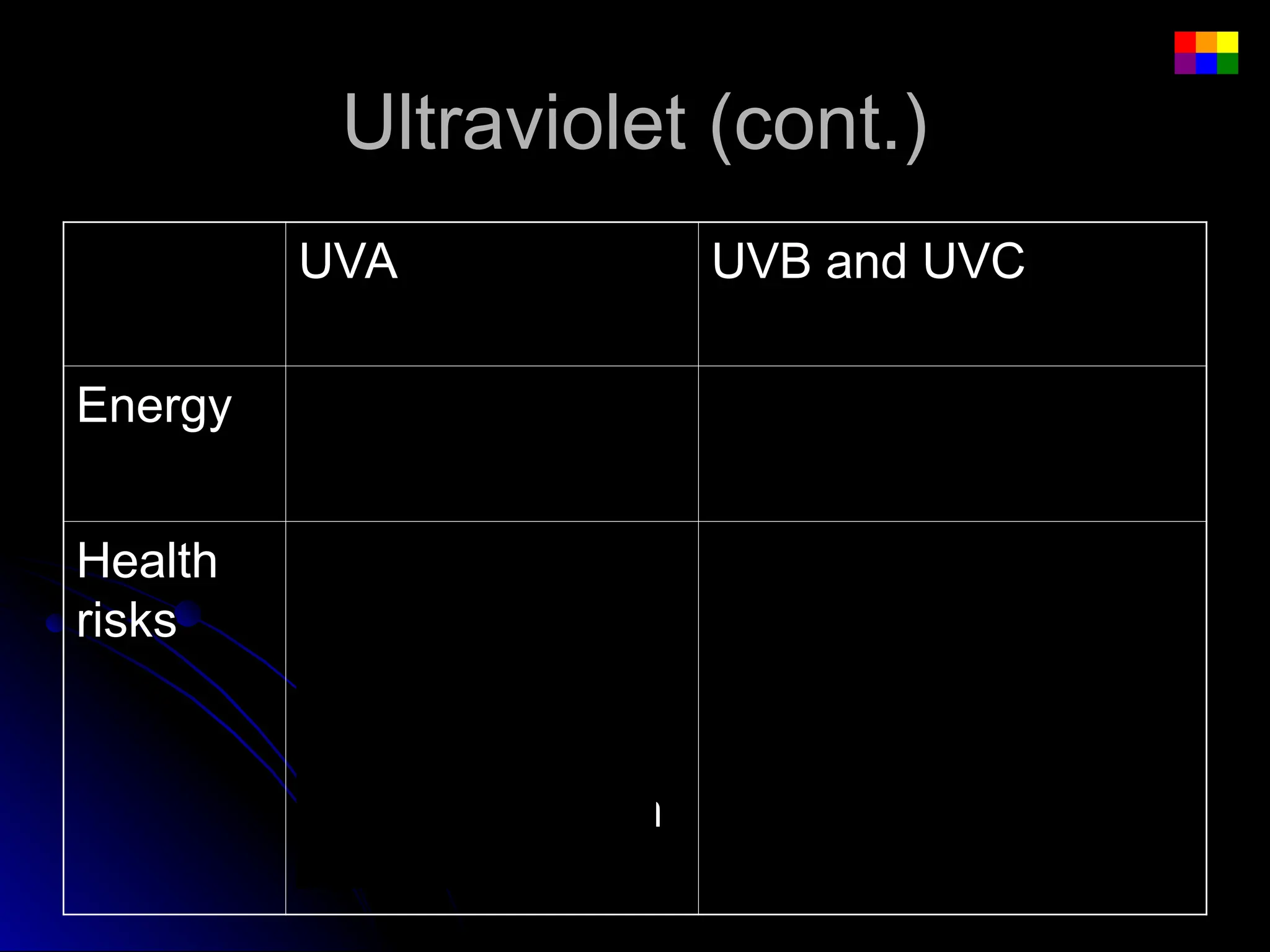
UVA
UVAUVB and UVC
UVB and UVC
Energy
Energy Highest of UV
Highest of UV
waves
waves
Lower than UVA
Lower than UVA
Health
Health
risks
risks
Extremely low
Extremely low
risk for DNA
risk for DNA
damage
damage
Can destroy
Can destroy
Vitamin A in skin
Vitamin A in skin
Can cause DNA
Can cause DNA
damage, leading to
damage, leading to
skin cancer
skin cancer
Responsible for
Responsible for
sunburn
sunburn
24.
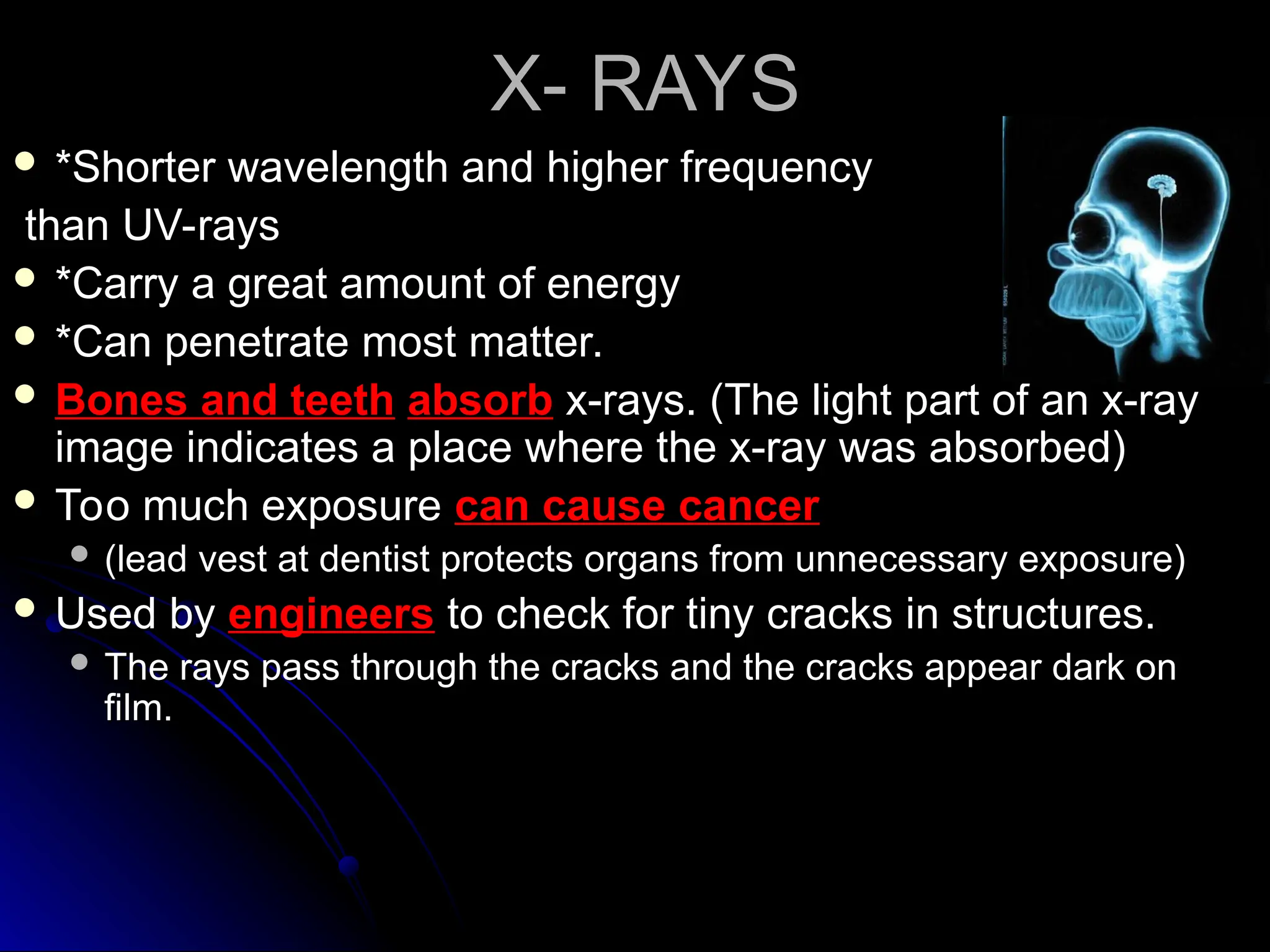
X- RAYS
X- RAYS
*Shorter wavelength and higher frequency
*Shorter wavelength and higher frequency
than UV-rays
than UV-rays
*Carry a great amount of energy
*Carry a great amount of energy
*Can penetrate most matter.
*Can penetrate most matter.
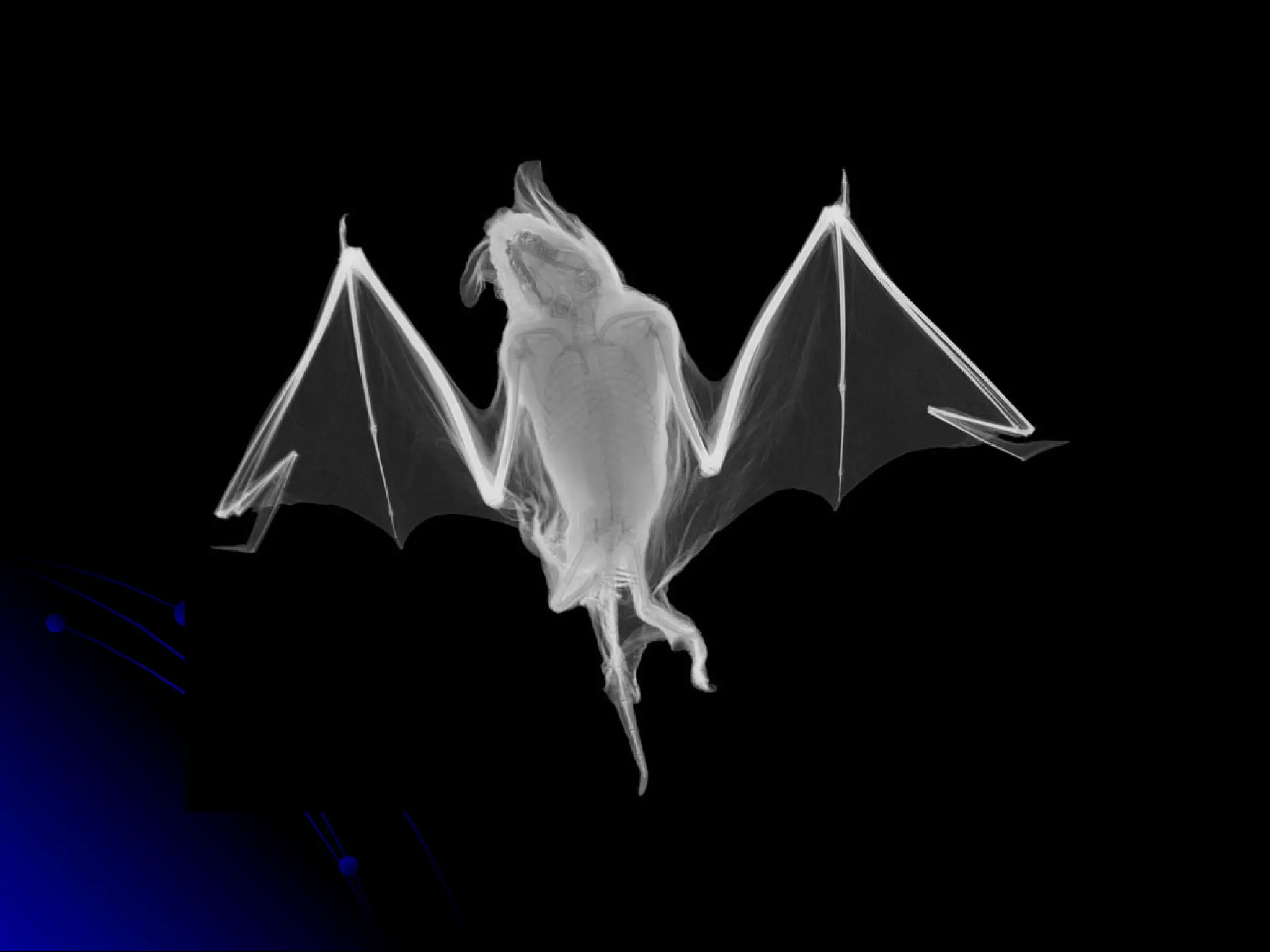
Bones and teeth
Bones and teeth absorb
absorb x-rays. (The light part of an x-ray
x-rays. (The light part of an x-ray
image indicates a place where the x-ray was absorbed)
image indicates a place where the x-ray was absorbed)
Too much exposure
Too much exposure can cause cancer
can cause cancer
(lead vest at dentist protects organs from unnecessary exposure)
(lead vest at dentist protects organs from unnecessary exposure)
Used by
Used by engineers
engineers to check for tiny cracks in structures.
to check for tiny cracks in structures.
The rays pass through the cracks and the cracks appear dark on
The rays pass through the cracks and the cracks appear dark on
film.
film.
26.
GAMMA RAYS
GAMMA RAYS
Shorter wavelength and higher frequency than
Shorter wavelength and higher frequency than
X-rays
X-rays
Carry the
Carry the greatest amount of energy
greatest amount of energy and
and
penetrate the most.
penetrate the most.
Used in
Used in radiation treatment
radiation treatment to kill cancer
to kill cancer
cells.
cells.
Can be very harmful if not used correctly.
Can be very harmful if not used correctly.
27.
Gamma Rays
Gamma Rays
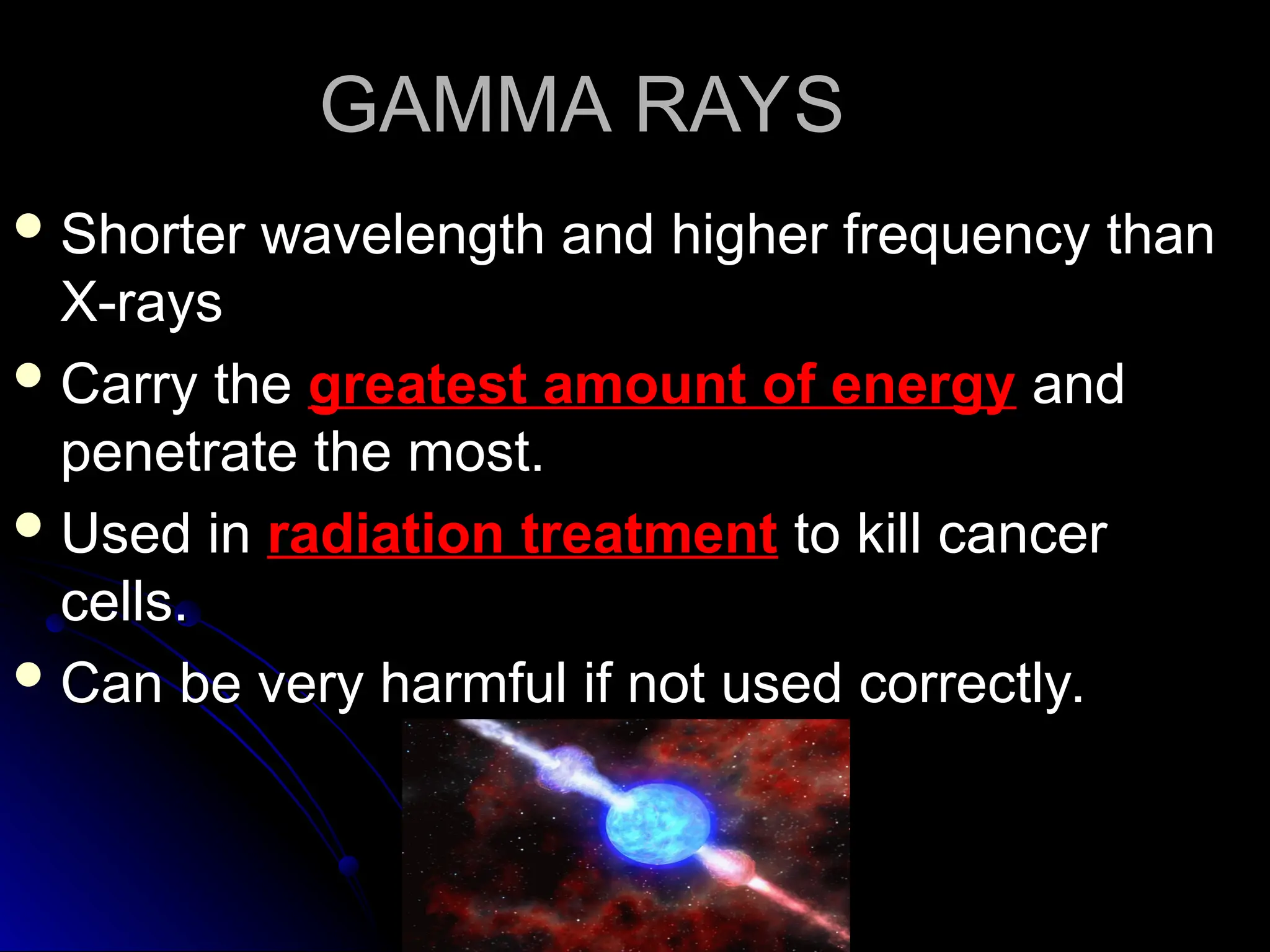
They are produced by the hottest and
They are produced by the hottest and
most energetic objects in the universe
most energetic objects in the universe,
,
such as neutron stars and pulsars,
such as neutron stars and pulsars,
supernova explosions, and regions around
supernova explosions, and regions around
black holes.
black holes.
On Earth, gamma waves are generated by
On Earth, gamma waves are generated by
nuclear explosions
nuclear explosions,
, lightning
lightning, and the less
, and the less
dramatic activity of
dramatic activity of radioactive decay
radioactive decay.
.
28.
Using the EMwaves to view the
Using the EM waves to view the
Sun
Sun
Animation
Animation—View a Galaxy at different wavelengths
—View a Galaxy at different wavelengths
Song:
Song:
http://www.youtube.com/watch?v=P_PVz8HrrCI&safe=active
http://www.youtube.com/watch?v=P_PVz8HrrCI&safe=active
29.
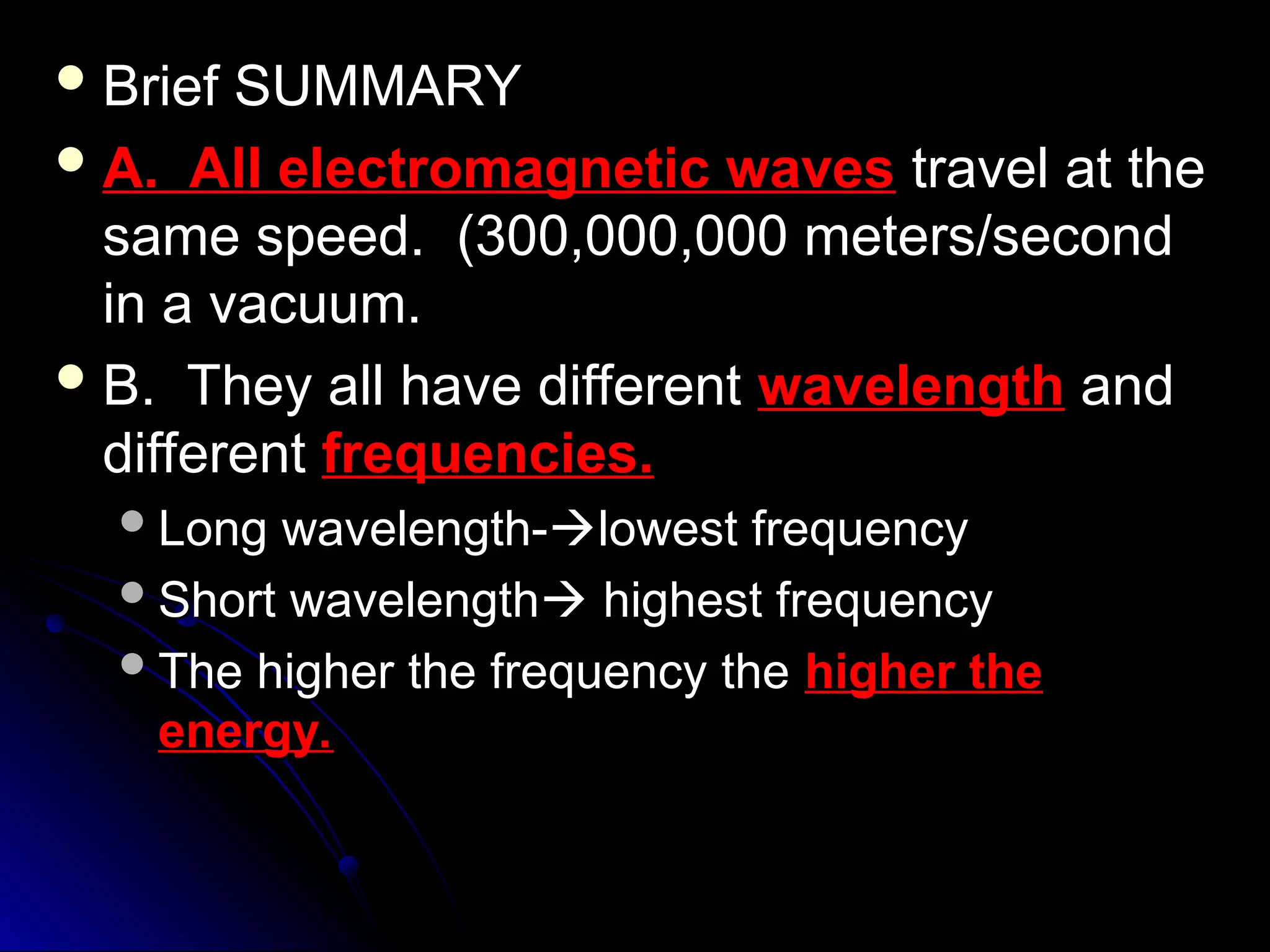
Brief SUMMARY
BriefSUMMARY
A. All electromagnetic waves
A. All electromagnetic waves travel at the
travel at the
same speed. (300,000,000 meters/second
same speed. (300,000,000 meters/second
in a vacuum.
in a vacuum.
B. They all have different
B. They all have different wavelength
wavelength and
and
different
different frequencies.
frequencies.
Long wavelength-
Long wavelength-
lowest frequency
lowest frequency
Short wavelength
Short wavelength
highest frequency
highest frequency
The higher the frequency the
The higher the frequency the higher the
higher the
energy.
energy.
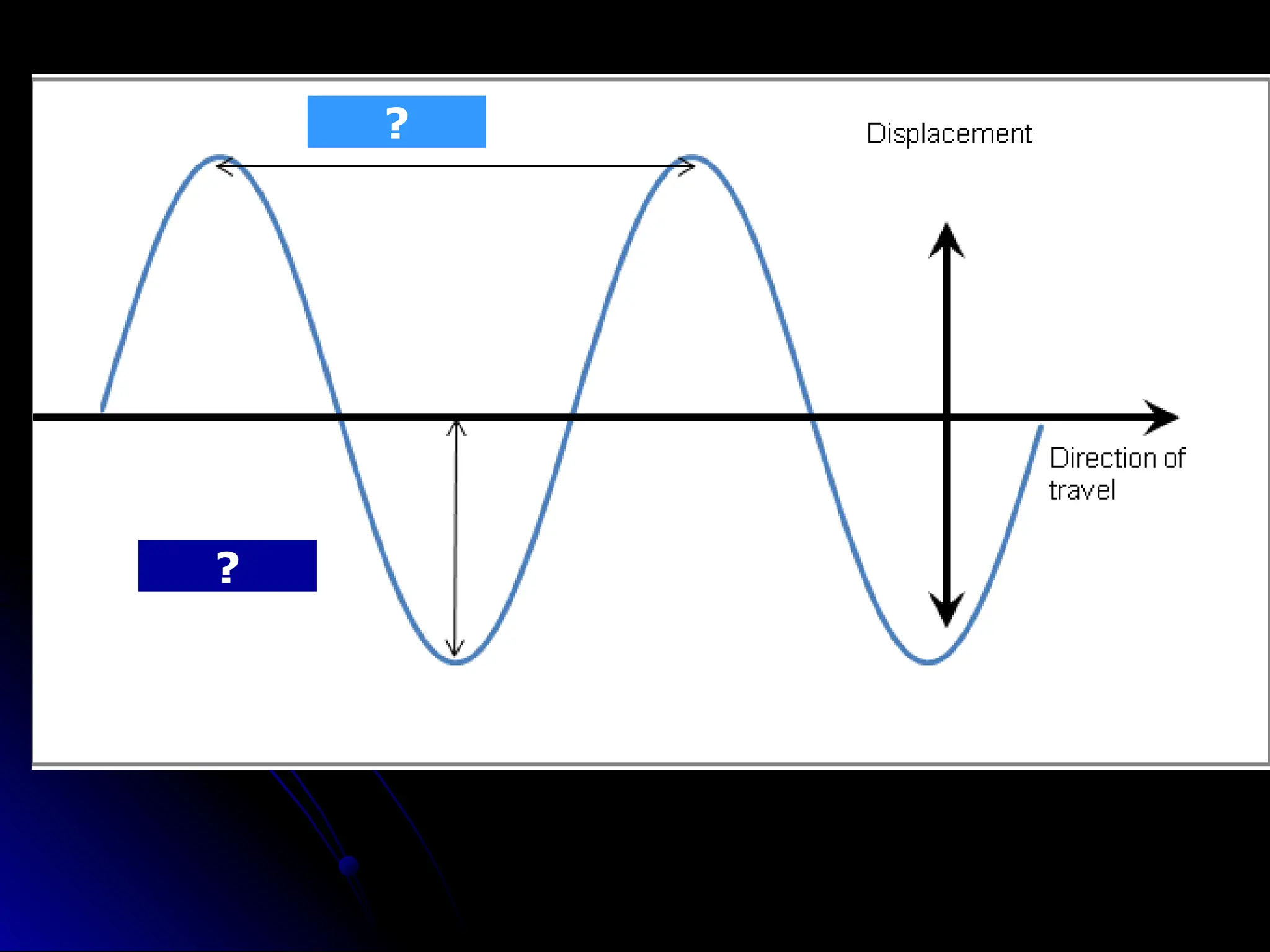
#4 Prompt students to guess what the teal box, then the blue box, is hiding. (Wavelength, Amplitude)
#23 Table will fill in from left to right, top to bottom as you advance through. Click the little rainbow box in the top right corner to return to the overview EM spectrum diagram