Electromagnetic spectrum
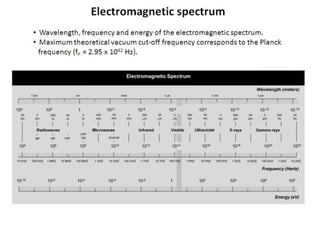
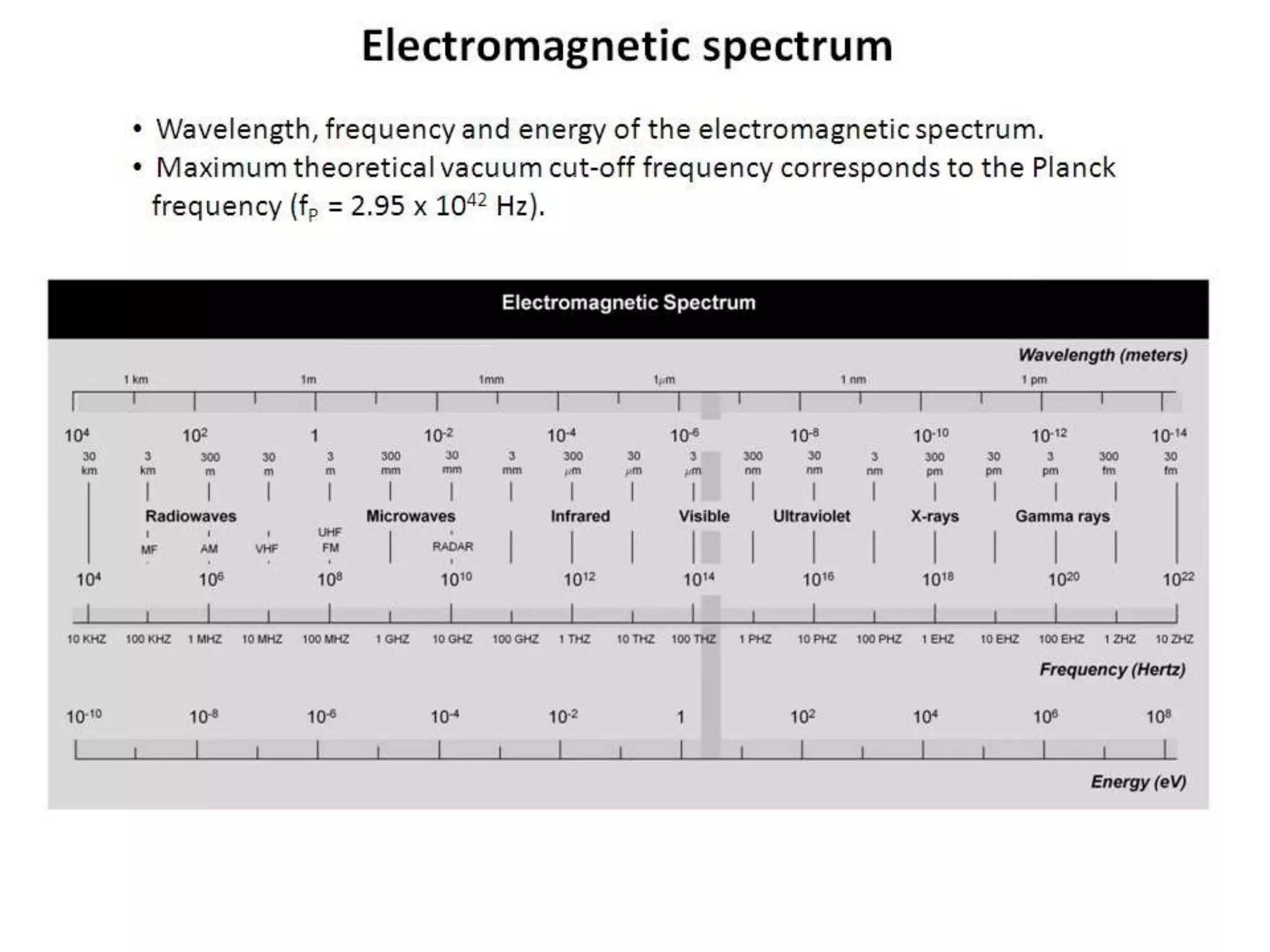
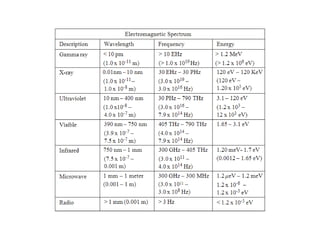
• Wavelength, frequency and energy of the electromagnetic spectrum.
• Maximum theoretical vacuum cut-off frequency corresponds to the Planck
frequency (fP = 2.95 x 1042 Hz).
Logarithmic spiral
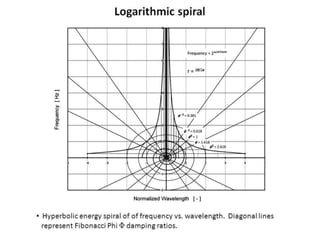
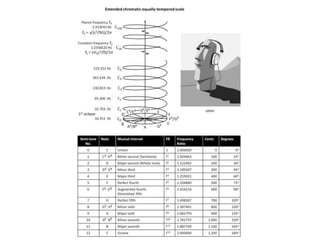
• Hyperbolic energy spiral of of frequency vs. wavelength. Diagonal lines
represent Fibonacci Phi F damping ratios.
Logarithmic (Hyperbolic) frequency spiral
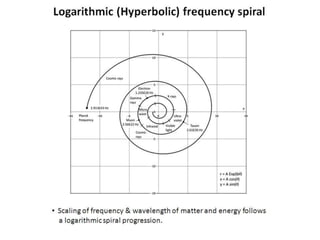
• Scaling of frequency & wavelength of matter and energy follows
a logarithmic spiral progression.
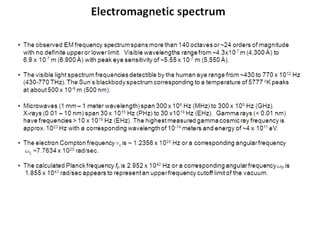
• The observed EM frequency spectrum spans more than 140 octaves or ~24 orders of magnitude
with no definite upper or lower limit. Visible wavelengths range from ~4.3x10⁻⁷ m (4,300 Å) to
6.9 x 10⁻⁷ m (6,900 Å) with peak eye sensitivity of ~5.55 x 10⁻⁷ m (5,550 Å).
• The visible light spectrum frequencies detectible by the human eye range from ~430 to 770 x 1012 Hz
(430-770 THz). The Sun’s blackbody spectrum corresponding to a temperature of 5777 oK peaks
at about 500 x 10-9 m (500 nm).
• Microwaves (1 mm – 1 meter wavelength) span 300 x 106 Hz (MHz) to 300 x 109 Hz (GHz).
X-rays (0.01 – 10 nm) span 30 x 1015 Hz (PHz) to 30 x1018 Hz (EHz). Gamma rays (< 0.01 nm)
have frequencies > 10 x 1018 Hz (EHz). The highest measured gamma cosmic ray frequency is
approx. 1023 Hz with a corresponding wavelength of 10-14 meters and energy of ~4 x 10¹¹ eV.
• The electron Compton frequency nc is ~ 1.2356 x 10²⁰ Hz or a corresponding angular frequency
wc ~7.7634 x 10²⁰ rad/sec.
• The calculated Planck frequency fP is 2.952 x 1042 Hz or a corresponding angular frequency wP is
1.855 x 1043 rad/sec appears to represent an upper frequency cutoff limit of the vacuum.
Electromagnetic spectrum

Electromagnetic spectrum

  • 1.
    Electromagnetic spectrum • Wavelength,frequency and energy of the electromagnetic spectrum. • Maximum theoretical vacuum cut-off frequency corresponds to the Planck frequency (fP = 2.95 x 1042 Hz).
  • 2.
    Logarithmic spiral • Hyperbolicenergy spiral of of frequency vs. wavelength. Diagonal lines represent Fibonacci Phi F damping ratios.
  • 3.
    Logarithmic (Hyperbolic) frequencyspiral • Scaling of frequency & wavelength of matter and energy follows a logarithmic spiral progression.
  • 4.
    • The observedEM frequency spectrum spans more than 140 octaves or ~24 orders of magnitude with no definite upper or lower limit. Visible wavelengths range from ~4.3x10⁻⁷ m (4,300 Å) to 6.9 x 10⁻⁷ m (6,900 Å) with peak eye sensitivity of ~5.55 x 10⁻⁷ m (5,550 Å). • The visible light spectrum frequencies detectible by the human eye range from ~430 to 770 x 1012 Hz (430-770 THz). The Sun’s blackbody spectrum corresponding to a temperature of 5777 oK peaks at about 500 x 10-9 m (500 nm). • Microwaves (1 mm – 1 meter wavelength) span 300 x 106 Hz (MHz) to 300 x 109 Hz (GHz). X-rays (0.01 – 10 nm) span 30 x 1015 Hz (PHz) to 30 x1018 Hz (EHz). Gamma rays (< 0.01 nm) have frequencies > 10 x 1018 Hz (EHz). The highest measured gamma cosmic ray frequency is approx. 1023 Hz with a corresponding wavelength of 10-14 meters and energy of ~4 x 10¹¹ eV. • The electron Compton frequency nc is ~ 1.2356 x 10²⁰ Hz or a corresponding angular frequency wc ~7.7634 x 10²⁰ rad/sec. • The calculated Planck frequency fP is 2.952 x 1042 Hz or a corresponding angular frequency wP is 1.855 x 1043 rad/sec appears to represent an upper frequency cutoff limit of the vacuum. Electromagnetic spectrum