ELECTRICITY GENERATION
  FROM SPEED BREAKER
                    BY


                 M.DEVENDER
                 (08C31A0232)
BALAJI INSTITUTE OF TECHNOLOGY AND SCIENCE
Introduction:
 Is anyone happy with current situation of
  electricity in India?
 So, this is our small step to try to improve
  this situation by our project.
 A large amount of energy is wasted at the
  speed breakers through friction, every
  time a vehicle passes over it.
Scope and Uses:
 Low Budget electricity production
 Less floor area
 No obstruction to traffic
 Easy maintenance
 Suitable at parking of multiplexes, malls,
  toll booths, signals, etc.
 Uses: Charging batteries and using them
  to light up the streets, etc.
BASIC PRINCIPLE:
  Simple energy conversion from
   Mechanical to Electrical.
 To generate electricity using the vehicle
   weight (potential energy) as input
 Possible using 3 different mechanisms:
I. Crank-shaft mechanism
II. Roller mechanism
III. Rack- Pinion mechanism
 Crank-shafts are required to be mounted
  on bearings which creates balancing
  problem leading to mechanical vibrations
  which in turn damage the bearings.
 Secondly as bearings are of sliding type,
  any occurrence of variable load( which is
  bit obvious in case of vehicles!!) leads to
  balancing problem.
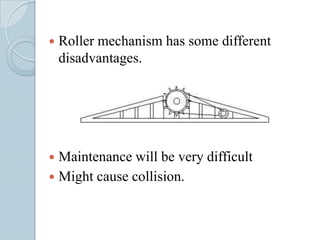
   Roller mechanism has some different
    disadvantages.


 Maintenance will be very difficult
 Might cause collision.
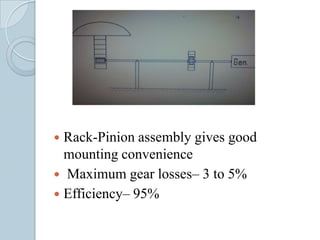
 Rack-Pinion assembly gives good
  mounting convenience
 Maximum gear losses– 3 to 5%
 Efficiency– 95%
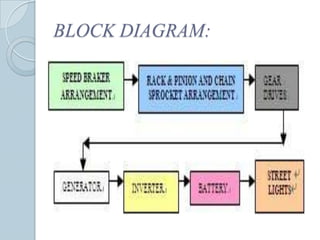
BLOCK DIAGRAM:
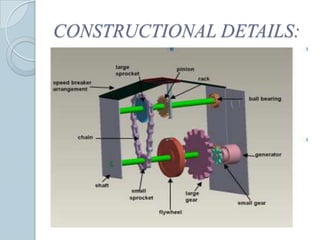
CONSTRUCTIONAL DETAILS:
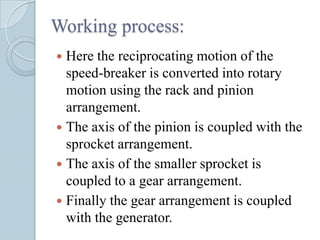
Working process:
 Here the reciprocating motion of the
  speed-breaker is converted into rotary
  motion using the rack and pinion
  arrangement.
 The axis of the pinion is coupled with the
  sprocket arrangement.
 The axis of the smaller sprocket is
  coupled to a gear arrangement.
 Finally the gear arrangement is coupled
  with the generator.
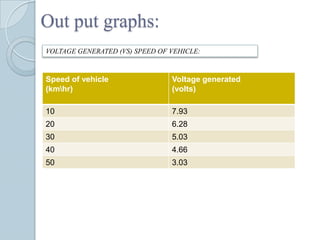
Out put graphs:
VOLTAGE GENERATED (VS) SPEED OF VEHICLE:


Speed of vehicle                Voltage generated
(kmhr)                         (volts)

10                              7.93
20                              6.28
30                              5.03
40                              4.66
50                              3.03
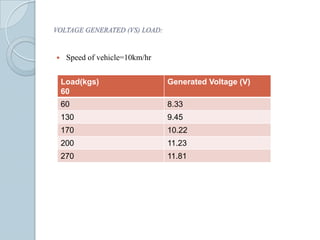
VOLTAGE GENERATED (VS) LOAD:


    Speed of vehicle=10km/hr


    Load(kgs)                   Generated Voltage (V)
    60
    60                          8.33
    130                         9.45
    170                         10.22
    200                         11.23
    270                         11.81
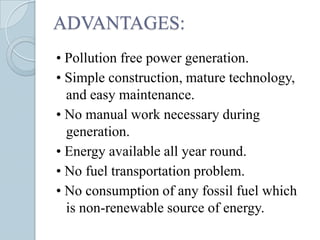
ADVANTAGES:
• Pollution free power generation.
• Simple construction, mature technology,
  and easy maintenance.
• No manual work necessary during
  generation.
• Energy available all year round.
• No fuel transportation problem.
• No consumption of any fossil fuel which
  is non-renewable source of energy.
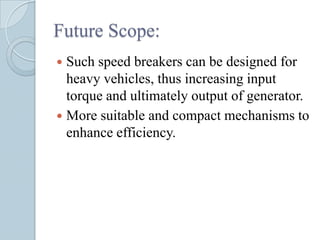
Future Scope:
 Such speed breakers can be designed for
  heavy vehicles, thus increasing input
  torque and ultimately output of generator.
 More suitable and compact mechanisms to
  enhance efficiency.
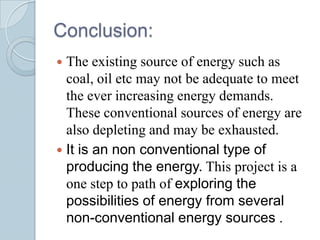
Conclusion:
 The existing source of energy such as
  coal, oil etc may not be adequate to meet
  the ever increasing energy demands.
  These conventional sources of energy are
  also depleting and may be exhausted.
 It is an non conventional type of
  producing the energy. This project is a
  one step to path of exploring the
  possibilities of energy from several
  non-conventional energy sources .
Electrical3.1

Electrical3.1

  • 1.
    ELECTRICITY GENERATION FROM SPEED BREAKER BY M.DEVENDER (08C31A0232) BALAJI INSTITUTE OF TECHNOLOGY AND SCIENCE
  • 2.
    Introduction:  Is anyonehappy with current situation of electricity in India?  So, this is our small step to try to improve this situation by our project.  A large amount of energy is wasted at the speed breakers through friction, every time a vehicle passes over it.
  • 3.
    Scope and Uses: Low Budget electricity production  Less floor area  No obstruction to traffic  Easy maintenance  Suitable at parking of multiplexes, malls, toll booths, signals, etc.  Uses: Charging batteries and using them to light up the streets, etc.
  • 4.
    BASIC PRINCIPLE:  Simple energy conversion from Mechanical to Electrical.  To generate electricity using the vehicle weight (potential energy) as input  Possible using 3 different mechanisms: I. Crank-shaft mechanism II. Roller mechanism III. Rack- Pinion mechanism
  • 5.
     Crank-shafts arerequired to be mounted on bearings which creates balancing problem leading to mechanical vibrations which in turn damage the bearings.  Secondly as bearings are of sliding type, any occurrence of variable load( which is bit obvious in case of vehicles!!) leads to balancing problem.
  • 6.
    Roller mechanism has some different disadvantages.  Maintenance will be very difficult  Might cause collision.
  • 7.
     Rack-Pinion assemblygives good mounting convenience  Maximum gear losses– 3 to 5%  Efficiency– 95%
  • 8.
  • 9.
  • 10.
    Working process:  Herethe reciprocating motion of the speed-breaker is converted into rotary motion using the rack and pinion arrangement.  The axis of the pinion is coupled with the sprocket arrangement.  The axis of the smaller sprocket is coupled to a gear arrangement.  Finally the gear arrangement is coupled with the generator.
  • 11.
    Out put graphs: VOLTAGEGENERATED (VS) SPEED OF VEHICLE: Speed of vehicle Voltage generated (kmhr) (volts) 10 7.93 20 6.28 30 5.03 40 4.66 50 3.03
  • 12.
    VOLTAGE GENERATED (VS)LOAD:  Speed of vehicle=10km/hr Load(kgs) Generated Voltage (V) 60 60 8.33 130 9.45 170 10.22 200 11.23 270 11.81
  • 13.
    ADVANTAGES: • Pollution freepower generation. • Simple construction, mature technology, and easy maintenance. • No manual work necessary during generation. • Energy available all year round. • No fuel transportation problem. • No consumption of any fossil fuel which is non-renewable source of energy.
  • 14.
    Future Scope:  Suchspeed breakers can be designed for heavy vehicles, thus increasing input torque and ultimately output of generator.  More suitable and compact mechanisms to enhance efficiency.
  • 15.
    Conclusion:  The existingsource of energy such as coal, oil etc may not be adequate to meet the ever increasing energy demands. These conventional sources of energy are also depleting and may be exhausted.  It is an non conventional type of producing the energy. This project is a one step to path of exploring the possibilities of energy from several non-conventional energy sources .