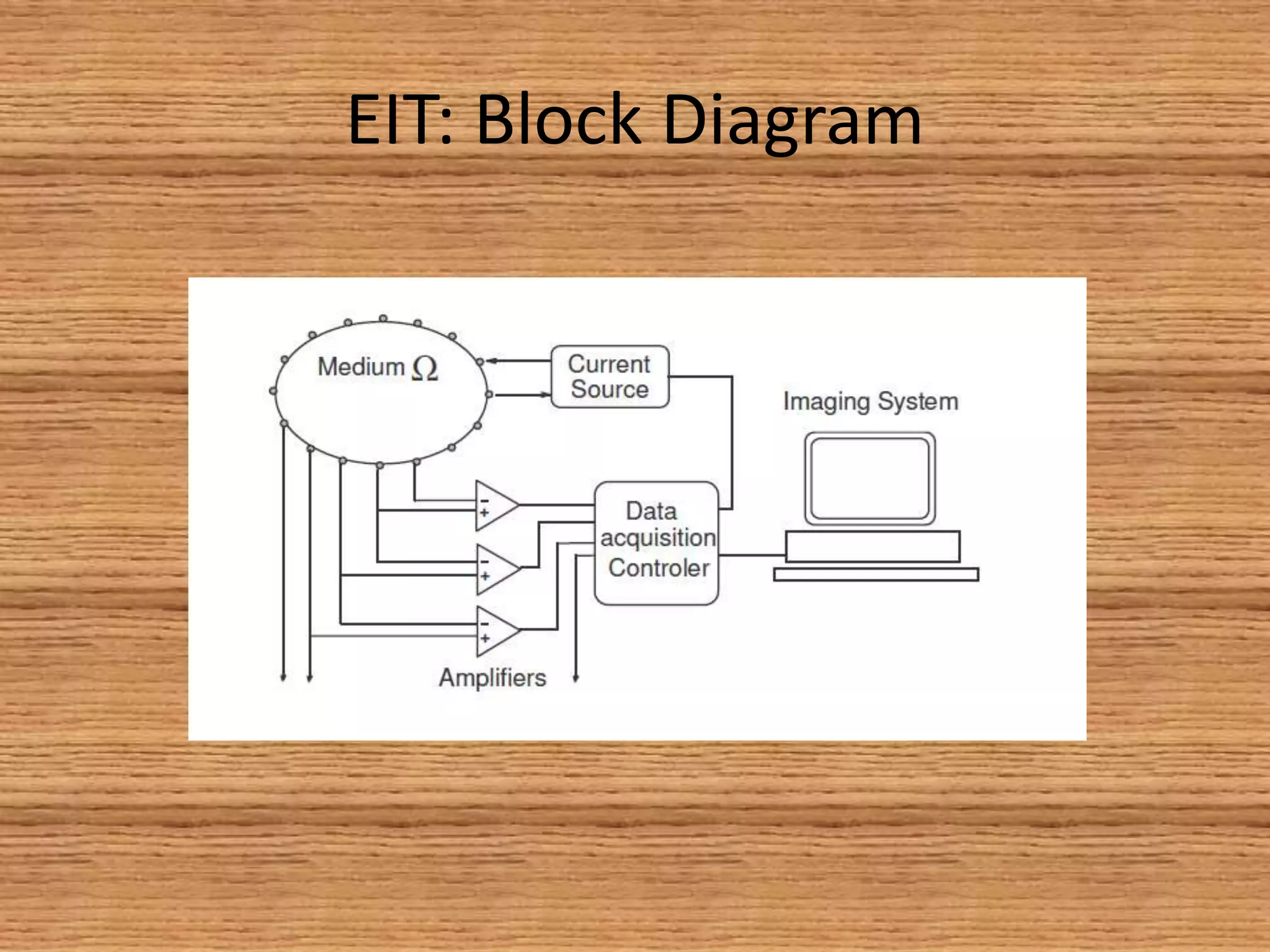
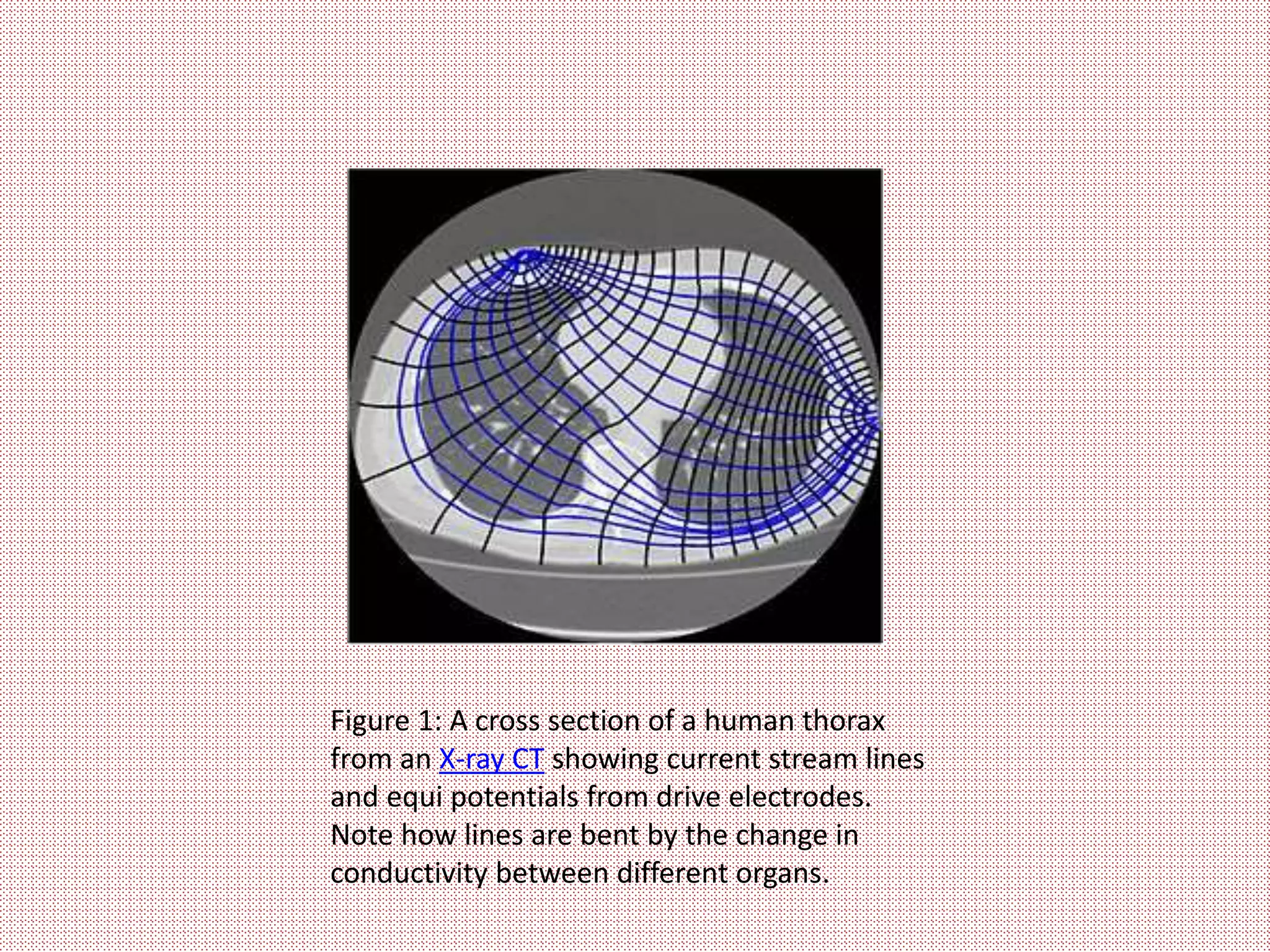
Electrical impedance tomography (EIT) is a medical imaging technique that uses surface electrodes to apply currents and measure voltages to reconstruct images showing the internal conductivity distribution. EIT has applications in imaging physiological processes involving fluid movement in organs like lungs, heart, and brain. It has advantages of being non-invasive, portable, and low-cost compared to other modalities like CT. However, EIT also has disadvantages like lower resolution and the complex inverse problem of reconstructing 3D conductivity based on 2D electrode measurements.