DEAR STUDENTS
Welcome to the II nd part of
e-learning.
Here we are going to view
materials about some of the
delivery methods of
e-learning, Instructor led training
and about the Concept of e-
learning.
E-learning is a means of education that incorporates
 self-motivation,
communication,
 efficiency, and
 technology.
Distance between the student and the instructor is
eliminated.
 E-learning is efficient as it eliminates distances by
 properly equipped computer terminals, and other
means of Internet accessible technology
E-learning is a flexible term used to
describe a means of teaching through
technology.
The different types of e-learning are
based on:
•Means of communication(through
online, face to face, blended learning)
•Schedule(synchronous &Asynchronous)
•E-learning class structure(self-paced,
instructor-led, or self-study with an
expert)
•Technologies used
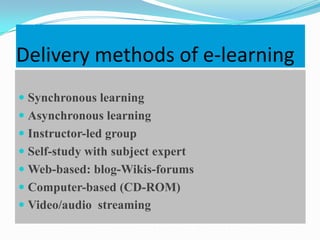
Delivery methods of e-learning
 Synchronous learning
 Asynchronous learning
 Instructor-led group
 Self-study with subject expert
 Web-based: blog-Wikis-forums
 Computer-based (CD-ROM)
 Video/audio streaming
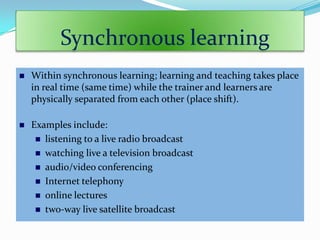
Synchronous learning
   Within synchronous learning; learning and teaching takes place
    in real time (same time) while the trainer and learners are
    physically separated from each other (place shift).

   Examples include:
      listening to a live radio broadcast
      watching live a television broadcast
      audio/video conferencing
      Internet telephony
      online lectures
      two-way live satellite broadcast
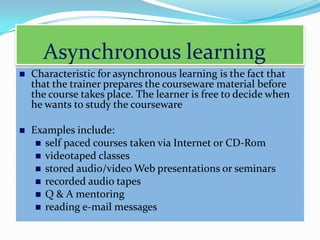
Asynchronous learning
   Characteristic for asynchronous learning is the fact that
    that the trainer prepares the courseware material before
    the course takes place. The learner is free to decide when
    he wants to study the courseware

   Examples include:
      self paced courses taken via Internet or CD-Rom
      videotaped classes
      stored audio/video Web presentations or seminars
      recorded audio tapes
      Q & A mentoring
      reading e-mail messages
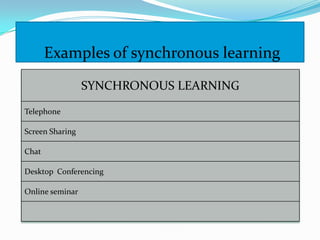
Examples of synchronous learning
                 SYNCHRONOUS LEARNING
Telephone

Screen Sharing

Chat

Desktop Conferencing

Online seminar
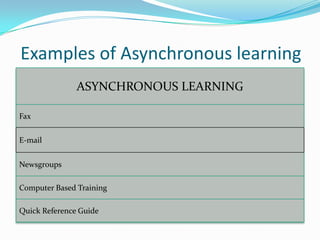
Examples of Asynchronous learning
               ASYNCHRONOUS LEARNING

Fax

E-mail


Newsgroups

Computer Based Training

Quick Reference Guide
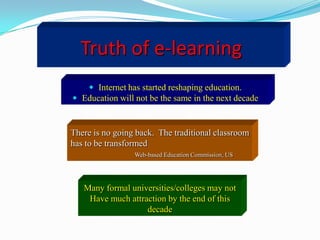
Truth of e-learning
      Internet has started reshaping education.
 Education will not be the same in the next decade


There is no going back. The traditional classroom
has to be transformed
                 Web-based Education Commission, US


   Many formal universities/colleges may not
    Have much attraction by the end of this
                   decade
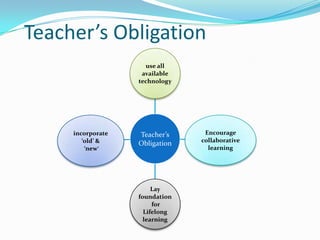
Teacher’s Obligation
                     use all
                    available
                   technology


     incorporate   Teacher’s     Encourage
        ‘old’ &                 collaborative
                   Obligation
         ‘new’                    learning


                        Lay
                   foundation
                        for
                     Lifelong
                     learning
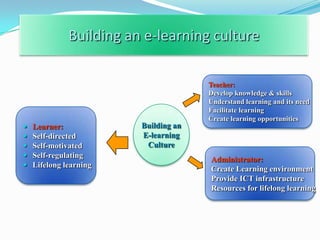
Building an e-learning culture

                                       Teacher:
                                       Develop knowledge & skills
                                       Understand learning and its need
                                       Facilitate learning
                                       Create learning opportunities
   Learner:             Building an
   Self-directed        E-learning
   Self-motivated        Culture
   Self-regulating                    Administrator:
   Lifelong learning                  Create Learning environment
                                       Provide ICT infrastructure
                                       Resources for lifelong learning
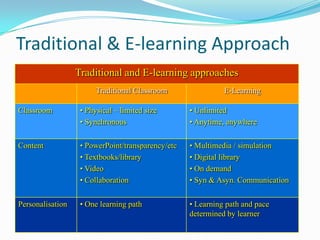
Traditional & E-learning Approach
                  Traditional and E-learning approaches
                        Traditional Classroom                E-Learning

Classroom          • Physical – limited size       • Unlimited
                   • Synchronous                   • Anytime, anywhere

Content            • PowerPoint/transparency/etc   • Multimedia / simulation
                   • Textbooks/library             • Digital library
                   • Video                         • On demand
                   • Collaboration                 • Syn & Asyn. Communication


Personalisation    • One learning path             • Learning path and pace
                                                   determined by learner
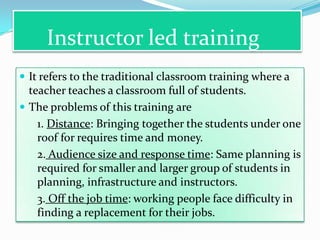
Instructor led training
 It refers to the traditional classroom training where a
  teacher teaches a classroom full of students.
 The problems of this training are
    1. Distance: Bringing together the students under one
    roof for requires time and money.
    2. Audience size and response time: Same planning is
    required for smaller and larger group of students in
    planning, infrastructure and instructors.
    3. Off the job time: working people face difficulty in
    finding a replacement for their jobs.
Concept of e-learning
    In our rapid changing world, we
find it difficult to overcome the
learning challenges and the possible
achievements.
    To bridge this gap, the concepts
such as e-learning, e-teaching, e-
teachers has become the part of
effective education.
E-teaching
 E-teaching is the appreciation of live teaching with
  streaming lectures, whiteboards, downloadable slide
  sets and discussion forum.
 E-teaching is an automation of an existing teacher-
  centered educational approach
 The real work is in creating content and learning
  management systems that support e-learning.
E-teachers
 E-teachers are teachers who work in an internet
  environment in both regular and virtual classroom
  situations.
 They build new concepts of working in time and space.
 They find new learning resources as they interact with
  information, materials and ideas with their students
  and colleagues.

Elearning-II

  • 1.
    DEAR STUDENTS Welcome tothe II nd part of e-learning. Here we are going to view materials about some of the delivery methods of e-learning, Instructor led training and about the Concept of e- learning.
  • 2.
    E-learning is ameans of education that incorporates self-motivation, communication, efficiency, and technology. Distance between the student and the instructor is eliminated. E-learning is efficient as it eliminates distances by properly equipped computer terminals, and other means of Internet accessible technology
  • 3.
    E-learning is aflexible term used to describe a means of teaching through technology. The different types of e-learning are based on: •Means of communication(through online, face to face, blended learning) •Schedule(synchronous &Asynchronous) •E-learning class structure(self-paced, instructor-led, or self-study with an expert) •Technologies used
  • 4.
    Delivery methods ofe-learning  Synchronous learning  Asynchronous learning  Instructor-led group  Self-study with subject expert  Web-based: blog-Wikis-forums  Computer-based (CD-ROM)  Video/audio streaming
  • 5.
    Synchronous learning  Within synchronous learning; learning and teaching takes place in real time (same time) while the trainer and learners are physically separated from each other (place shift).  Examples include:  listening to a live radio broadcast  watching live a television broadcast  audio/video conferencing  Internet telephony  online lectures  two-way live satellite broadcast
  • 6.
    Asynchronous learning  Characteristic for asynchronous learning is the fact that that the trainer prepares the courseware material before the course takes place. The learner is free to decide when he wants to study the courseware  Examples include:  self paced courses taken via Internet or CD-Rom  videotaped classes  stored audio/video Web presentations or seminars  recorded audio tapes  Q & A mentoring  reading e-mail messages
  • 7.
    Examples of synchronouslearning SYNCHRONOUS LEARNING Telephone Screen Sharing Chat Desktop Conferencing Online seminar
  • 8.
    Examples of Asynchronouslearning ASYNCHRONOUS LEARNING Fax E-mail Newsgroups Computer Based Training Quick Reference Guide
  • 9.
    Truth of e-learning  Internet has started reshaping education.  Education will not be the same in the next decade There is no going back. The traditional classroom has to be transformed Web-based Education Commission, US Many formal universities/colleges may not Have much attraction by the end of this decade
  • 10.
    Teacher’s Obligation use all available technology incorporate Teacher’s Encourage ‘old’ & collaborative Obligation ‘new’ learning Lay foundation for Lifelong learning
  • 11.
    Building an e-learningculture Teacher: Develop knowledge & skills Understand learning and its need Facilitate learning Create learning opportunities  Learner: Building an  Self-directed E-learning  Self-motivated Culture  Self-regulating Administrator:  Lifelong learning Create Learning environment Provide ICT infrastructure Resources for lifelong learning
  • 12.
    Traditional & E-learningApproach Traditional and E-learning approaches Traditional Classroom E-Learning Classroom • Physical – limited size • Unlimited • Synchronous • Anytime, anywhere Content • PowerPoint/transparency/etc • Multimedia / simulation • Textbooks/library • Digital library • Video • On demand • Collaboration • Syn & Asyn. Communication Personalisation • One learning path • Learning path and pace determined by learner
  • 13.
    Instructor led training It refers to the traditional classroom training where a teacher teaches a classroom full of students.  The problems of this training are 1. Distance: Bringing together the students under one roof for requires time and money. 2. Audience size and response time: Same planning is required for smaller and larger group of students in planning, infrastructure and instructors. 3. Off the job time: working people face difficulty in finding a replacement for their jobs.
  • 14.
    Concept of e-learning In our rapid changing world, we find it difficult to overcome the learning challenges and the possible achievements. To bridge this gap, the concepts such as e-learning, e-teaching, e- teachers has become the part of effective education.
  • 15.
    E-teaching  E-teaching isthe appreciation of live teaching with streaming lectures, whiteboards, downloadable slide sets and discussion forum.  E-teaching is an automation of an existing teacher- centered educational approach  The real work is in creating content and learning management systems that support e-learning.
  • 16.
    E-teachers  E-teachers areteachers who work in an internet environment in both regular and virtual classroom situations.  They build new concepts of working in time and space.  They find new learning resources as they interact with information, materials and ideas with their students and colleagues.