TECHNOLOGY IN
EDUCATION
BRIEF INTRODUCTION



Use of technology in education is a problematic
premise because it has generated a heated debate on
whether it helps or hinders learning.



Integration of technology in schools has changed
today’s education and also the way teachers and
students use their classrooms.
HISTORY
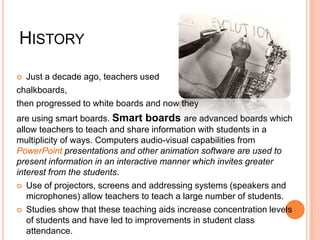
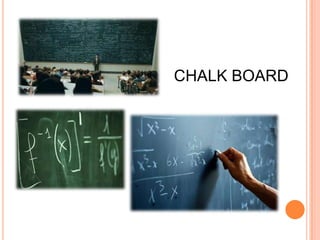
Just a decade ago, teachers used
chalkboards,
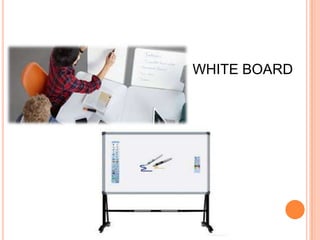
then progressed to white boards and now they


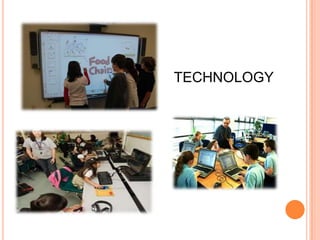
are using smart boards. Smart boards are advanced boards which
allow teachers to teach and share information with students in a
multiplicity of ways. Computers audio-visual capabilities from
PowerPoint presentations and other animation software are used to
present information in an interactive manner which invites greater
interest from the students.
 Use of projectors, screens and addressing systems (speakers and
microphones) allow teachers to teach a large number of students.
 Studies show that these teaching aids increase concentration levels
of students and have led to improvements in student class
attendance.
CHALK BOARD
WHITE BOARD
TECHNOLOGY
HOW DOES TECHNOLOGY
HELP EDUCATION?
Technology can be used to improve teaching and
learning and help our students be successful.
 Instead of the teacher being the only source of help in a
classroom, students can access web sites, online
tutorials, and more to assist them. Education doesn’t
stop at the end of the school day because students
have access to teachers, resources, and assignments
via the web and access these resources at any time.
 Parental involvement is another factor that can increase
student achievement. Most parents these days have
extremely busy schedules, work different hours, and
can’t always help their child with homework or come to
school for conferences. Technology can help

Easy-to-access course materials
 Student motivation
 More opportunities for extended learning
 Wide participation
 Improved student writing.
 Differentiated Instruction.
 The Internet itself has unlocked a world of
opportunity for students. Information and ideas that
were previously out of reach are a click away.
Students of all ages can connect, share, and learn
on a global scale.







Using computers or other forms of technology can give
students practice on core content and skills while the
teacher can work with others, conduct assessments, or
perform other tasks.
Using technology in the classroom can allow teachers'
to effectively organize and present lessons. Multimedia
presentations can make the material more meaningful
and engaging.
Studies completed in "computer intensive" settings
found increases in student centre, cooperative and
higher order learning, students writing skills, problem
solving, and using technology. In addition, positive
attitudes toward technology as a learning tool by
parents, students and teachers are also improved.


Technology has revolutionized how teachers teach
and how students learn. The importance and
benefits of technology to the teachers and students
cannot be ignored. Technology has made it easier
for teachers to impart knowledge to the students
and for students to acquire it. The use of
technology in schools has also made the process of
learning and teaching enjoyable.
HOW TECHNOLOGY HINDER
EDUCATION?
Takes

Away Learning Time
Overuse
Game Mentality

Technology in education

  • 1.
  • 2.
    BRIEF INTRODUCTION  Use oftechnology in education is a problematic premise because it has generated a heated debate on whether it helps or hinders learning.  Integration of technology in schools has changed today’s education and also the way teachers and students use their classrooms.
  • 3.
    HISTORY Just a decadeago, teachers used chalkboards, then progressed to white boards and now they  are using smart boards. Smart boards are advanced boards which allow teachers to teach and share information with students in a multiplicity of ways. Computers audio-visual capabilities from PowerPoint presentations and other animation software are used to present information in an interactive manner which invites greater interest from the students.  Use of projectors, screens and addressing systems (speakers and microphones) allow teachers to teach a large number of students.  Studies show that these teaching aids increase concentration levels of students and have led to improvements in student class attendance.
  • 4.
  • 5.
  • 6.
  • 7.
  • 8.
    Technology can beused to improve teaching and learning and help our students be successful.  Instead of the teacher being the only source of help in a classroom, students can access web sites, online tutorials, and more to assist them. Education doesn’t stop at the end of the school day because students have access to teachers, resources, and assignments via the web and access these resources at any time.  Parental involvement is another factor that can increase student achievement. Most parents these days have extremely busy schedules, work different hours, and can’t always help their child with homework or come to school for conferences. Technology can help 
  • 9.
    Easy-to-access course materials Student motivation  More opportunities for extended learning  Wide participation  Improved student writing.  Differentiated Instruction.  The Internet itself has unlocked a world of opportunity for students. Information and ideas that were previously out of reach are a click away. Students of all ages can connect, share, and learn on a global scale. 
  • 10.
       Using computers orother forms of technology can give students practice on core content and skills while the teacher can work with others, conduct assessments, or perform other tasks. Using technology in the classroom can allow teachers' to effectively organize and present lessons. Multimedia presentations can make the material more meaningful and engaging. Studies completed in "computer intensive" settings found increases in student centre, cooperative and higher order learning, students writing skills, problem solving, and using technology. In addition, positive attitudes toward technology as a learning tool by parents, students and teachers are also improved.
  • 11.
     Technology has revolutionizedhow teachers teach and how students learn. The importance and benefits of technology to the teachers and students cannot be ignored. Technology has made it easier for teachers to impart knowledge to the students and for students to acquire it. The use of technology in schools has also made the process of learning and teaching enjoyable.
  • 12.
  • 13.