
e-Learning Governance in Malaysian HigherEducation InstitutionsBy:Prof. Dr. Mohamed Amin Embi
Key Findings of e-Learning GovernanceOnly five HEIs (19.2%) did not have a specific centre/department/unit to manage e-Learning in their respective institutions. In general, e-Learning governance is put under the purview of the Information Technology Centre (61.5%) followed by the Academic Development Centre (38.5%) and the Center for Teaching and Learning (34.5%) of the respective institutions. Only seven HEIs (26.9%) have an e-Learning Centre which serve as a formal governance structure for the planning and implementation of e-Learning. e-Learning governance in two HEIs is the responsibility of the faculties, while in one, it is the responsibility of the e-Learning committee.
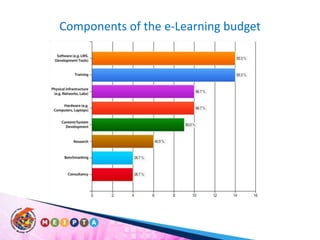
In nearly half of the HEIs (42.5%) surveyed, the e-Learning coordinator is reponsible for managing e-Learning, while in 23.1% of the HEIs, the Director of the Information Technology Centre bears the responsibility of managing e-Learning. A majority of the HEIs (80.8%) has an e-Learning committee. Generally, only half of the HEIs (57.7%) in Malaysia provide an annual management budget specifically for e-Learning. The main components of the budget were allocated for training and authoring software purchases (93.3%), followed by the acquisition of equipment and provision of physical infrastructure (66.7%). The benchmarking and the consultancy components were allocated the least amount of funds.
In terms of the effectiveness of the existing e-Learning governance, only half of the e-Learning administrators (50%) believe that their institutions have an effective governance structure. In addition, only half of the e-Learning administrators (57.7%) are of the view that they have adequate facilities for the effective implementation of e-Learning in their respective institutions. Most of the e-Learning administrators (65.4%) believe that the representatives from the faculty/school/department have successfully played an effective role in enhancing the use of e-Learning in their respective institutions.
The main challenges related to the e-Learning governance is shortage of staff (84.5%) and lack of incentives provided by the HEIs to those responsible for implementing e-Learning (69.2%). Other challenges include the lack of a clear e-Learning policy (61.5%), lack of a clear e-Learning governance structure (50%), and no clear guidelines as to who is responsible for implementing e-Learning (42.3%). Only three HEIs (11.5%) felt that the main challenge is the lack of support from the top management of their respective institutions.
Number/Percentage of HEIs with a centre/division/department/unit dedicated to theimplementation of e-Learning
Centre/Division/Department/Unit in charge of e-Learning
The person in charge of e-Learning
Number/Percentage of HEIs with a central e-Learning committee
Number/Percentage of HEIs with a yearly e-Learning budget
Components of the e-Learning budget
Opinion of HEIs e-Learning administrators on the effectiveness of the current governance structure
Opinion of e-Learning administrators on the adequacy of facilities for the effective implementation of e-Learning
Opinion of e-Learning administrators on the role of representatives at the faculty/school/department level in encouraging the use of e-Learning
Main problems and challenges related to e-Learning governance in Malaysian HEIs

e-learning governance by Mohamed Amin Embi

  • 1.
    e-Learning Governance inMalaysian HigherEducation InstitutionsBy:Prof. Dr. Mohamed Amin Embi
  • 2.
    Key Findings ofe-Learning GovernanceOnly five HEIs (19.2%) did not have a specific centre/department/unit to manage e-Learning in their respective institutions. In general, e-Learning governance is put under the purview of the Information Technology Centre (61.5%) followed by the Academic Development Centre (38.5%) and the Center for Teaching and Learning (34.5%) of the respective institutions. Only seven HEIs (26.9%) have an e-Learning Centre which serve as a formal governance structure for the planning and implementation of e-Learning. e-Learning governance in two HEIs is the responsibility of the faculties, while in one, it is the responsibility of the e-Learning committee.
  • 3.
    In nearly halfof the HEIs (42.5%) surveyed, the e-Learning coordinator is reponsible for managing e-Learning, while in 23.1% of the HEIs, the Director of the Information Technology Centre bears the responsibility of managing e-Learning. A majority of the HEIs (80.8%) has an e-Learning committee. Generally, only half of the HEIs (57.7%) in Malaysia provide an annual management budget specifically for e-Learning. The main components of the budget were allocated for training and authoring software purchases (93.3%), followed by the acquisition of equipment and provision of physical infrastructure (66.7%). The benchmarking and the consultancy components were allocated the least amount of funds.
  • 4.
    In terms ofthe effectiveness of the existing e-Learning governance, only half of the e-Learning administrators (50%) believe that their institutions have an effective governance structure. In addition, only half of the e-Learning administrators (57.7%) are of the view that they have adequate facilities for the effective implementation of e-Learning in their respective institutions. Most of the e-Learning administrators (65.4%) believe that the representatives from the faculty/school/department have successfully played an effective role in enhancing the use of e-Learning in their respective institutions.
  • 5.
    The main challengesrelated to the e-Learning governance is shortage of staff (84.5%) and lack of incentives provided by the HEIs to those responsible for implementing e-Learning (69.2%). Other challenges include the lack of a clear e-Learning policy (61.5%), lack of a clear e-Learning governance structure (50%), and no clear guidelines as to who is responsible for implementing e-Learning (42.3%). Only three HEIs (11.5%) felt that the main challenge is the lack of support from the top management of their respective institutions.
  • 6.
    Number/Percentage of HEIswith a centre/division/department/unit dedicated to theimplementation of e-Learning
  • 7.
  • 8.
    The person incharge of e-Learning
  • 9.
    Number/Percentage of HEIswith a central e-Learning committee
  • 10.
    Number/Percentage of HEIswith a yearly e-Learning budget
  • 11.
    Components of thee-Learning budget
  • 12.
    Opinion of HEIse-Learning administrators on the effectiveness of the current governance structure
  • 13.
    Opinion of e-Learningadministrators on the adequacy of facilities for the effective implementation of e-Learning
  • 14.
    Opinion of e-Learningadministrators on the role of representatives at the faculty/school/department level in encouraging the use of e-Learning
  • 15.
    Main problems andchallenges related to e-Learning governance in Malaysian HEIs