Accessible online materials in 
Thai universities: 
awareness, attitudes and barriers 
to effective development 
Rattanavalee Maisak 
Justin Brown 
Nattakant Utakrit
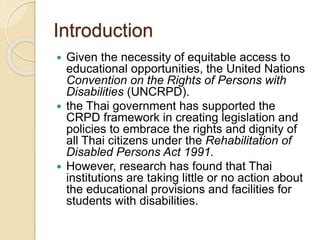
Introduction 
 Given the necessity of equitable access to 
educational opportunities, the United Nations 
Convention on the Rights of Persons with 
Disabilities (UNCRPD). 
 the Thai government has supported the 
CRPD framework in creating legislation and 
policies to embrace the rights and dignity of 
all Thai citizens under the Rehabilitation of 
Disabled Persons Act 1991. 
 However, research has found that Thai 
institutions are taking little or no action about 
the educational provisions and facilities for 
students with disabilities.
Research Question 
What is the level of awareness of Thai 
university staff regarding web 
accessibility and accessible online 
materials for students with disabilities?
Literature Review 
 Accessible online resources and 
special needs 
 Web accessibility and related work 
 Assistive technologies
Research Design 
 Web questionnaires and face to face 
interviews 
 Three participant's groups: lecturer, 
senior manager and web administrator
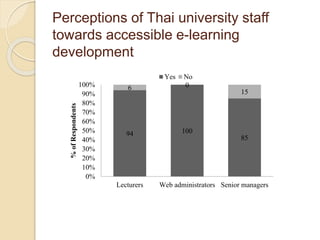
Perceptions of Thai university staff 
towards accessible e-learning 
development 
94 100 
85 
6 0 
15 
100% 
90% 
80% 
70% 
60% 
50% 
40% 
30% 
20% 
10% 
0% 
Lecturers Web administrators Senior managers 
% of Respondents 
Yes No
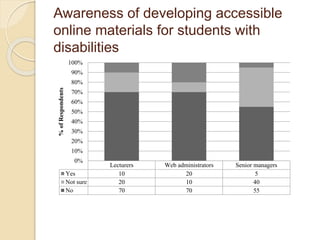
Awareness of developing accessible 
online materials for students with 
disabilities 
Lecturers Web administrators Senior managers 
100% 
90% 
80% 
70% 
60% 
50% 
40% 
30% 
20% 
10% 
0% 
Yes 10 20 5 
Not sure 20 10 40 
No 70 70 55 
% of Respondents
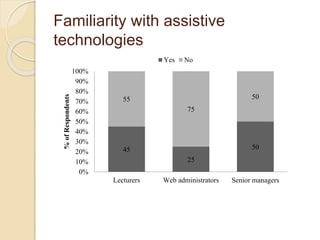
Familiarity with assistive 
technologies 
45 
25 
50 
55 
75 
50 
100% 
90% 
80% 
70% 
60% 
50% 
40% 
30% 
20% 
10% 
0% 
Lecturers Web administrators Senior managers 
% of Respondents 
Yes No
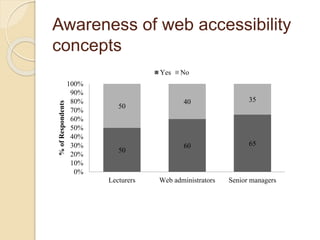
Awareness of web accessibility 
concepts 
50 
60 65 
50 
40 35 
100% 
90% 
80% 
70% 
60% 
50% 
40% 
30% 
20% 
10% 
0% 
Lecturers Web administrators Senior managers 
% of Respondents 
Yes No
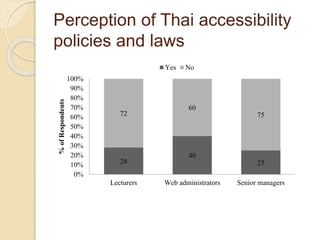
Perception of Thai accessibility 
policies and laws 
28 
40 
25 
72 
60 
75 
100% 
90% 
80% 
70% 
60% 
50% 
40% 
30% 
20% 
10% 
0% 
Lecturers Web administrators Senior managers 
% of Respondents 
Yes No
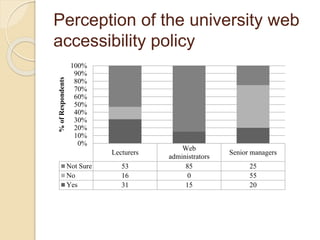
Perception of the university web 
accessibility policy 
Lecturers 
Web 
administrators 
Senior managers 
100% 
90% 
80% 
70% 
60% 
50% 
40% 
30% 
20% 
10% 
0% 
Not Sure 53 85 25 
No 16 0 55 
Yes 31 15 20 
% of Respondents
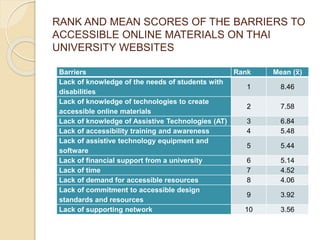
RANK AND MEAN SCORES OF THE BARRIERS TO 
ACCESSIBLE ONLINE MATERIALS ON THAI 
UNIVERSITY WEBSITES 
Barriers Rank Mean ( ) 
Lack of knowledge of the needs of students with 
1 8.46 
disabilities 
Lack of knowledge of technologies to create 
accessible online materials 
2 7.58 
Lack of knowledge of Assistive Technologies (AT) 3 6.84 
Lack of accessibility training and awareness 4 5.48 
Lack of assistive technology equipment and 
5 5.44 
software 
Lack of financial support from a university 6 5.14 
Lack of time 7 4.52 
Lack of demand for accessible resources 8 4.06 
Lack of commitment to accessible design 
9 3.92 
standards and resources 
Lack of supporting network 10 3.56
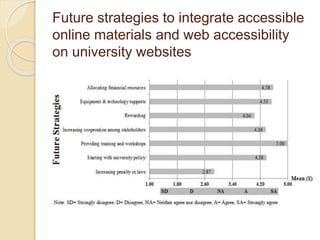
Future strategies to integrate accessible 
online materials and web accessibility 
on university websites
Conclusions 
 The lack of awareness of accessibility 
policies and knowledge of people with 
disabilities is highly problematic in 
Thailand. 
 Training is the best way to enhance and 
put into practice their knowledge and 
awareness as apparent in other 
institutions. 
 It is recommended that accessibility 
should be one of the Key Performance 
Indicators (KPIs) in educational quality 
assessment.

Accessible online materials in thai universities

  • 1.
    Accessible online materialsin Thai universities: awareness, attitudes and barriers to effective development Rattanavalee Maisak Justin Brown Nattakant Utakrit
  • 2.
    Introduction  Giventhe necessity of equitable access to educational opportunities, the United Nations Convention on the Rights of Persons with Disabilities (UNCRPD).  the Thai government has supported the CRPD framework in creating legislation and policies to embrace the rights and dignity of all Thai citizens under the Rehabilitation of Disabled Persons Act 1991.  However, research has found that Thai institutions are taking little or no action about the educational provisions and facilities for students with disabilities.
  • 3.
    Research Question Whatis the level of awareness of Thai university staff regarding web accessibility and accessible online materials for students with disabilities?
  • 4.
    Literature Review Accessible online resources and special needs  Web accessibility and related work  Assistive technologies
  • 5.
    Research Design Web questionnaires and face to face interviews  Three participant's groups: lecturer, senior manager and web administrator
  • 6.
    Perceptions of Thaiuniversity staff towards accessible e-learning development 94 100 85 6 0 15 100% 90% 80% 70% 60% 50% 40% 30% 20% 10% 0% Lecturers Web administrators Senior managers % of Respondents Yes No
  • 7.
    Awareness of developingaccessible online materials for students with disabilities Lecturers Web administrators Senior managers 100% 90% 80% 70% 60% 50% 40% 30% 20% 10% 0% Yes 10 20 5 Not sure 20 10 40 No 70 70 55 % of Respondents
  • 8.
    Familiarity with assistive technologies 45 25 50 55 75 50 100% 90% 80% 70% 60% 50% 40% 30% 20% 10% 0% Lecturers Web administrators Senior managers % of Respondents Yes No
  • 9.
    Awareness of webaccessibility concepts 50 60 65 50 40 35 100% 90% 80% 70% 60% 50% 40% 30% 20% 10% 0% Lecturers Web administrators Senior managers % of Respondents Yes No
  • 10.
    Perception of Thaiaccessibility policies and laws 28 40 25 72 60 75 100% 90% 80% 70% 60% 50% 40% 30% 20% 10% 0% Lecturers Web administrators Senior managers % of Respondents Yes No
  • 11.
    Perception of theuniversity web accessibility policy Lecturers Web administrators Senior managers 100% 90% 80% 70% 60% 50% 40% 30% 20% 10% 0% Not Sure 53 85 25 No 16 0 55 Yes 31 15 20 % of Respondents
  • 12.
    RANK AND MEANSCORES OF THE BARRIERS TO ACCESSIBLE ONLINE MATERIALS ON THAI UNIVERSITY WEBSITES Barriers Rank Mean ( ) Lack of knowledge of the needs of students with 1 8.46 disabilities Lack of knowledge of technologies to create accessible online materials 2 7.58 Lack of knowledge of Assistive Technologies (AT) 3 6.84 Lack of accessibility training and awareness 4 5.48 Lack of assistive technology equipment and 5 5.44 software Lack of financial support from a university 6 5.14 Lack of time 7 4.52 Lack of demand for accessible resources 8 4.06 Lack of commitment to accessible design 9 3.92 standards and resources Lack of supporting network 10 3.56
  • 13.
    Future strategies tointegrate accessible online materials and web accessibility on university websites
  • 14.
    Conclusions  Thelack of awareness of accessibility policies and knowledge of people with disabilities is highly problematic in Thailand.  Training is the best way to enhance and put into practice their knowledge and awareness as apparent in other institutions.  It is recommended that accessibility should be one of the Key Performance Indicators (KPIs) in educational quality assessment.