

Dr. K. RAJENDER REDDY
LECTURER IN CHEMISTRY
Email:raj3iict@gmail.com
Friday, April 24, 2020 1ELECTRO CHEMISTRY- KRR
Electrochemistry
(Electrode Potential, Electro
chemical series)
Friday, April 24, 2020 2ELECTRO CHEMISTRY- KRR
Electrode potential
• The tendency of a metal to lose the electrons (oxidation) or gain the
electrons (reduction), when it is in contact with solution of its own salt is
called electrode potential.
• When a metal [M] is placed in a solution containing its own ions [Mn+],
then the metal may undergo either oxidation or reduction. If the metal
undergoes oxidation, then the positive metal ions may pass into the
solution
• M Mn+ + ne‒
• If the metal undergoes reduction, then the negative ions may get
deposited over the metal.
• Mn+ + ne‒ M
Friday, April 24, 2020 3ELECTRO CHEMISTRY- KRR
Zn in ZnSO4
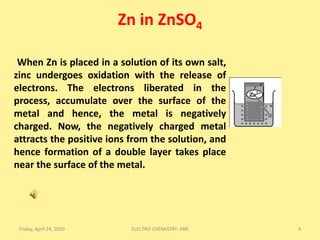
When Zn is placed in a solution of its own salt,
zinc undergoes oxidation with the release of
electrons. The electrons liberated in the
process, accumulate over the surface of the
metal and hence, the metal is negatively
charged. Now, the negatively charged metal
attracts the positive ions from the solution, and
hence formation of a double layer takes place
near the surface of the metal.
Friday, April 24, 2020 4ELECTRO CHEMISTRY- KRR
Cu in CuSO4
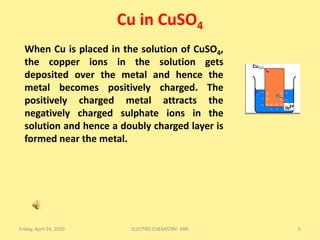
When Cu is placed in the solution of CuSO4,
the copper ions in the solution gets
deposited over the metal and hence the
metal becomes positively charged. The
positively charged metal attracts the
negatively charged sulphate ions in the
solution and hence a doubly charged layer is
formed near the metal.
Friday, April 24, 2020 5ELECTRO CHEMISTRY- KRR
Standard Electrode Potential
• Standard Electrode Potential: The potential of
an electrode at 25 oC with 1 M concentration
of electrolyte is called standard electrode
potential (E0).
Oxidation potential = - Reduction potential
Friday, April 24, 2020 6ELECTRO CHEMISTRY- KRR
MEASURING OF ELECTRODE POTENTIAL
• It is not possible to determine experimentally
the potential of a single electrode, We can
only measure the potential difference
between two electrodes potentiometrically. In
order to measure the electrode potential, NHE
is taken as primary reference electrode
Friday, April 24, 2020 7ELECTRO CHEMISTRY- KRR
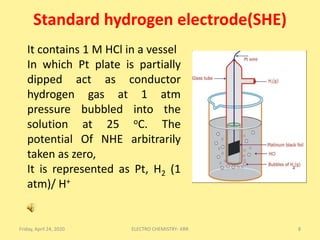
Standard hydrogen electrode(SHE)
It contains 1 M HCl in a vessel
In which Pt plate is partially
dipped act as conductor
hydrogen gas at 1 atm
pressure bubbled into the
solution at 25 oC. The
potential Of NHE arbitrarily
taken as zero,
It is represented as Pt, H2 (1
atm)/ H+
Friday, April 24, 2020 8ELECTRO CHEMISTRY- KRR
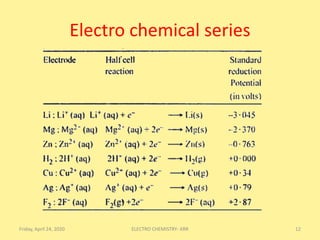
Electrochemical Series
• Electrochemical Series: The arrangement of
electrodes in the increasing order of their
standard reduction potentials is called
electrochemical series.
• In this top electrode is Li and the bottom
electrode is Fluorine
Friday, April 24, 2020 9ELECTRO CHEMISTRY- KRR
Significance of electro chemical series
 The metal which is higher in electrochemical
series acts as reducing agent or anode and
undergoes corrosion first.
 Metals above hydrogen are called active
metals, which can displace hydrogen from
dilute acids or water.
 The metals below hydrogen are less reactive .
They do not liberate Hydrogen from dilute
acids or water
Friday, April 24, 2020 10ELECTRO CHEMISTRY- KRR
Significance of electro chemical series
• The metal with higher negative potential
displace a metal with lower negative potential
or positive potential from the salt solution of
metal.
• The reactivity or reducing character decreases
From top to bottom, So Li is the strongest
reducing agent and fluorine is the strongest
oxidizing agent.
Friday, April 24, 2020 11ELECTRO CHEMISTRY- KRR
Electro chemical series
Friday, April 24, 2020 12ELECTRO CHEMISTRY- KRR
THANK U
Friday, April 24, 2020 13ELECTRO CHEMISTRY- KRR

Ele ctrode potential, electrochemical series

  • 1.
    Dr. K. RAJENDERREDDY LECTURER IN CHEMISTRY Email:raj3iict@gmail.com Friday, April 24, 2020 1ELECTRO CHEMISTRY- KRR
  • 2.
    Electrochemistry (Electrode Potential, Electro chemicalseries) Friday, April 24, 2020 2ELECTRO CHEMISTRY- KRR
  • 3.
    Electrode potential • Thetendency of a metal to lose the electrons (oxidation) or gain the electrons (reduction), when it is in contact with solution of its own salt is called electrode potential. • When a metal [M] is placed in a solution containing its own ions [Mn+], then the metal may undergo either oxidation or reduction. If the metal undergoes oxidation, then the positive metal ions may pass into the solution • M Mn+ + ne‒ • If the metal undergoes reduction, then the negative ions may get deposited over the metal. • Mn+ + ne‒ M Friday, April 24, 2020 3ELECTRO CHEMISTRY- KRR
  • 4.
    Zn in ZnSO4 WhenZn is placed in a solution of its own salt, zinc undergoes oxidation with the release of electrons. The electrons liberated in the process, accumulate over the surface of the metal and hence, the metal is negatively charged. Now, the negatively charged metal attracts the positive ions from the solution, and hence formation of a double layer takes place near the surface of the metal. Friday, April 24, 2020 4ELECTRO CHEMISTRY- KRR
  • 5.
    Cu in CuSO4 WhenCu is placed in the solution of CuSO4, the copper ions in the solution gets deposited over the metal and hence the metal becomes positively charged. The positively charged metal attracts the negatively charged sulphate ions in the solution and hence a doubly charged layer is formed near the metal. Friday, April 24, 2020 5ELECTRO CHEMISTRY- KRR
  • 6.
    Standard Electrode Potential •Standard Electrode Potential: The potential of an electrode at 25 oC with 1 M concentration of electrolyte is called standard electrode potential (E0). Oxidation potential = - Reduction potential Friday, April 24, 2020 6ELECTRO CHEMISTRY- KRR
  • 7.
    MEASURING OF ELECTRODEPOTENTIAL • It is not possible to determine experimentally the potential of a single electrode, We can only measure the potential difference between two electrodes potentiometrically. In order to measure the electrode potential, NHE is taken as primary reference electrode Friday, April 24, 2020 7ELECTRO CHEMISTRY- KRR
  • 8.
    Standard hydrogen electrode(SHE) Itcontains 1 M HCl in a vessel In which Pt plate is partially dipped act as conductor hydrogen gas at 1 atm pressure bubbled into the solution at 25 oC. The potential Of NHE arbitrarily taken as zero, It is represented as Pt, H2 (1 atm)/ H+ Friday, April 24, 2020 8ELECTRO CHEMISTRY- KRR
  • 9.
    Electrochemical Series • ElectrochemicalSeries: The arrangement of electrodes in the increasing order of their standard reduction potentials is called electrochemical series. • In this top electrode is Li and the bottom electrode is Fluorine Friday, April 24, 2020 9ELECTRO CHEMISTRY- KRR
  • 10.
    Significance of electrochemical series  The metal which is higher in electrochemical series acts as reducing agent or anode and undergoes corrosion first.  Metals above hydrogen are called active metals, which can displace hydrogen from dilute acids or water.  The metals below hydrogen are less reactive . They do not liberate Hydrogen from dilute acids or water Friday, April 24, 2020 10ELECTRO CHEMISTRY- KRR
  • 11.
    Significance of electrochemical series • The metal with higher negative potential displace a metal with lower negative potential or positive potential from the salt solution of metal. • The reactivity or reducing character decreases From top to bottom, So Li is the strongest reducing agent and fluorine is the strongest oxidizing agent. Friday, April 24, 2020 11ELECTRO CHEMISTRY- KRR
  • 12.
    Electro chemical series Friday,April 24, 2020 12ELECTRO CHEMISTRY- KRR
  • 13.
    THANK U Friday, April24, 2020 13ELECTRO CHEMISTRY- KRR