Elastin,Fibronectin and Basal
lamina
What Are these exactly?
Elastin
• Of course as the name suggests the elastin is
elastic???
• Elastin is made up of glycine, valine, alanine,
and proline Residues
• As we are Biotechnologists we may have to
surely Know which the gene is responsible??
ELN gene at 7th chromosome has the
information on ELASTIN
Elastin
• Elastin is a key protein of the extracellular
matrix.
• It is highly elastic and present in connective
tissue allowing many tissues in the body to
resume their shape after stretching or
contracting.
• Molecular weight : 552.7 g/mol
• Molecular Formula : C27H48N6O6
How it Look like???
Relax or unstreched
Stressed
Fibronectin
• Fibronectin is a glycoprotein
• Fibronectin is a high-molecular weight protein
(~440kDa)
• Specific domains allow fibronectin to
promote cell-to-cell adhesion, cell-to-basement-
membrane attachment, clot stabilization,
embryogenesis, nerve regeneration, fibroblast
migration, macrophage function, and pathogen
(virus, fungus, bacteria, and protozoa) binding to
mammalian cells and extracellular matrix.
They are Tissue Specific!!!
• Different forms of fibronectin appear to be
generated from tissue specific splicing of
fibronectin mRNA, transcribed from a single
gene.
• FN1 gene holds the info to synthesize the
Fibronectin
Chromosomal position
What does it do ??? And Where is it
• Fibronectin sometimes serves as a
general cell adhesion molecule by anchoring
cells to collagen or proteoglycan substrates
• Soluble plasma fibronectin is produced by
hepatocytes in the liver and is a major
component of blood plasma. Insoluble
cellular fibronectin is secreted by many cells
in the body
Basal lamina
• Functions of basal lamina:
• Support
• Selective barrier
• Influencing cell polarity distinguish the basal
& apical sides.
• Regulation of proliferation and differentiation
• Affect cell-cell interaction
• Pathway for cell migration
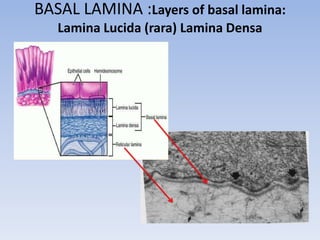
BASAL LAMINA :Layers of basal lamina:
Lamina Lucida (rara) Lamina Densa
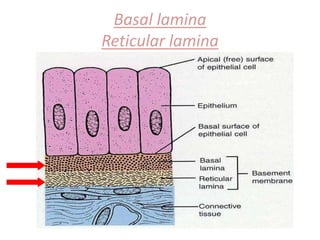
Basal lamina
Reticular lamina

Elastin,fibronectin and basal lamina

  • 1.
  • 2.
    Elastin • Of courseas the name suggests the elastin is elastic??? • Elastin is made up of glycine, valine, alanine, and proline Residues • As we are Biotechnologists we may have to surely Know which the gene is responsible?? ELN gene at 7th chromosome has the information on ELASTIN
  • 3.
    Elastin • Elastin isa key protein of the extracellular matrix. • It is highly elastic and present in connective tissue allowing many tissues in the body to resume their shape after stretching or contracting. • Molecular weight : 552.7 g/mol • Molecular Formula : C27H48N6O6
  • 4.
    How it Looklike???
  • 5.
  • 7.
    Fibronectin • Fibronectin isa glycoprotein • Fibronectin is a high-molecular weight protein (~440kDa) • Specific domains allow fibronectin to promote cell-to-cell adhesion, cell-to-basement- membrane attachment, clot stabilization, embryogenesis, nerve regeneration, fibroblast migration, macrophage function, and pathogen (virus, fungus, bacteria, and protozoa) binding to mammalian cells and extracellular matrix.
  • 8.
    They are TissueSpecific!!! • Different forms of fibronectin appear to be generated from tissue specific splicing of fibronectin mRNA, transcribed from a single gene. • FN1 gene holds the info to synthesize the Fibronectin
  • 9.
  • 10.
    What does itdo ??? And Where is it • Fibronectin sometimes serves as a general cell adhesion molecule by anchoring cells to collagen or proteoglycan substrates • Soluble plasma fibronectin is produced by hepatocytes in the liver and is a major component of blood plasma. Insoluble cellular fibronectin is secreted by many cells in the body
  • 12.
    Basal lamina • Functionsof basal lamina: • Support • Selective barrier • Influencing cell polarity distinguish the basal & apical sides. • Regulation of proliferation and differentiation • Affect cell-cell interaction • Pathway for cell migration
  • 13.
    BASAL LAMINA :Layersof basal lamina: Lamina Lucida (rara) Lamina Densa
  • 14.