

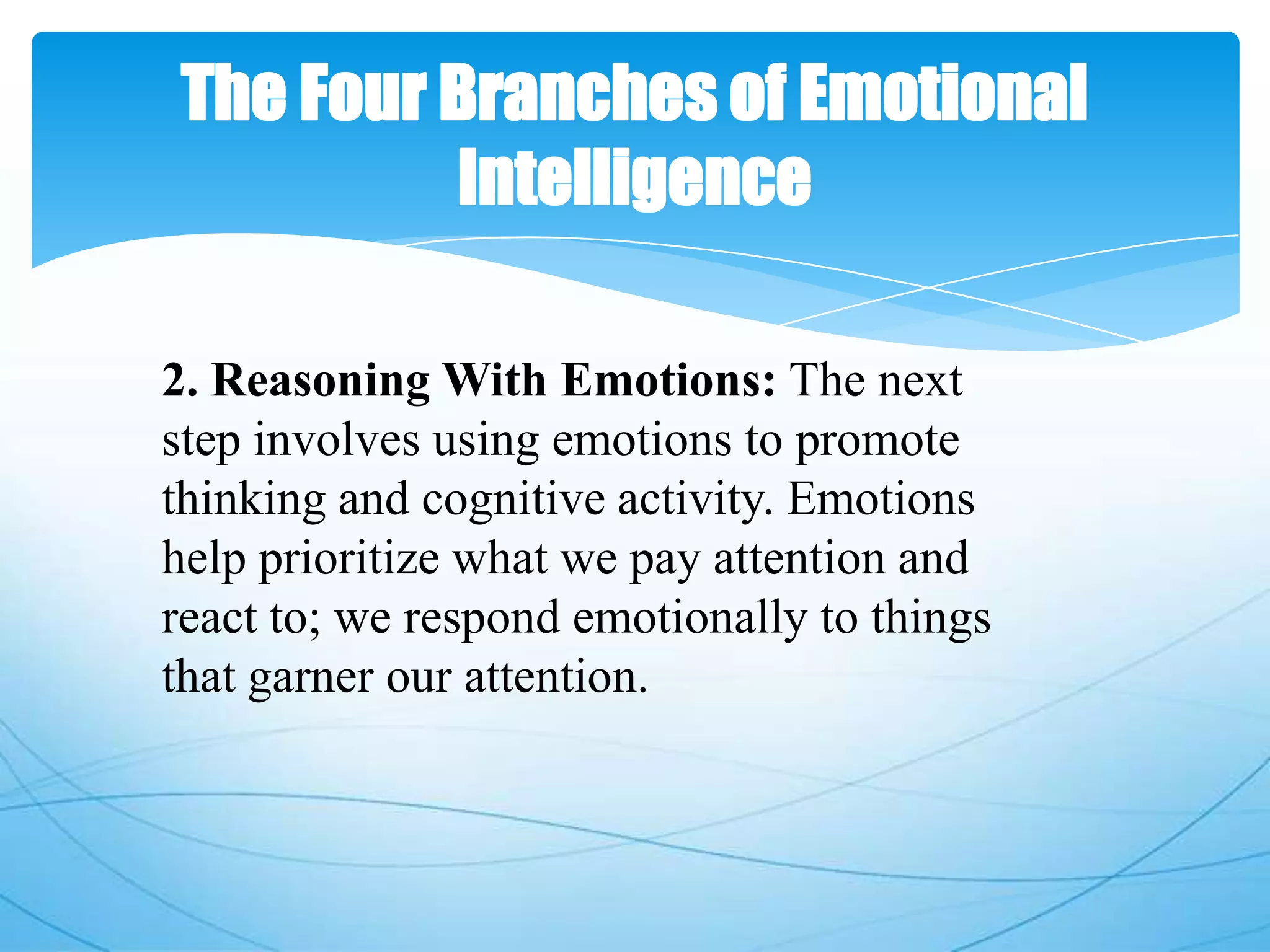
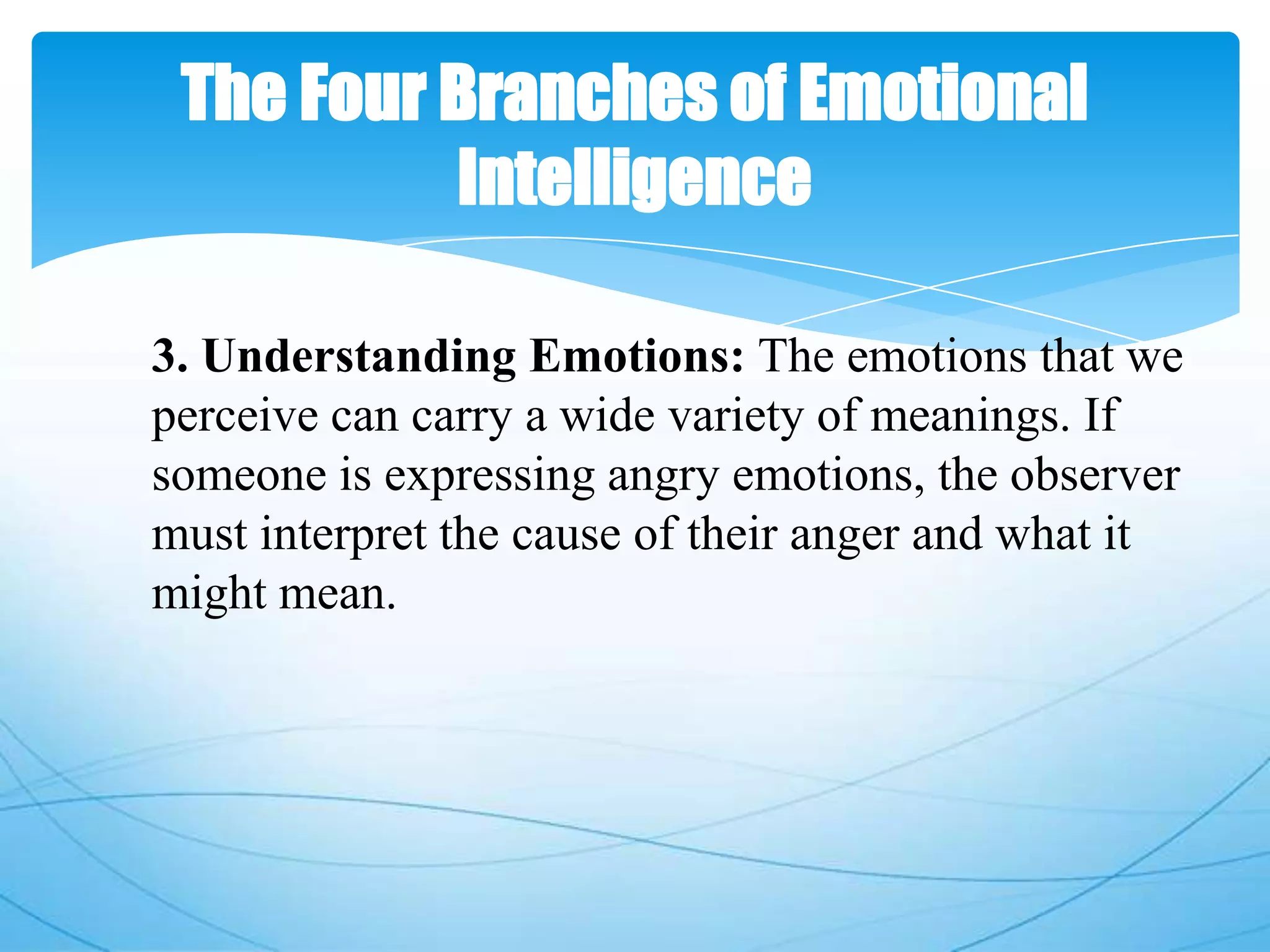

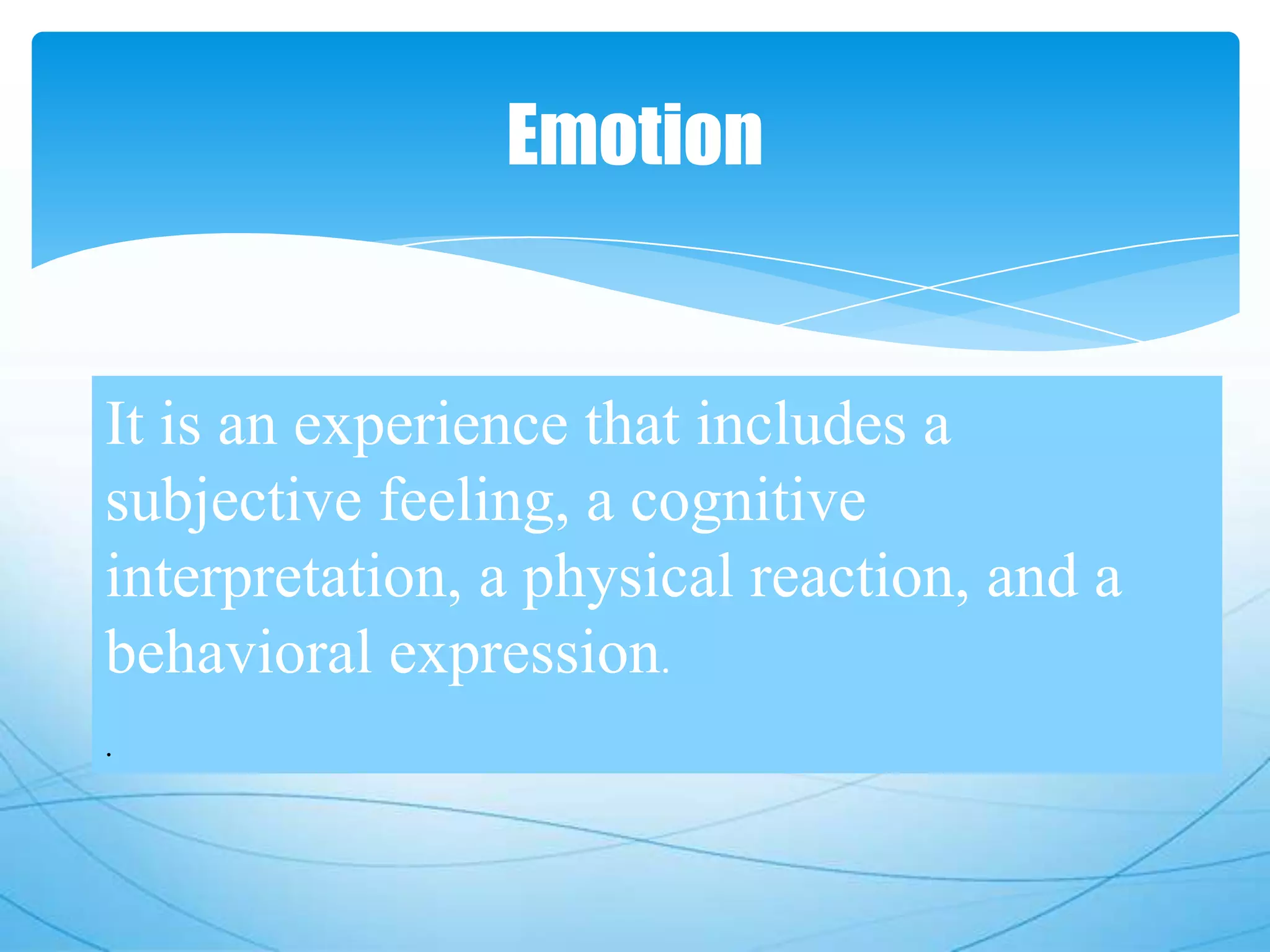
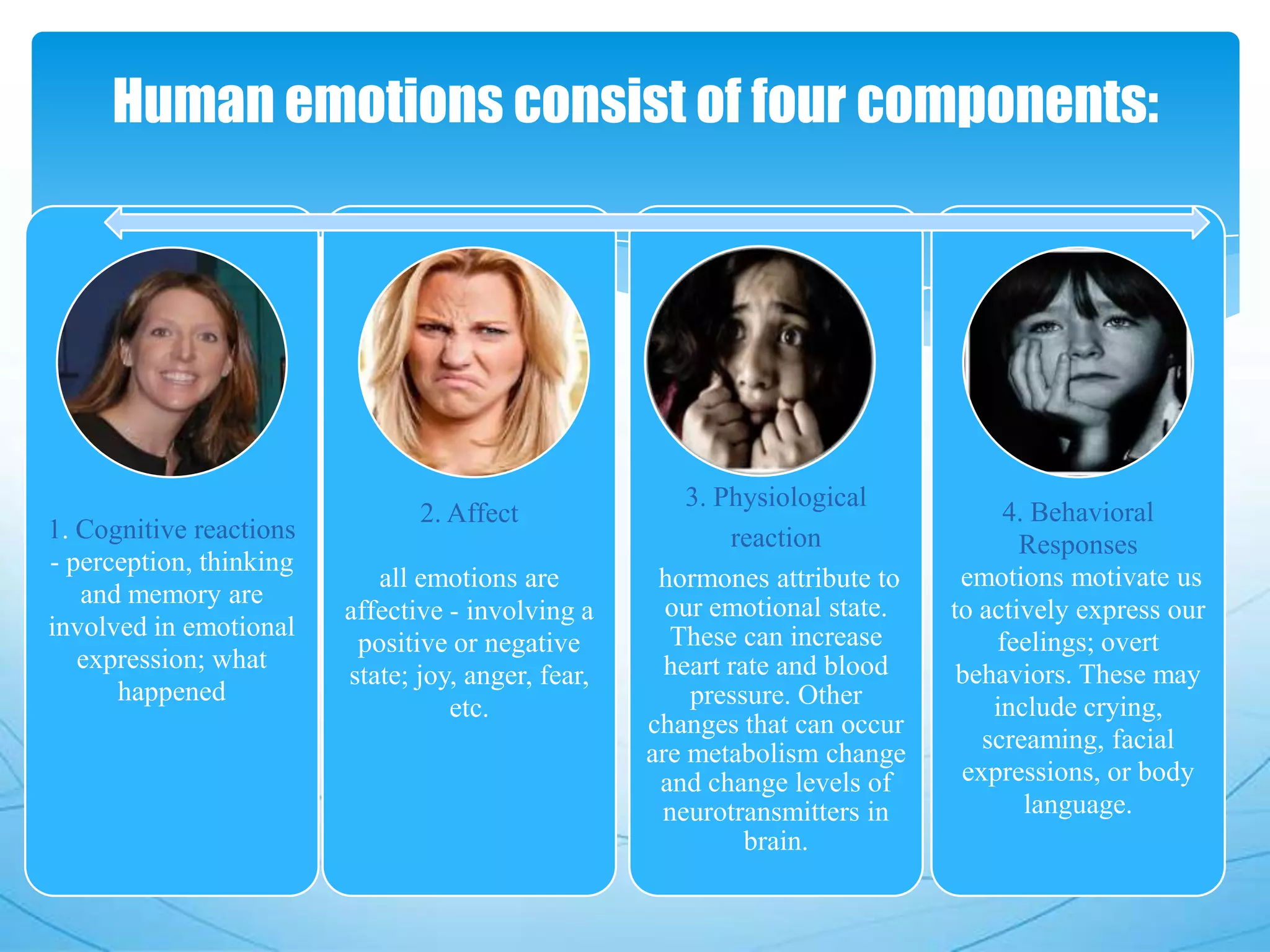
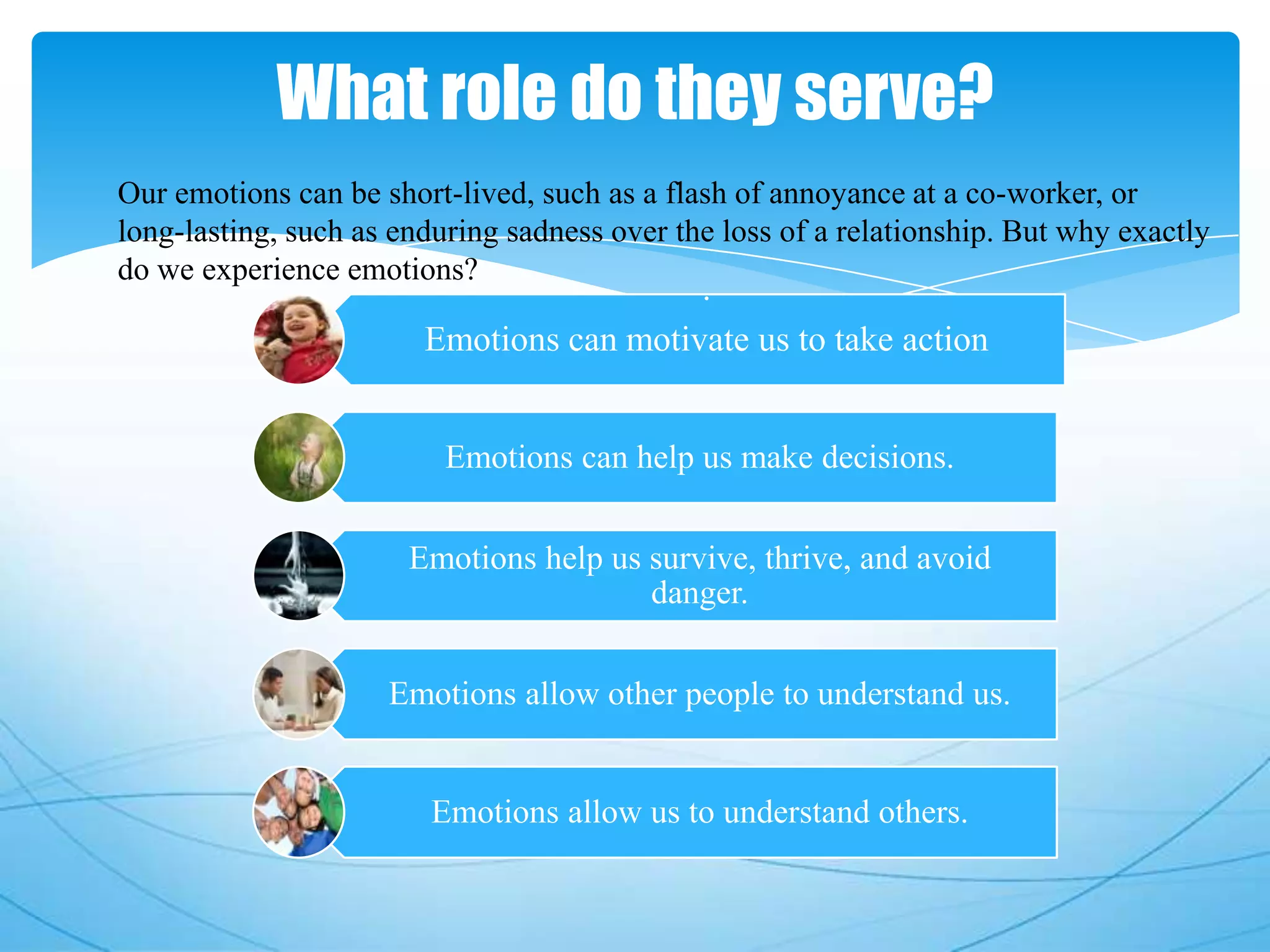



The document discusses the importance of emotional intelligence and its role in education. It defines emotional intelligence as the ability to perceive, control, and evaluate emotions. The four branches of emotional intelligence are perceiving emotions, reasoning with emotions, understanding emotions, and managing emotions. Developing emotional intelligence provides benefits such as improved interpersonal relationships, psychological well-being, academic performance, and reduced disruptive behaviors. Techniques for teaching emotional intelligence in classrooms include circle teams, self-reflection quizzes, and morning check-ins. Overall, the document emphasizes that emotional intelligence is a learnable skill that should be explicitly addressed in schools.


