ANCIENT EGYPTIAN
ARCHITECTURE
Dr. Zeinab Feisal
Text
Text
Text
Text
Text
Text
Zeinab Feisa
Text
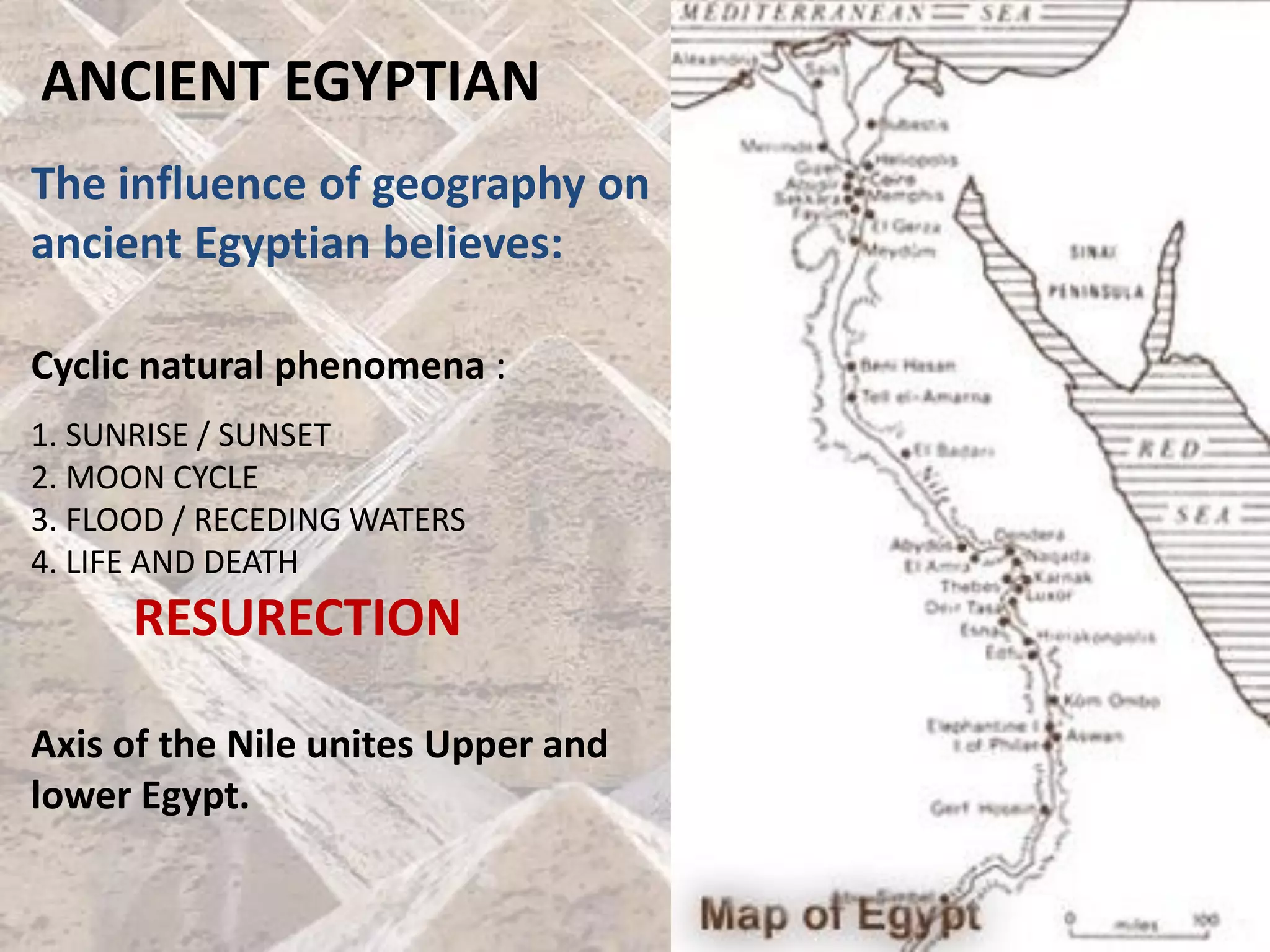
The influence of geography on
ancient Egyptian believes:
Cyclic natural phenomena :
1. SUNRISE / SUNSET
2. MOON CYCLE
3. FLOOD / RECEDING WATERS
4. LIFE AND DEATH
RESURECTION
Axis of the Nile unites Upper and
lower Egypt.
ANCIENT EGYPTIAN
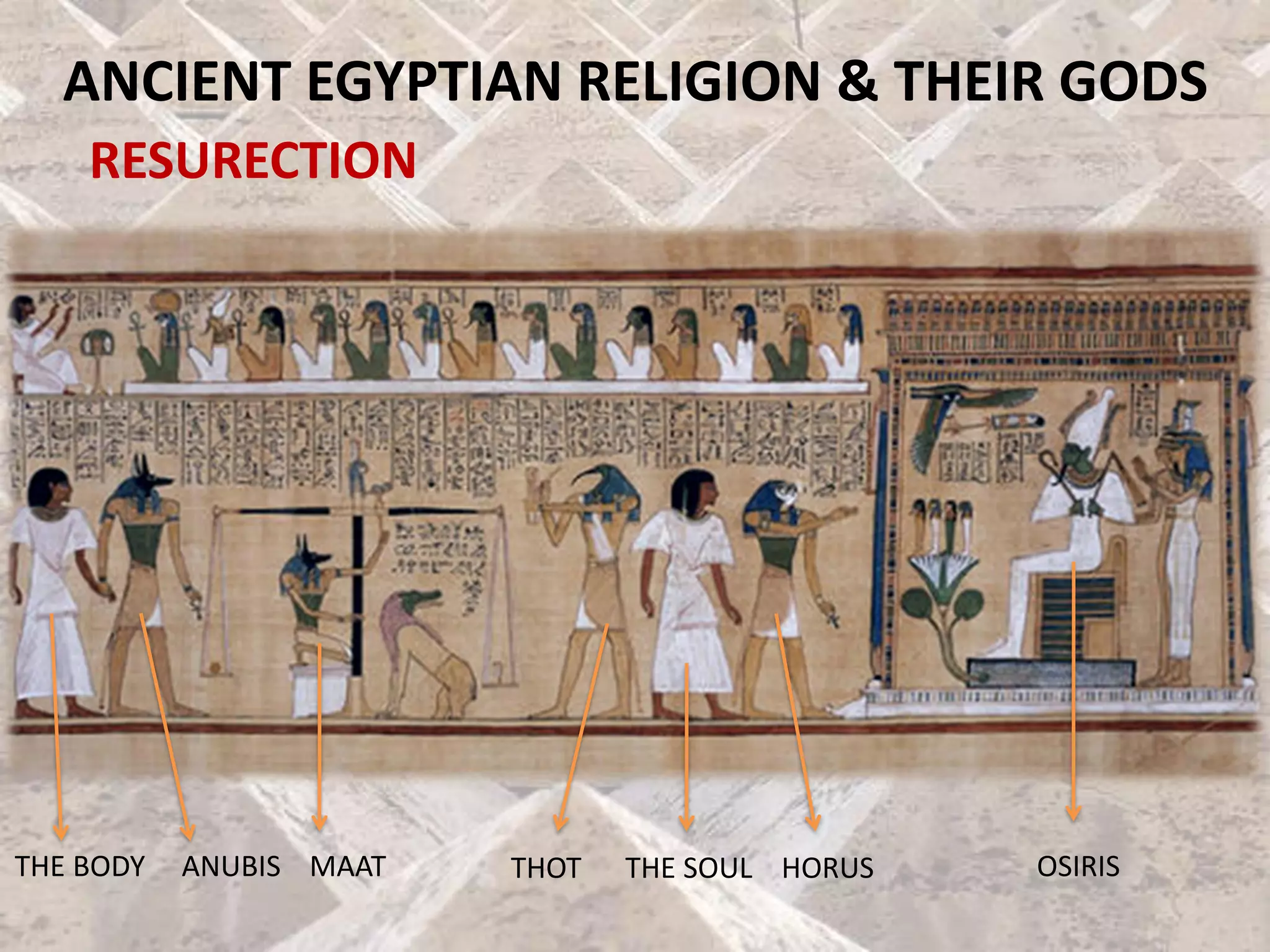
RESURECTION
OSIRIS
THOT THE SOUL HORUS
THE BODY ANUBIS MAAT
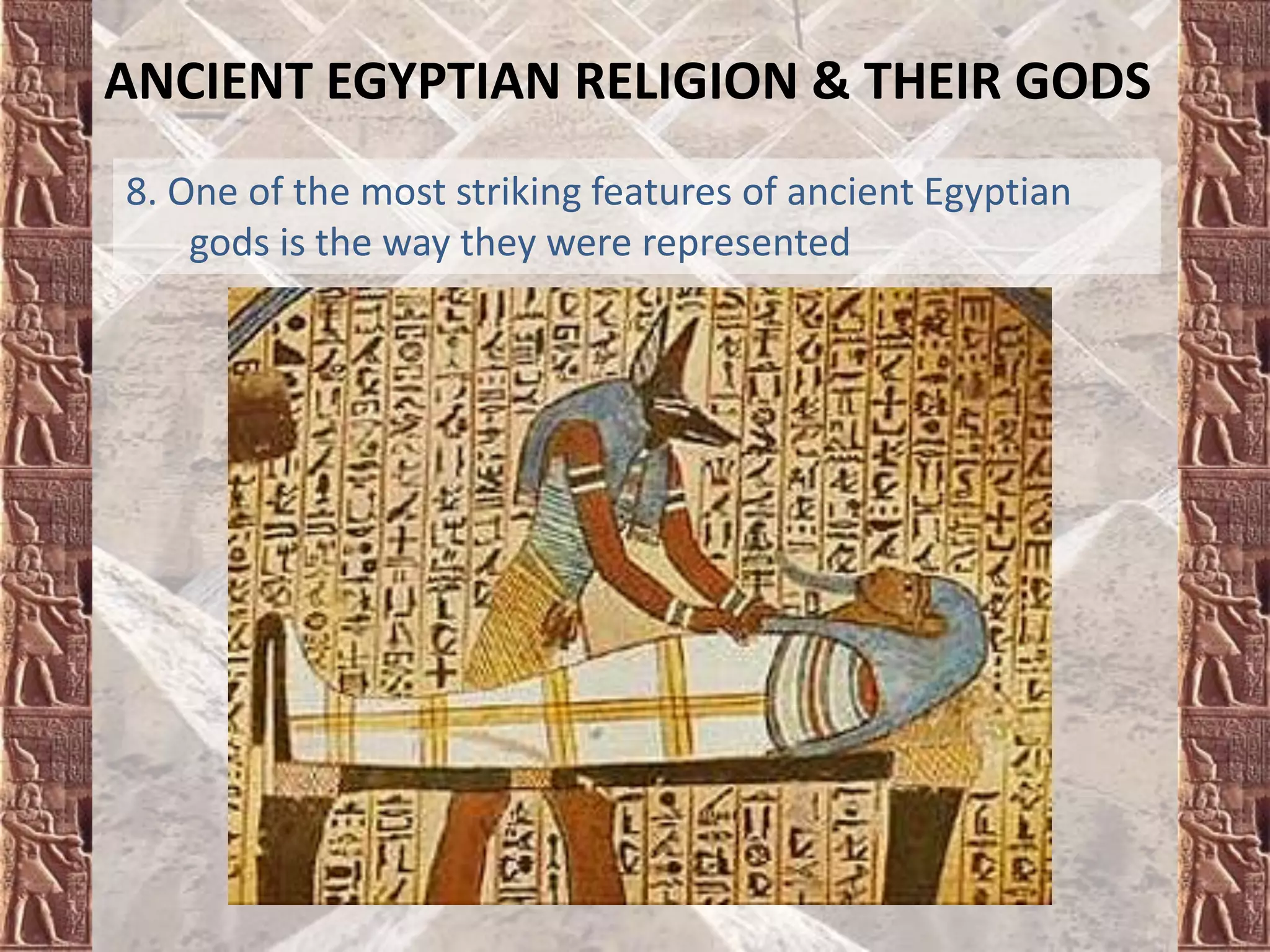
ANCIENT EGYPTIAN RELIGION & THEIR GODS
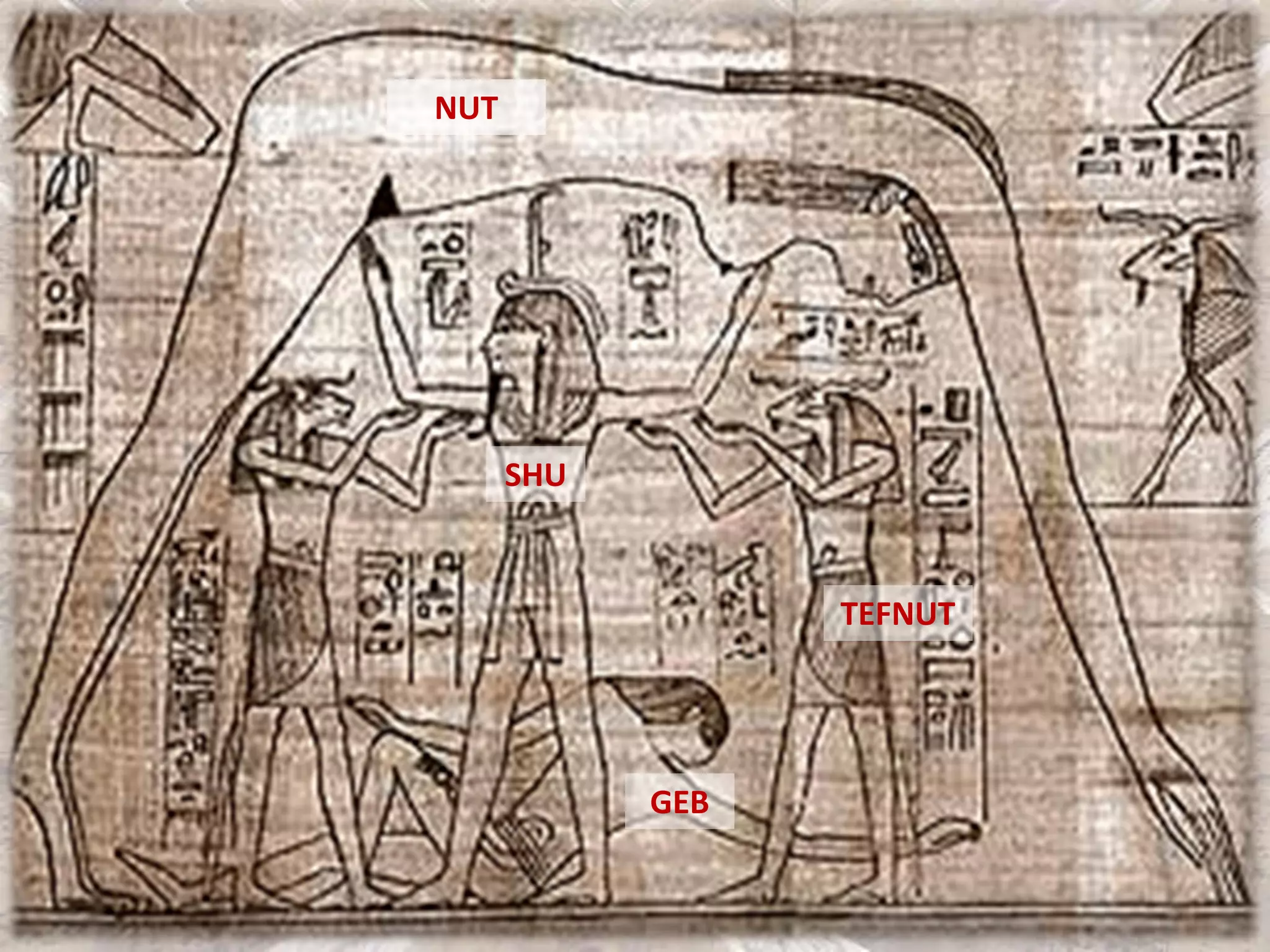
NUT
GEB
SHU
TEFNUT
ANCIENT EGYPTIAN RELIGION & THEIR GODS
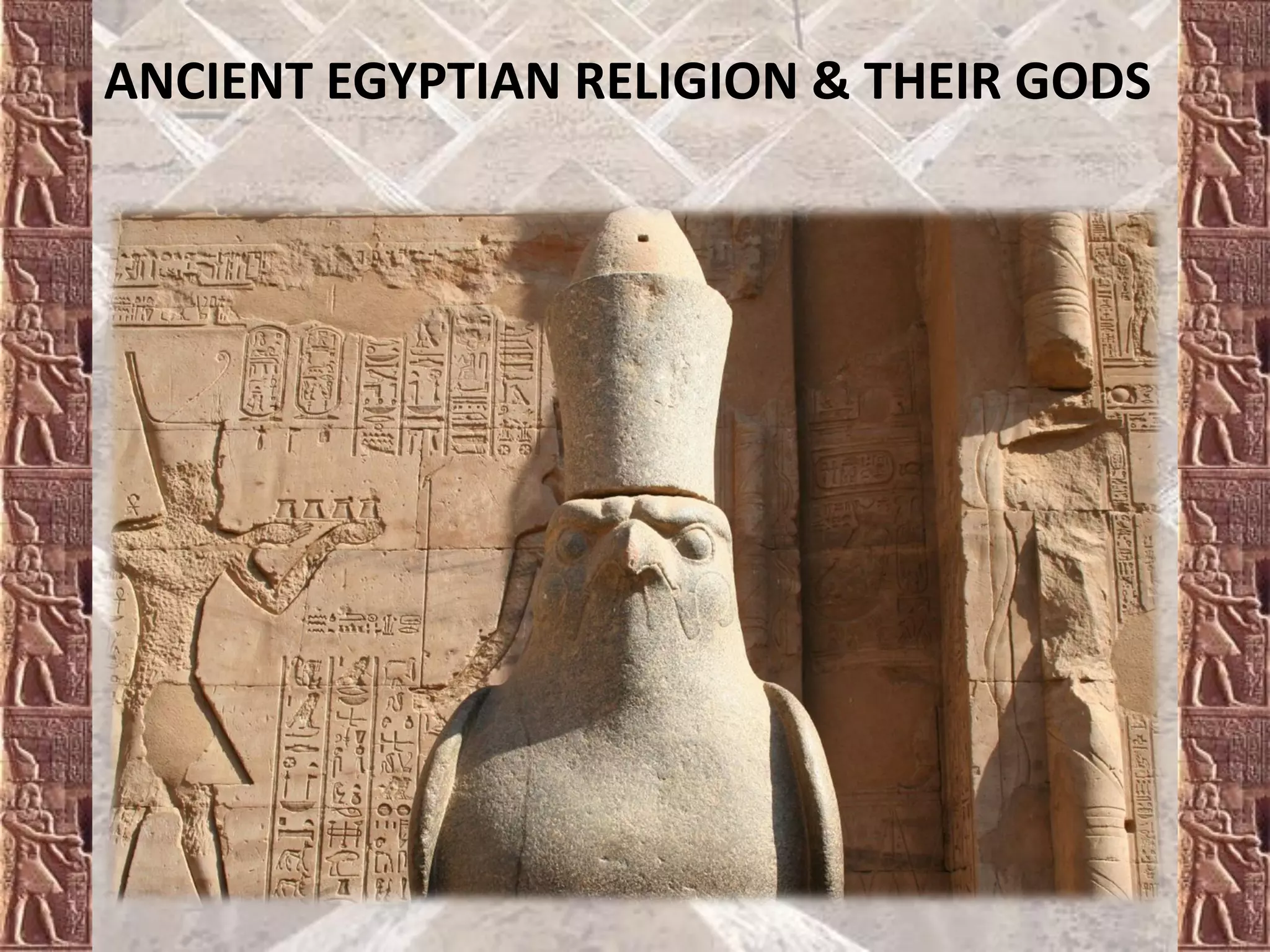
8. One of the most striking features of ancient Egyptian
gods is the way they were represented
ANCIENT EGYPTIAN RELIGION & THEIR GODS
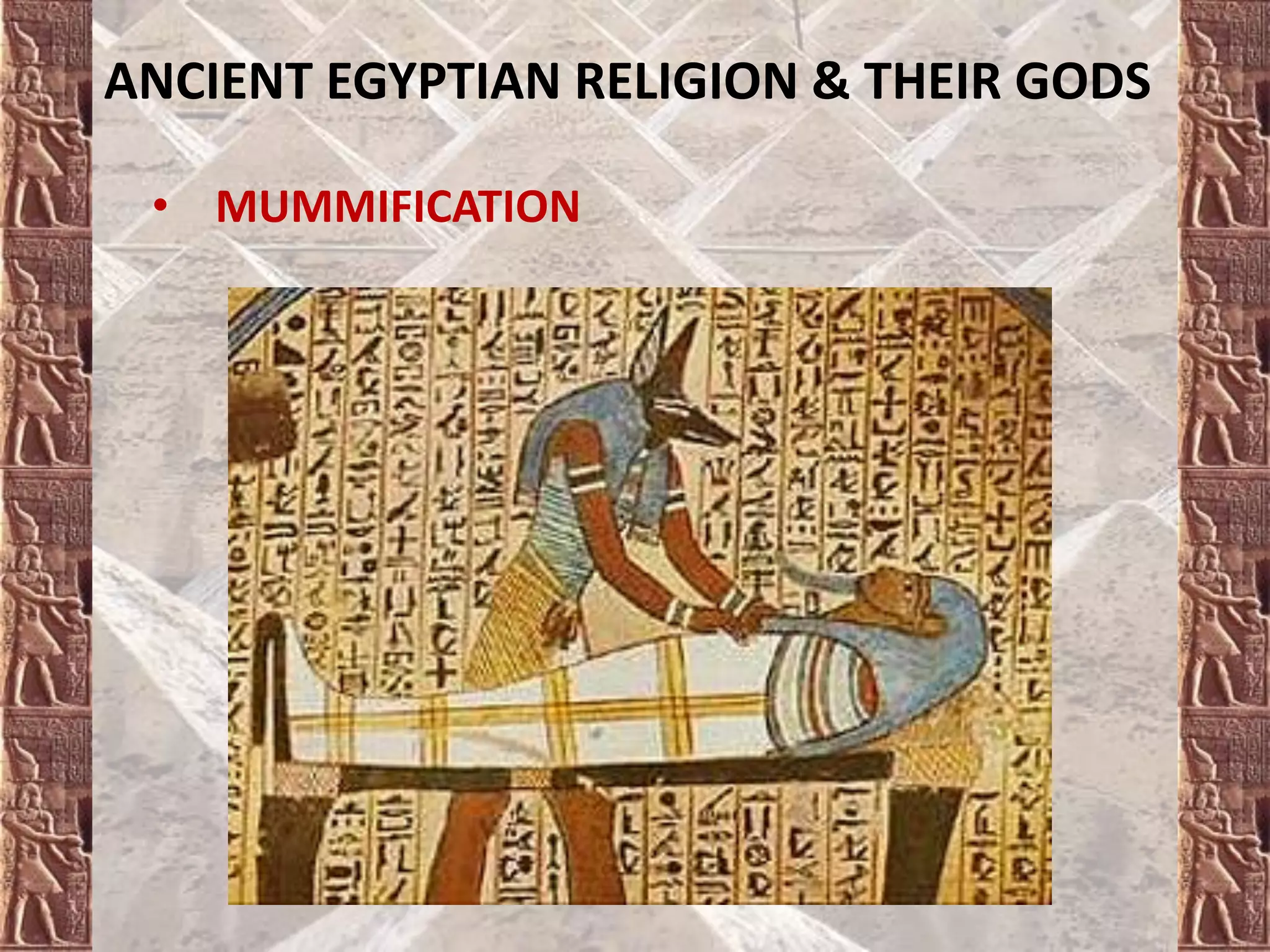
• MUMMIFICATION
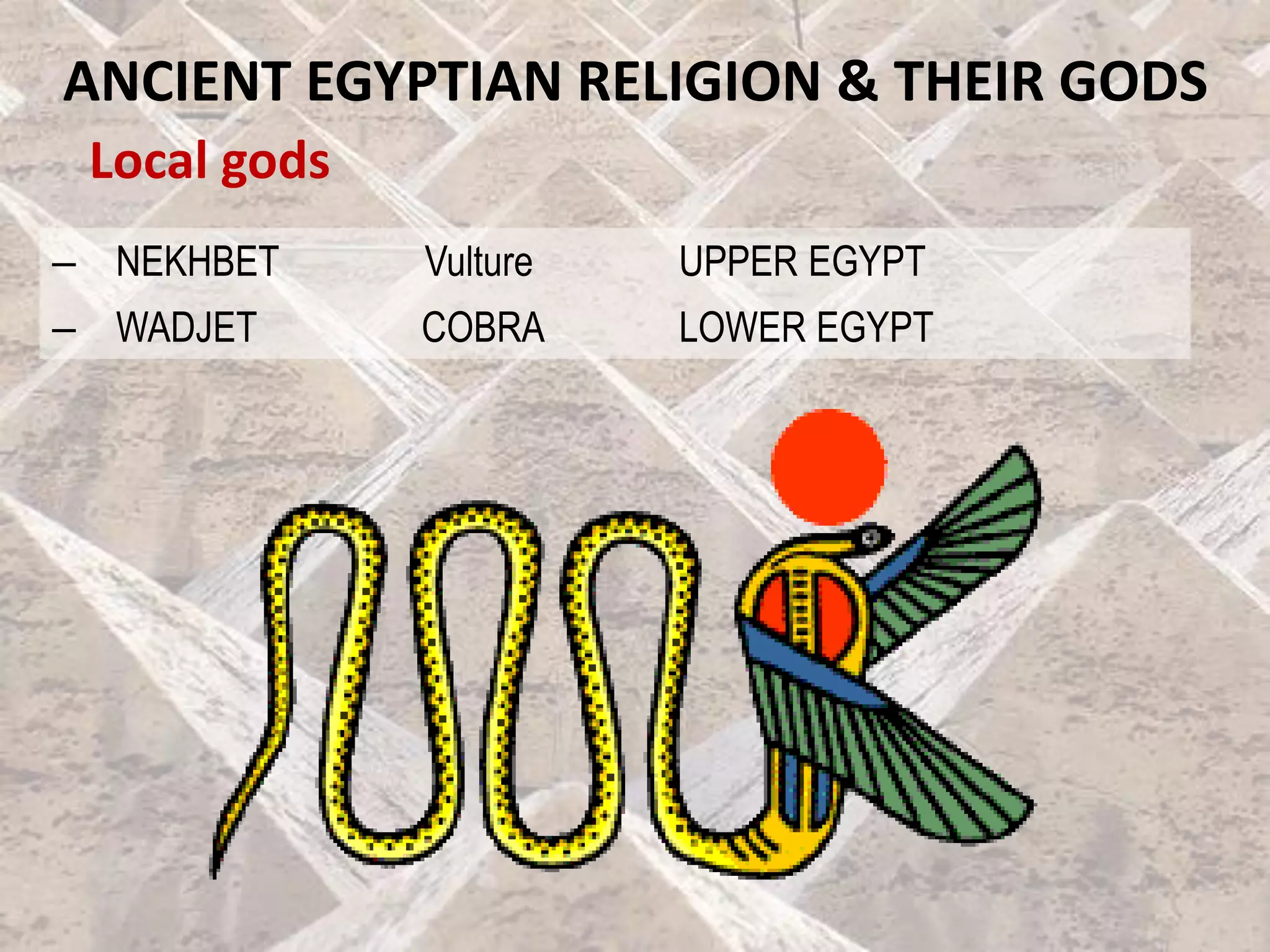
Local gods
ANCIENT EGYPTIAN RELIGION & THEIR GODS
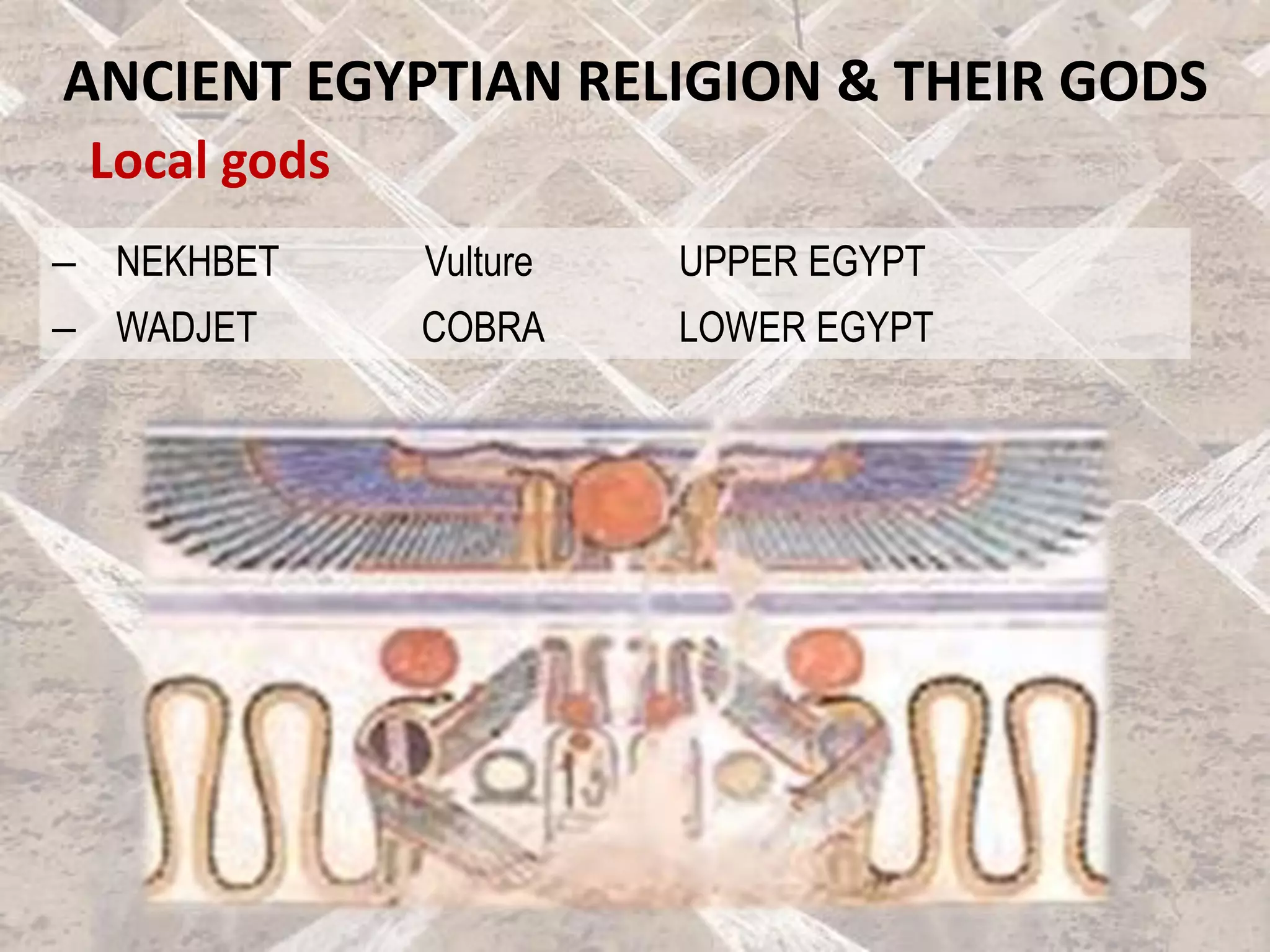
– NEKHBET Vulture UPPER EGYPT
– WADJET COBRA LOWER EGYPT
Local gods
ANCIENT EGYPTIAN RELIGION & THEIR GODS
– NEKHBET Vulture UPPER EGYPT
– WADJET COBRA LOWER EGYPT
KINGSHIP AND DIVINITY
ANCIENT EGYPTIAN RELIGION & THEIR GODS
– Living king is a symbol of HORUS
– Dead king is a symbol of OSIRIS
– HUMAN ……… DIVINE
– UPPER EGYPT ……… LOWER EGYPT
– LIGHT ……... DARKNESS
– GREEN VALLEY …….... DESERT SIDES
– EARTH ………. SKY & HEAVEN
Not POLARITIES
But
UNITIES of Two’s
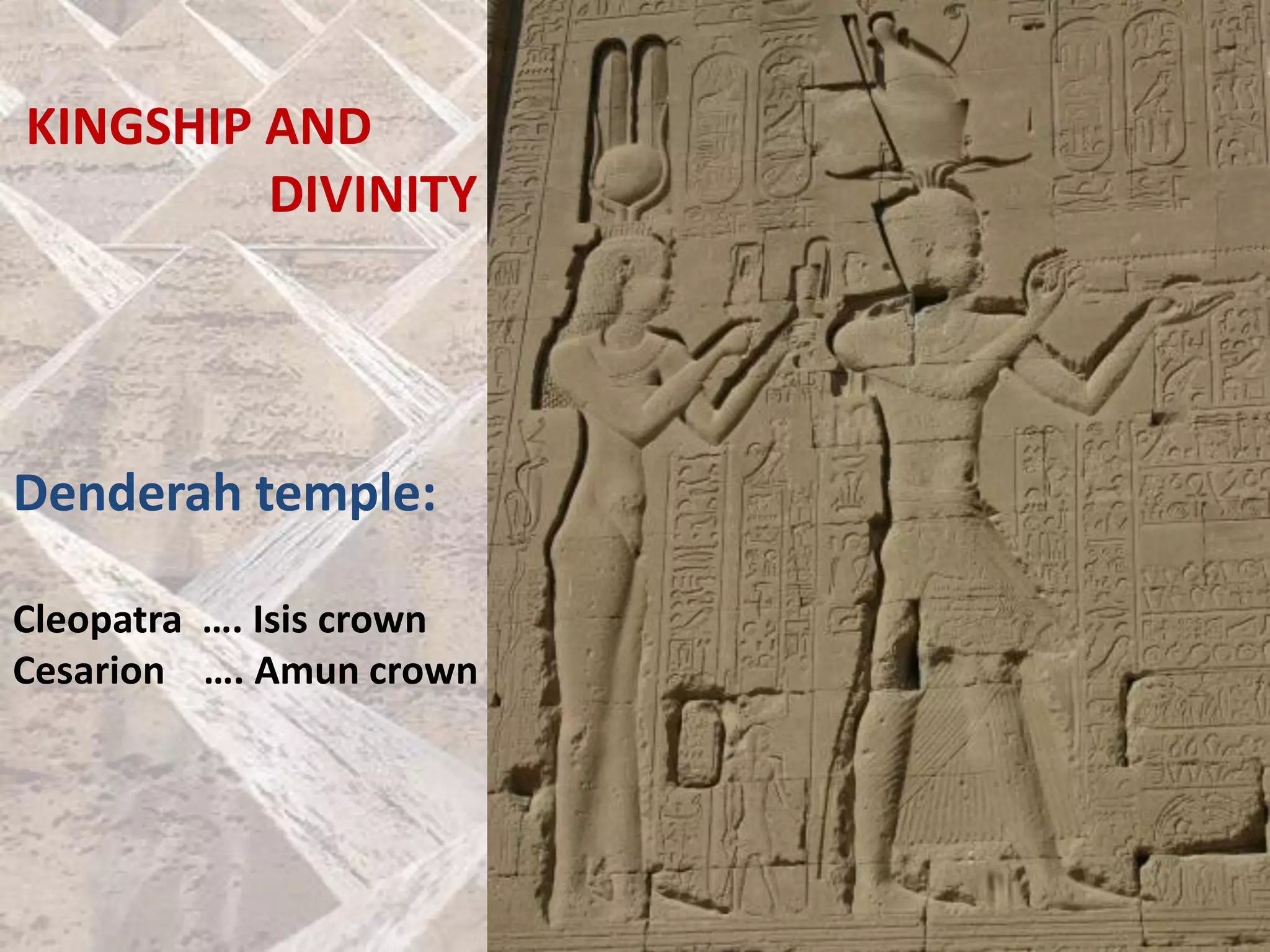
Denderah temple:
Cleopatra …. Isis crown
Cesarion …. Amun crown
KINGSHIP AND
DIVINITY
MYTHS
ANCIENT EGYPTIAN RELIGION & THEIR GODS
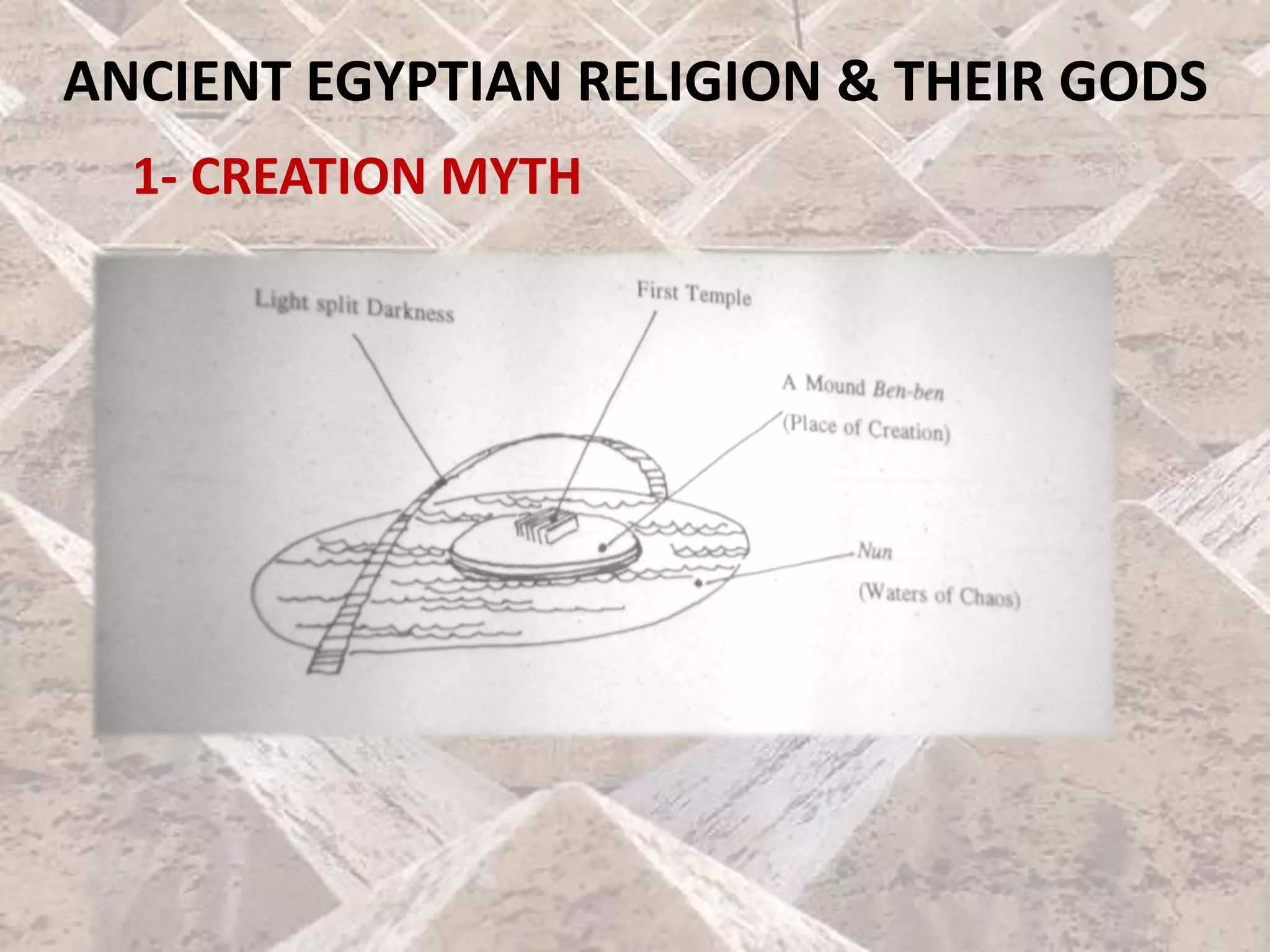
1- CREATION MYTH
ANCIENT EGYPTIAN RELIGION & THEIR GODS
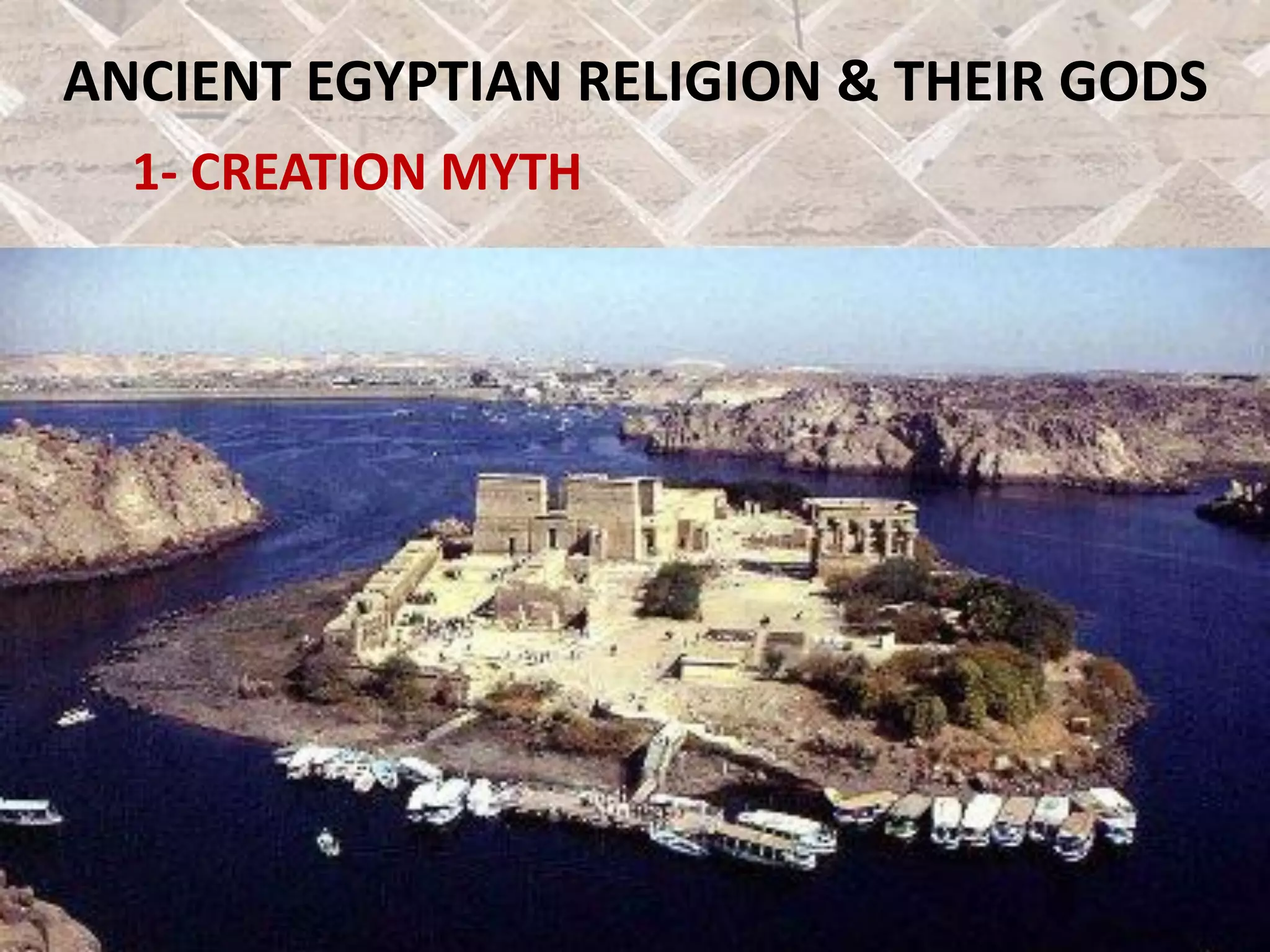
1- CREATION MYTH
ANCIENT EGYPTIAN RELIGION & THEIR GODS
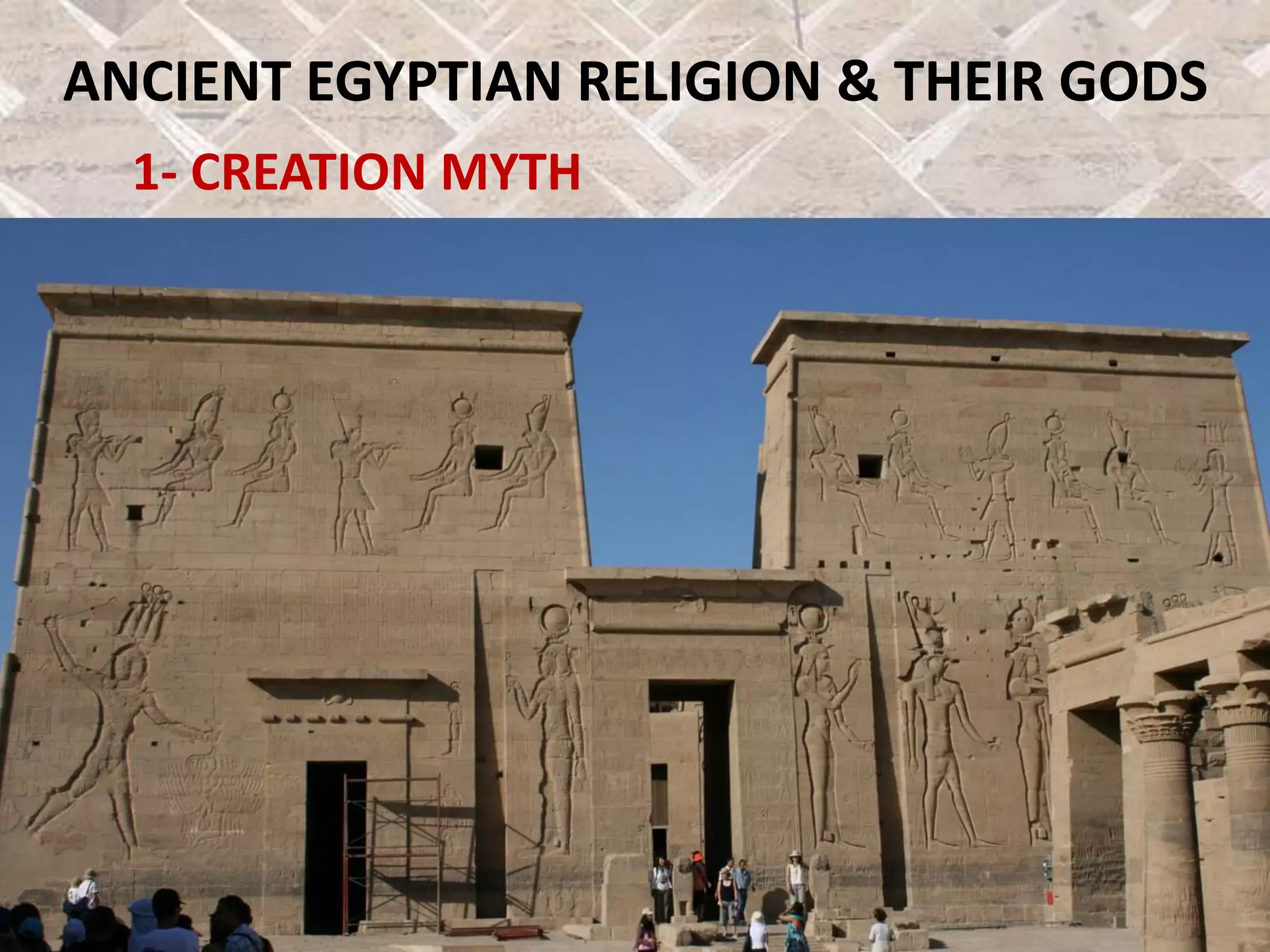
1- CREATION MYTH
ANCIENT EGYPTIAN RELIGION & THEIR GODS
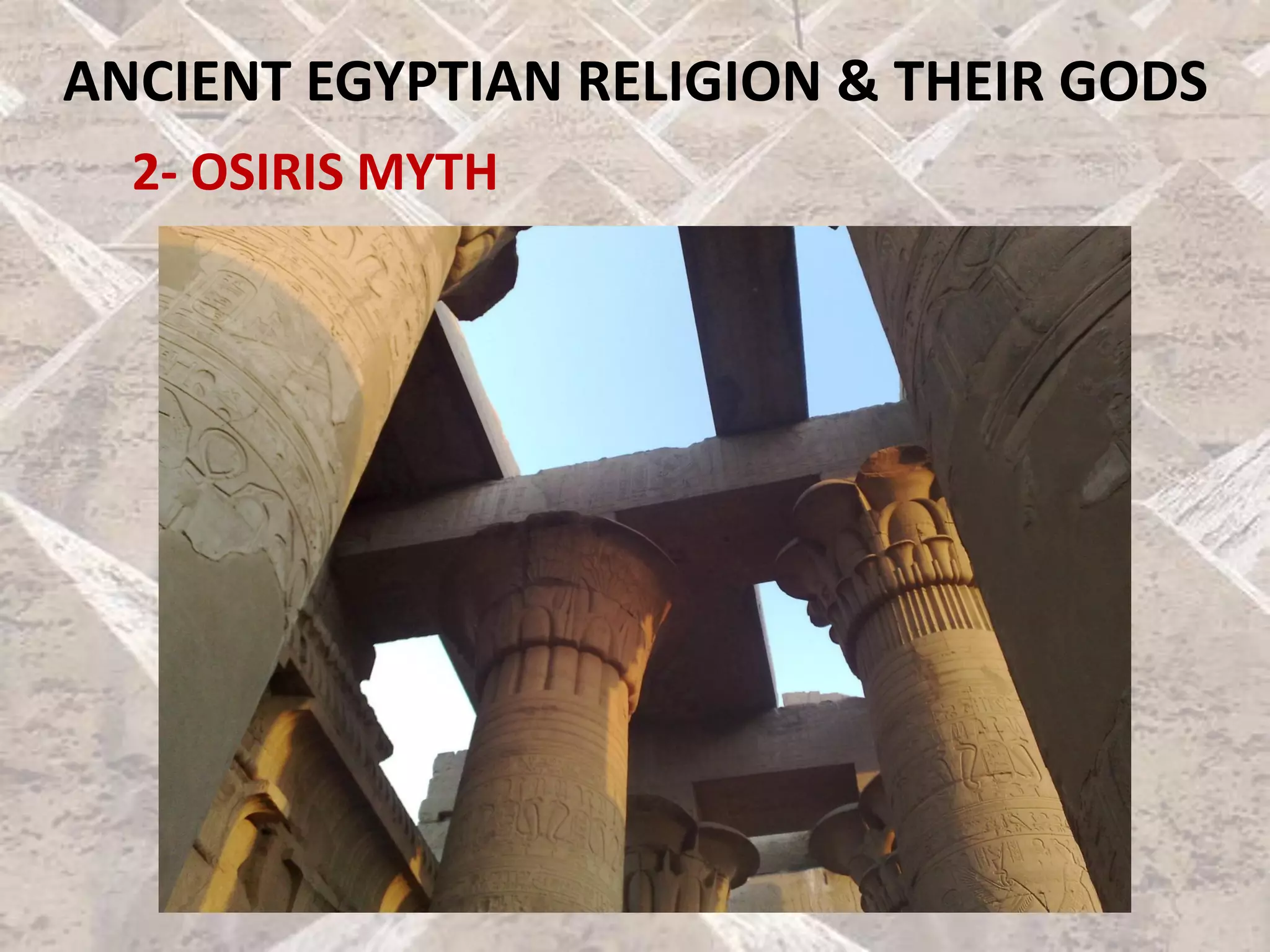
2- OSIRIS MYTH
• OSIRIS and ISIS ruled the Earth.
• SETH kills OSIRIS , cuts him into 14 parts and throws
them in the Nile.
• ISIS searches Egypt and collects his body parts.
• ANUBIS makes OSIRIS into the first mummy and
brings him briefly back to life to conceive a child.
• Pregnant ISIS hides in the Delta Papyrus thicket on
an island.
• HORUS fights SETH and wins, becomes the
prototype of the living king / God on earth.
• OSIRIS is resurrected and becomes the prototype of
the God of the Underworld.
ANCIENT EGYPTIAN RELIGION & THEIR GODS
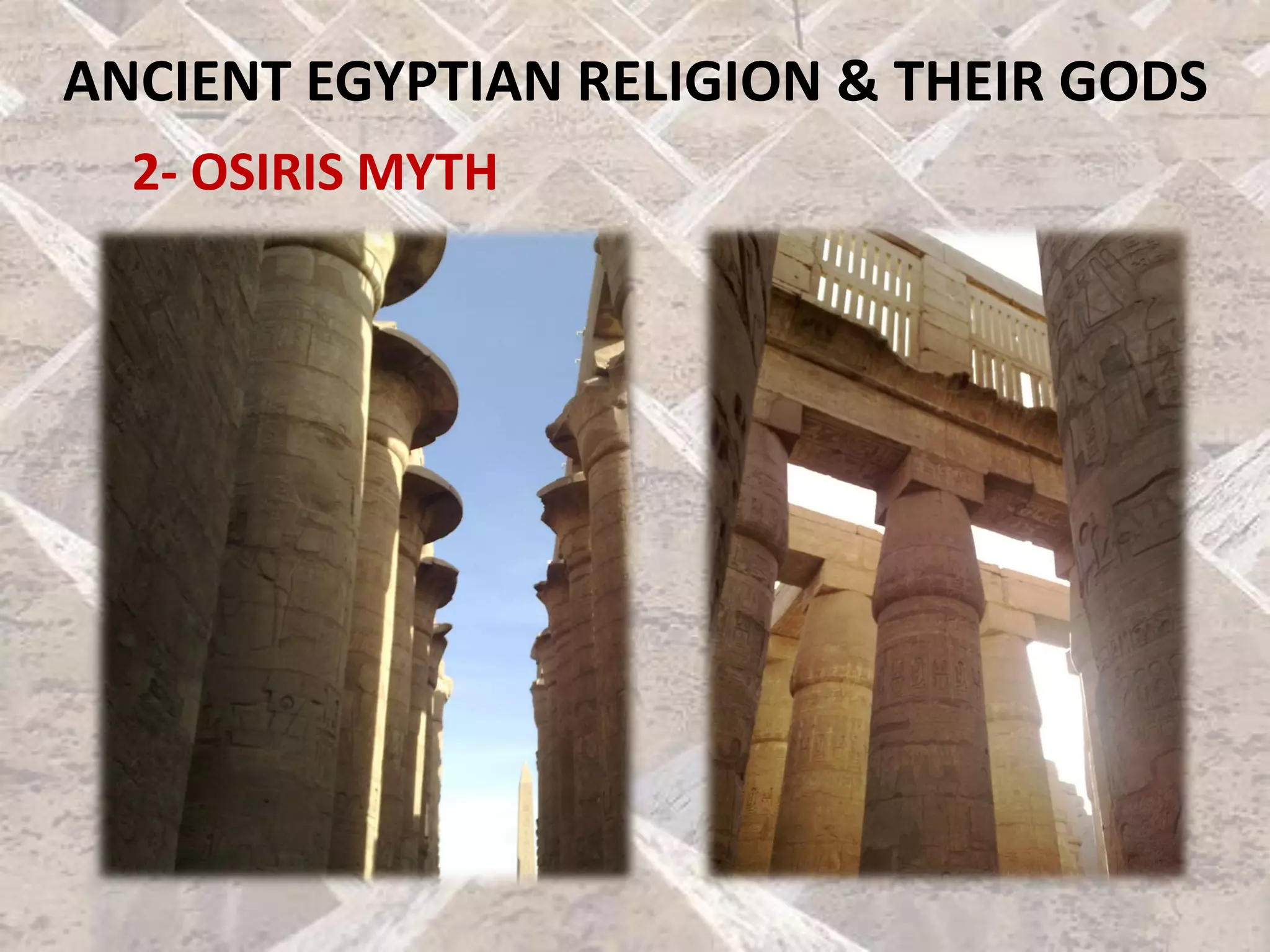
2- OSIRIS MYTH
ANCIENT EGYPTIAN RELIGION & THEIR GODS
2- OSIRIS MYTH
ANCIENT EGYPTIAN RELIGION & THEIR GODS
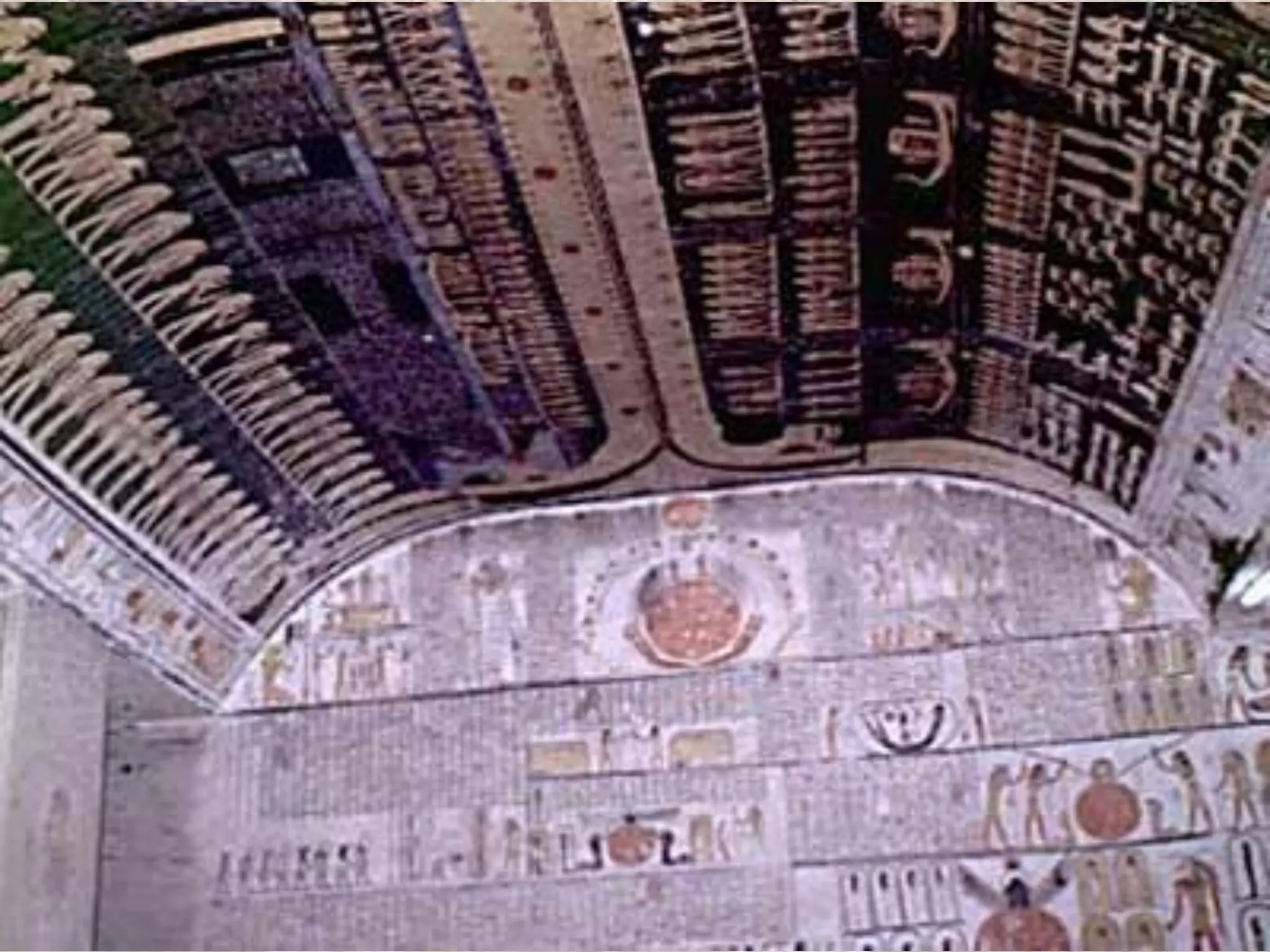
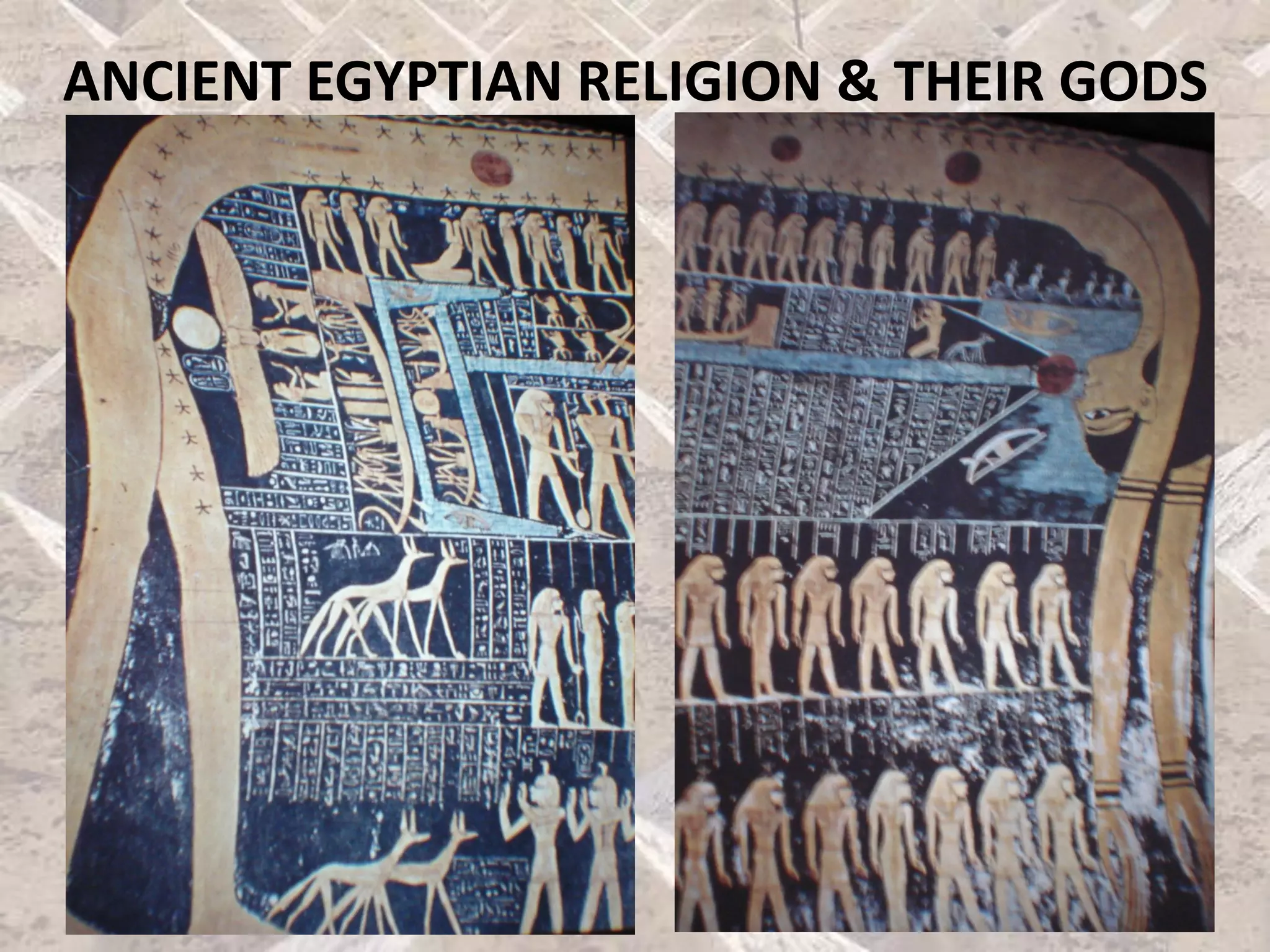
4- Myth of Solar Cycle
▪ NUT gave birth to RE the Sun God as a sphere.
▪ RE journeyed in solar baroques of gold along
the star studded heavens.
▪ MESEKTET was the morning baroque,
MANDET was the night Braque.
ANCIENT EGYPTIAN RELIGION & THEIR GODS
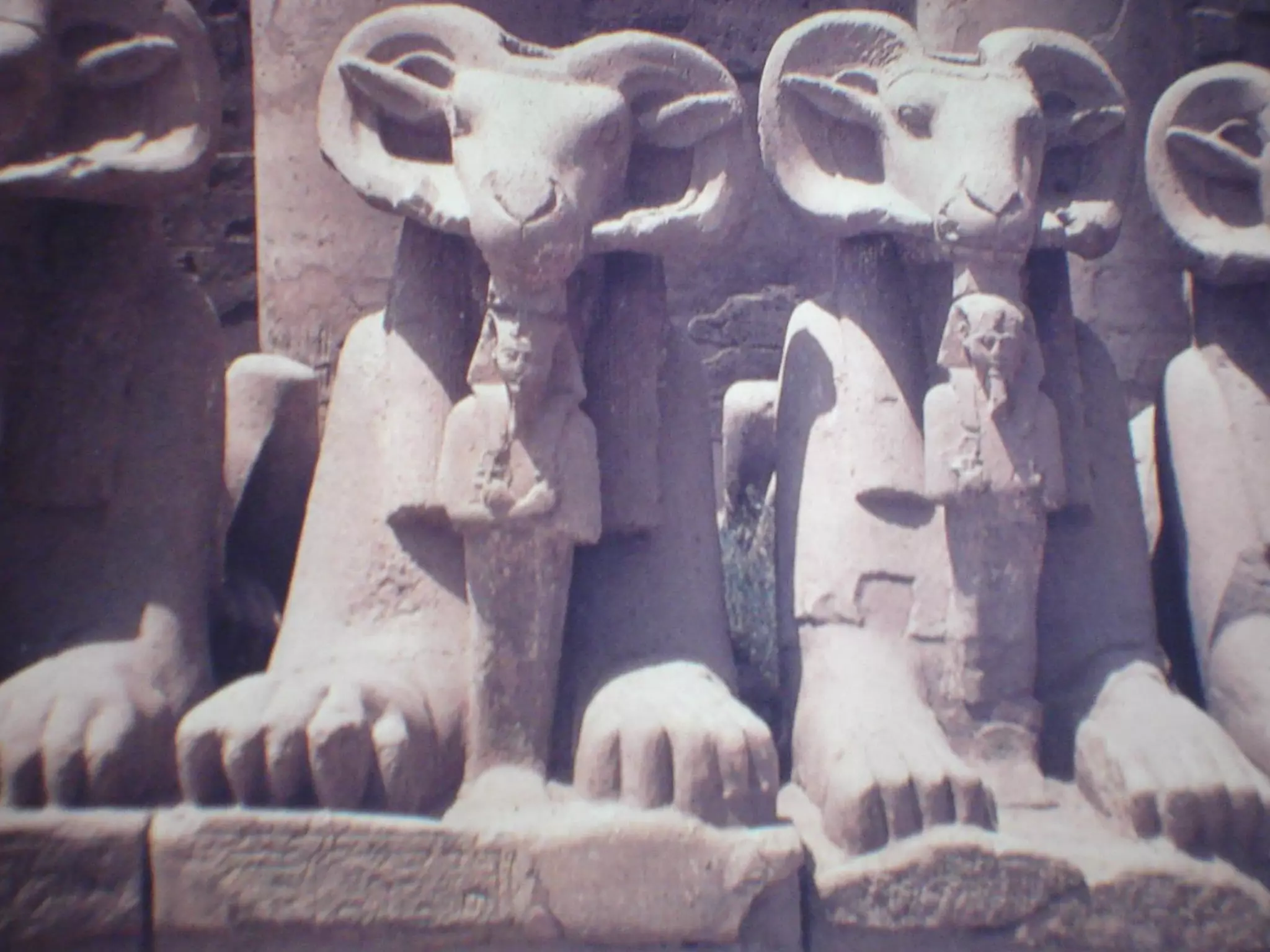
5- Myth OF THE CREATION OF MAN
▪The God KHNUM created man from clay of the
Nile flood.
▪He formed his body and duplicate
▪This act of creation was on the island of
Elephantine.
Ancient Egyptian
architecture
ANCIENT EGYPTIAN ARCHITECTURE
ANCIENT EGYPTIAN TIMELINE:
• PRE DYNASTIC
• OLD KINGDOM
• MIDDLE KINGDOM
• NEW EMPIRE
ANCIENT EGYPTIAN ARCHITECTURE
ANCIENT EGYPTIAN TIMELINE:
The Old Kingdom
"the age of the pyramids”
3rd – 7th Dynasty
Introduction
• During the old Kingdom, the pharaoh and his court
lived in Memphis
• When they died they were buried at the Necropolis
at Saqqara
• The earthly dwelling of the ancient Egyptians was
seen as temporary and the tomb as a permanent
dwelling
• Houses were built of temporary materials to last for
a life time
ANCIENT EGYPTIAN ARCHITECTURE
• Tombs were most outstanding architectural
element of the period
• Tombs also serve as the focus for the worship of
the dead
• The Tomb evolved during the old kingdom from
the Mastaba, through the stepped pyramid to the
renown ancient Egyptian pyramid
• We will examine each of these next
Introduction
ANCIENT EGYPTIAN ARCHITECTURE
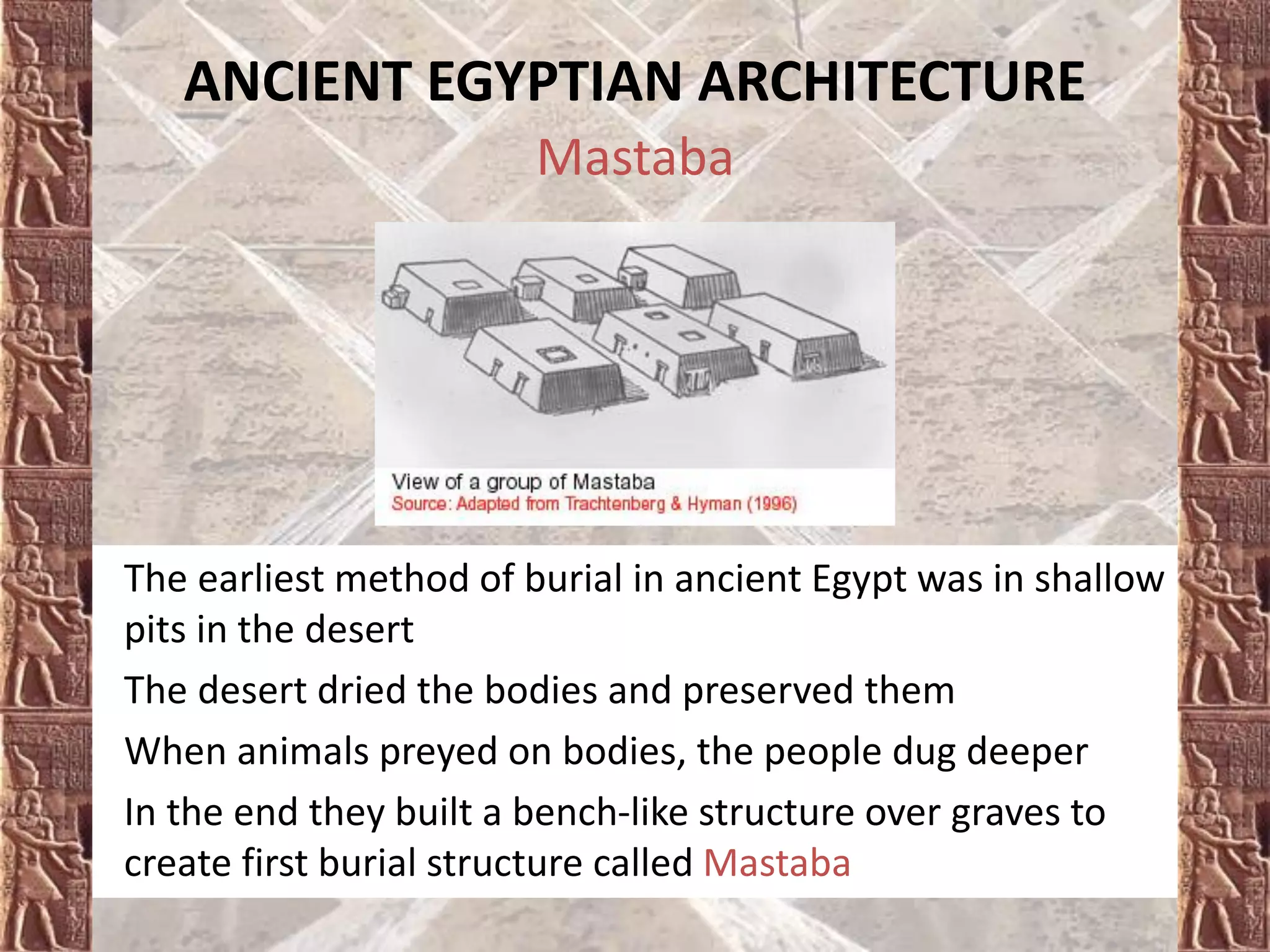
Mastaba
• The earliest method of burial in ancient Egypt was in shallow
pits in the desert
• The desert dried the bodies and preserved them
• When animals preyed on bodies, the people dug deeper
• In the end they built a bench-like structure over graves to
create first burial structure called Mastaba
ANCIENT EGYPTIAN ARCHITECTURE
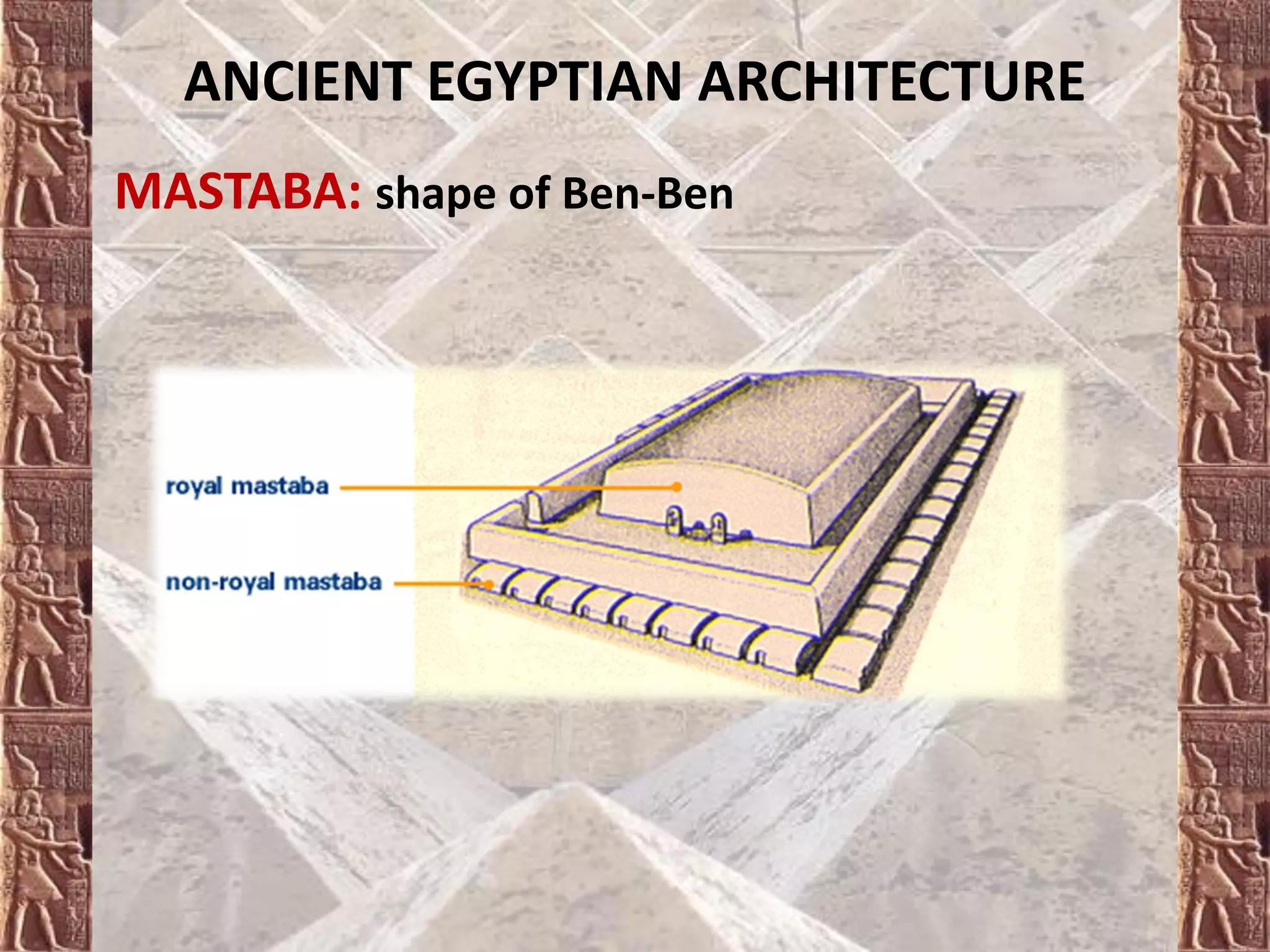
MASTABA: shape of Ben-Ben
•The Mastaba was rectangular
•Flat or curved roofed structures
•Sloping sides with angle of about 75 degree
•It consists of three parts:
1. The outer champer (A chapel)
2. The Serdab.
3. Aburial chamber :The chamber containing the
sarcophagus.
ANCIENT EGYPTIAN ARCHITECTURE
MASTABA: shape of Ben-Ben
ANCIENT EGYPTIAN ARCHITECTURE
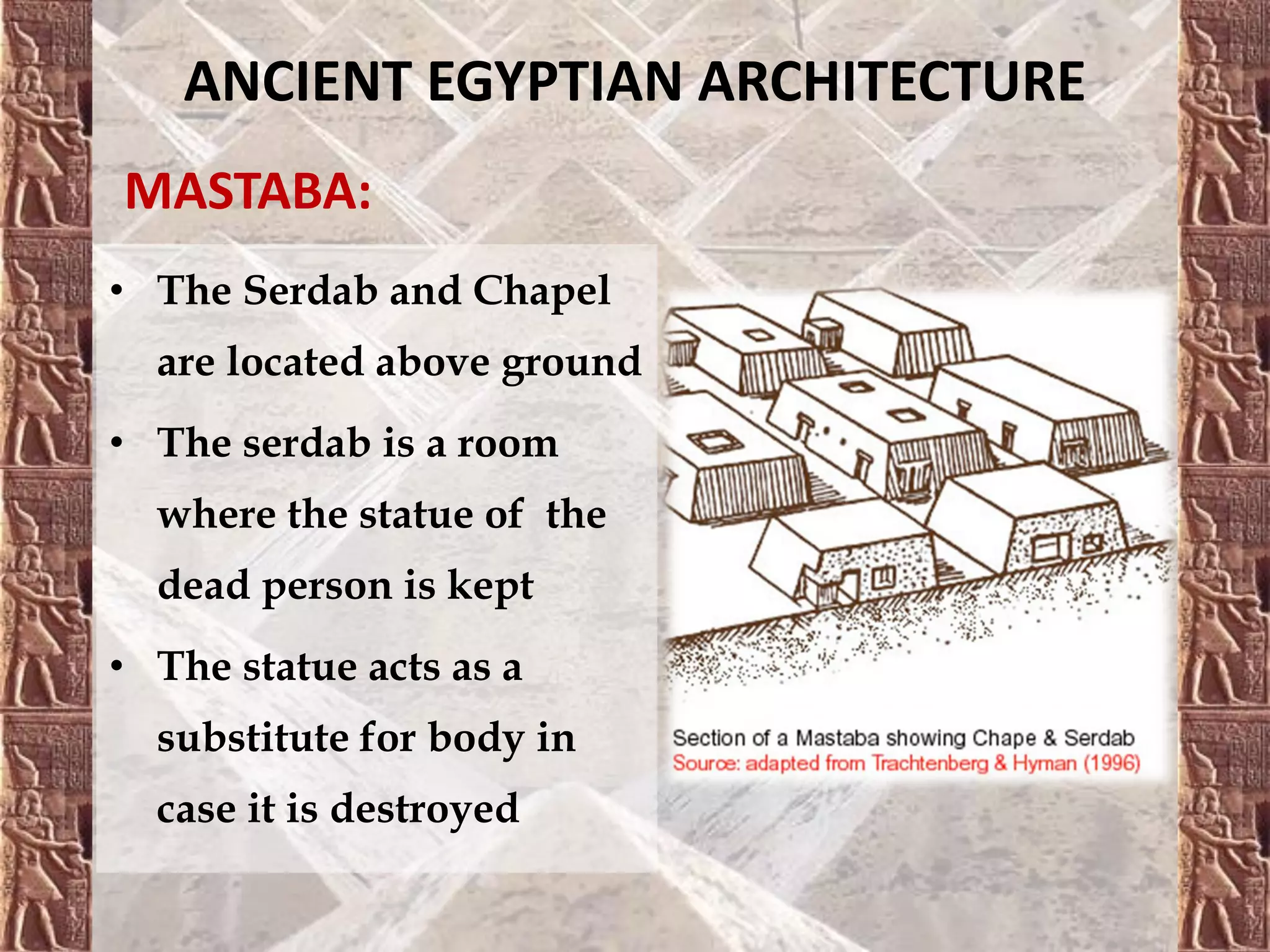
MASTABA:
• The Serdab and Chapel
are located above ground
• The serdab is a room
where the statue of the
dead person is kept
• The statue acts as a
substitute for body in
case it is destroyed
ANCIENT EGYPTIAN ARCHITECTURE
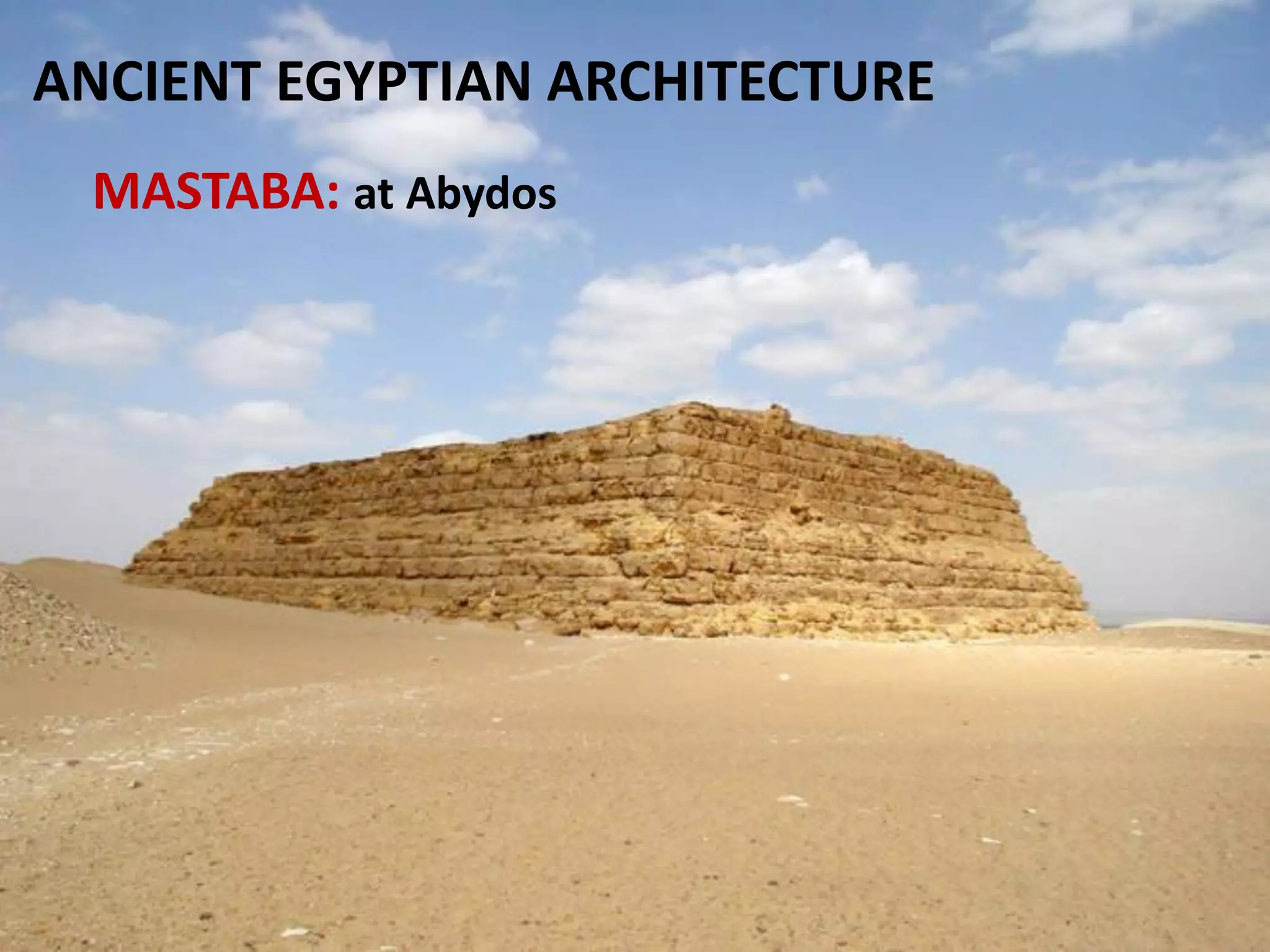
MASTABA: at Abydos
ANCIENT EGYPTIAN ARCHITECTURE
MASTABA:
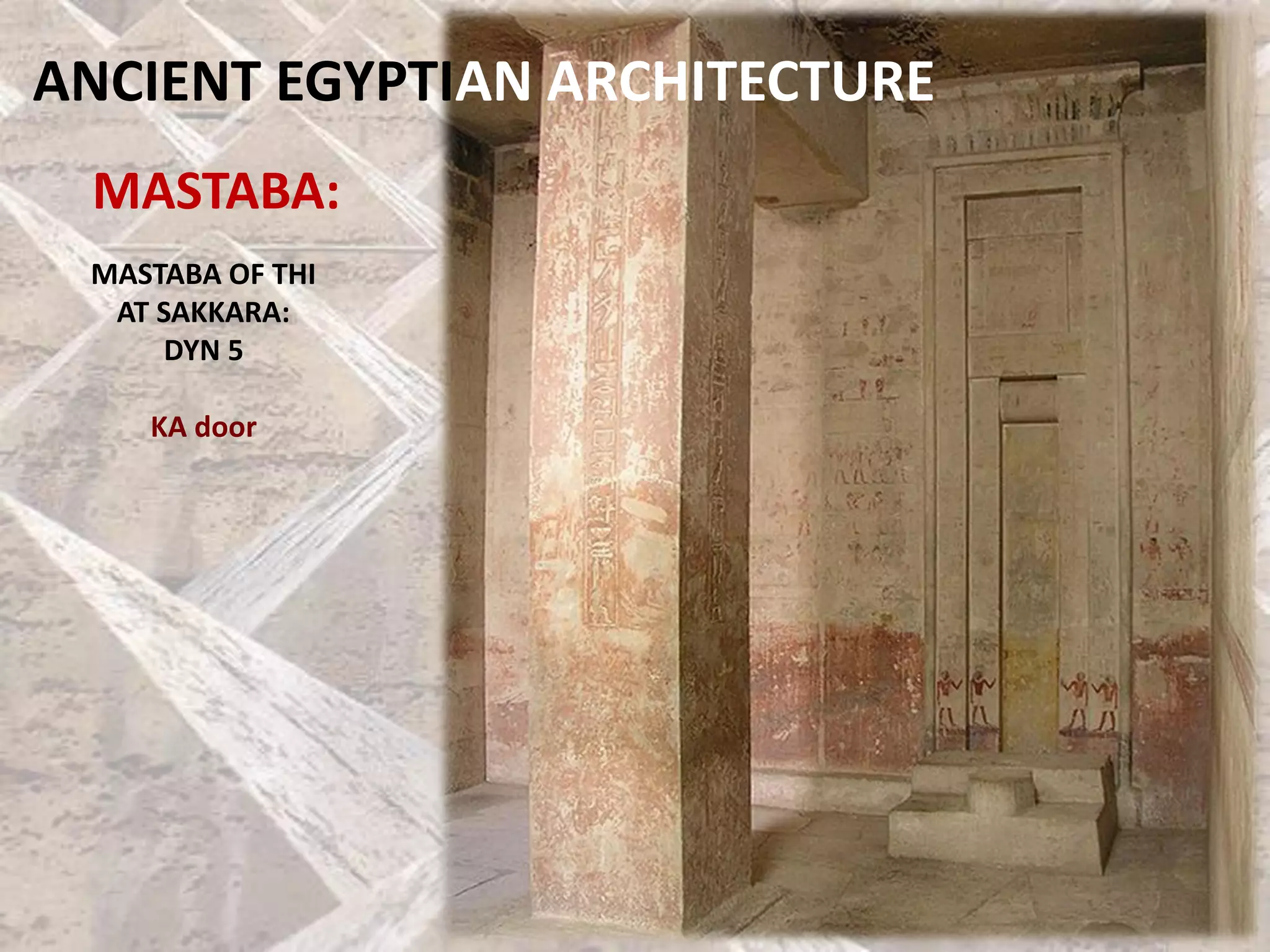
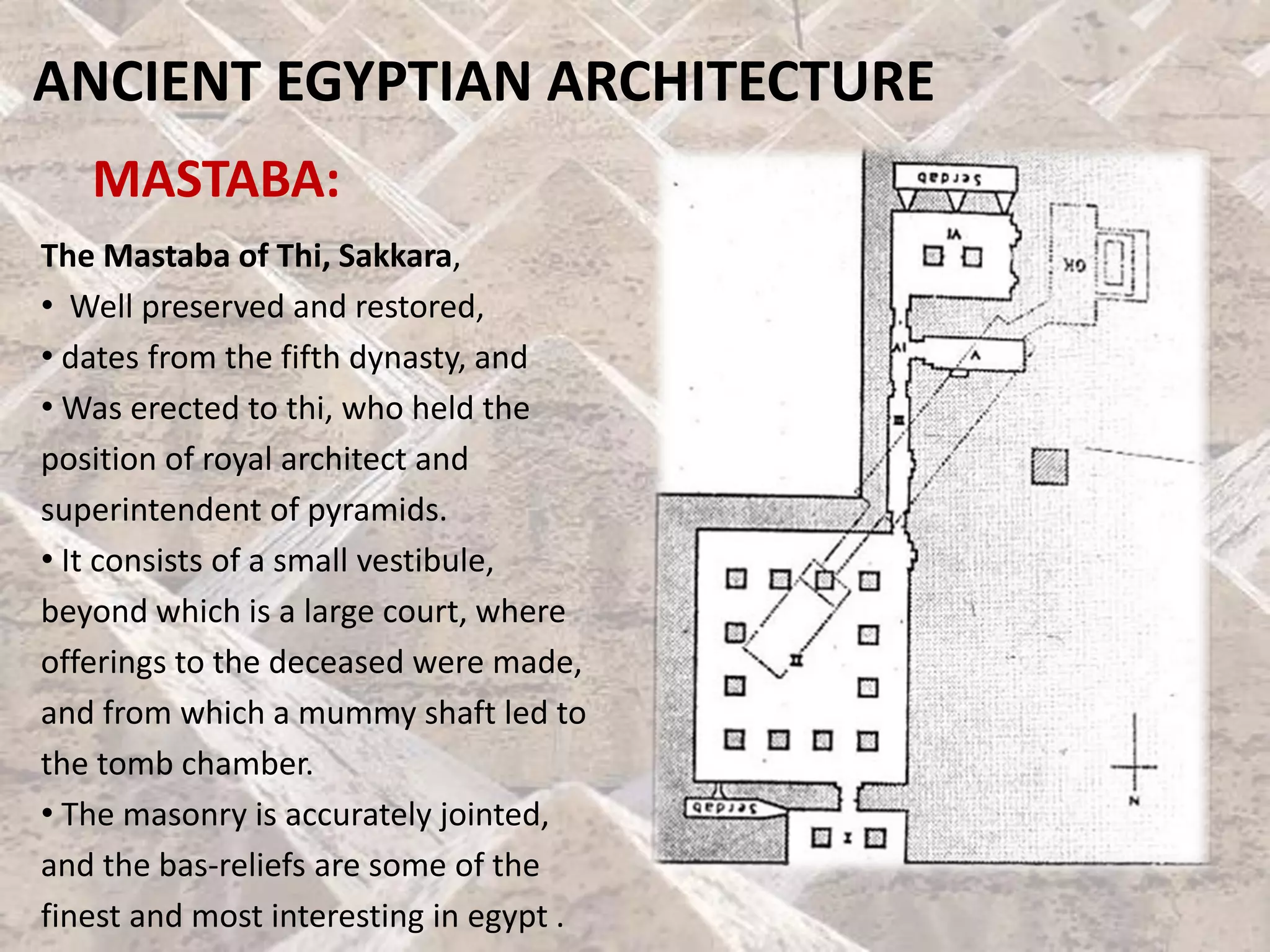
The Mastaba of Thi, Sakkara,
• Well preserved and restored,
• dates from the fifth dynasty, and
• Was erected to thi, who held the
position of royal architect and
superintendent of pyramids.
• It consists of a small vestibule,
beyond which is a large court, where
offerings to the deceased were made,
and from which a mummy shaft led to
the tomb chamber.
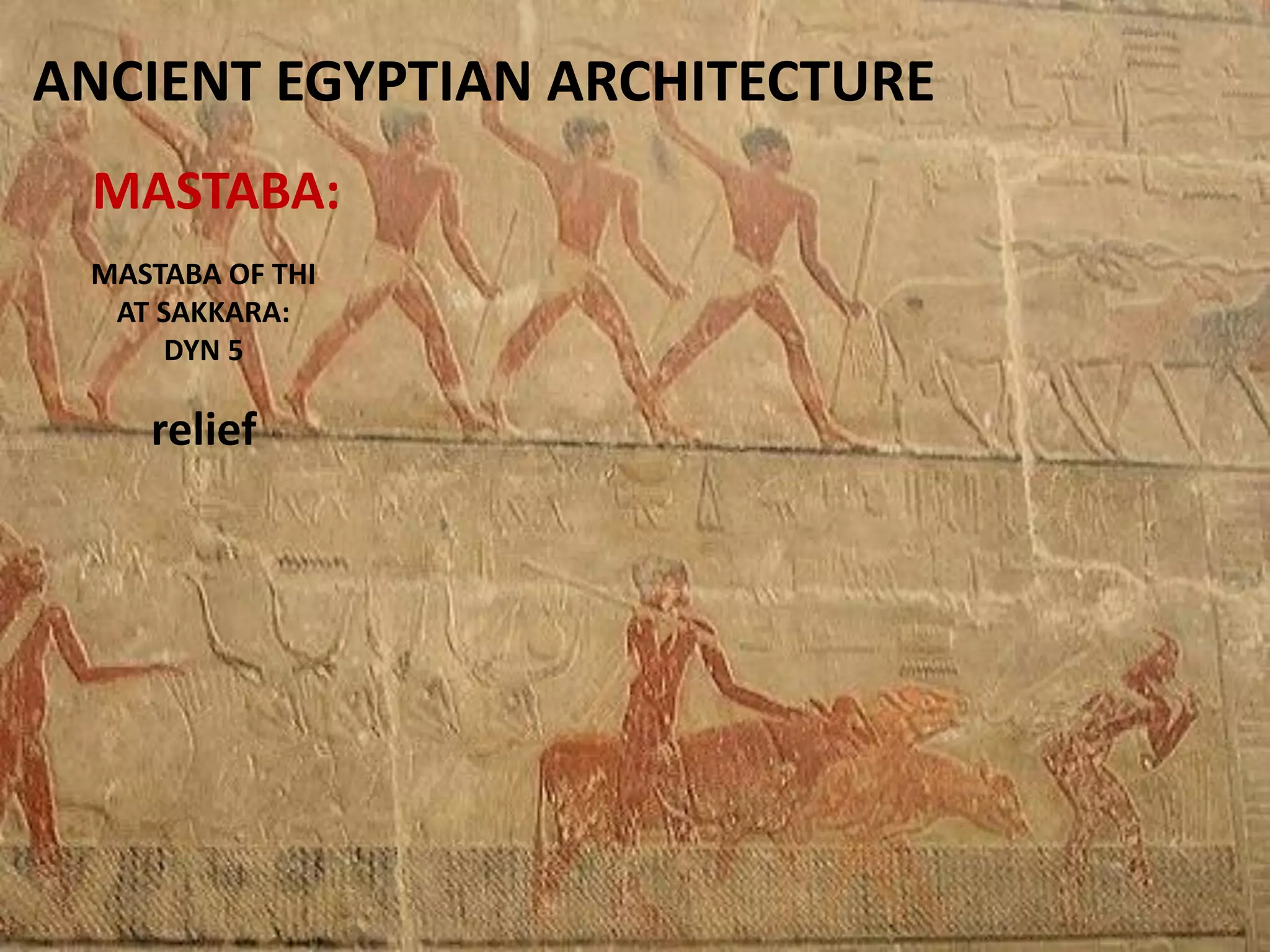
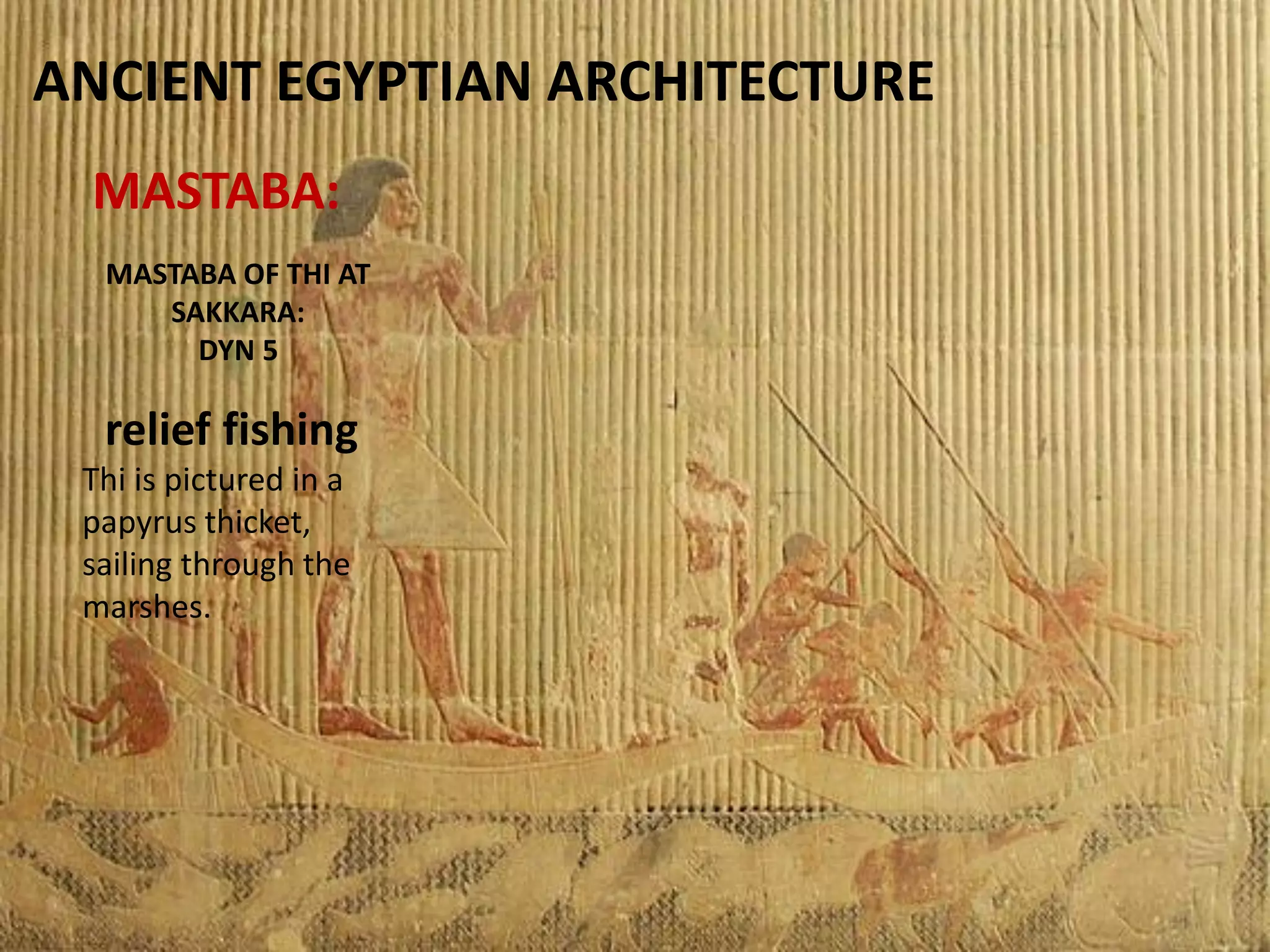
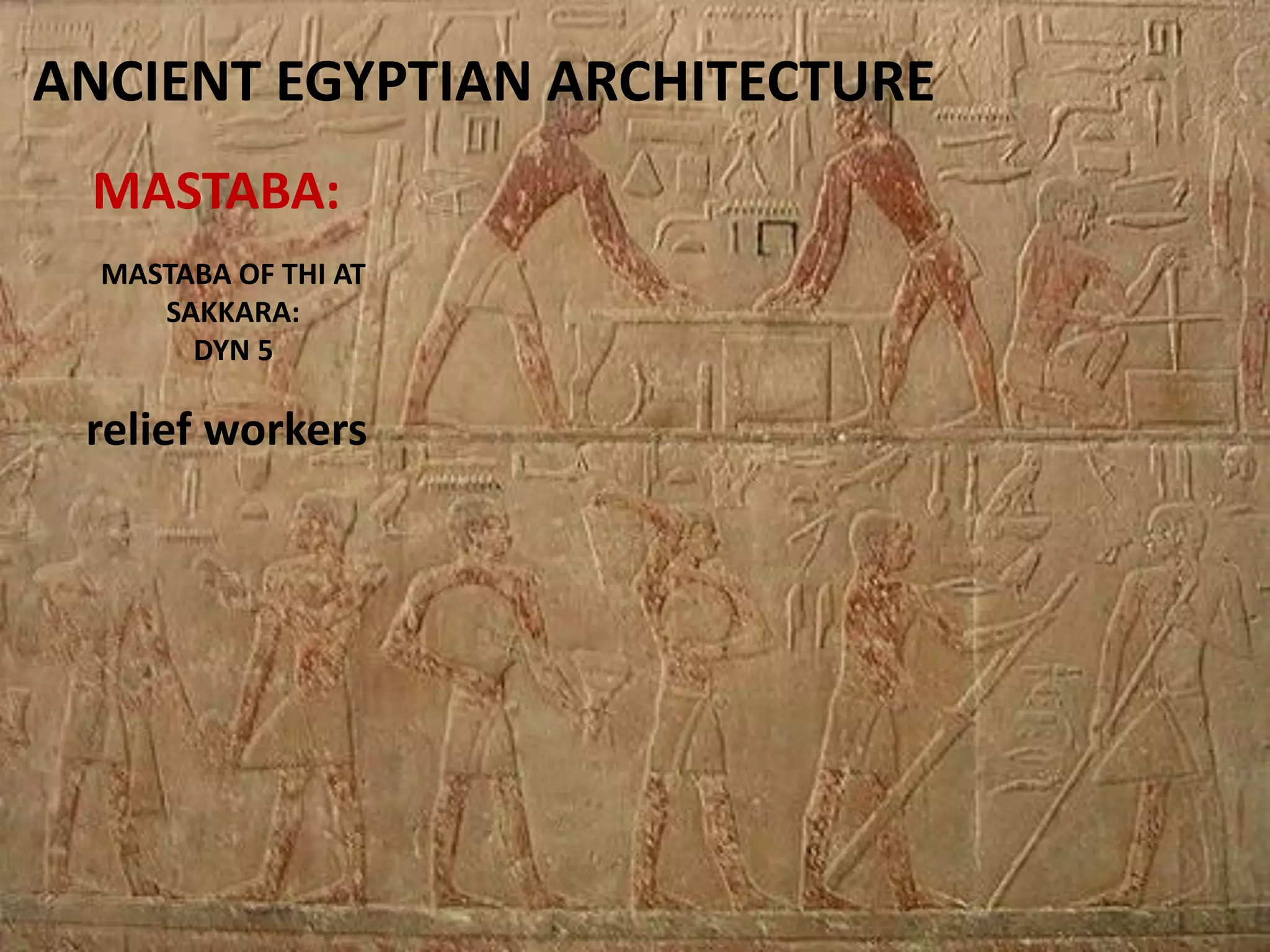
• The masonry is accurately jointed,
and the bas-reliefs are some of the
finest and most interesting in egypt .
ANCIENT EGYPTIAN ARCHITECTURE
MASTABA:
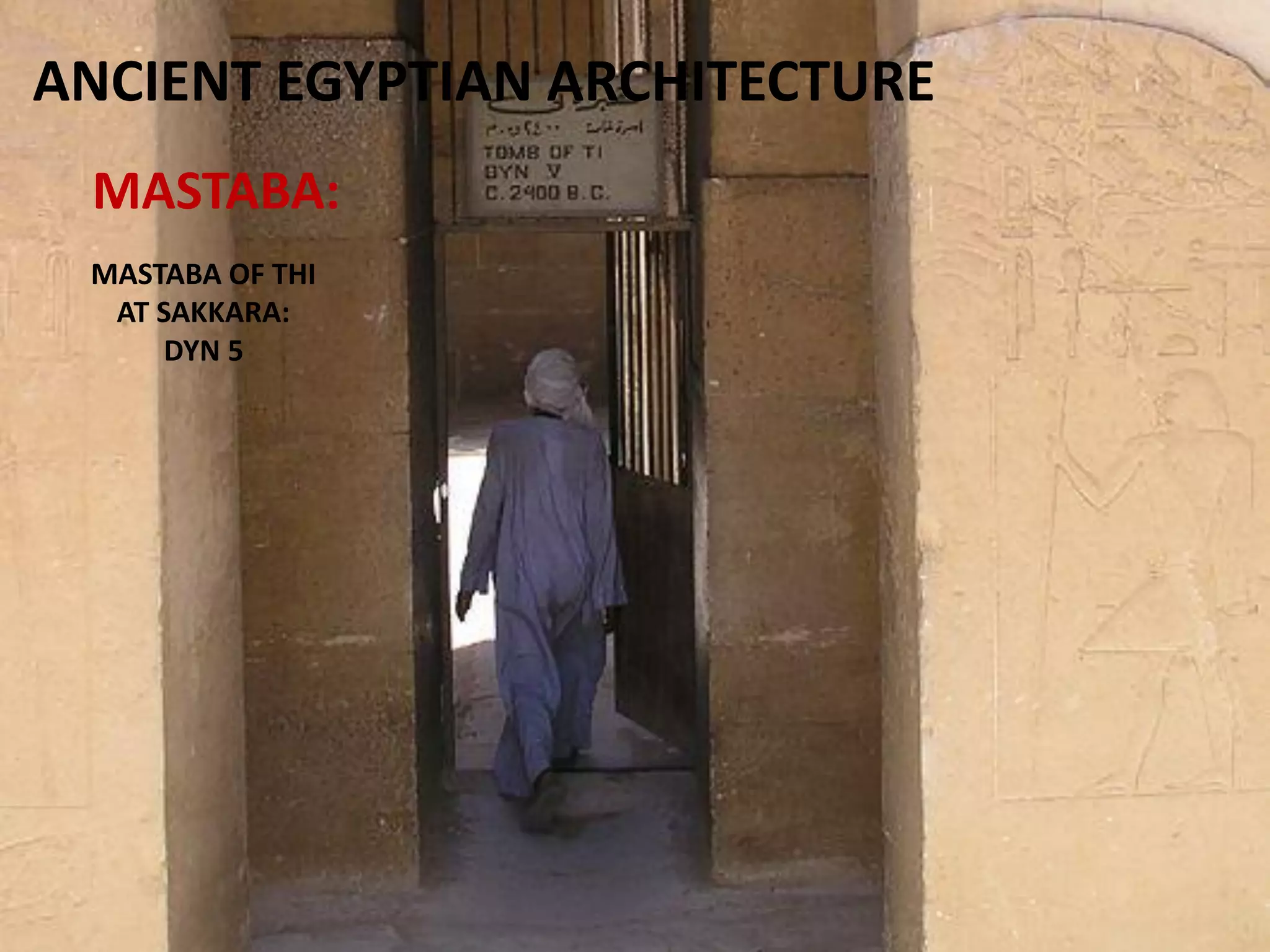
MASTABA OF THI
AT SAKKARA:
DYN 5
ANCIENT EGYPTIAN ARCHITECTURE
MASTABA:
MASTABA OF THI
AT SAKKARA:
DYN 5
KA door
ANCIENT EGYPTIAN ARCHITECTURE
MASTABA:
MASTABA OF THI
AT SAKKARA:
DYN 5
relief
ANCIENT EGYPTIAN ARCHITECTURE
MASTABA:
MASTABA OF THI AT
SAKKARA:
DYN 5
relief fishing
Thi is pictured in a
papyrus thicket,
sailing through the
marshes.
ANCIENT EGYPTIAN ARCHITECTURE
MASTABA:
MASTABA OF THI AT
SAKKARA:
DYN 5
relief workers
ANCIENT EGYPTIAN ARCHITECTURE
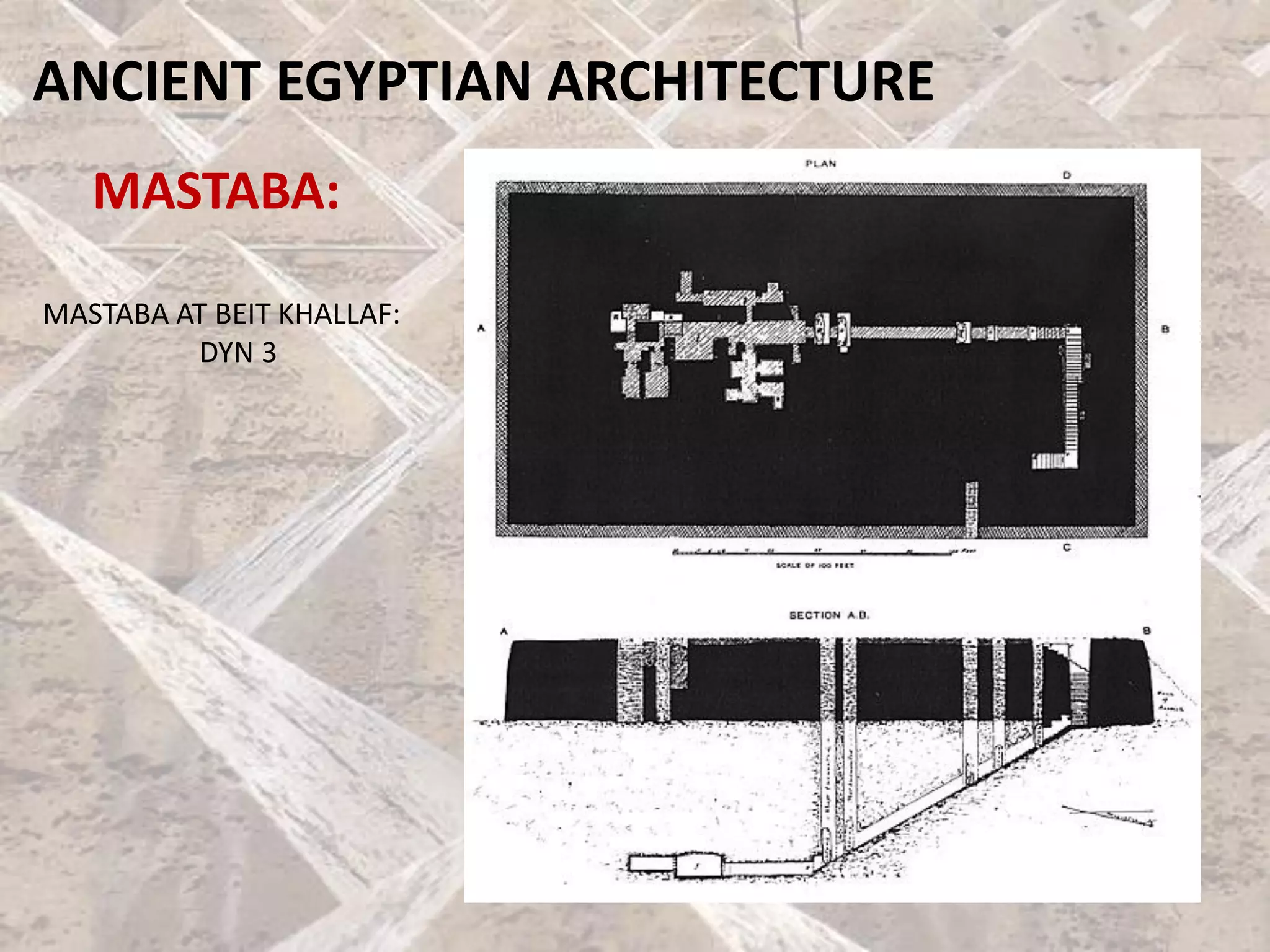
MASTABA:
MASTABA AT BEIT KHALLAF:
DYN 3
ANCIENT EGYPTIAN ARCHITECTURE
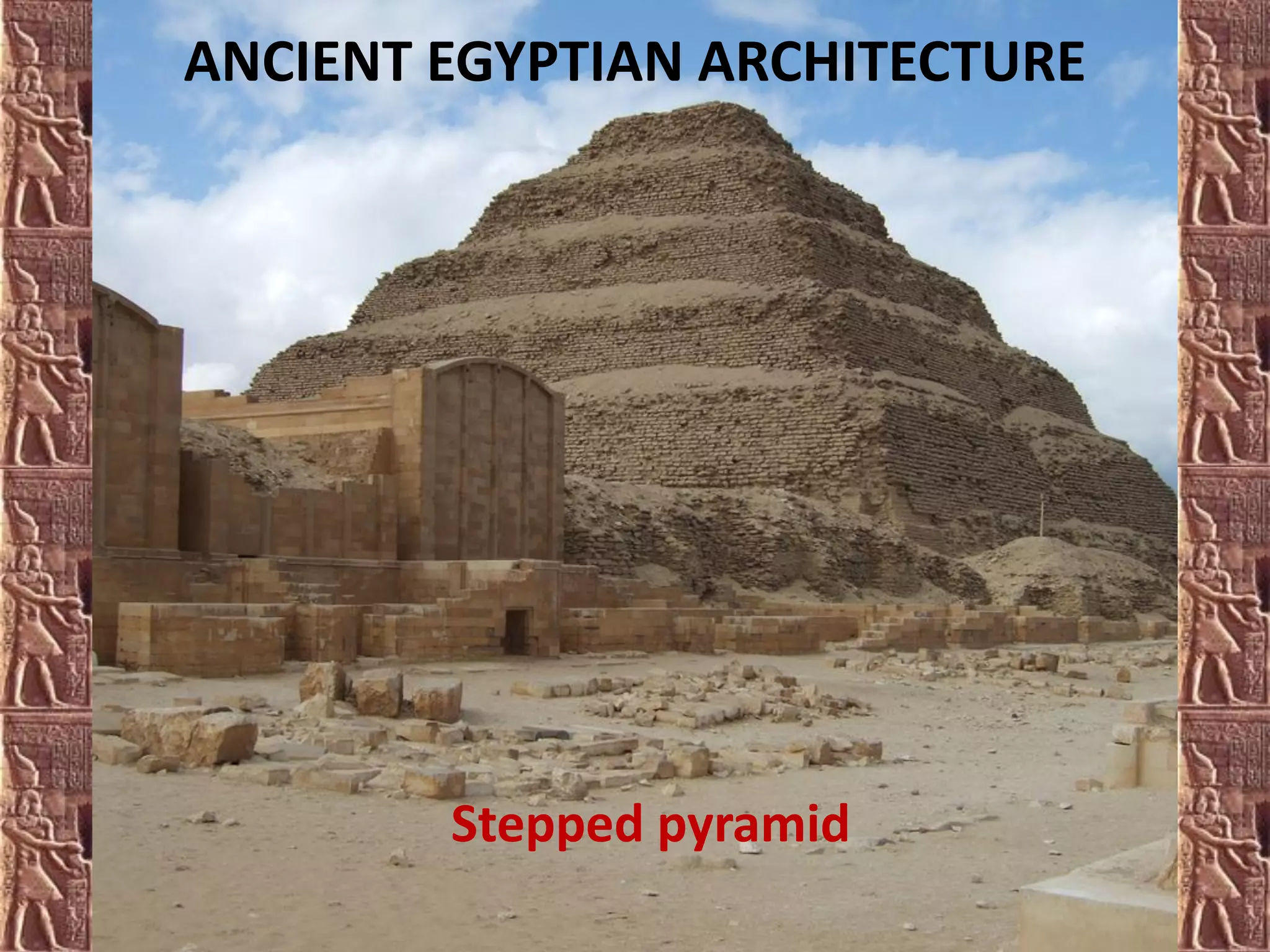
Stepped pyramid
ANCIENT EGYPTIAN ARCHITECTURE
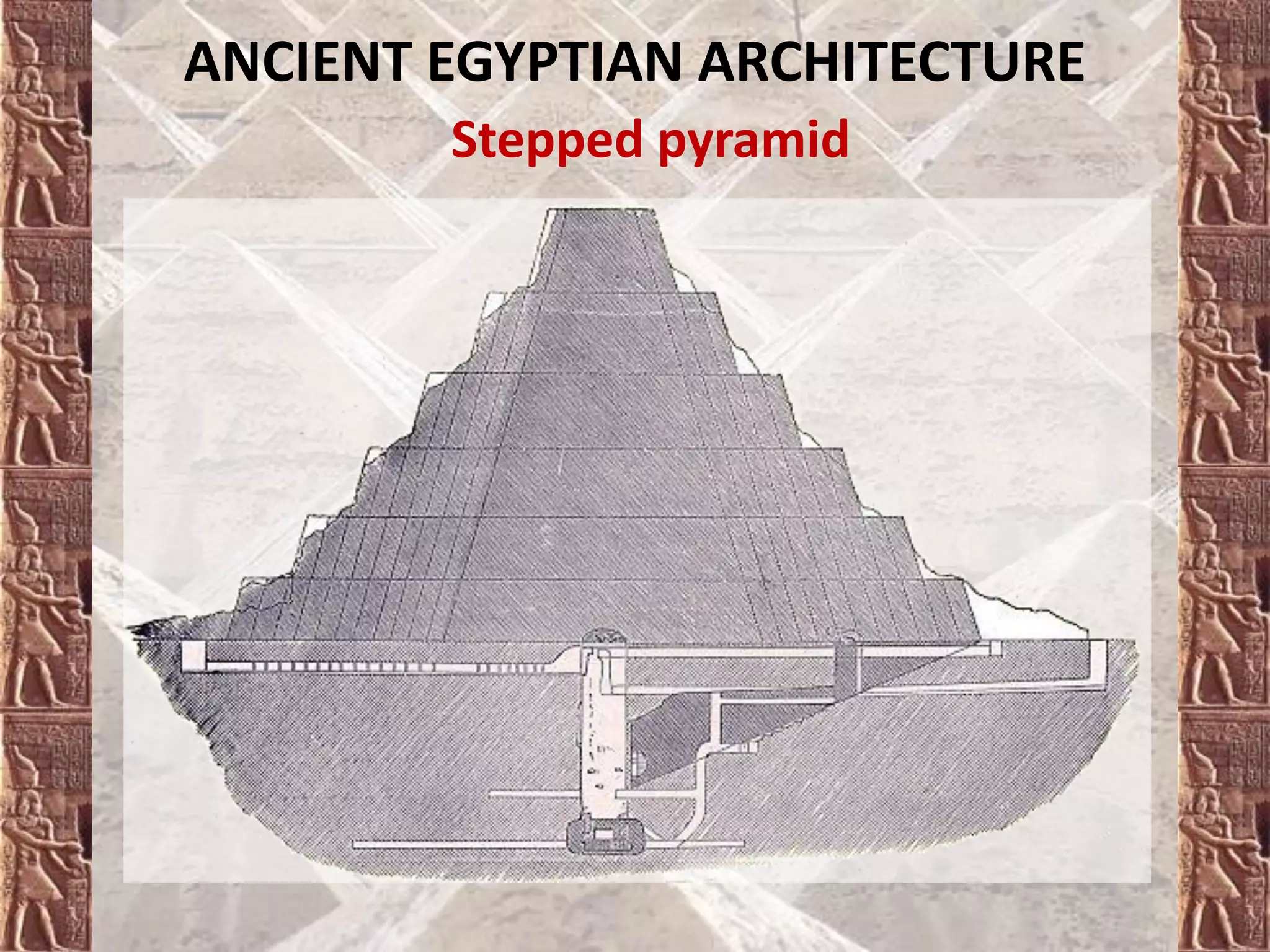
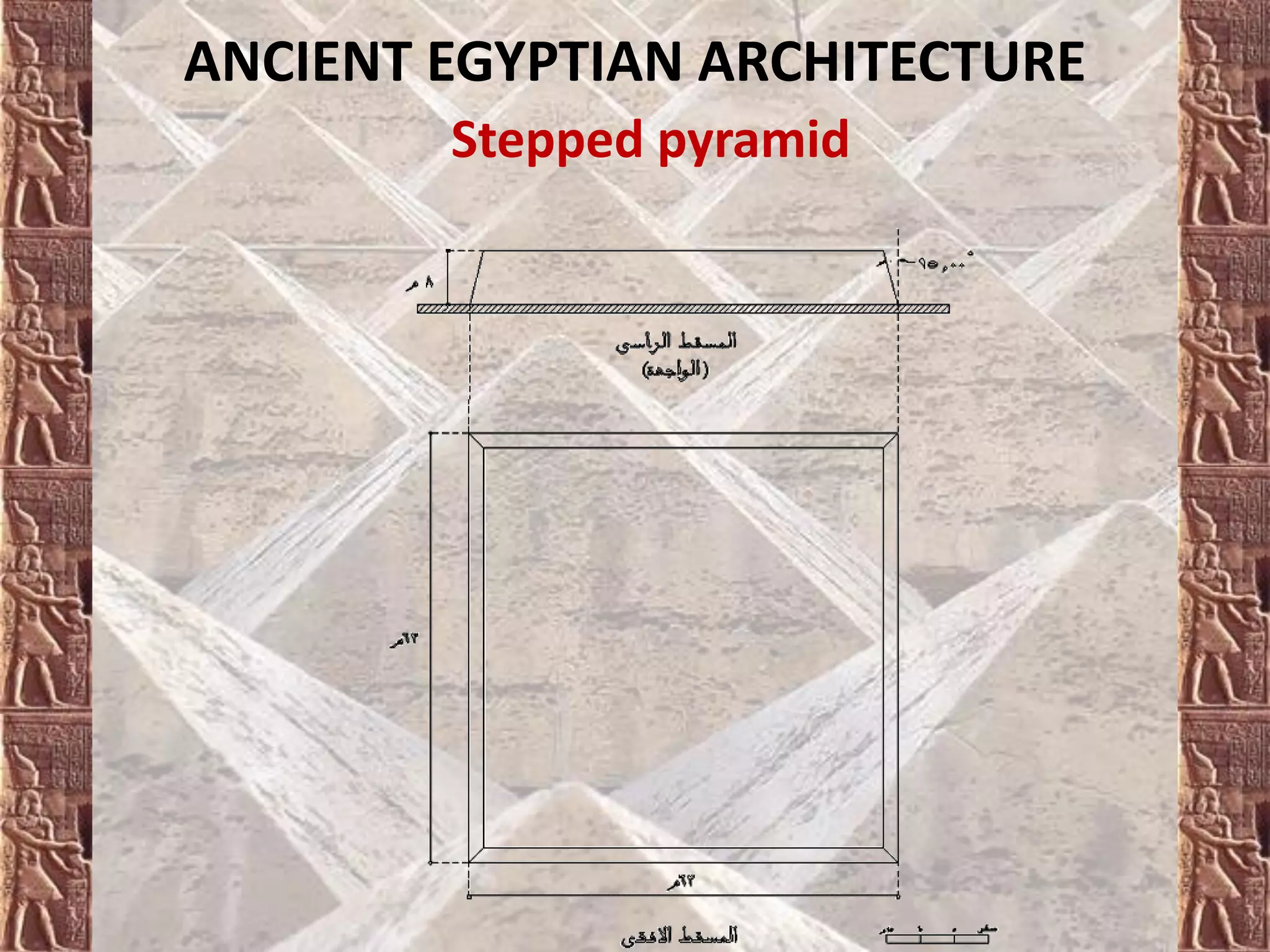
Stepped pyramid
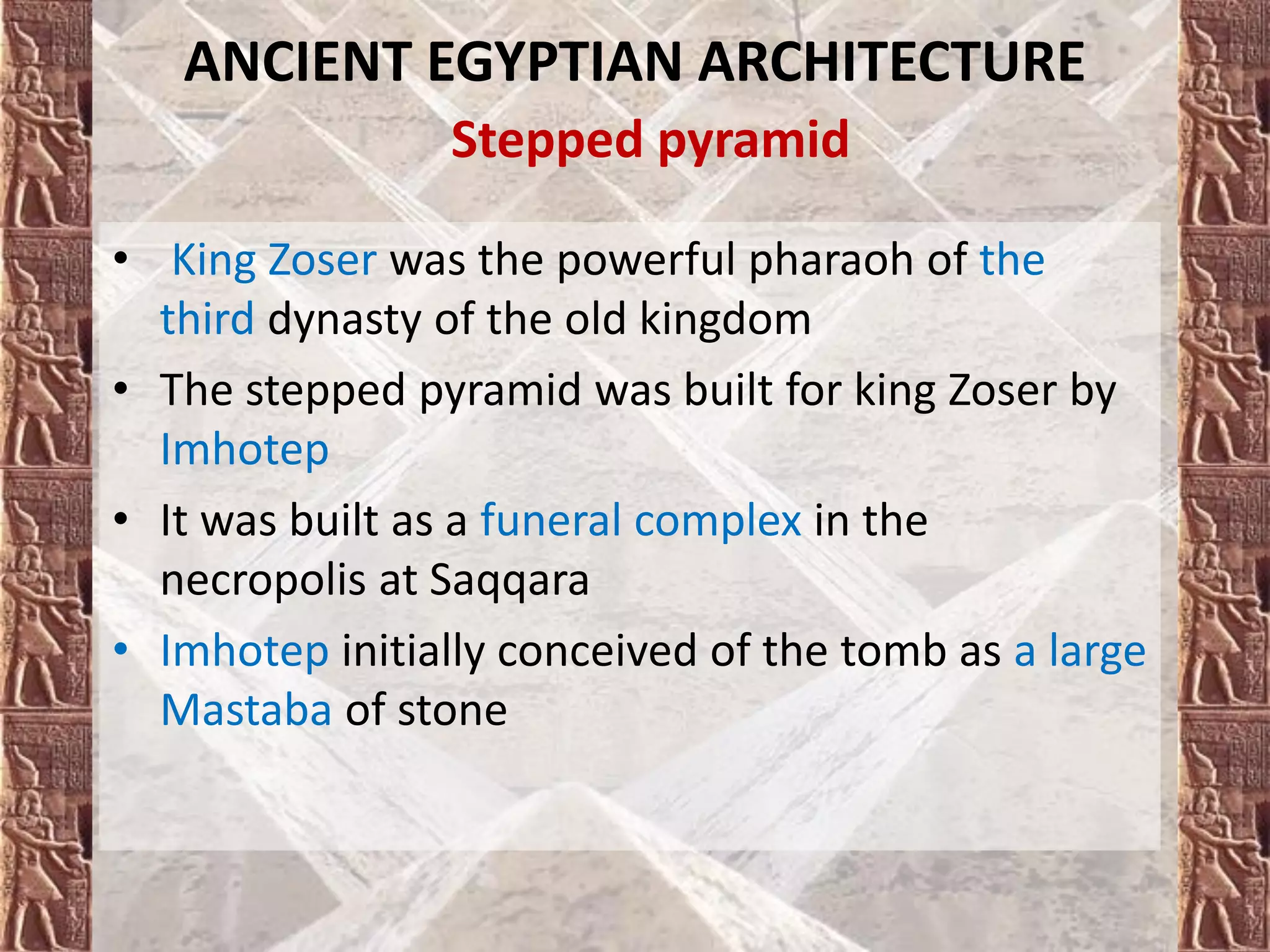
• King Zoser was the powerful pharaoh of the
third dynasty of the old kingdom
• The stepped pyramid was built for king Zoser by
Imhotep
• It was built as a funeral complex in the
necropolis at Saqqara
• Imhotep initially conceived of the tomb as a large
Mastaba of stone
ANCIENT EGYPTIAN ARCHITECTURE
Stepped pyramid
ANCIENT EGYPTIAN ARCHITECTURE
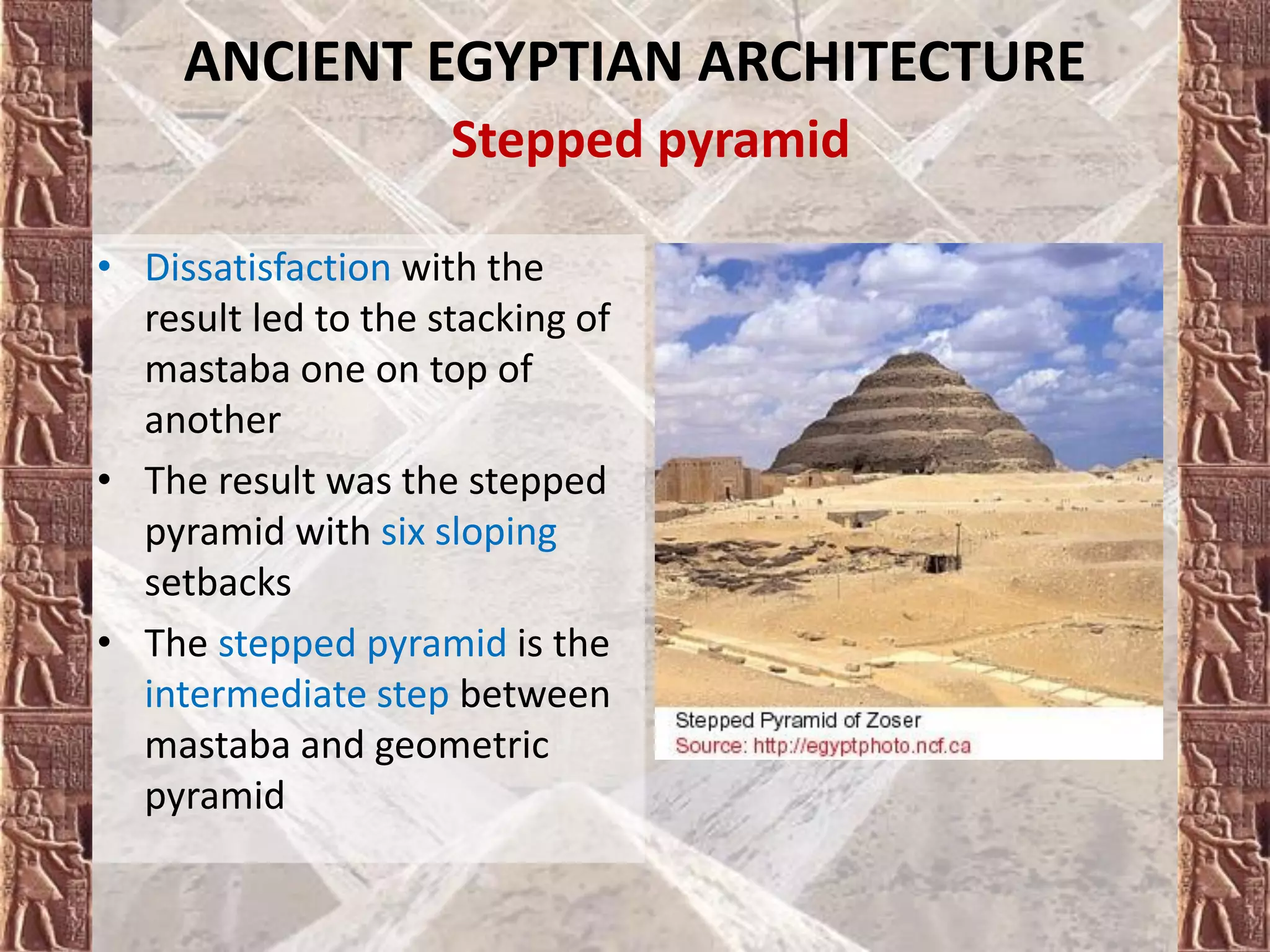
Stepped pyramid
• Dissatisfaction with the
result led to the stacking of
mastaba one on top of
another
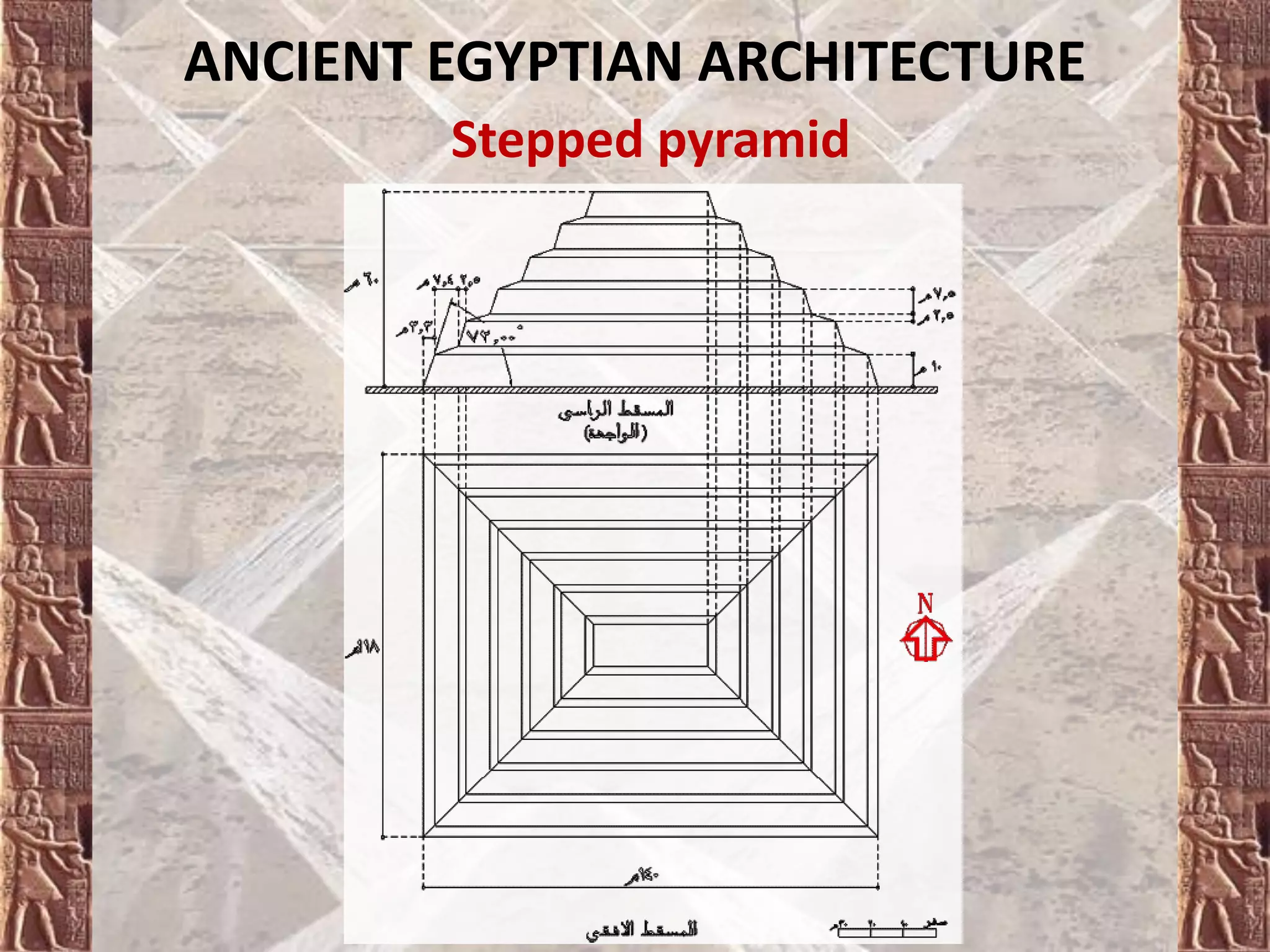
• The result was the stepped
pyramid with six sloping
setbacks
• The stepped pyramid is the
intermediate step between
mastaba and geometric
pyramid
ANCIENT EGYPTIAN ARCHITECTURE
Stepped pyramid
ANCIENT EGYPTIAN ARCHITECTURE
Stepped pyramid
ANCIENT EGYPTIAN ARCHITECTURE
Stepped pyramid
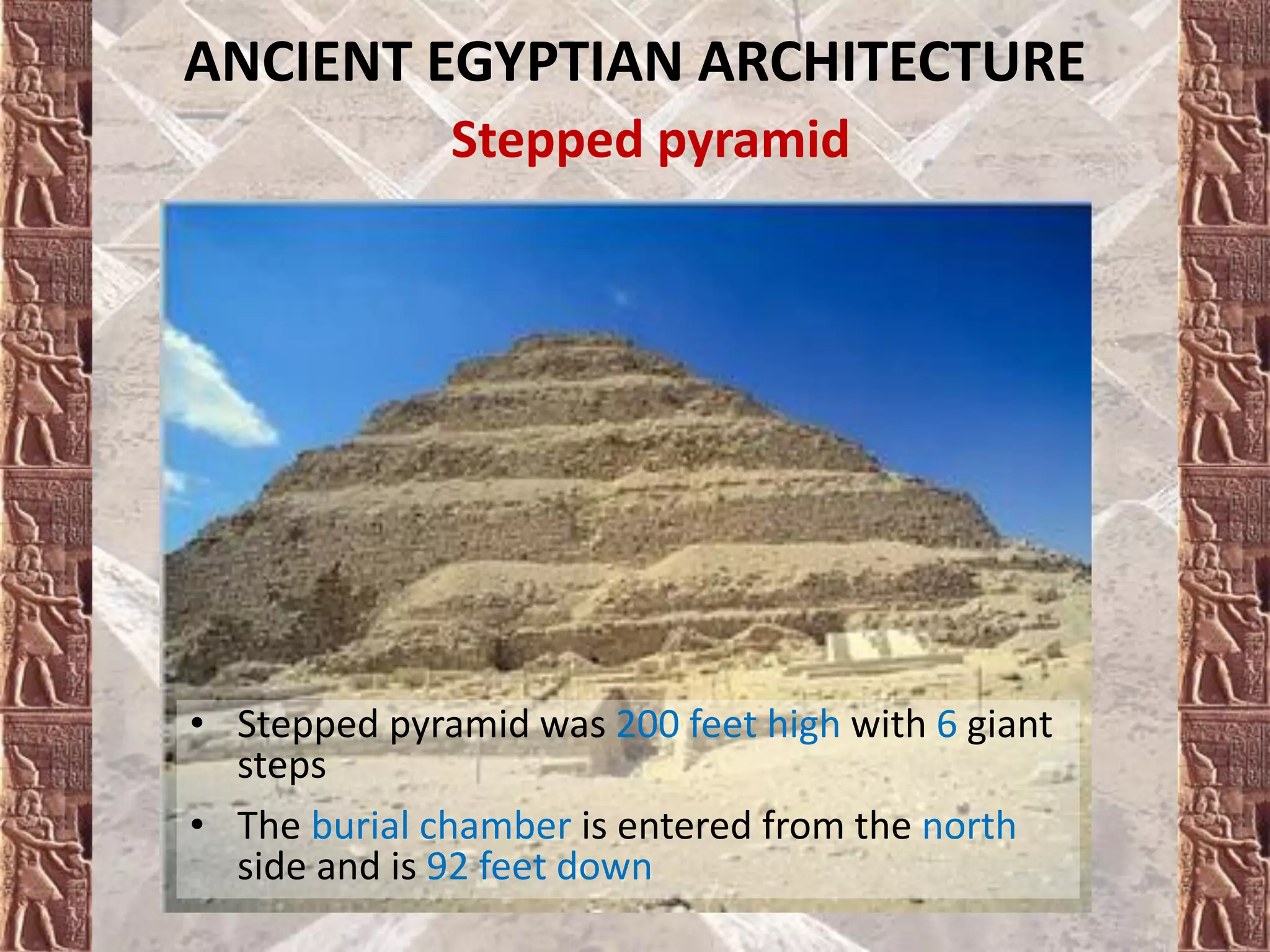
• Stepped pyramid was 200 feet high with 6 giant
steps
• The burial chamber is entered from the north
side and is 92 feet down
ANCIENT EGYPTIAN ARCHITECTURE
Stepped pyramid
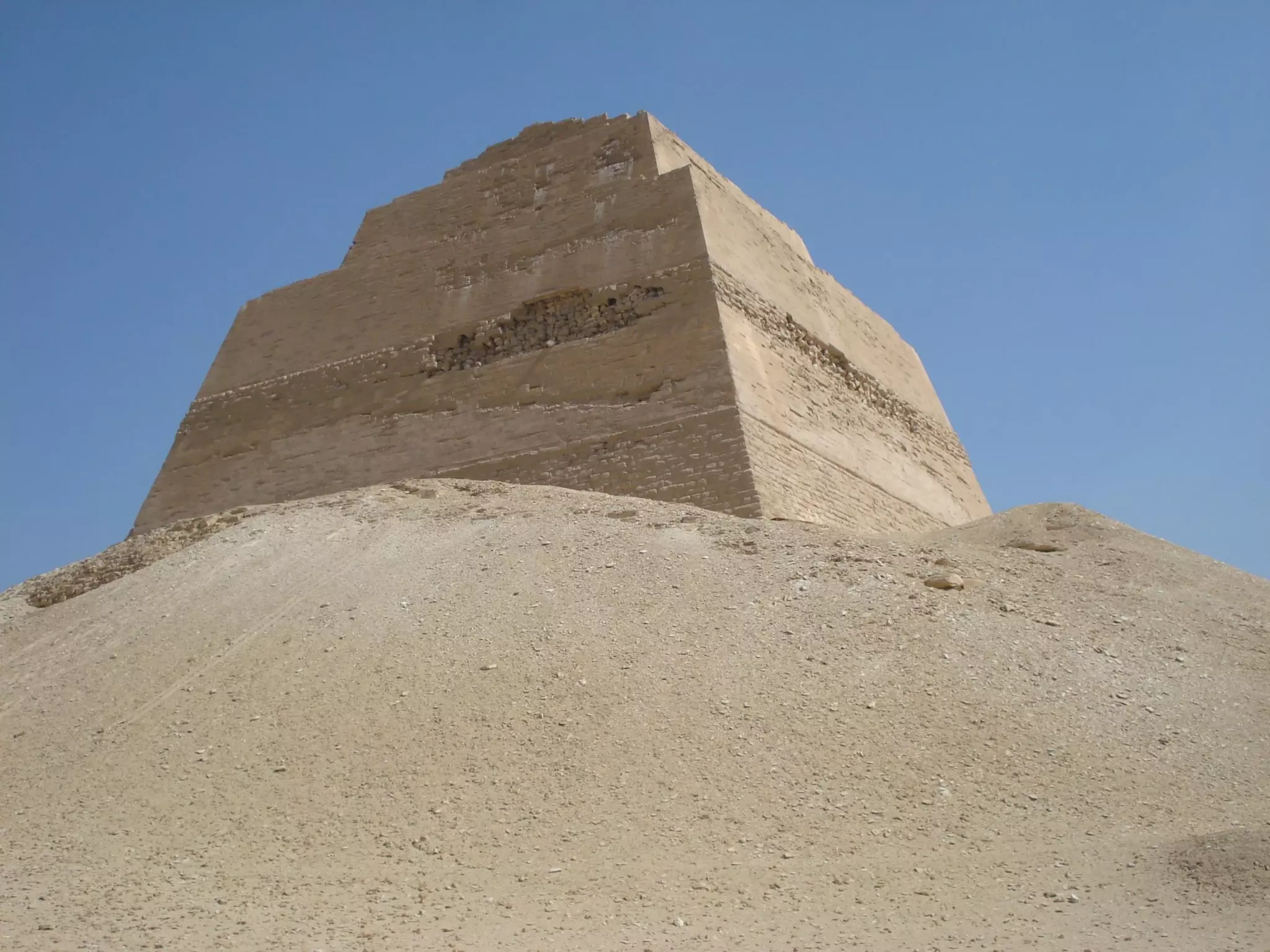
• After the stepped pyramids, there were
several attempt at building a pure
geometric pyramid
• Among the prominent attempts were the
pyramid at Medum and two pyramids
built by Snefru at Dashur
Early Kingdom Tomb
Attempts at Pyramid Building
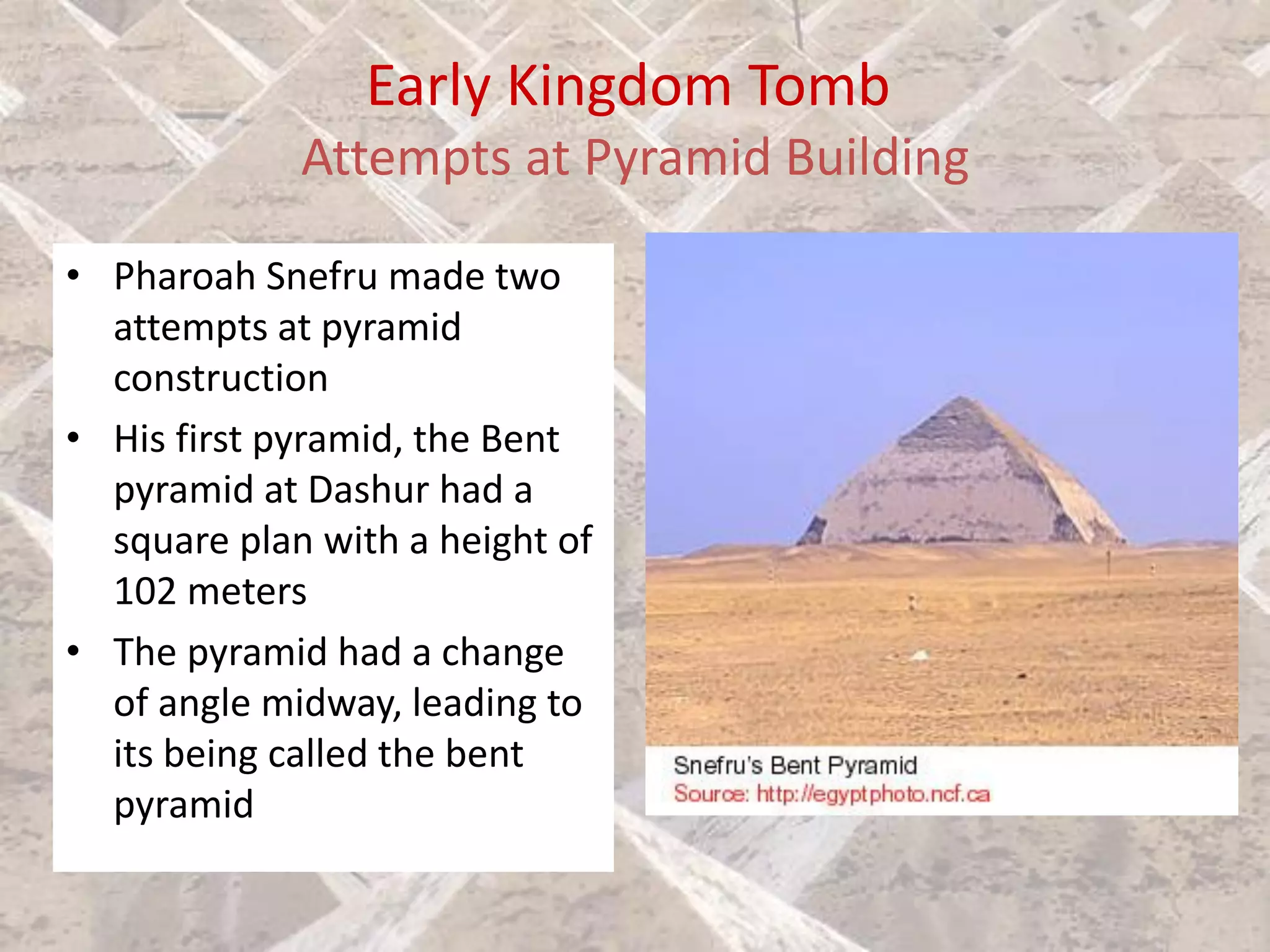
• Pharoah Snefru made two
attempts at pyramid
construction
• His first pyramid, the Bent
pyramid at Dashur had a
square plan with a height of
102 meters
• The pyramid had a change
of angle midway, leading to
its being called the bent
pyramid
ANCIENT EGYPTIAN ARCHITECTURE
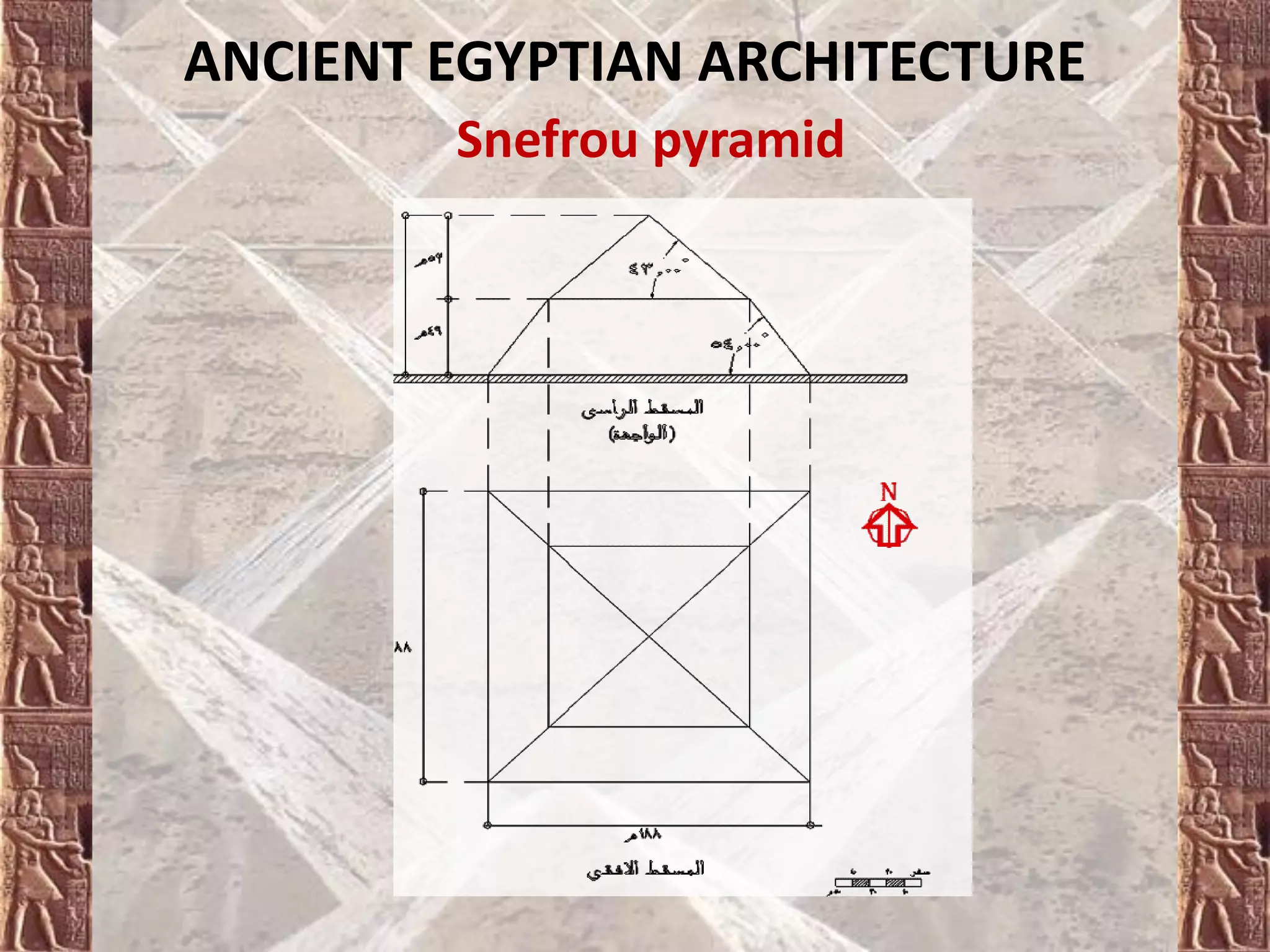
Snefrou pyramid
Early Kingdom Tomb
Attempts at Pyramid Building
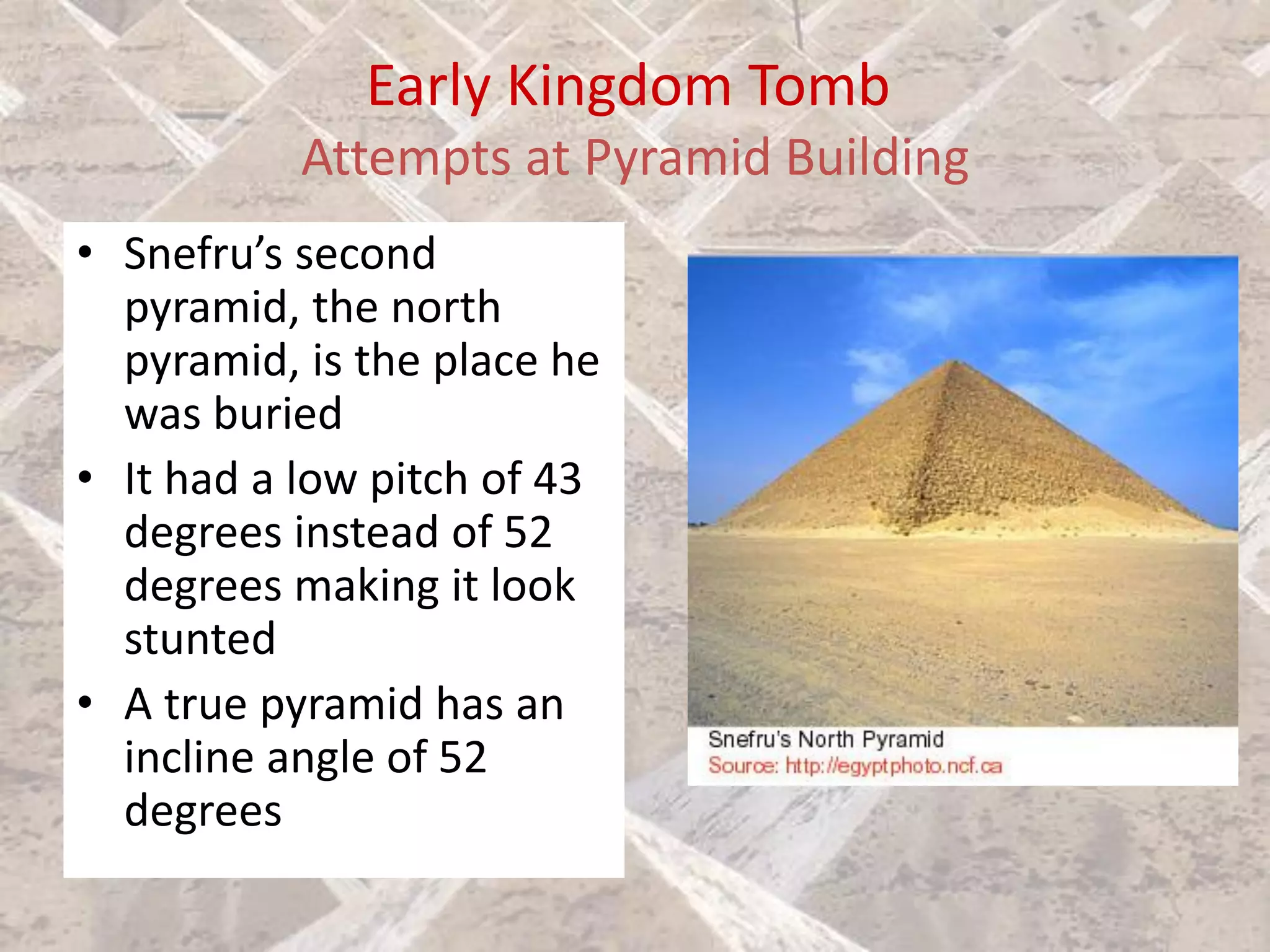
• Snefru’s second
pyramid, the north
pyramid, is the place he
was buried
• It had a low pitch of 43
degrees instead of 52
degrees making it look
stunted
• A true pyramid has an
incline angle of 52
degrees
Early Kingdom Tomb
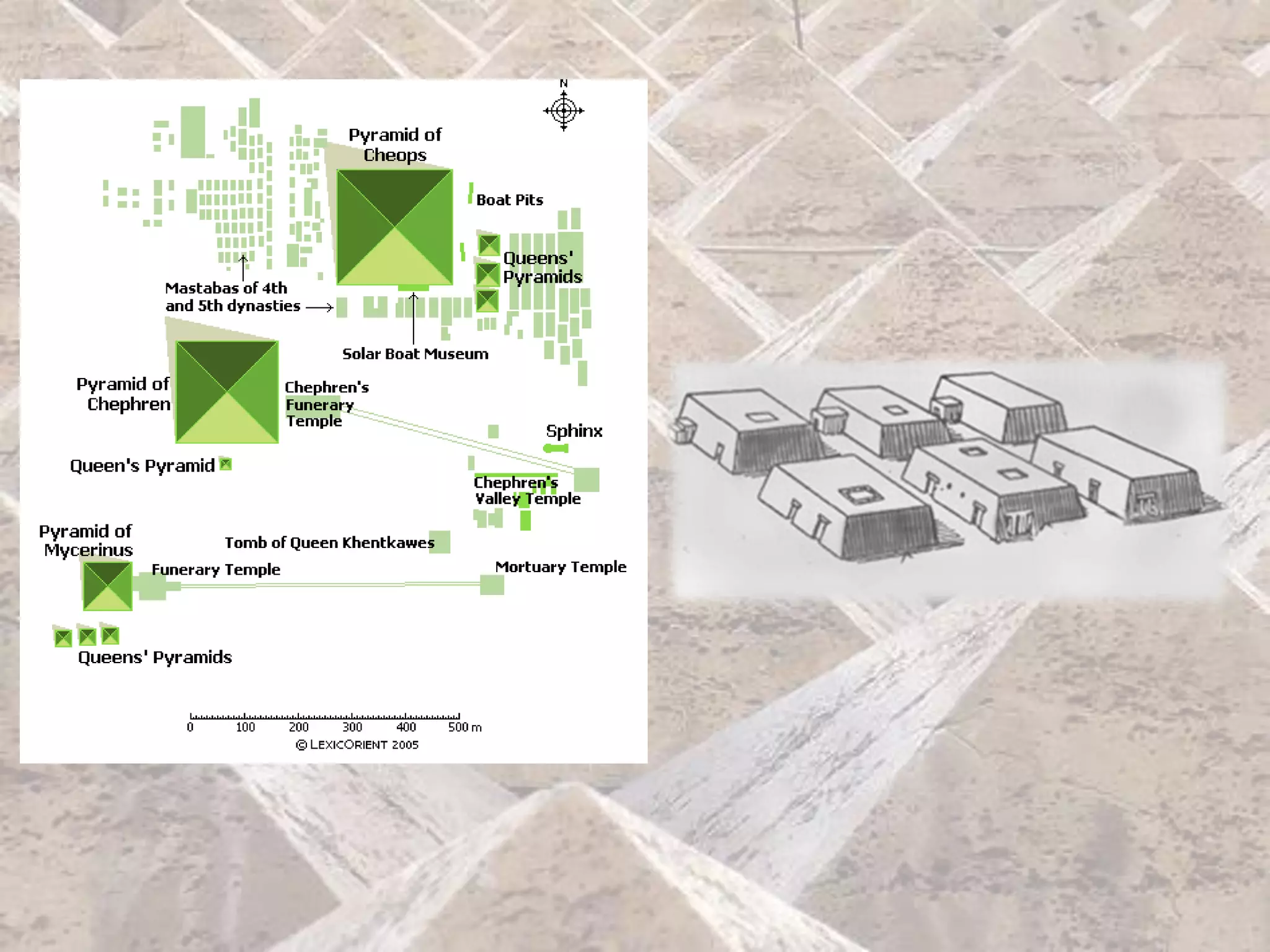
The Pyramids at Giza
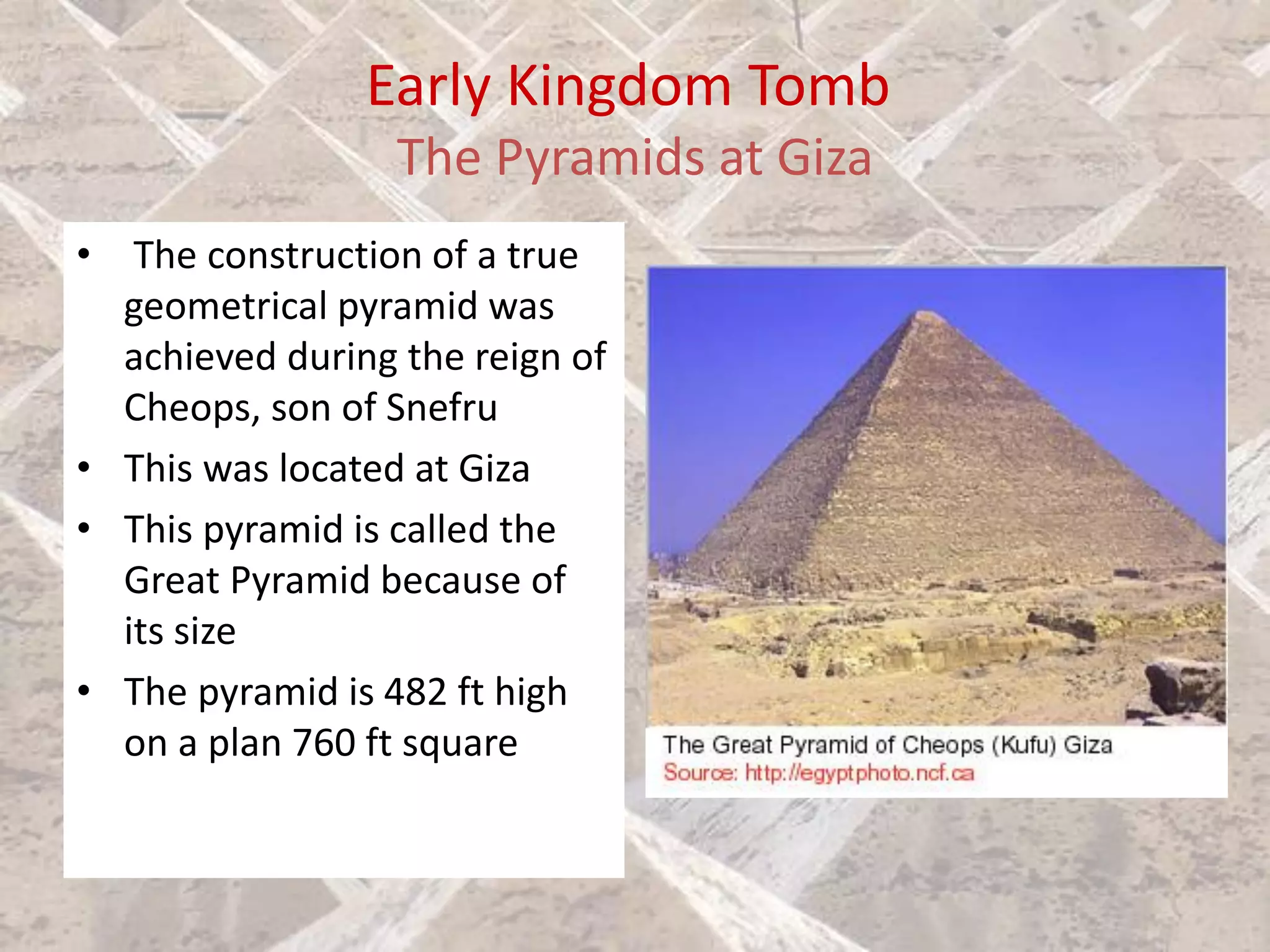
• The construction of a true
geometrical pyramid was
achieved during the reign of
Cheops, son of Snefru
• This was located at Giza
• This pyramid is called the
Great Pyramid because of
its size
• The pyramid is 482 ft high
on a plan 760 ft square
Early Kingdom Tomb
The Pyramids at Giza
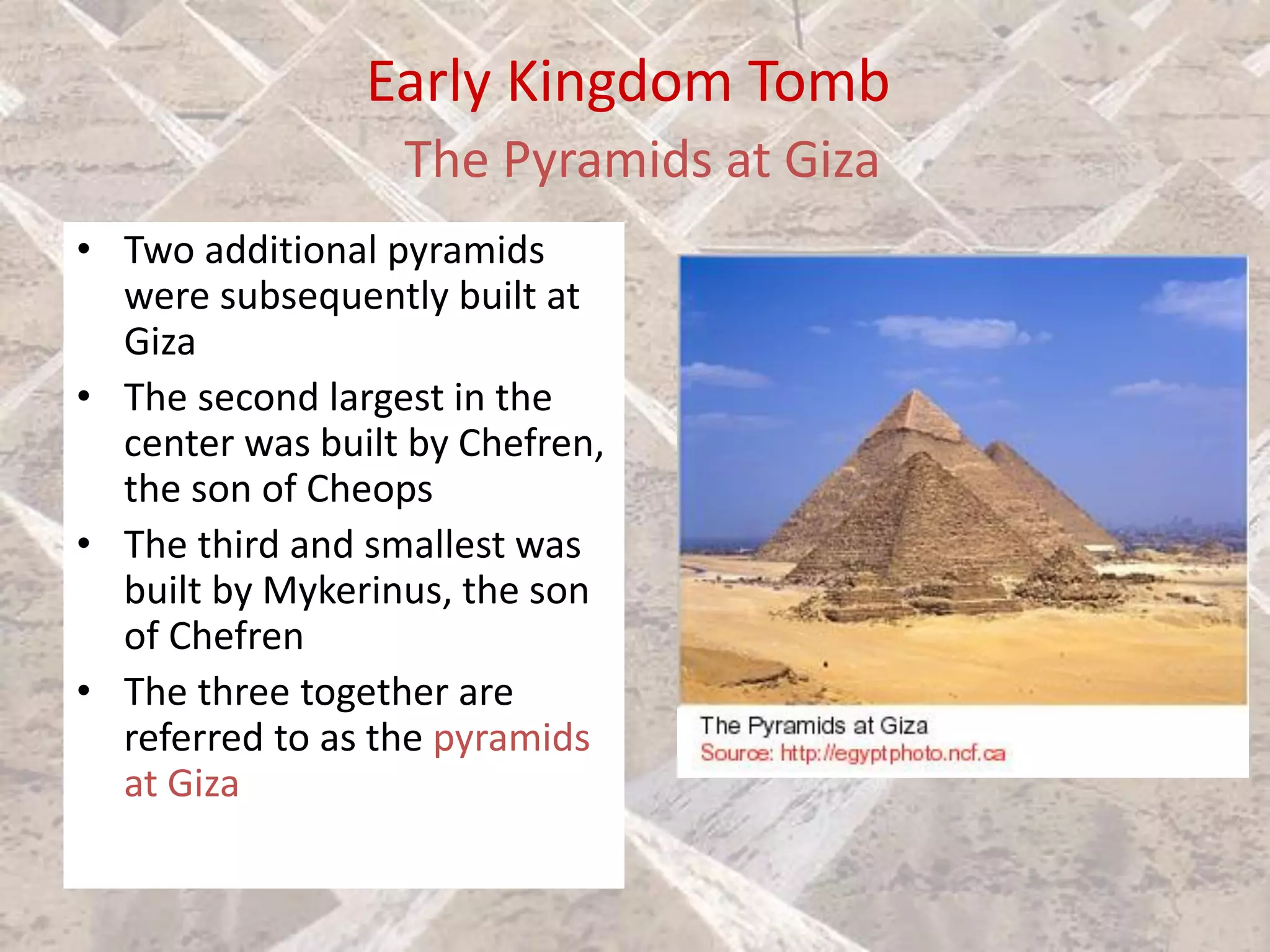
• Two additional pyramids
were subsequently built at
Giza
• The second largest in the
center was built by Chefren,
the son of Cheops
• The third and smallest was
built by Mykerinus, the son
of Chefren
• The three together are
referred to as the pyramids
at Giza
Early Kingdom Tomb
The Pyramids at Giza
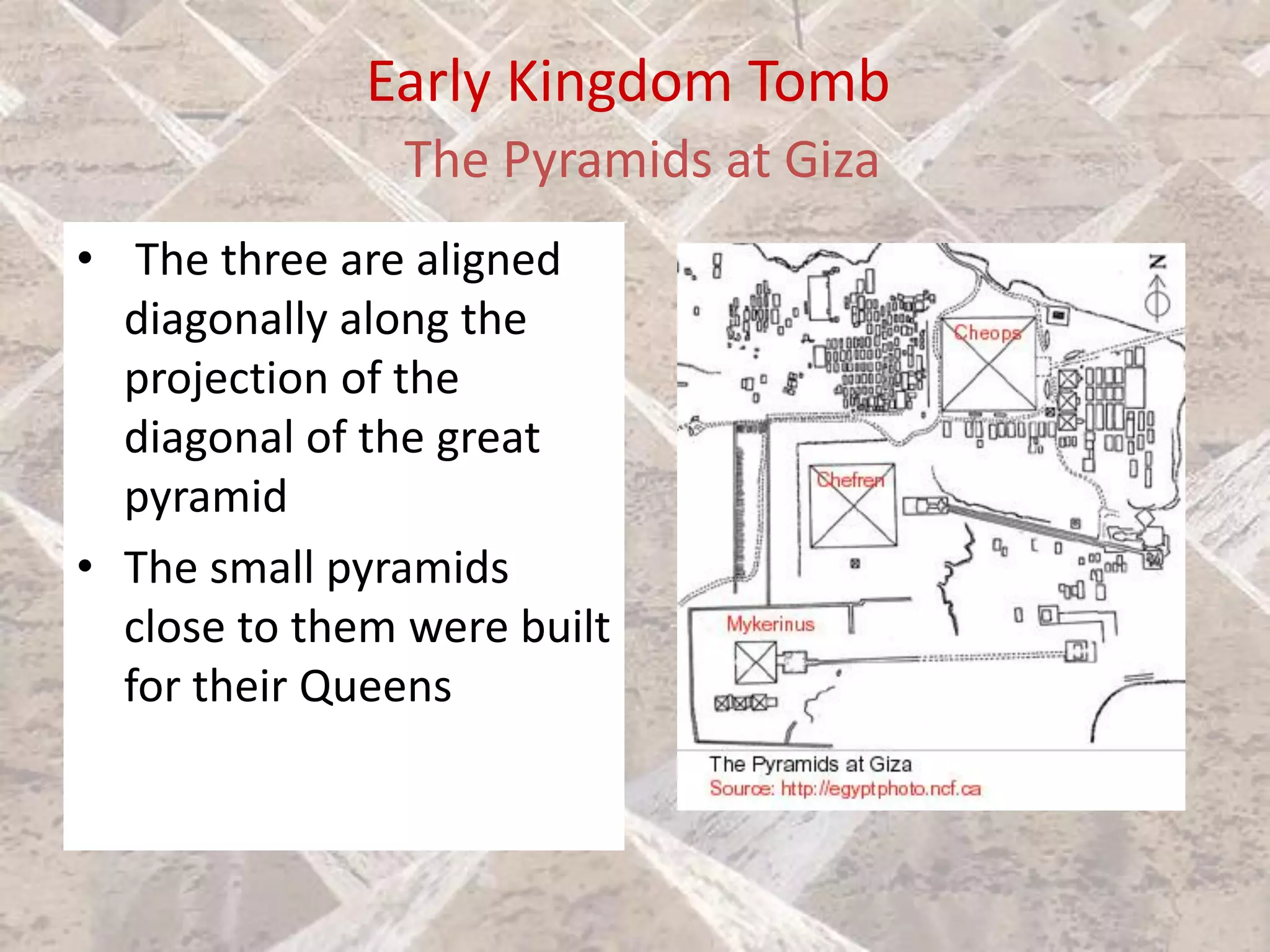
• The three are aligned
diagonally along the
projection of the
diagonal of the great
pyramid
• The small pyramids
close to them were built
for their Queens
Early Kingdom Tomb
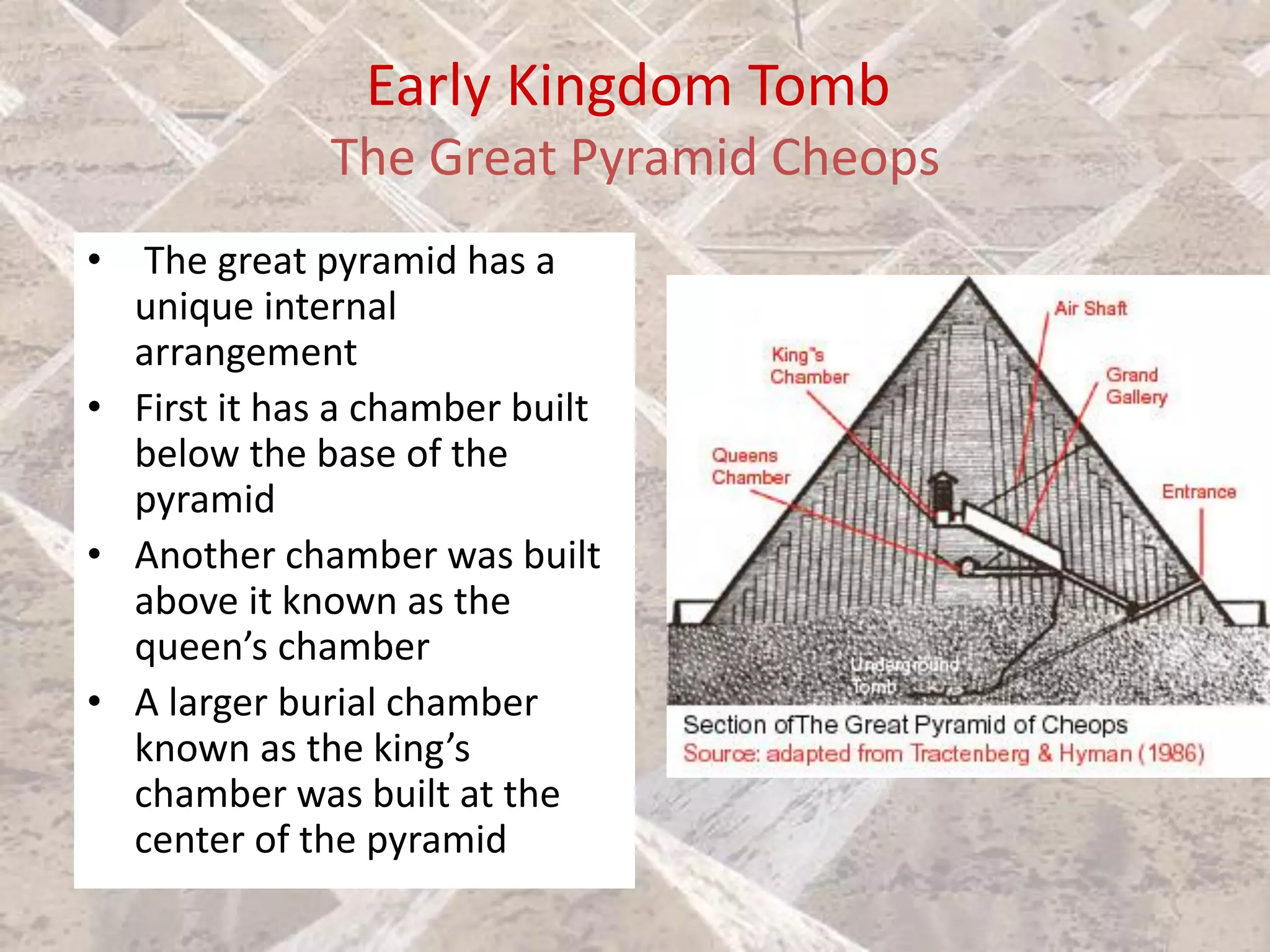
The Great Pyramid Cheops
• The great pyramid has a
unique internal
arrangement
• First it has a chamber built
below the base of the
pyramid
• Another chamber was built
above it known as the
queen’s chamber
• A larger burial chamber
known as the king’s
chamber was built at the
center of the pyramid
Early Kingdom Tomb
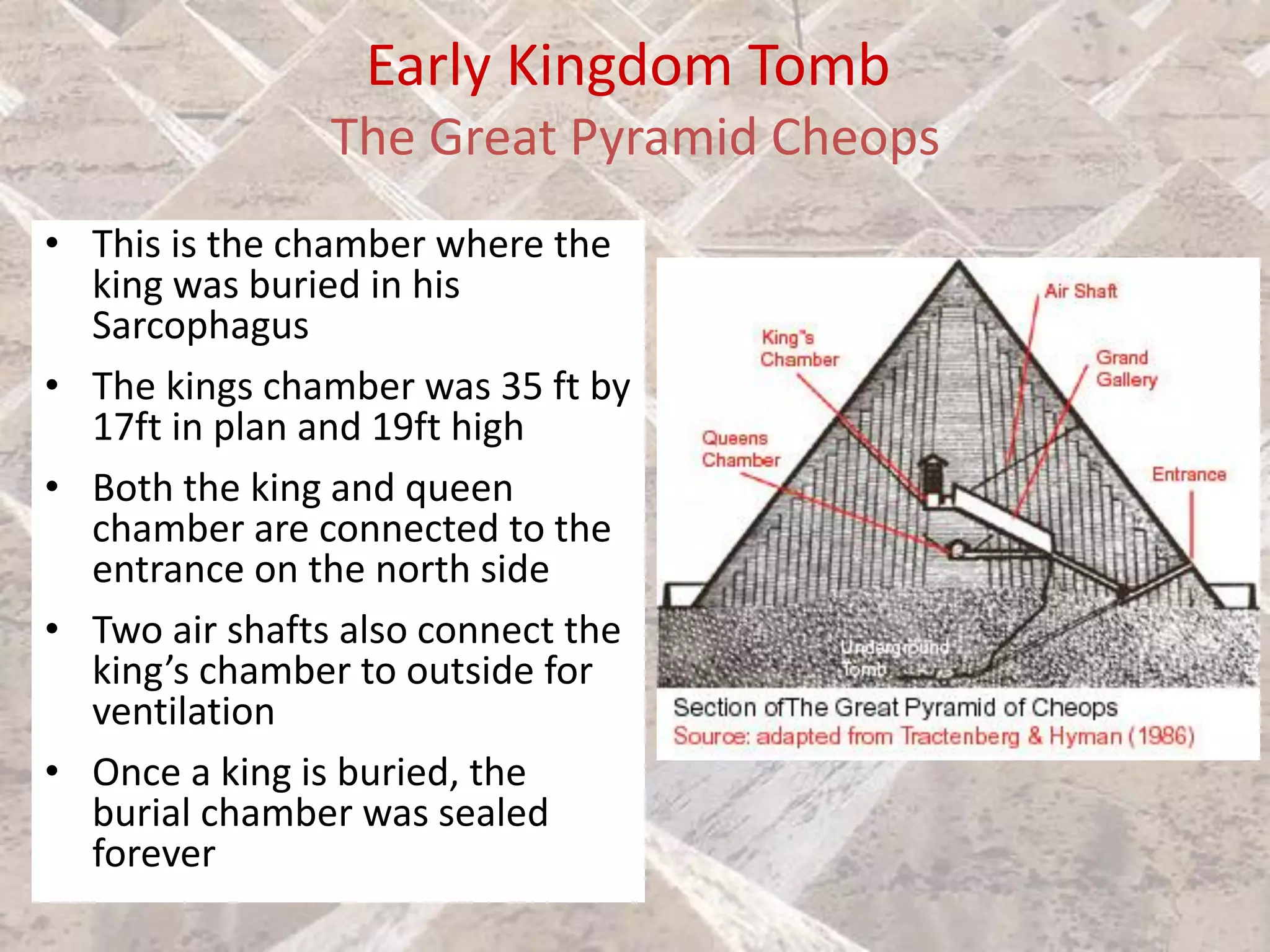
The Great Pyramid Cheops
• This is the chamber where the
king was buried in his
Sarcophagus
• The kings chamber was 35 ft by
17ft in plan and 19ft high
• Both the king and queen
chamber are connected to the
entrance on the north side
• Two air shafts also connect the
king’s chamber to outside for
ventilation
• Once a king is buried, the
burial chamber was sealed
forever
Early Kingdom Tomb
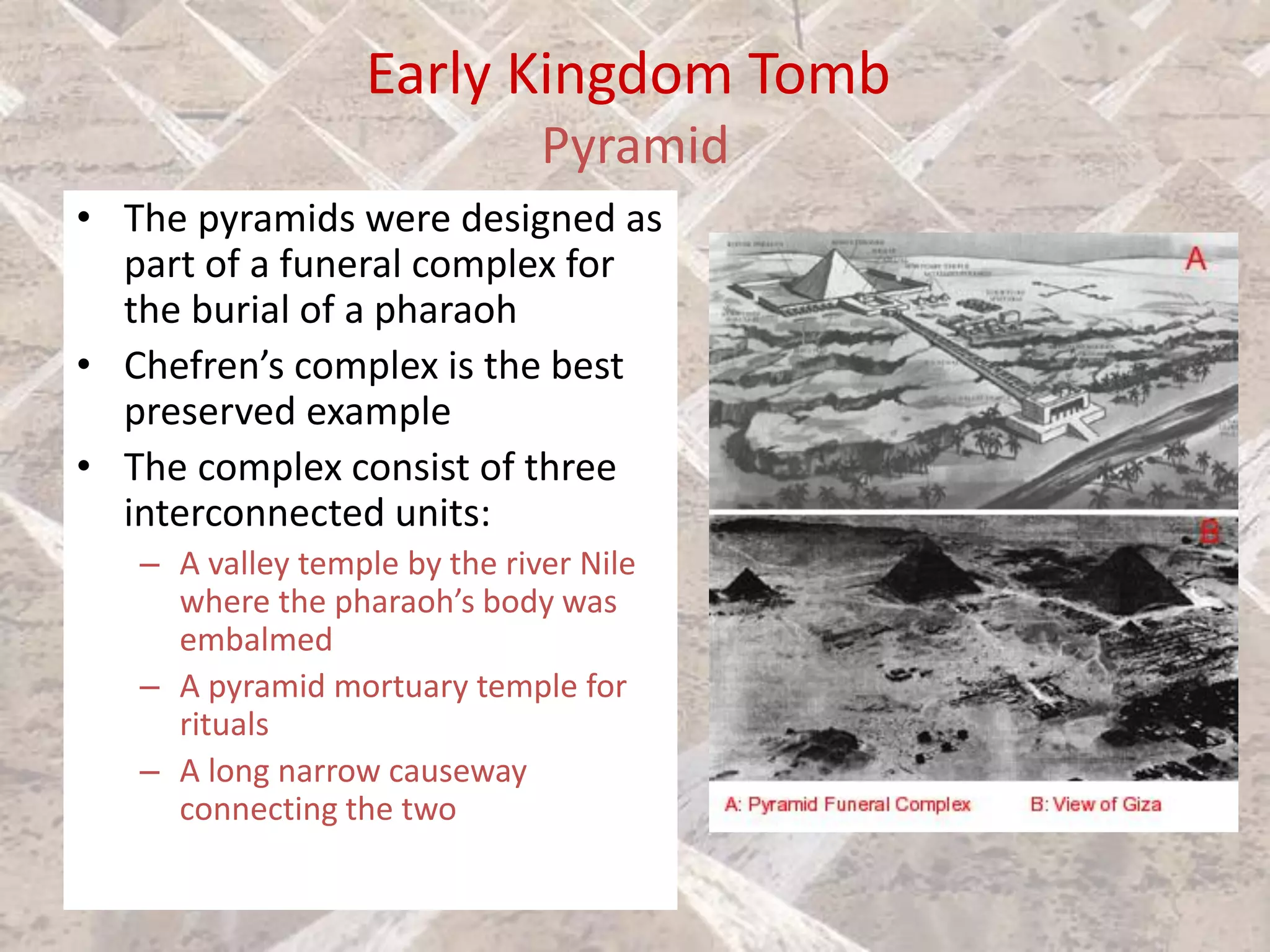
Pyramid
• The pyramids were designed as
part of a funeral complex for
the burial of a pharaoh
• Chefren’s complex is the best
preserved example
• The complex consist of three
interconnected units:
– A valley temple by the river Nile
where the pharaoh’s body was
embalmed
– A pyramid mortuary temple for
rituals
– A long narrow causeway
connecting the two
THANK YOU!

Ancient Egyptian Architecture.pdf

  • 1.
    ANCIENT EGYPTIAN ARCHITECTURE Dr. ZeinabFeisal Text Text Text Text Text Text Zeinab Feisa Text
  • 2.
    The influence ofgeography on ancient Egyptian believes: Cyclic natural phenomena : 1. SUNRISE / SUNSET 2. MOON CYCLE 3. FLOOD / RECEDING WATERS 4. LIFE AND DEATH RESURECTION Axis of the Nile unites Upper and lower Egypt. ANCIENT EGYPTIAN
  • 3.
    RESURECTION OSIRIS THOT THE SOULHORUS THE BODY ANUBIS MAAT ANCIENT EGYPTIAN RELIGION & THEIR GODS
  • 4.
  • 8.
    ANCIENT EGYPTIAN RELIGION& THEIR GODS 8. One of the most striking features of ancient Egyptian gods is the way they were represented
  • 9.
  • 10.
    ANCIENT EGYPTIAN RELIGION& THEIR GODS • MUMMIFICATION
  • 12.
    Local gods ANCIENT EGYPTIANRELIGION & THEIR GODS – NEKHBET Vulture UPPER EGYPT – WADJET COBRA LOWER EGYPT
  • 13.
    Local gods ANCIENT EGYPTIANRELIGION & THEIR GODS – NEKHBET Vulture UPPER EGYPT – WADJET COBRA LOWER EGYPT
  • 14.
    KINGSHIP AND DIVINITY ANCIENTEGYPTIAN RELIGION & THEIR GODS – Living king is a symbol of HORUS – Dead king is a symbol of OSIRIS – HUMAN ……… DIVINE – UPPER EGYPT ……… LOWER EGYPT – LIGHT ……... DARKNESS – GREEN VALLEY …….... DESERT SIDES – EARTH ………. SKY & HEAVEN Not POLARITIES But UNITIES of Two’s
  • 15.
    Denderah temple: Cleopatra ….Isis crown Cesarion …. Amun crown KINGSHIP AND DIVINITY
  • 16.
  • 17.
    ANCIENT EGYPTIAN RELIGION& THEIR GODS 1- CREATION MYTH
  • 18.
    ANCIENT EGYPTIAN RELIGION& THEIR GODS 1- CREATION MYTH
  • 19.
    ANCIENT EGYPTIAN RELIGION& THEIR GODS 1- CREATION MYTH
  • 20.
    ANCIENT EGYPTIAN RELIGION& THEIR GODS 2- OSIRIS MYTH • OSIRIS and ISIS ruled the Earth. • SETH kills OSIRIS , cuts him into 14 parts and throws them in the Nile. • ISIS searches Egypt and collects his body parts. • ANUBIS makes OSIRIS into the first mummy and brings him briefly back to life to conceive a child. • Pregnant ISIS hides in the Delta Papyrus thicket on an island. • HORUS fights SETH and wins, becomes the prototype of the living king / God on earth. • OSIRIS is resurrected and becomes the prototype of the God of the Underworld.
  • 21.
    ANCIENT EGYPTIAN RELIGION& THEIR GODS 2- OSIRIS MYTH
  • 22.
    ANCIENT EGYPTIAN RELIGION& THEIR GODS 2- OSIRIS MYTH
  • 23.
    ANCIENT EGYPTIAN RELIGION& THEIR GODS 4- Myth of Solar Cycle ▪ NUT gave birth to RE the Sun God as a sphere. ▪ RE journeyed in solar baroques of gold along the star studded heavens. ▪ MESEKTET was the morning baroque, MANDET was the night Braque.
  • 25.
  • 26.
    ANCIENT EGYPTIAN RELIGION& THEIR GODS 5- Myth OF THE CREATION OF MAN ▪The God KHNUM created man from clay of the Nile flood. ▪He formed his body and duplicate ▪This act of creation was on the island of Elephantine.
  • 28.
  • 29.
    ANCIENT EGYPTIAN ARCHITECTURE ANCIENTEGYPTIAN TIMELINE: • PRE DYNASTIC • OLD KINGDOM • MIDDLE KINGDOM • NEW EMPIRE
  • 30.
    ANCIENT EGYPTIAN ARCHITECTURE ANCIENTEGYPTIAN TIMELINE: The Old Kingdom "the age of the pyramids” 3rd – 7th Dynasty
  • 31.
    Introduction • During theold Kingdom, the pharaoh and his court lived in Memphis • When they died they were buried at the Necropolis at Saqqara • The earthly dwelling of the ancient Egyptians was seen as temporary and the tomb as a permanent dwelling • Houses were built of temporary materials to last for a life time ANCIENT EGYPTIAN ARCHITECTURE
  • 32.
    • Tombs weremost outstanding architectural element of the period • Tombs also serve as the focus for the worship of the dead • The Tomb evolved during the old kingdom from the Mastaba, through the stepped pyramid to the renown ancient Egyptian pyramid • We will examine each of these next Introduction ANCIENT EGYPTIAN ARCHITECTURE
  • 33.
    Mastaba • The earliestmethod of burial in ancient Egypt was in shallow pits in the desert • The desert dried the bodies and preserved them • When animals preyed on bodies, the people dug deeper • In the end they built a bench-like structure over graves to create first burial structure called Mastaba ANCIENT EGYPTIAN ARCHITECTURE
  • 34.
  • 35.
    •The Mastaba wasrectangular •Flat or curved roofed structures •Sloping sides with angle of about 75 degree •It consists of three parts: 1. The outer champer (A chapel) 2. The Serdab. 3. Aburial chamber :The chamber containing the sarcophagus. ANCIENT EGYPTIAN ARCHITECTURE MASTABA: shape of Ben-Ben
  • 36.
    ANCIENT EGYPTIAN ARCHITECTURE MASTABA: •The Serdab and Chapel are located above ground • The serdab is a room where the statue of the dead person is kept • The statue acts as a substitute for body in case it is destroyed
  • 37.
  • 38.
    ANCIENT EGYPTIAN ARCHITECTURE MASTABA: TheMastaba of Thi, Sakkara, • Well preserved and restored, • dates from the fifth dynasty, and • Was erected to thi, who held the position of royal architect and superintendent of pyramids. • It consists of a small vestibule, beyond which is a large court, where offerings to the deceased were made, and from which a mummy shaft led to the tomb chamber. • The masonry is accurately jointed, and the bas-reliefs are some of the finest and most interesting in egypt .
  • 39.
  • 40.
    ANCIENT EGYPTIAN ARCHITECTURE MASTABA: MASTABAOF THI AT SAKKARA: DYN 5 KA door
  • 41.
    ANCIENT EGYPTIAN ARCHITECTURE MASTABA: MASTABAOF THI AT SAKKARA: DYN 5 relief
  • 42.
    ANCIENT EGYPTIAN ARCHITECTURE MASTABA: MASTABAOF THI AT SAKKARA: DYN 5 relief fishing Thi is pictured in a papyrus thicket, sailing through the marshes.
  • 43.
    ANCIENT EGYPTIAN ARCHITECTURE MASTABA: MASTABAOF THI AT SAKKARA: DYN 5 relief workers
  • 44.
  • 45.
  • 46.
  • 47.
    • King Zoserwas the powerful pharaoh of the third dynasty of the old kingdom • The stepped pyramid was built for king Zoser by Imhotep • It was built as a funeral complex in the necropolis at Saqqara • Imhotep initially conceived of the tomb as a large Mastaba of stone ANCIENT EGYPTIAN ARCHITECTURE Stepped pyramid
  • 48.
  • 49.
    • Dissatisfaction withthe result led to the stacking of mastaba one on top of another • The result was the stepped pyramid with six sloping setbacks • The stepped pyramid is the intermediate step between mastaba and geometric pyramid ANCIENT EGYPTIAN ARCHITECTURE Stepped pyramid
  • 50.
  • 51.
    ANCIENT EGYPTIAN ARCHITECTURE Steppedpyramid • Stepped pyramid was 200 feet high with 6 giant steps • The burial chamber is entered from the north side and is 92 feet down
  • 52.
    ANCIENT EGYPTIAN ARCHITECTURE Steppedpyramid • After the stepped pyramids, there were several attempt at building a pure geometric pyramid • Among the prominent attempts were the pyramid at Medum and two pyramids built by Snefru at Dashur
  • 54.
    Early Kingdom Tomb Attemptsat Pyramid Building • Pharoah Snefru made two attempts at pyramid construction • His first pyramid, the Bent pyramid at Dashur had a square plan with a height of 102 meters • The pyramid had a change of angle midway, leading to its being called the bent pyramid
  • 55.
  • 56.
    Early Kingdom Tomb Attemptsat Pyramid Building • Snefru’s second pyramid, the north pyramid, is the place he was buried • It had a low pitch of 43 degrees instead of 52 degrees making it look stunted • A true pyramid has an incline angle of 52 degrees
  • 57.
    Early Kingdom Tomb ThePyramids at Giza • The construction of a true geometrical pyramid was achieved during the reign of Cheops, son of Snefru • This was located at Giza • This pyramid is called the Great Pyramid because of its size • The pyramid is 482 ft high on a plan 760 ft square
  • 58.
    Early Kingdom Tomb ThePyramids at Giza • Two additional pyramids were subsequently built at Giza • The second largest in the center was built by Chefren, the son of Cheops • The third and smallest was built by Mykerinus, the son of Chefren • The three together are referred to as the pyramids at Giza
  • 59.
    Early Kingdom Tomb ThePyramids at Giza • The three are aligned diagonally along the projection of the diagonal of the great pyramid • The small pyramids close to them were built for their Queens
  • 60.
    Early Kingdom Tomb TheGreat Pyramid Cheops • The great pyramid has a unique internal arrangement • First it has a chamber built below the base of the pyramid • Another chamber was built above it known as the queen’s chamber • A larger burial chamber known as the king’s chamber was built at the center of the pyramid
  • 61.
    Early Kingdom Tomb TheGreat Pyramid Cheops • This is the chamber where the king was buried in his Sarcophagus • The kings chamber was 35 ft by 17ft in plan and 19ft high • Both the king and queen chamber are connected to the entrance on the north side • Two air shafts also connect the king’s chamber to outside for ventilation • Once a king is buried, the burial chamber was sealed forever
  • 62.
    Early Kingdom Tomb Pyramid •The pyramids were designed as part of a funeral complex for the burial of a pharaoh • Chefren’s complex is the best preserved example • The complex consist of three interconnected units: – A valley temple by the river Nile where the pharaoh’s body was embalmed – A pyramid mortuary temple for rituals – A long narrow causeway connecting the two
  • 63.