EFFICIENCY AND ECONOMIC
VALUATION
PREPARED BY
DR.ANJALATCHI
M.SC(N)MD(AM)MBA(HA)
Content /learning objective
• Efficiency and economic valuation
• Introduction
• Meaning
• Type of efficiency
• Allocative efficiency
• Basic allocative efficiency
• Productivity efficiency
• Basic productivity efficiency
• Basic social efficiency
• Basic dynamic efficiency /example
• Key concept –innovative
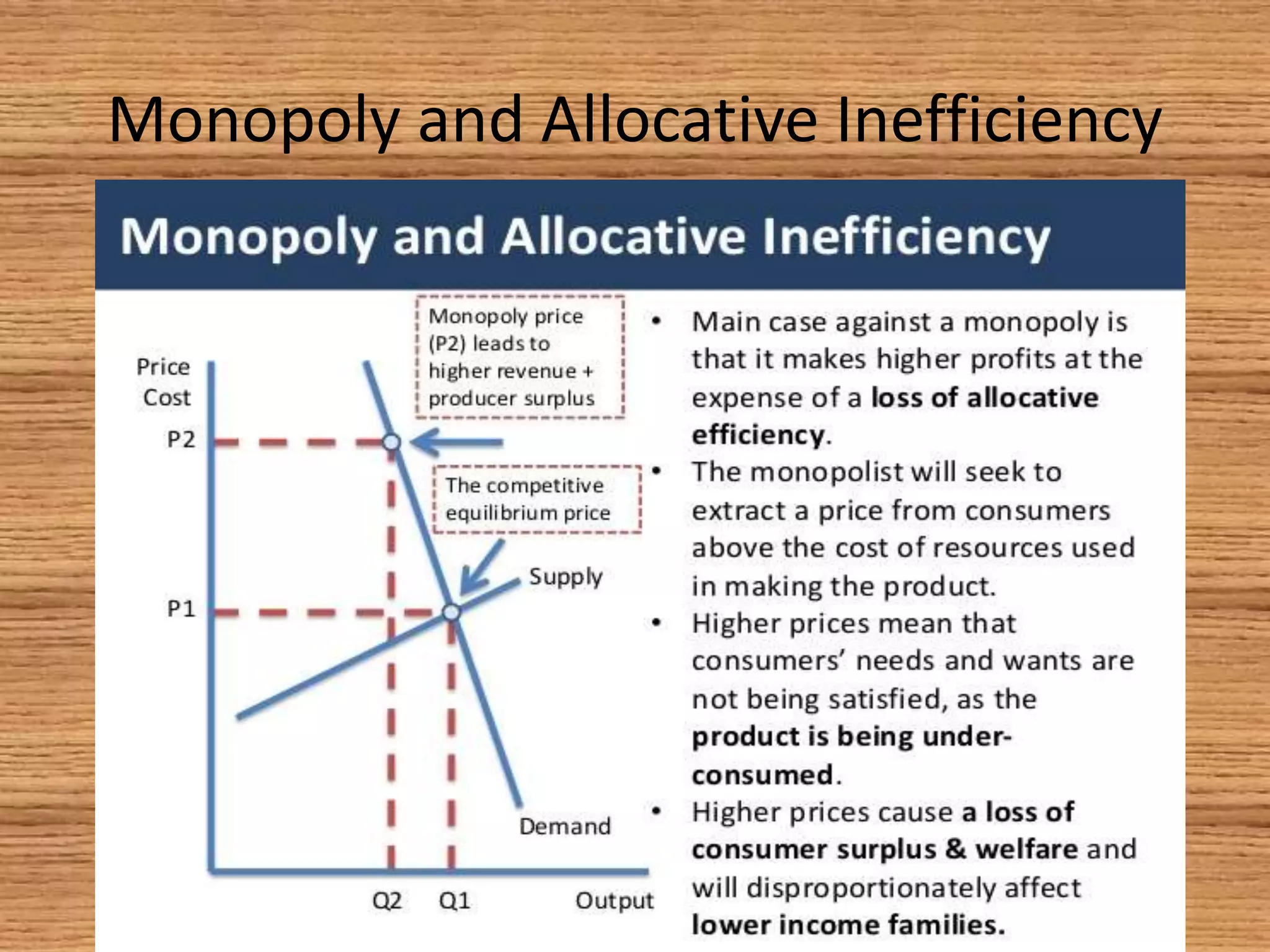
• Monopoly-
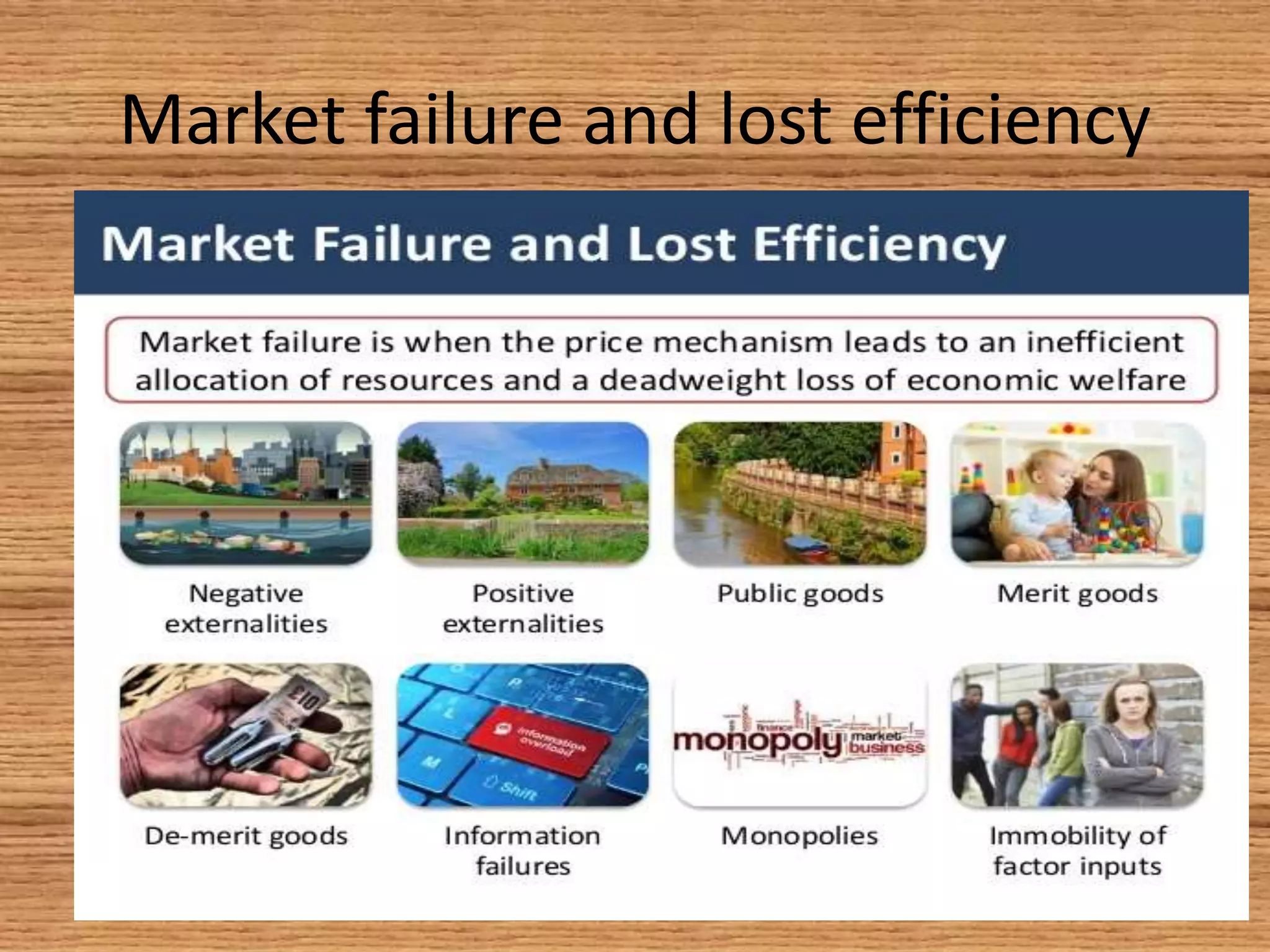
• Market failure
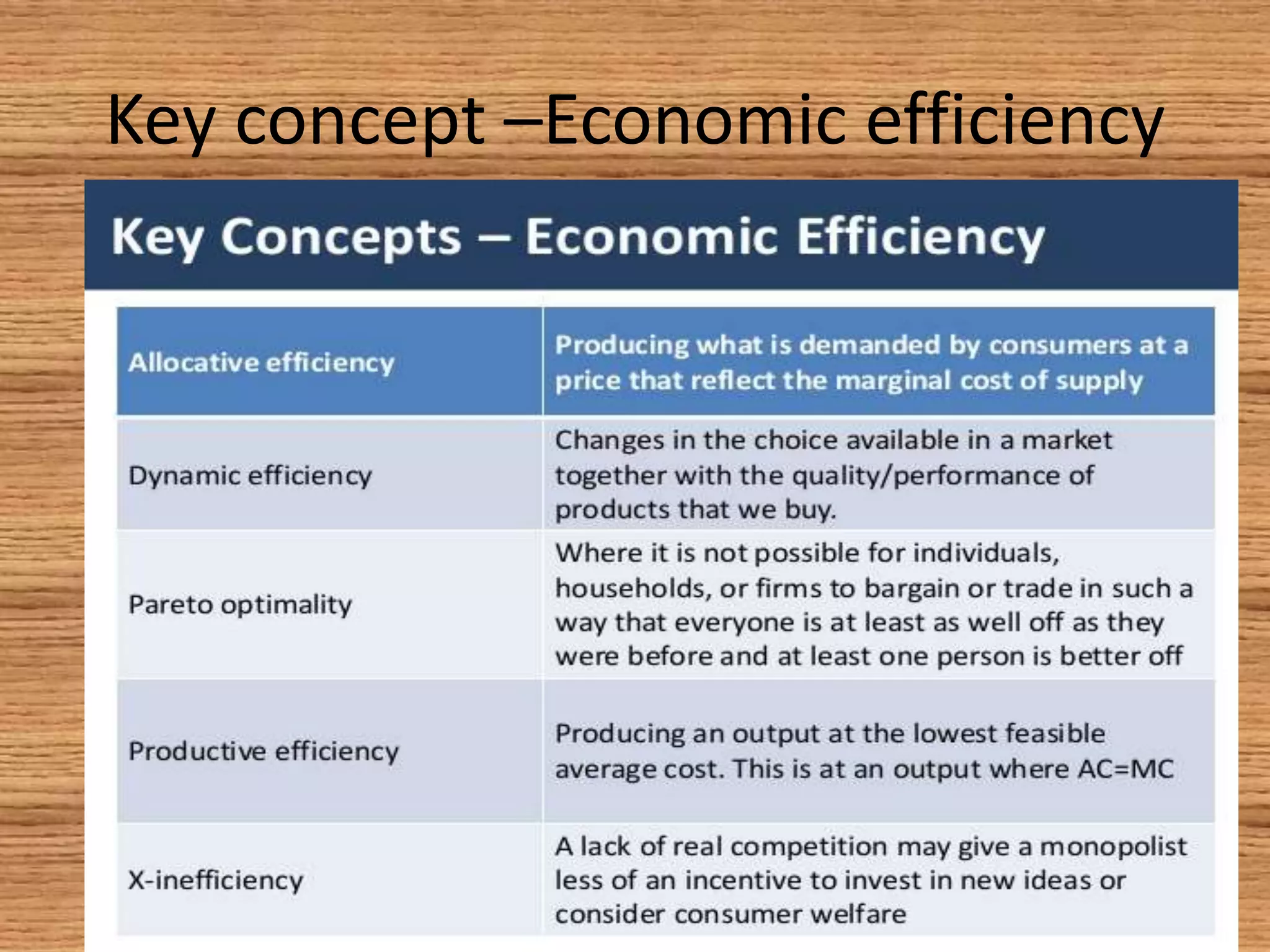
• Key concept-economic efficiency
TERMINOLOGY USED IN TOPIC
• EFFICIENCY -Efficiency is the ability to avoid
wasting materials, energy, efforts, money, and
time in doing something or in producing a desired
result. In a more general sense, it is the ability to
do things well, successfully, and without waste
• ECONOMIC-the branch of knowledge concerned
with the production, consumption, and transfer
of wealth.
• VALUATION-an estimation of the worth of
something, especially one carried out by a
professional valuer
• STATIC-lacking in movement, action, or change,
especially in an undesirable or uninteresting way.
• ALLOCATIVE-Allocative efficiency is a state of the
economy in which production represents
consumer preferences; in particular, every good
or service is produced up to the point where the
last unit provides a marginal benefit to
consumers equal to the marginal cost of
producing
• relating to the allocating of resources or funds to
a particular area or for a particular purpose.
• "free market mechanisms may be vital for
allocative efficiency“
• PRODUCTIVE -producing or able to produce large
amounts of goods, crops, or other commodities.
• MONOPOLY-the exclusive possession or control
of the supply of or trade in a commodity or
service.
• "the state's monopoly of radio and television
broadcasting“
• DYNAMIC-(of a process or system) characterized
by constant change, activity, or progress."a
dynamic economy“
• PARETO-denoting or involving the theories and
methods of the Italian economist and sociologist
Vilfredo Pareto (1848–1923), especially a formula
used to express the income distribution of a
society.
Introduction of Economic Efficiency
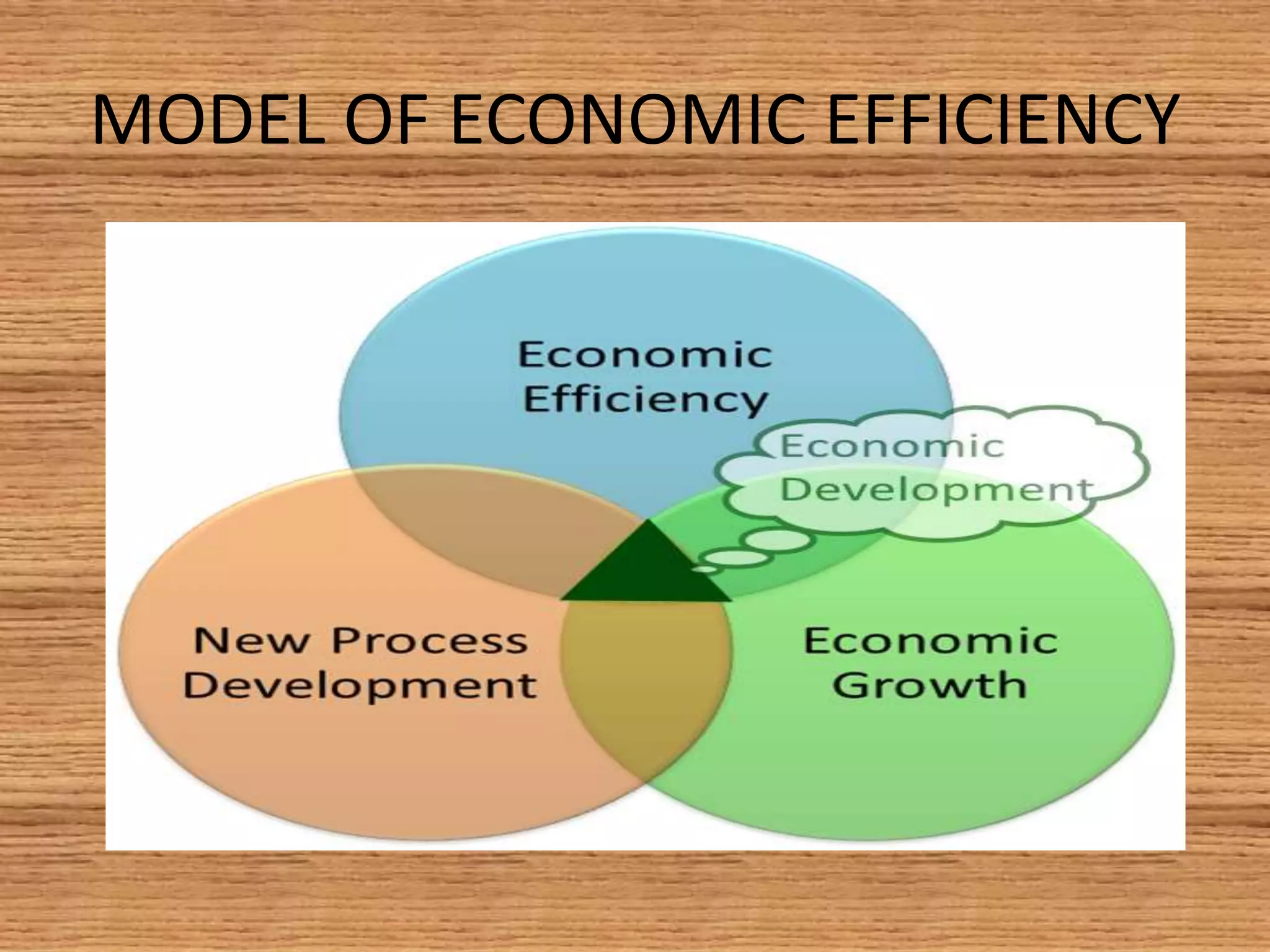
Economic Efficiency
MODEL OF ECONOMIC EFFICIENCY
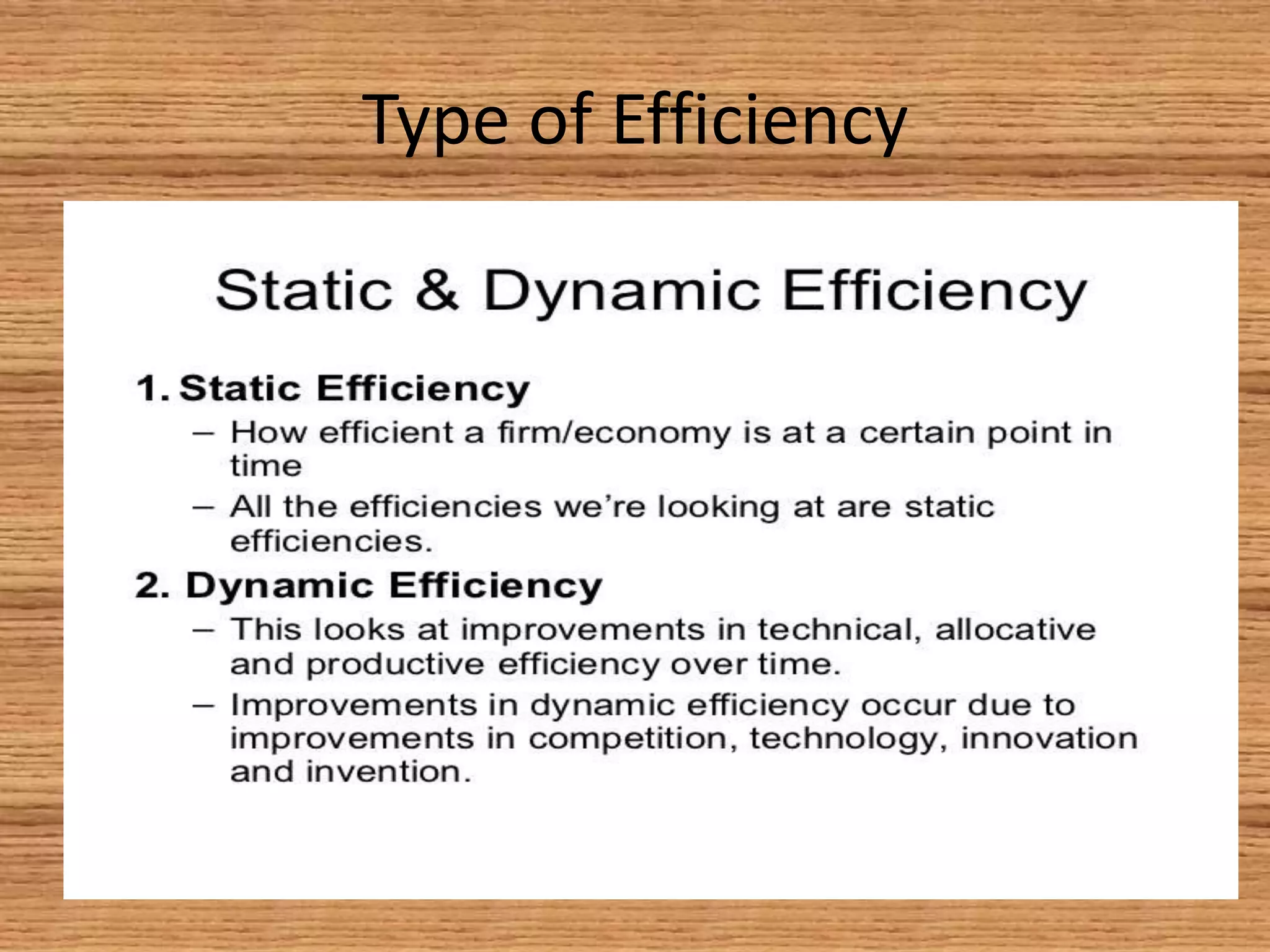
Type of Efficiency
SUFFICIENT CONDITION FOR
ECONOMIC EFFICIENCY
Allocative Efficiency
Basic of Allocation Efficiency
Basic of Allocative Efficiency
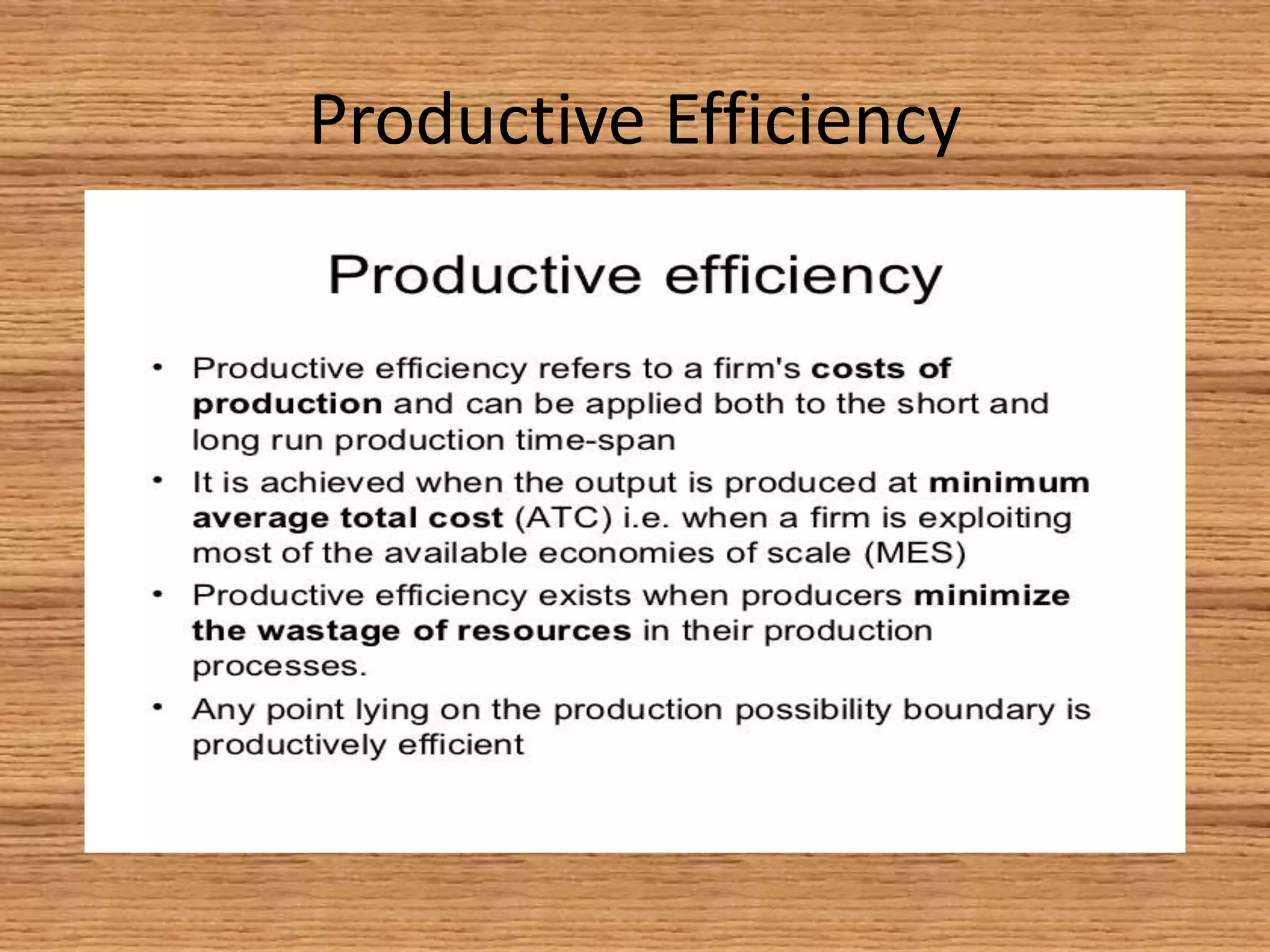
Productive Efficiency
Basic of protective efficiency
Basic of Social Efficiency
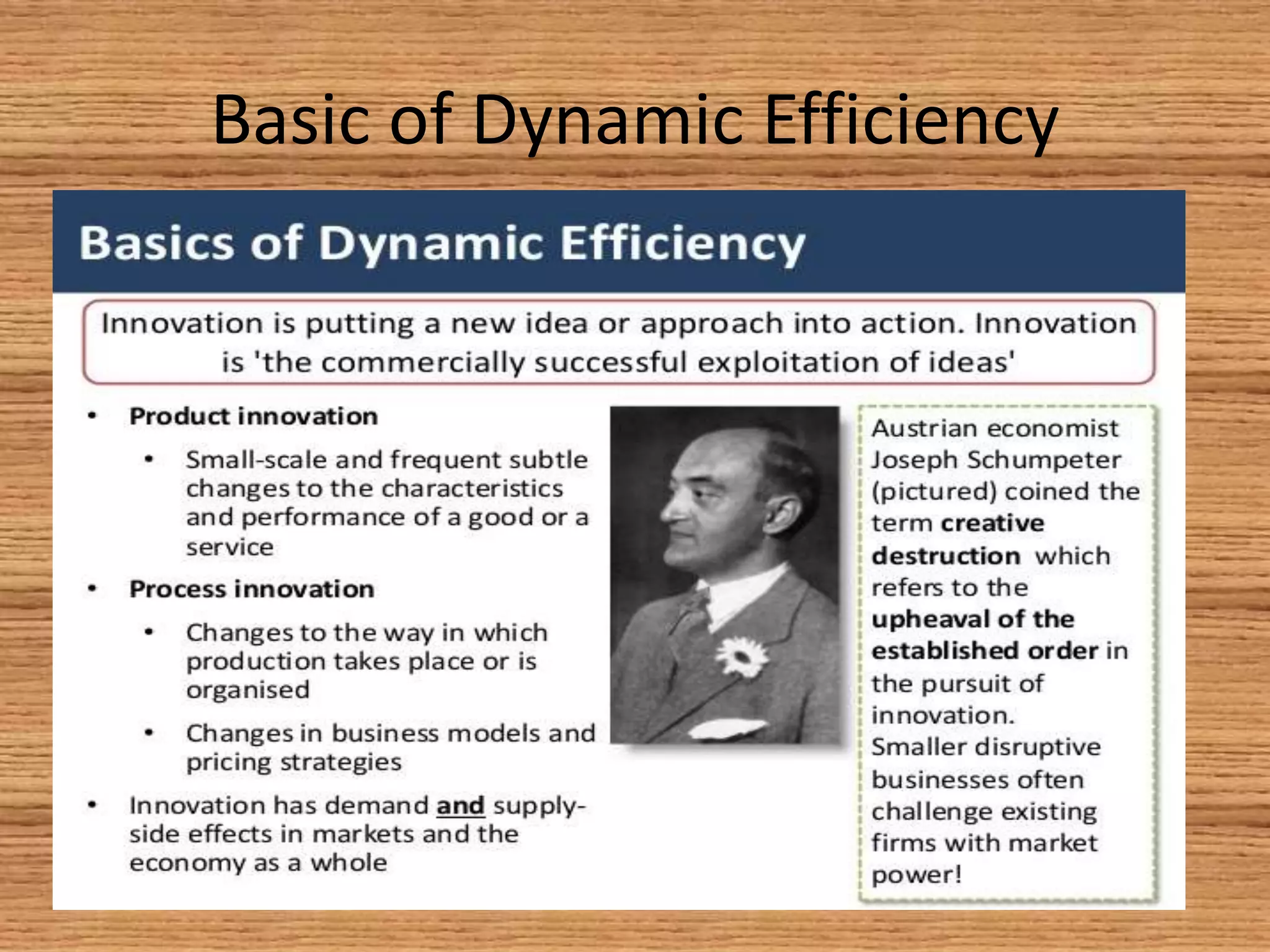
Basic of Dynamic Efficiency
Example of Dynamic Efficiency
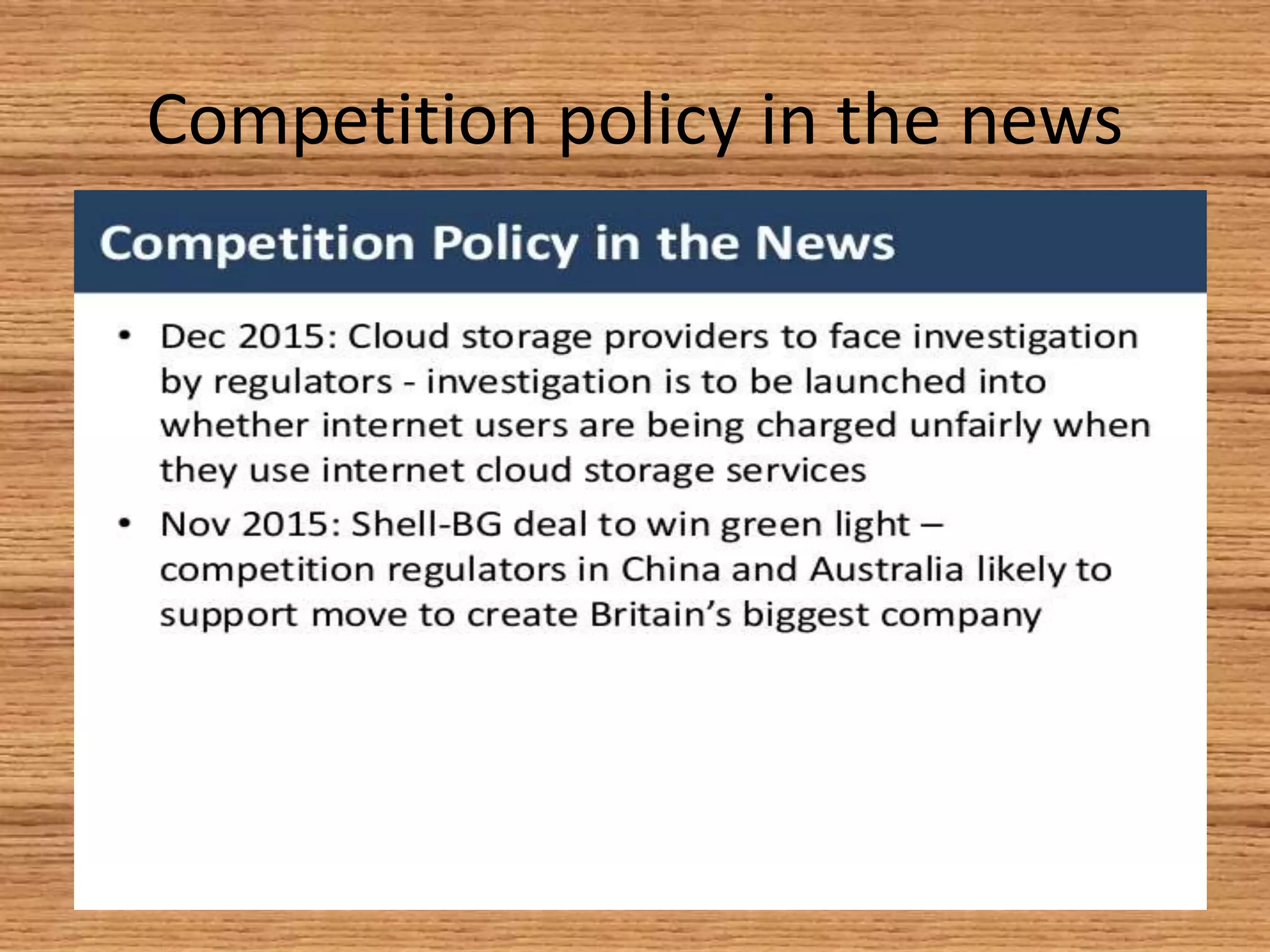
Competition policy in the news
Key concept –innovative Market
Monopoly and Allocative Inefficiency
Market failure and lost efficiency
Key concept –Economic efficiency
SUMMARY
• Economic efficiency is different than most
traditional measures of WUE – it is a set of
conditions, not a quantity measured on a
scale of 0-100% Indicators of economic
efficiency can be developed, but all have pros
and cons 5
THANK YOU FOR LISTENING

Efficiency and economic valuation ppt

  • 1.
    EFFICIENCY AND ECONOMIC VALUATION PREPAREDBY DR.ANJALATCHI M.SC(N)MD(AM)MBA(HA)
  • 3.
    Content /learning objective •Efficiency and economic valuation • Introduction • Meaning • Type of efficiency • Allocative efficiency • Basic allocative efficiency • Productivity efficiency • Basic productivity efficiency • Basic social efficiency • Basic dynamic efficiency /example • Key concept –innovative • Monopoly- • Market failure • Key concept-economic efficiency
  • 4.
    TERMINOLOGY USED INTOPIC • EFFICIENCY -Efficiency is the ability to avoid wasting materials, energy, efforts, money, and time in doing something or in producing a desired result. In a more general sense, it is the ability to do things well, successfully, and without waste • ECONOMIC-the branch of knowledge concerned with the production, consumption, and transfer of wealth. • VALUATION-an estimation of the worth of something, especially one carried out by a professional valuer
  • 5.
    • STATIC-lacking inmovement, action, or change, especially in an undesirable or uninteresting way. • ALLOCATIVE-Allocative efficiency is a state of the economy in which production represents consumer preferences; in particular, every good or service is produced up to the point where the last unit provides a marginal benefit to consumers equal to the marginal cost of producing • relating to the allocating of resources or funds to a particular area or for a particular purpose. • "free market mechanisms may be vital for allocative efficiency“ • PRODUCTIVE -producing or able to produce large amounts of goods, crops, or other commodities.
  • 6.
    • MONOPOLY-the exclusivepossession or control of the supply of or trade in a commodity or service. • "the state's monopoly of radio and television broadcasting“ • DYNAMIC-(of a process or system) characterized by constant change, activity, or progress."a dynamic economy“ • PARETO-denoting or involving the theories and methods of the Italian economist and sociologist Vilfredo Pareto (1848–1923), especially a formula used to express the income distribution of a society.
  • 7.
  • 8.
  • 9.
  • 10.
  • 11.
  • 12.
  • 13.
  • 14.
  • 15.
  • 16.
  • 17.
    Basic of SocialEfficiency
  • 18.
    Basic of DynamicEfficiency
  • 19.
  • 20.
  • 21.
  • 22.
  • 23.
    Market failure andlost efficiency
  • 24.
  • 25.
    SUMMARY • Economic efficiencyis different than most traditional measures of WUE – it is a set of conditions, not a quantity measured on a scale of 0-100% Indicators of economic efficiency can be developed, but all have pros and cons 5
  • 26.
    THANK YOU FORLISTENING