

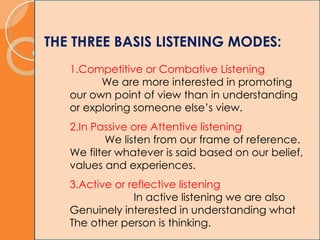

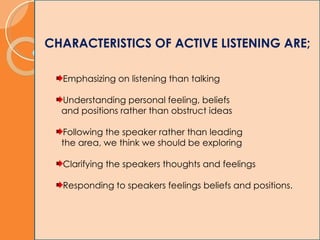

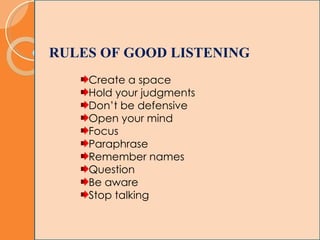


There are three basic listening modes: competitive listening where the focus is on promoting one's own viewpoint, passive listening where one filters what is said through their own beliefs and experiences, and active listening where the goal is to genuinely understand the other person's perspective. Active listening is characterized by emphasizing understanding over talking, clarifying the speaker's thoughts and feelings, and responding to their beliefs, feelings, and positions. Effective active listening requires motivation, concentration, empathy, knowledge, and managing one's emotions. Rules of good listening include creating space, avoiding judgments, focusing, paraphrasing, asking questions, and being aware of when to stop talking.


