Indian perspective
   India the third largest higher education
    system in the world, India provides access
    only to 12% of the 18-23 age group.
 
   Kothari   Education     Commission:     main
    purpose of a University is to working for the
    benefit of society and for the service of
    mankind.
 
   Research is the key       ingredient   in   the
    institutional identity.
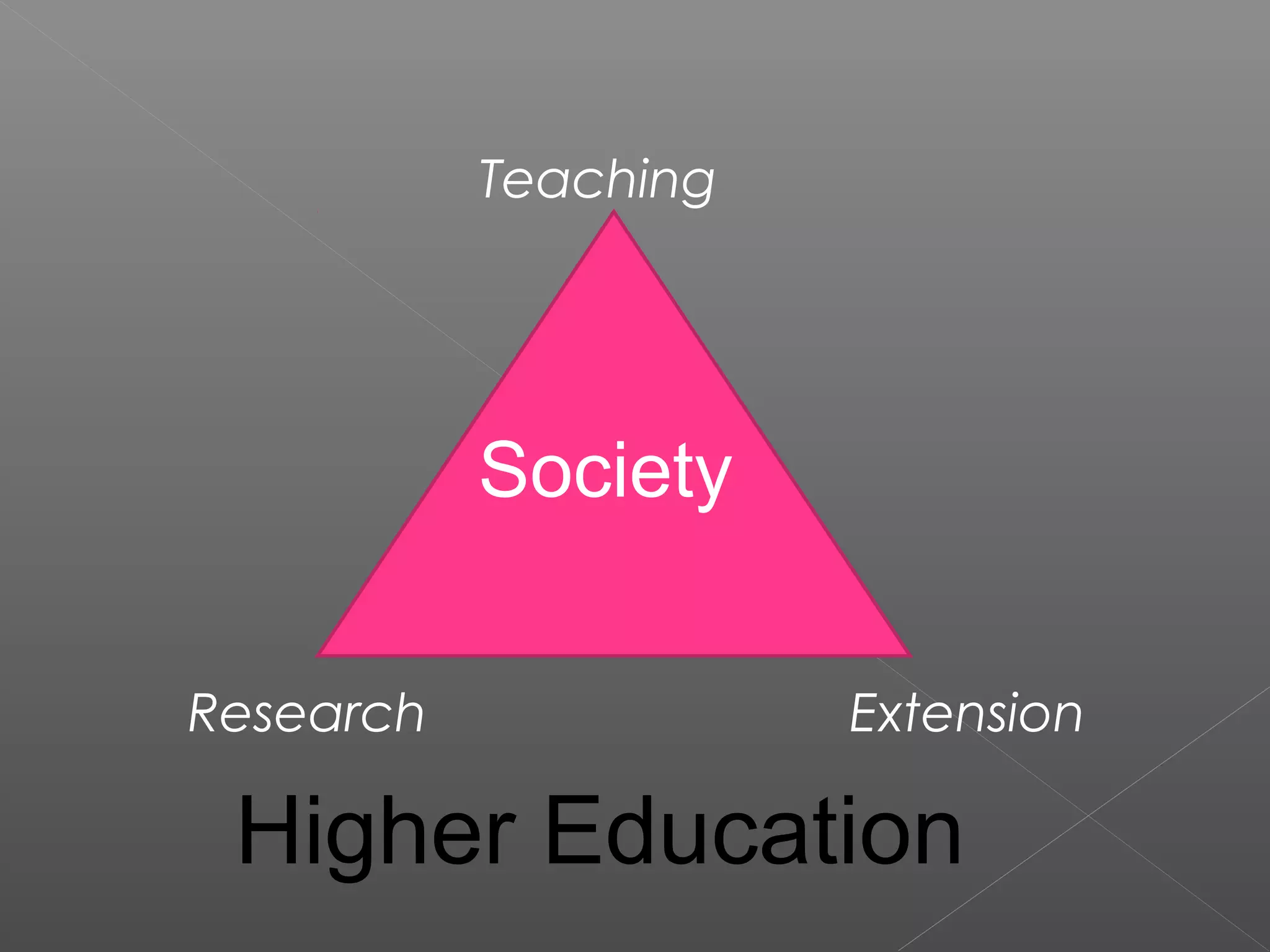
   Three dimensions of Higher Education namely,
    Teaching, Research and Extension.

   Research and development is the Backbone of
    Higher education system.

 No development, without research.
 Quality is a base for both research and
  development.
 The reputation of any institution(Nation) depends
  on the quality of research conducted.

   APJ Abdul Kalam,(2007): Research brings
    transformation and development and also
    enhances the quality of Education.
 

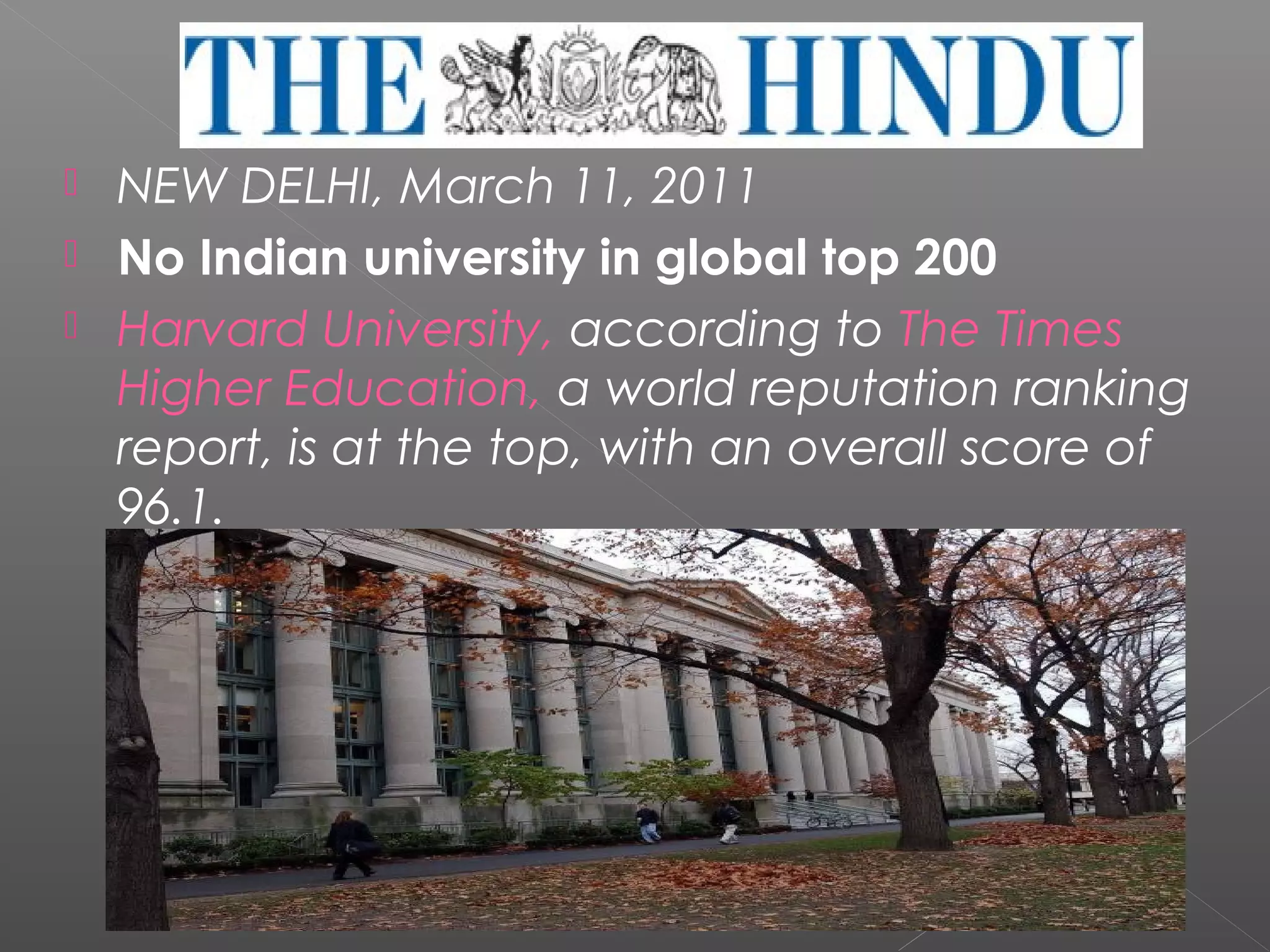
   NEW DELHI, March 11, 2011
   No Indian university in global top 200
   Harvard University, according to The Times
    Higher Education, a world reputation ranking
    report, is at the top, with an overall score of
    96.1.
   based on the global survey of academic opinion
    of13,000 experienced academics from 131 countries
    give their expert insight.

   China has performed well with 6 of its universities figuring
    in the list of 200, 2 in the first 50s as per the World
    University Rankings 2010-2011

   Between 2004 and 2009, the Indian Institutes of
    Technology, Indian Institutes of Management and the
    Jawaharlal Nehru University figured in the global list of
    200 institutes but have slipped out in the new scoring
    system.

   However, the Indian Institutes of Technology Roorkee,
    Kharagpur, Delhi, Kanpur and Bombay; Tata Institute of
    Fundamental Research, Indian Institute of Science,
    University of Delhi and Anna University do figure in the
    top 100 Asian Universities.
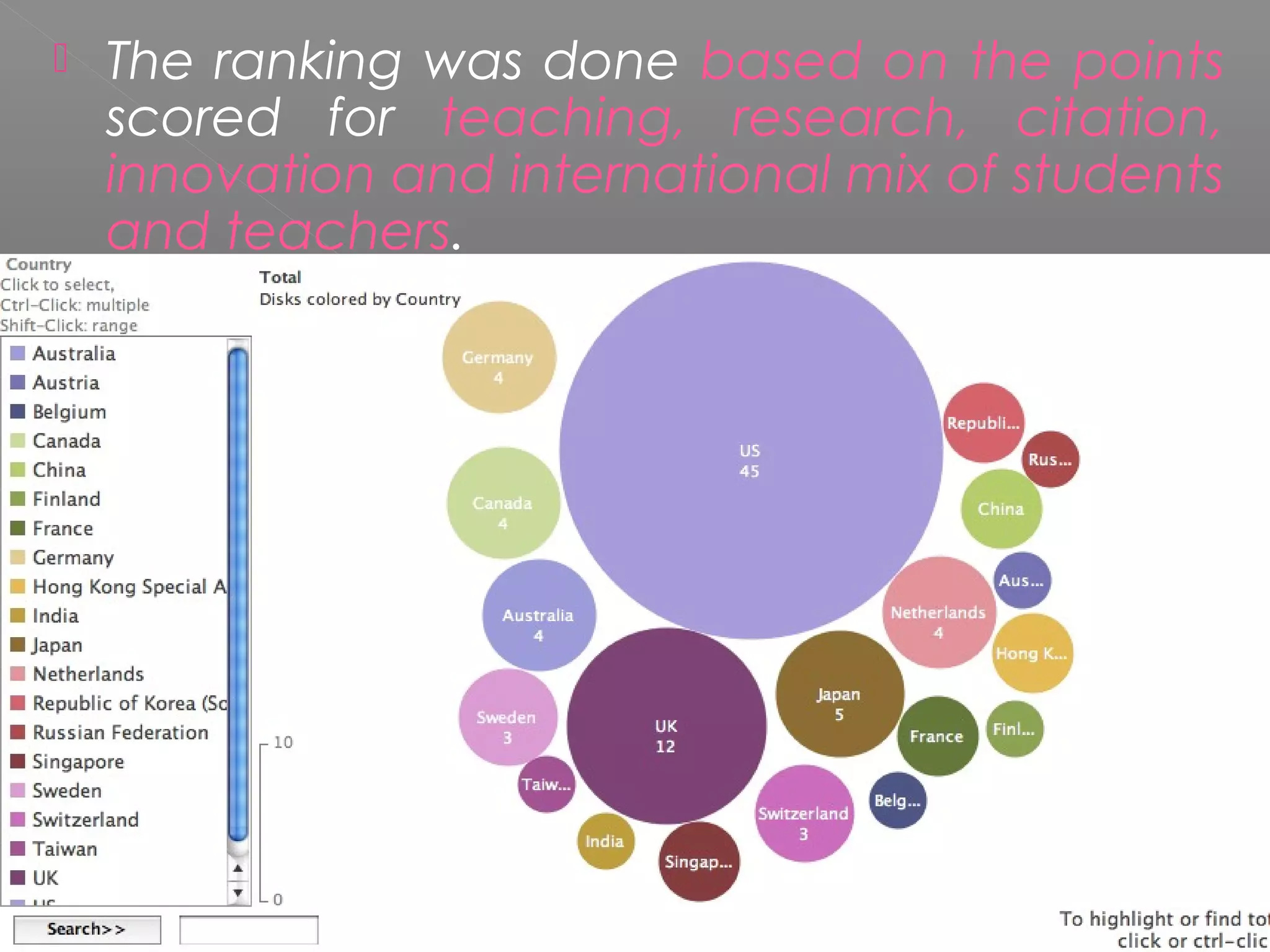
   The ranking was done based on the points
    scored for teaching, research, citation,
    innovation and international mix of students
    and teachers.
Smith: Teaching is an organized system of specific
activities aimed to help the learner to learn
something.


Gage defined,
Teaching as personal relationship between the
teacher and the taught causing behavior
modification.
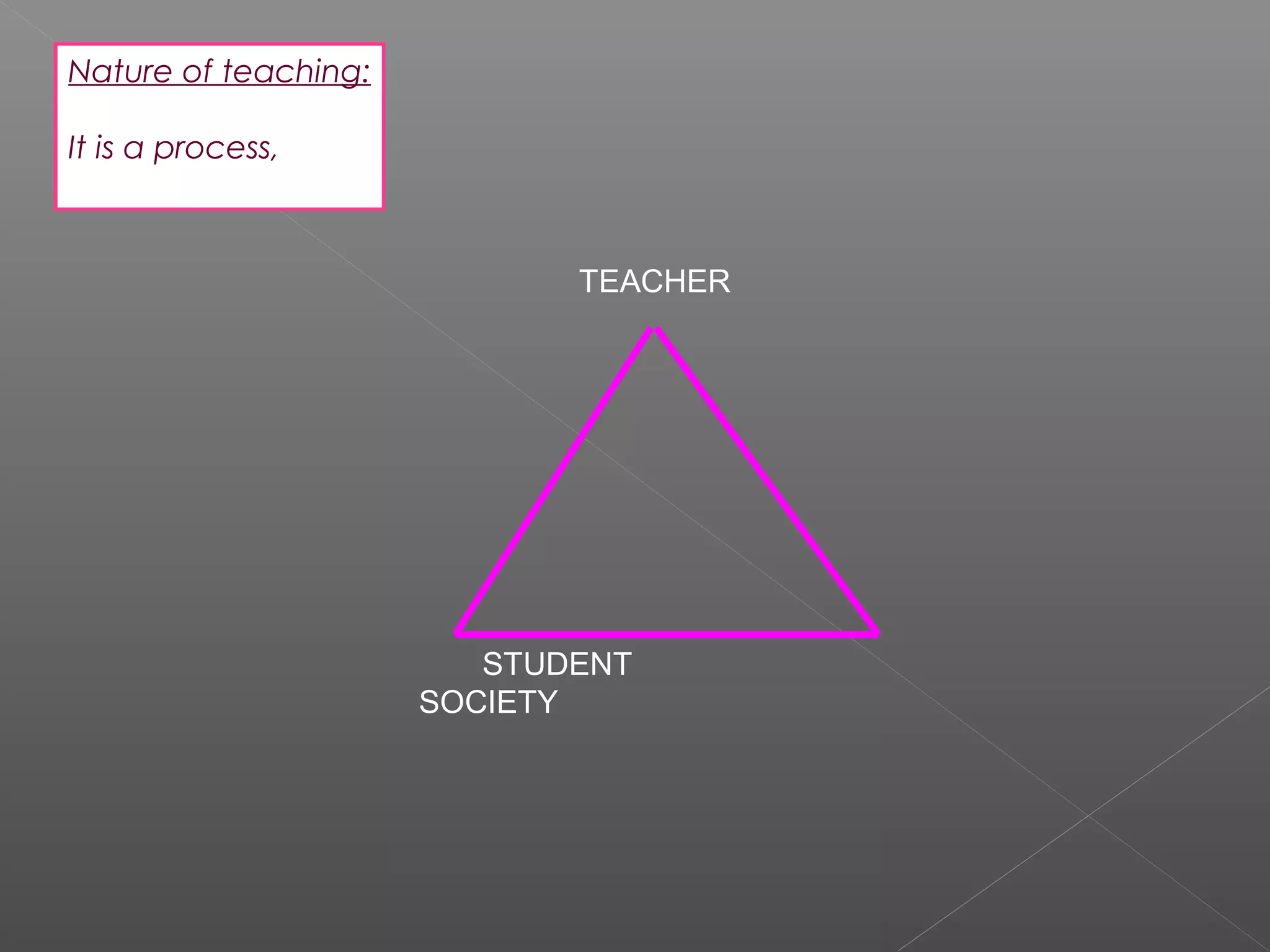
Nature of teaching:

It is a process,


                             TEACHER


                         STUDENT
                      SOCIETY
   A damaging misconception
    “Research dominates and diminishes Teaching”
   Two are inseparable,
   Teaching makes for better Research.

   Teaching and Research, Symbiosis

   Teaching and research flourish best in combination,
    they both suffer in isolation.
   complementary and mutually supporting.
   go hand in hand, each helping to other to reach
    excellence.
   ‘University Extension’ was first suggested at
    Dexter college, oxford university by William In
    1850.
   James Stuart, university of Cambridge gave the
    first extension lecturer in 1873.
   the movement spread widely through out the
    world thereafter.

   UGC India articulated the idea of extension in
    1977
    1982 introduction of extension as a third but
    equally imported function of the system of
    higher education;
 Extension means different things to
  different people.
 It means reaching fruits of knowledge,
  research and new skills to millions of
  people.

   ‘University extension means’ which
    incorporates various aspects of work
    intend and performed by the university
    other than the established job of
    teaching and research, intended not
    only for its regular students but other also.
   Extension  is one of the responsibilities of
    higher education institutions as universities
    have more social responsibility.

   University  must   concentrate       on   the
    disadvantaged population such as
    women,
    Un-employed youth,
    people below the poverty,
     Information and skills which result in better
    production of goods and services.
Community Development
 Potable water, soil analysis, modern
  agricultural methods, horticulture, animal
  husbandry, sericulture, poultry etc.
 Helping mothers to pick up the right
  practices like breast feeding, immunization,
  weight monitoring, family planning etc.
 Water management, banking awareness,
  bank facilities, consumer protection and
  training in Yoga, rural sports and stress
  management
   Dairy farming
   Radio and TV repairing
   Travel and tourism
   Interior decoration
   Electronics repairing
   Photography
   Fitness and nutrition
   Fashion designing
   Mushroom culture
   Aquaculture
   Sea food production
   Seeding production
   opportunities to different groups of
    people like

    industrial workers,
    household women and
    others who are in employment /semi
     employment but are in need to improve
     their qualifications or upgrade their
     skills.
 University must concentrate on Nation
  building activities.
 The country is facing problems like HIV/AIDS,
  Degradation of environment,
  Natural disaster like earth quakes, tsunami,
  floods and famines,
  Erosion of family values,
  Malnutrition and under-nutrition,
  Antisocial activities like terrorism, nexulism
  and so on.
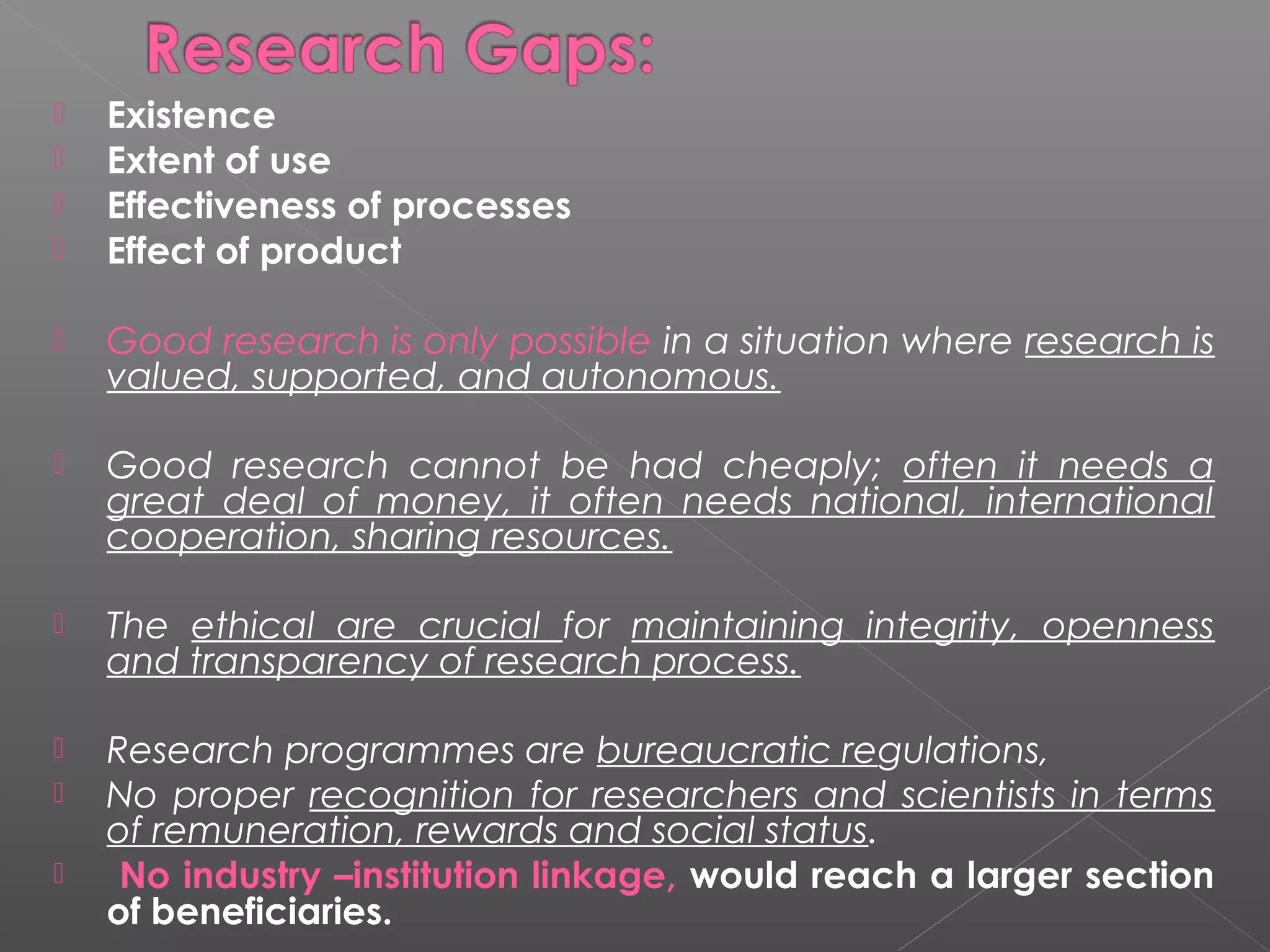
   Existence
   Extent of use
   Effectiveness of processes
   Effect of product

   Good research is only possible in a situation where research is
    valued, supported, and autonomous.

   Good research cannot be had cheaply; often it needs a
    great deal of money, it often needs national, international
    cooperation, sharing resources.

   The ethical are crucial for maintaining integrity, openness
    and transparency of research process.

   Research programmes are bureaucratic regulations,
   No proper recognition for researchers and scientists in terms
    of remuneration, rewards and social status.
    No industry –institution linkage, would reach a larger section
    of beneficiaries.
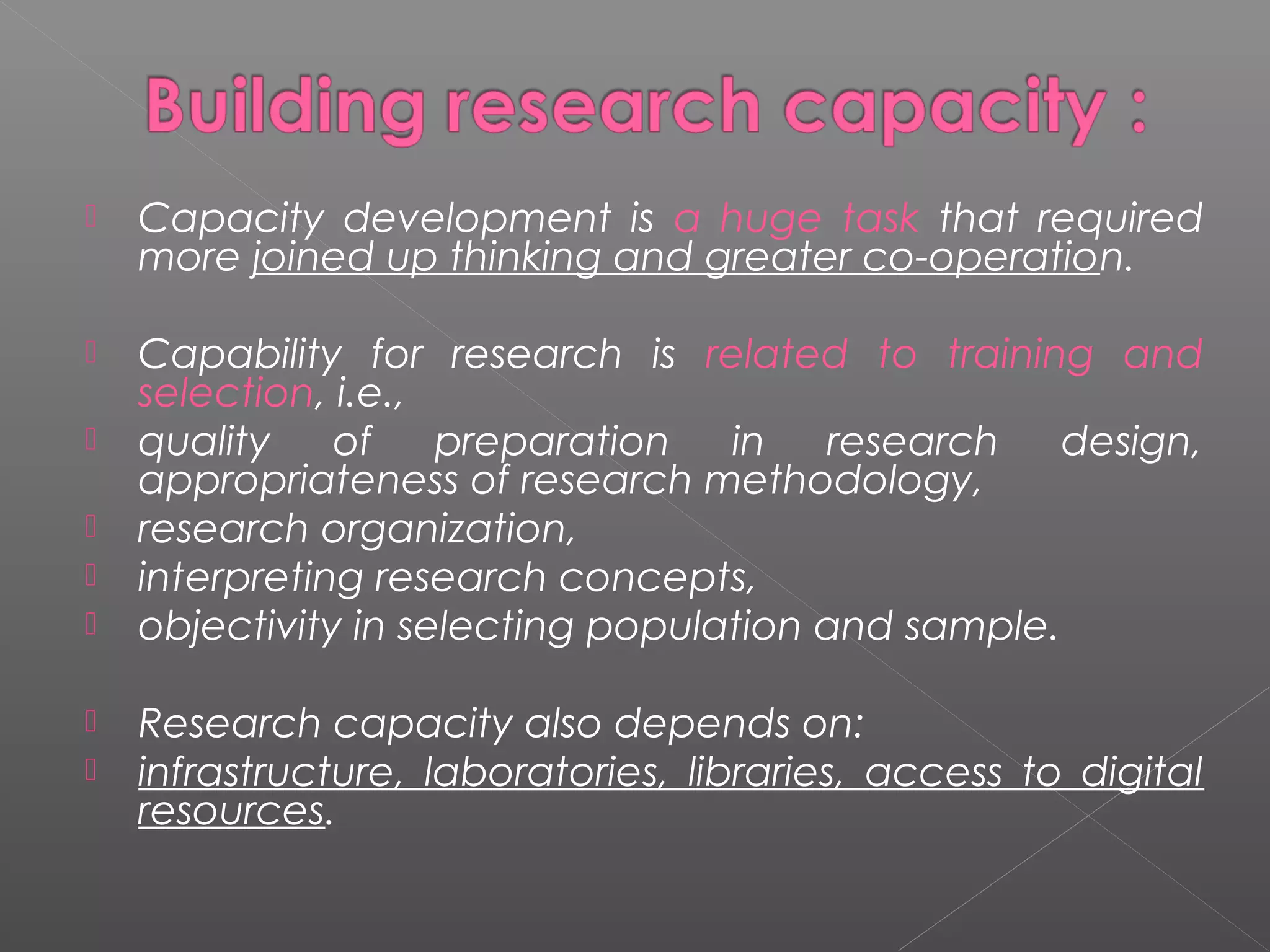
   Capacity development is a huge task that required
    more joined up thinking and greater co-operation.

   Capability for research is related to training and
    selection, i.e.,
   quality    of    preparation   in   research    design,
    appropriateness of research methodology,
   research organization,
   interpreting research concepts,
   objectivity in selecting population and sample.

   Research capacity also depends on:
   infrastructure, laboratories, libraries, access to digital
    resources.
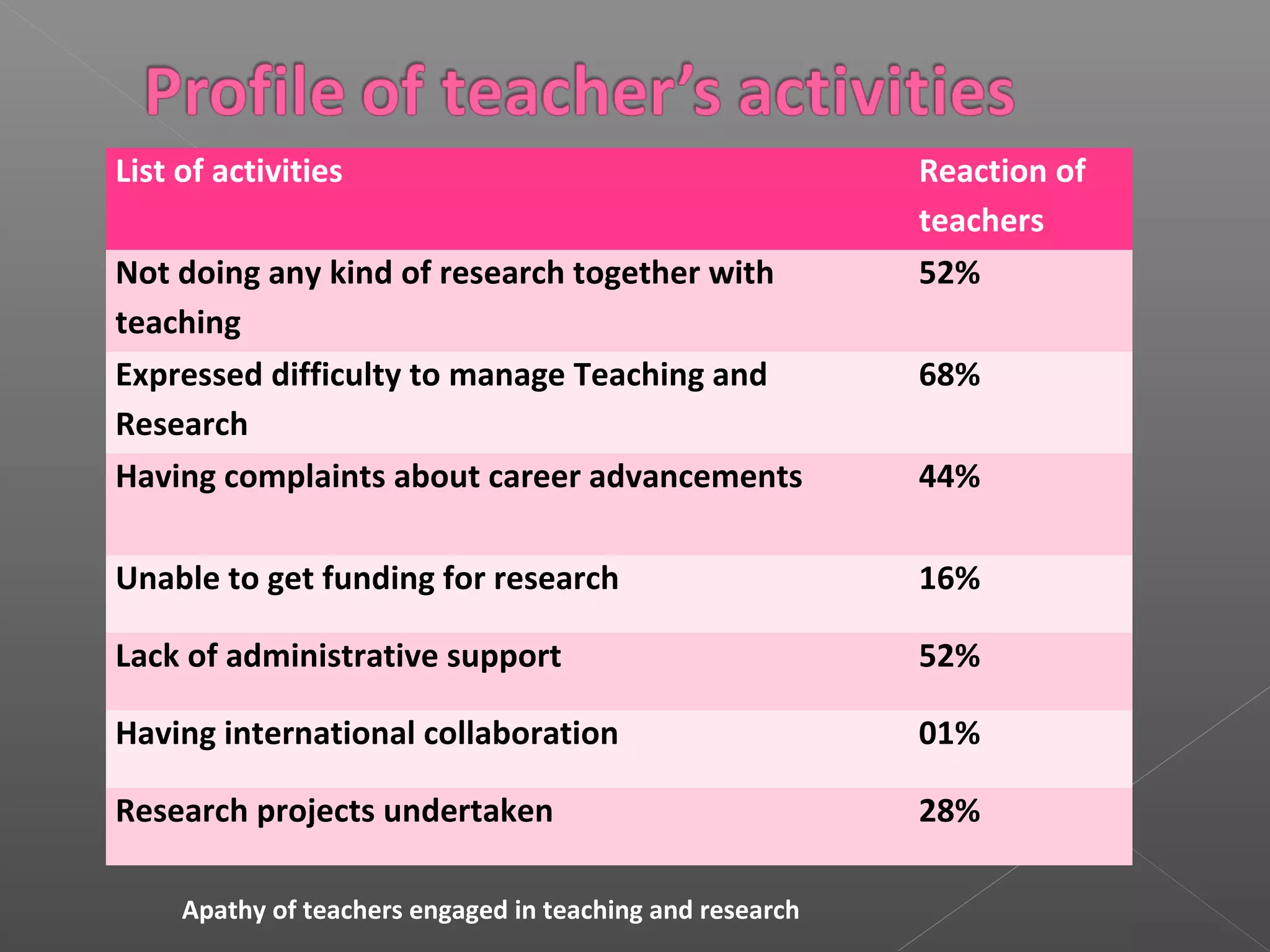
List of activities                                         Reaction of
                                                           teachers
Not doing any kind of research together with               52%
teaching
Expressed difficulty to manage Teaching and                68%
Research
Having complaints about career advancements                44%

Unable to get funding for research                         16%

Lack of administrative support                             52%

Having international collaboration                         01%

Research projects undertaken                               28%

     Apathy of teachers engaged in teaching and research
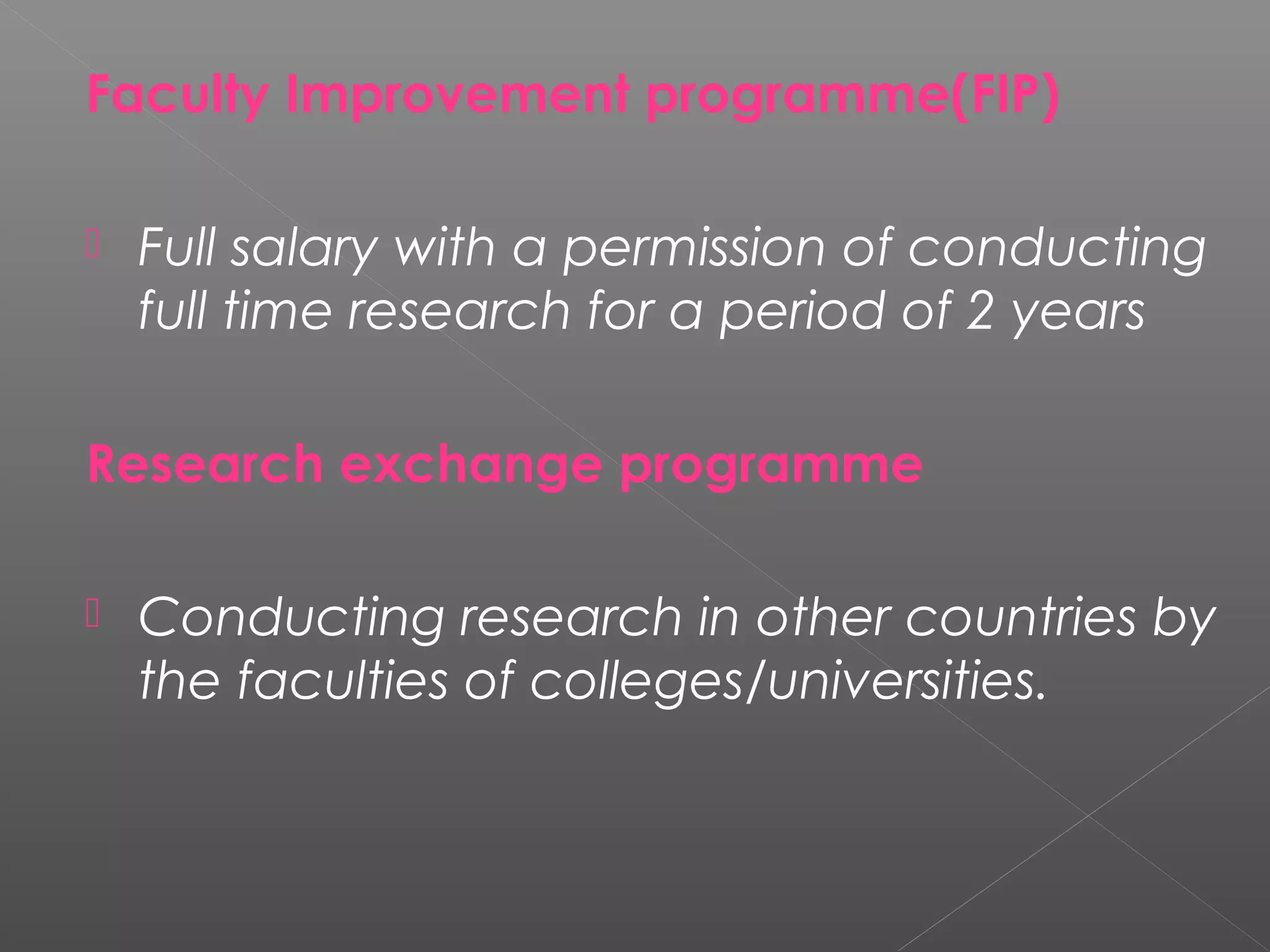
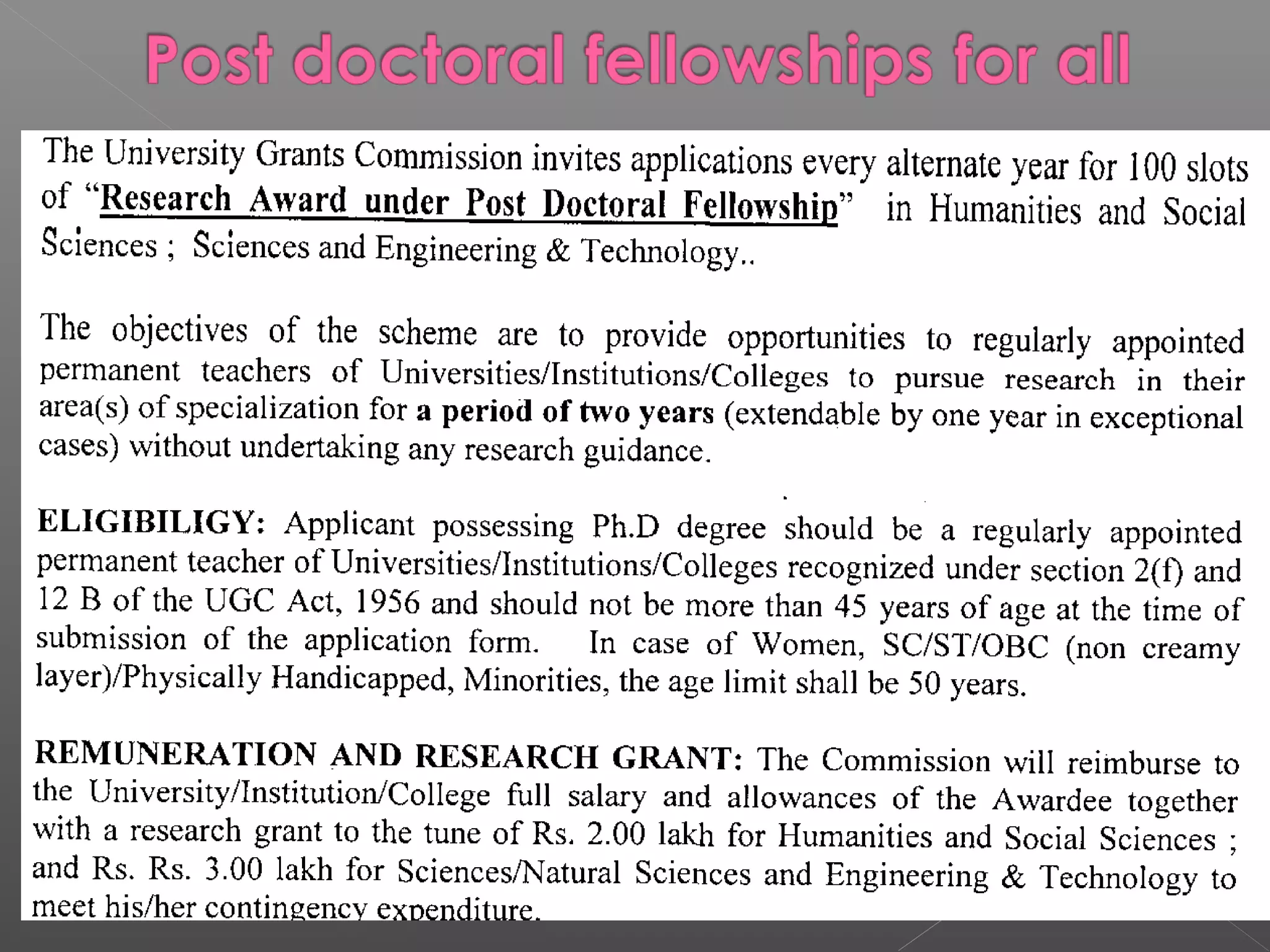
Faculty Improvement programme(FIP)
 
 Full salary with a permission of conducting
  full time research for a period of 2 years

Research exchange programme
 
 Conducting research in other countries by
  the faculties of colleges/universities.
Teaching


           Society


Research              Extension

 Higher Education
   Aristotle :“Education is necessary for good life”.

   Plato:
    “Good Education is necessary to make man better
    than he is and if good Education is necessary for
    making man better, a good teacher is necessary
    for making Education whatsoever it can be”.

              “Life’s battle do not always go
    To the strongest or the fastest man, soon or later
                     The man who wins
              Is the man who thinks he can”

 
Thank you


 E-Mail: jkdange@gmail.com

Education:Research,Development and Extension

  • 2.
    Indian perspective  India the third largest higher education system in the world, India provides access only to 12% of the 18-23 age group.    Kothari Education Commission: main purpose of a University is to working for the benefit of society and for the service of mankind.    Research is the key ingredient in the institutional identity.
  • 3.
    Three dimensions of Higher Education namely, Teaching, Research and Extension.  Research and development is the Backbone of Higher education system.  No development, without research.  Quality is a base for both research and development.  The reputation of any institution(Nation) depends on the quality of research conducted.  APJ Abdul Kalam,(2007): Research brings transformation and development and also enhances the quality of Education.
  • 4.
       NEW DELHI, March 11, 2011  No Indian university in global top 200  Harvard University, according to The Times Higher Education, a world reputation ranking report, is at the top, with an overall score of 96.1.
  • 5.
    based on the global survey of academic opinion of13,000 experienced academics from 131 countries give their expert insight.  China has performed well with 6 of its universities figuring in the list of 200, 2 in the first 50s as per the World University Rankings 2010-2011  Between 2004 and 2009, the Indian Institutes of Technology, Indian Institutes of Management and the Jawaharlal Nehru University figured in the global list of 200 institutes but have slipped out in the new scoring system.  However, the Indian Institutes of Technology Roorkee, Kharagpur, Delhi, Kanpur and Bombay; Tata Institute of Fundamental Research, Indian Institute of Science, University of Delhi and Anna University do figure in the top 100 Asian Universities.
  • 6.
    The ranking was done based on the points scored for teaching, research, citation, innovation and international mix of students and teachers.
  • 7.
    Smith: Teaching isan organized system of specific activities aimed to help the learner to learn something. Gage defined, Teaching as personal relationship between the teacher and the taught causing behavior modification.
  • 8.
    Nature of teaching: Itis a process, TEACHER STUDENT SOCIETY
  • 9.
    A damaging misconception “Research dominates and diminishes Teaching”  Two are inseparable,  Teaching makes for better Research.  Teaching and Research, Symbiosis  Teaching and research flourish best in combination,  they both suffer in isolation.  complementary and mutually supporting.  go hand in hand, each helping to other to reach excellence.
  • 10.
    ‘University Extension’ was first suggested at Dexter college, oxford university by William In 1850.  James Stuart, university of Cambridge gave the first extension lecturer in 1873.  the movement spread widely through out the world thereafter.  UGC India articulated the idea of extension in 1977  1982 introduction of extension as a third but equally imported function of the system of higher education;
  • 11.
     Extension meansdifferent things to different people.  It means reaching fruits of knowledge, research and new skills to millions of people.  ‘University extension means’ which incorporates various aspects of work intend and performed by the university other than the established job of teaching and research, intended not only for its regular students but other also.
  • 12.
    Extension is one of the responsibilities of higher education institutions as universities have more social responsibility.  University must concentrate on the disadvantaged population such as women, Un-employed youth, people below the poverty, Information and skills which result in better production of goods and services.
  • 13.
    Community Development  Potablewater, soil analysis, modern agricultural methods, horticulture, animal husbandry, sericulture, poultry etc.  Helping mothers to pick up the right practices like breast feeding, immunization, weight monitoring, family planning etc.  Water management, banking awareness, bank facilities, consumer protection and training in Yoga, rural sports and stress management
  • 14.
    Dairy farming  Radio and TV repairing  Travel and tourism  Interior decoration  Electronics repairing  Photography  Fitness and nutrition  Fashion designing  Mushroom culture  Aquaculture  Sea food production  Seeding production
  • 15.
    opportunities to different groups of people like industrial workers, household women and others who are in employment /semi employment but are in need to improve their qualifications or upgrade their skills.
  • 16.
     University mustconcentrate on Nation building activities.  The country is facing problems like HIV/AIDS, Degradation of environment, Natural disaster like earth quakes, tsunami, floods and famines, Erosion of family values, Malnutrition and under-nutrition, Antisocial activities like terrorism, nexulism and so on.
  • 17.
    Existence  Extent of use  Effectiveness of processes  Effect of product  Good research is only possible in a situation where research is valued, supported, and autonomous.  Good research cannot be had cheaply; often it needs a great deal of money, it often needs national, international cooperation, sharing resources.  The ethical are crucial for maintaining integrity, openness and transparency of research process.  Research programmes are bureaucratic regulations,  No proper recognition for researchers and scientists in terms of remuneration, rewards and social status.  No industry –institution linkage, would reach a larger section of beneficiaries.
  • 18.
    Capacity development is a huge task that required more joined up thinking and greater co-operation.  Capability for research is related to training and selection, i.e.,  quality of preparation in research design, appropriateness of research methodology,  research organization,  interpreting research concepts,  objectivity in selecting population and sample.  Research capacity also depends on:  infrastructure, laboratories, libraries, access to digital resources.
  • 19.
    List of activities Reaction of teachers Not doing any kind of research together with 52% teaching Expressed difficulty to manage Teaching and 68% Research Having complaints about career advancements 44% Unable to get funding for research 16% Lack of administrative support 52% Having international collaboration 01% Research projects undertaken 28% Apathy of teachers engaged in teaching and research
  • 20.
    Faculty Improvement programme(FIP)   Full salary with a permission of conducting full time research for a period of 2 years Research exchange programme    Conducting research in other countries by the faculties of colleges/universities.
  • 22.
    Teaching Society Research Extension Higher Education
  • 23.
    Aristotle :“Education is necessary for good life”.  Plato: “Good Education is necessary to make man better than he is and if good Education is necessary for making man better, a good teacher is necessary for making Education whatsoever it can be”. “Life’s battle do not always go To the strongest or the fastest man, soon or later The man who wins Is the man who thinks he can”  
  • 24.
    Thank you E-Mail:jkdange@gmail.com