Downloaded 321 times


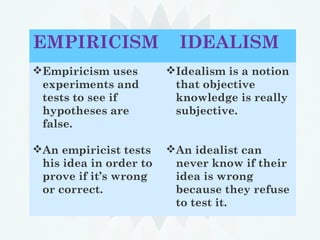
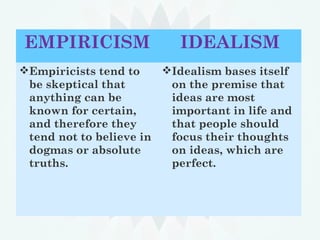
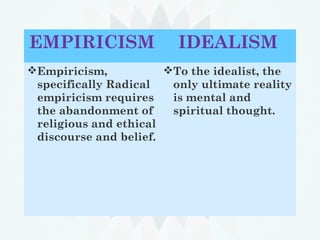


The document discusses different philosophical beliefs regarding the origins and nature of knowledge. It describes empiricism as the view that all knowledge is derived from sensory experience and the senses. More radical forms of empiricism hold that only claims that can be empirically tested and verified have meaning. Moderate empiricism allows some exceptions. Idealism believes objective knowledge is subjective and ideas are most important. Positivism is the view that assertions must be scientifically verified or logically/mathematically proven to be considered knowledge, rejecting metaphysics and theism. Auguste Comte argued knowledge develops through theological, metaphysical and positive stages focused on science.


