Subject-Verb
Agreement
Check
Up!
a. Filipino
proverbs
(teach, teaches)
good behavior to
teenagers.
Check
Up!
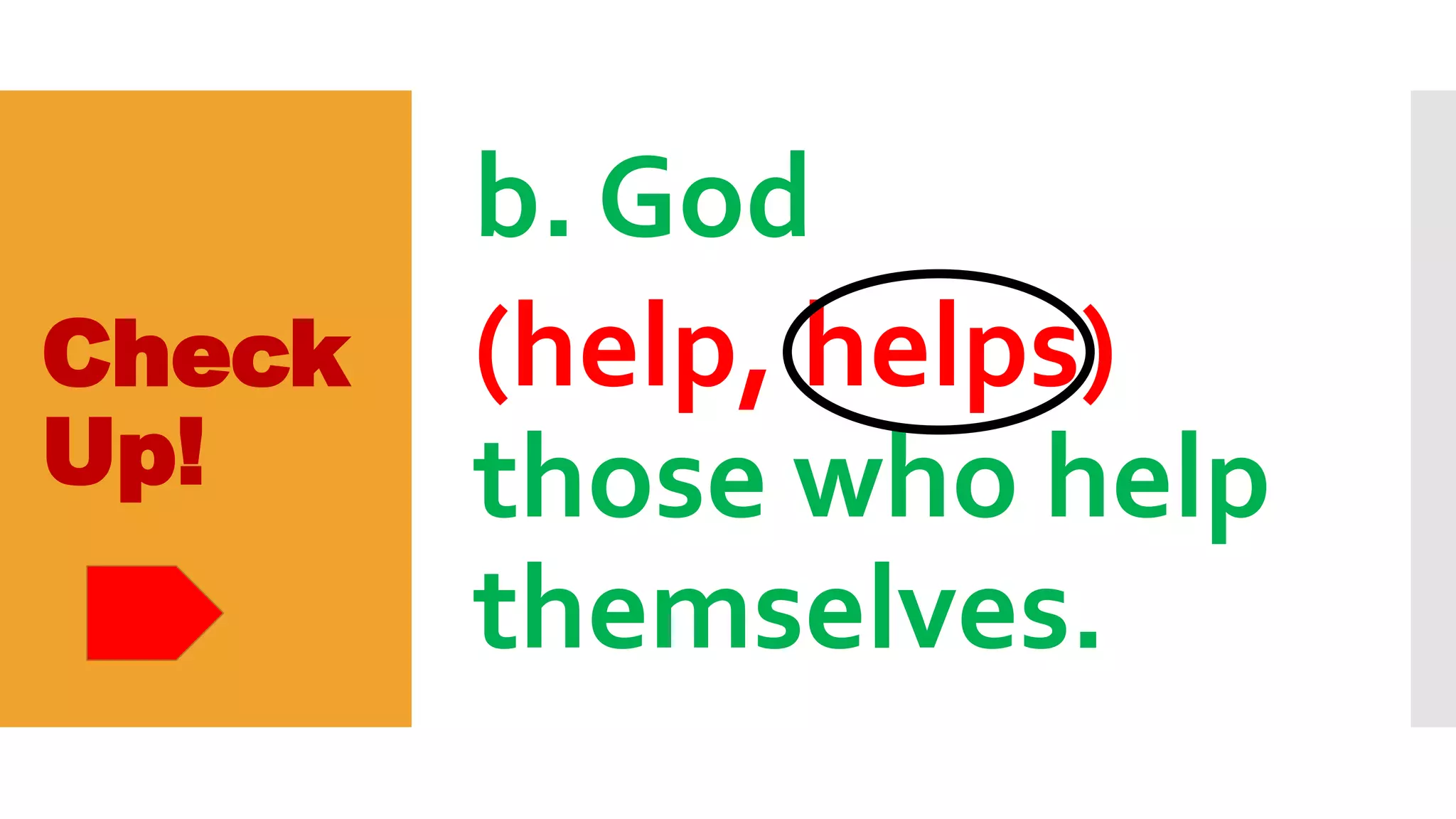
b. God
(help, helps)
those who help
themselves.
Check
Up!
c. Laziness
(is, are) the
sibling of
starvation.
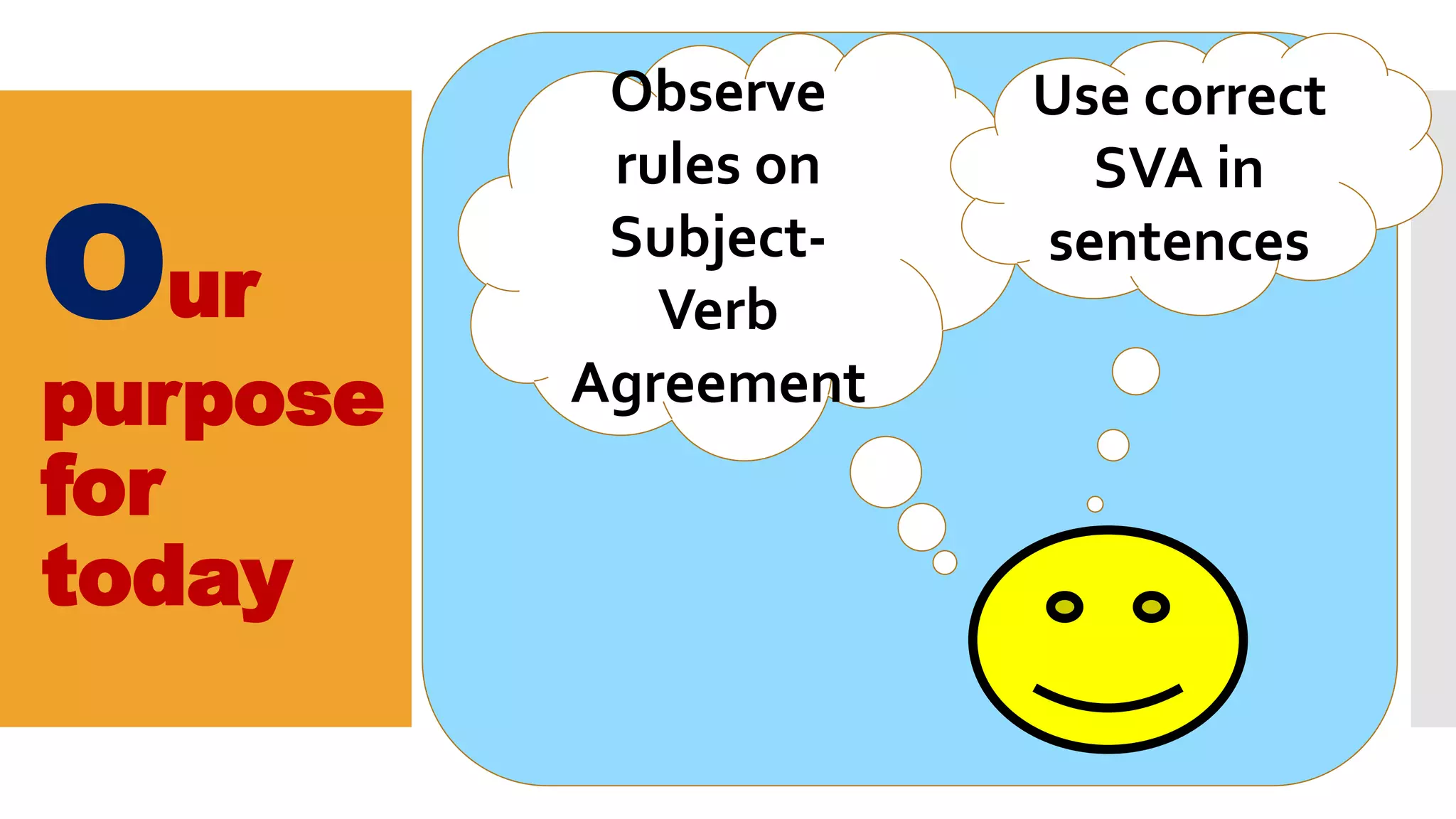
Our
purpose
for
today
Observe
rules on
Subject-
Verb
Agreement
Use correct
SVA in
sentences
Let’s
warm
up!
see
p.29
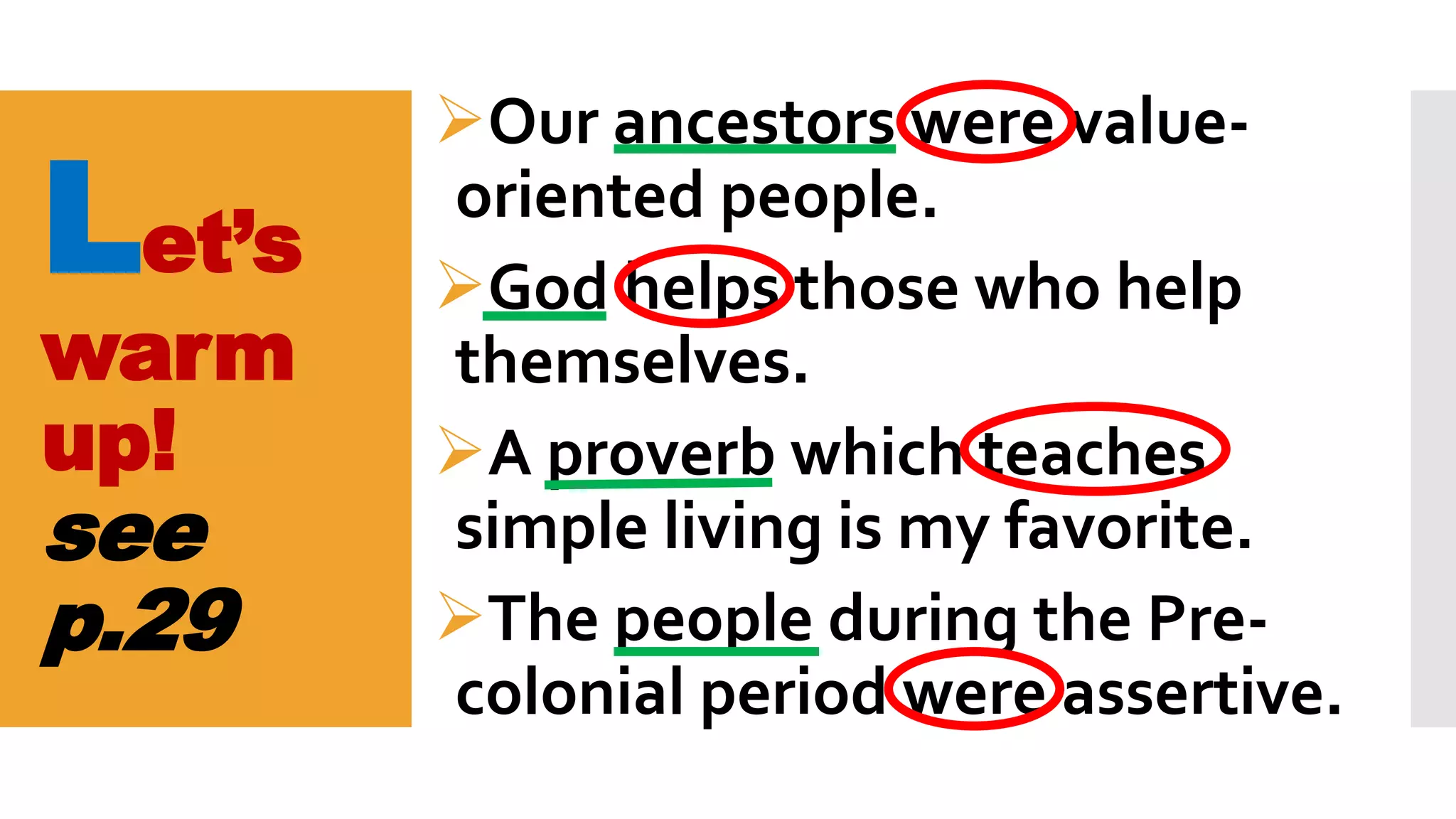
Our ancestors were value-
oriented people.
God helps those who help
themselves.
A proverb which teaches
simple living is my favorite.
The people during the Pre-
colonial period were assertive.
Rules
onSubj
ectVerb
Agreem
ent
A. Subjects and verbs must
agree in number.
Examples:
Laziness is the sibling of
starvation.
The students clean the
room.
Rules
onSubj
ectVerb
Agreem
ent
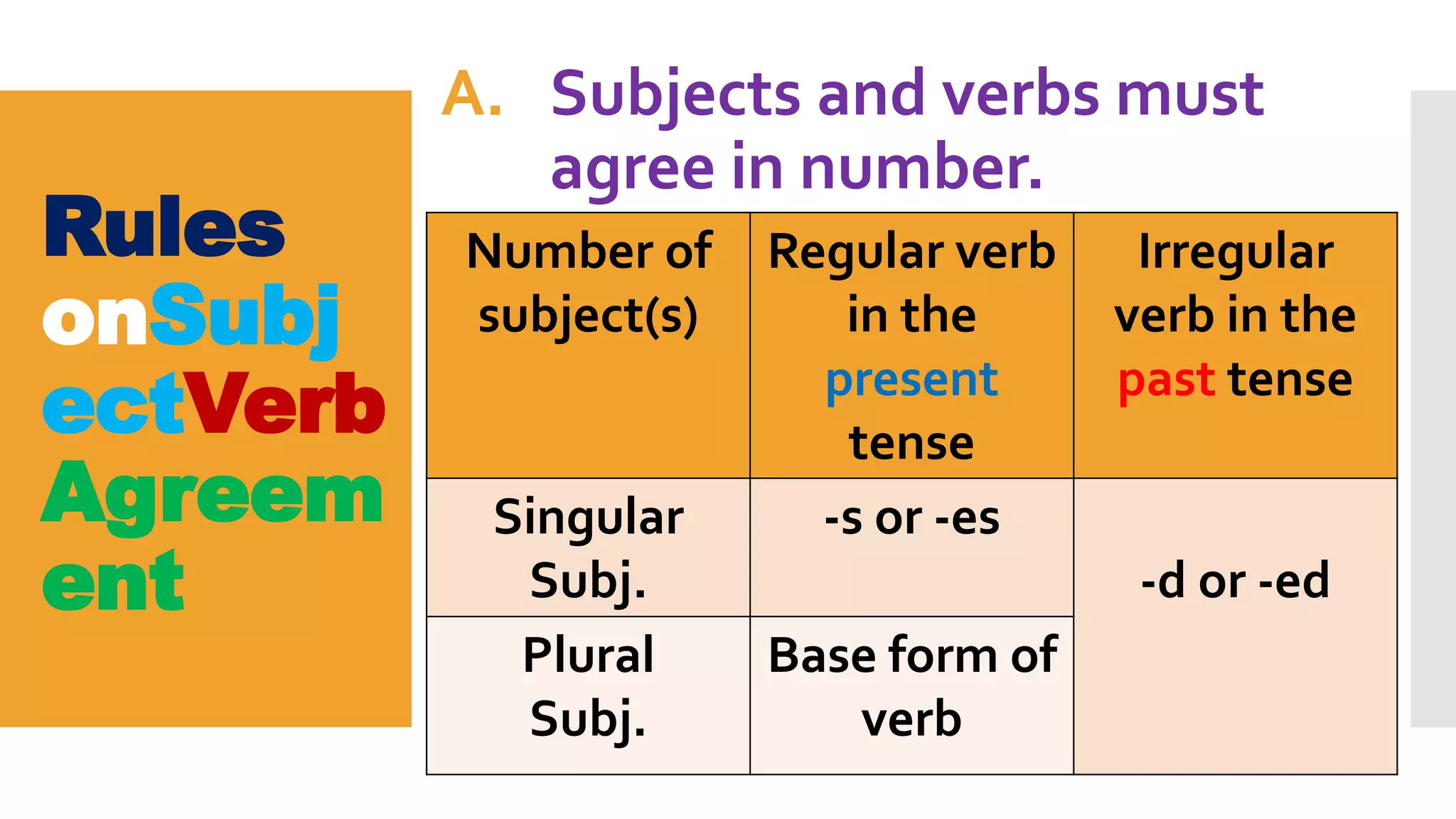
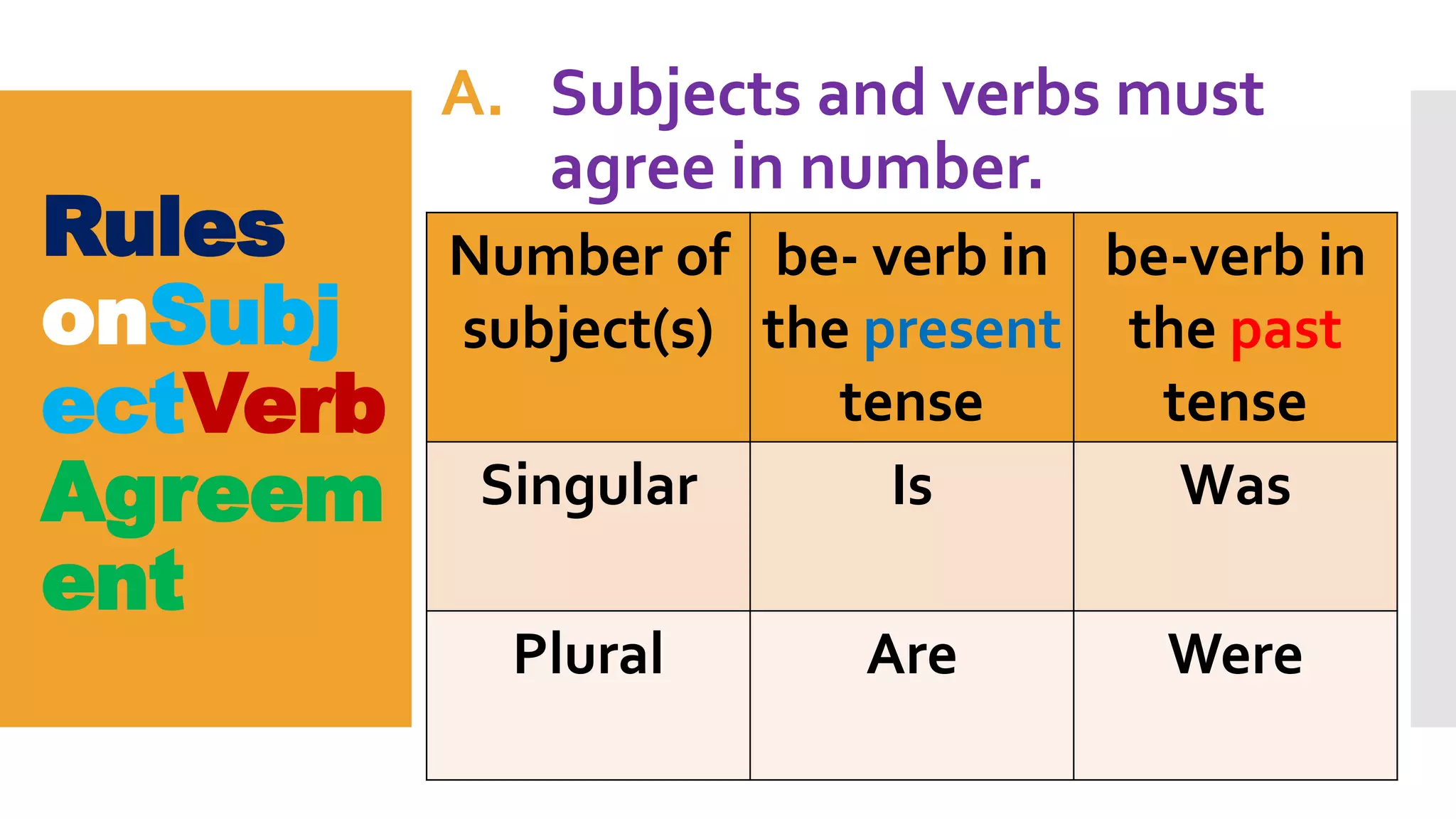
A. Subjects and verbs must
agree in number.
Number of
subject(s)
Regular verb
in the
present
tense
Irregular
verb in the
past tense
Singular
Subj.
-s or -es
-d or -ed
Plural
Subj.
Base form of
verb
Rules
onSubj
ectVerb
Agreem
ent
A. Subjects and verbs must
agree in number.
Number of
subject(s)
be- verb in
the present
tense
be-verb in
the past
tense
Singular Is Was
Plural Are Were
Rules
onSubj
ectVerb
Agreem
ent
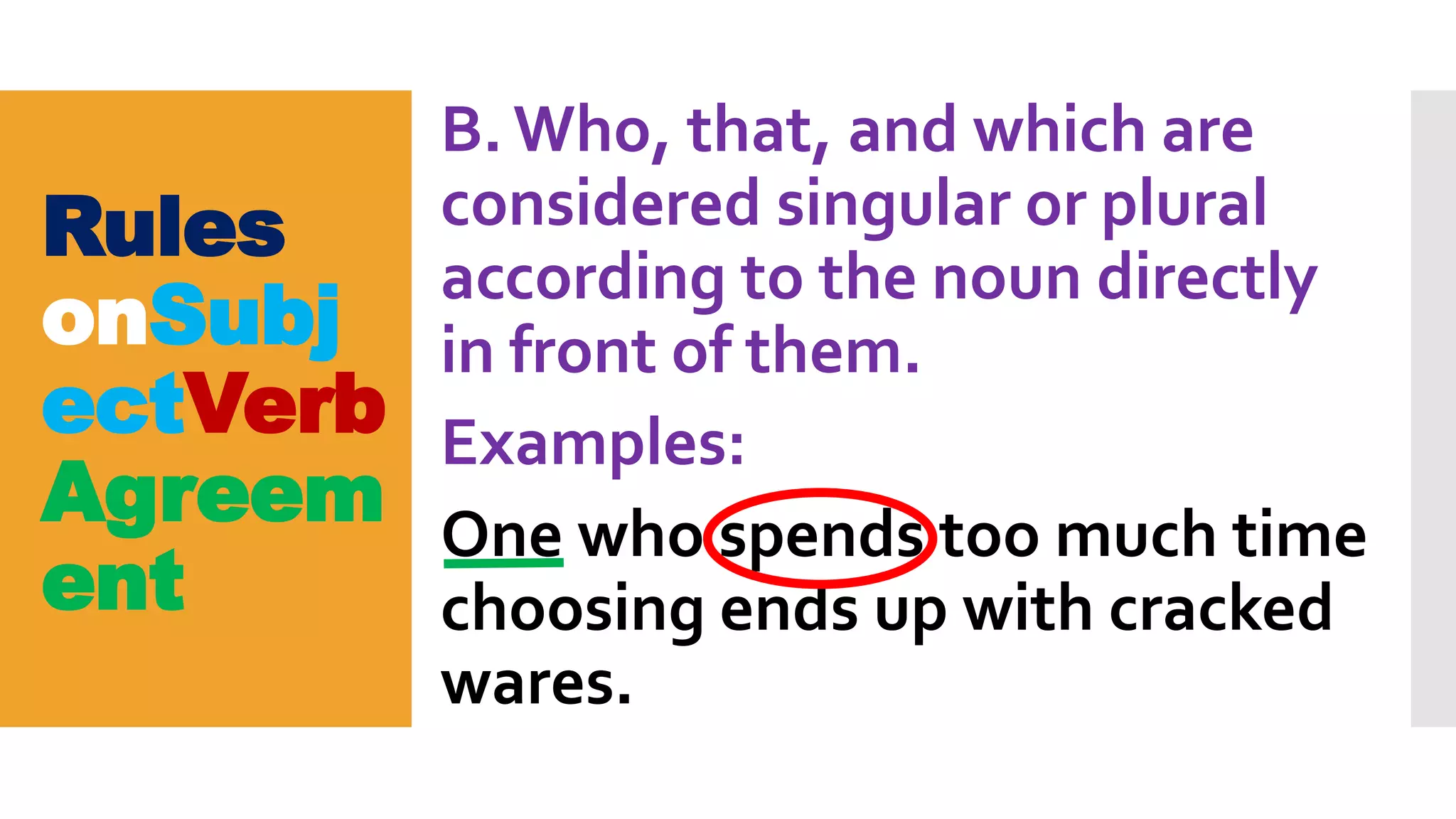
B. Who, that, and which are
considered singular or plural
according to the noun directly
in front of them.
Examples:
One who spends too much time
choosing ends up with cracked
wares.
Rules
onSubj
ectVerb
Agreem
ent
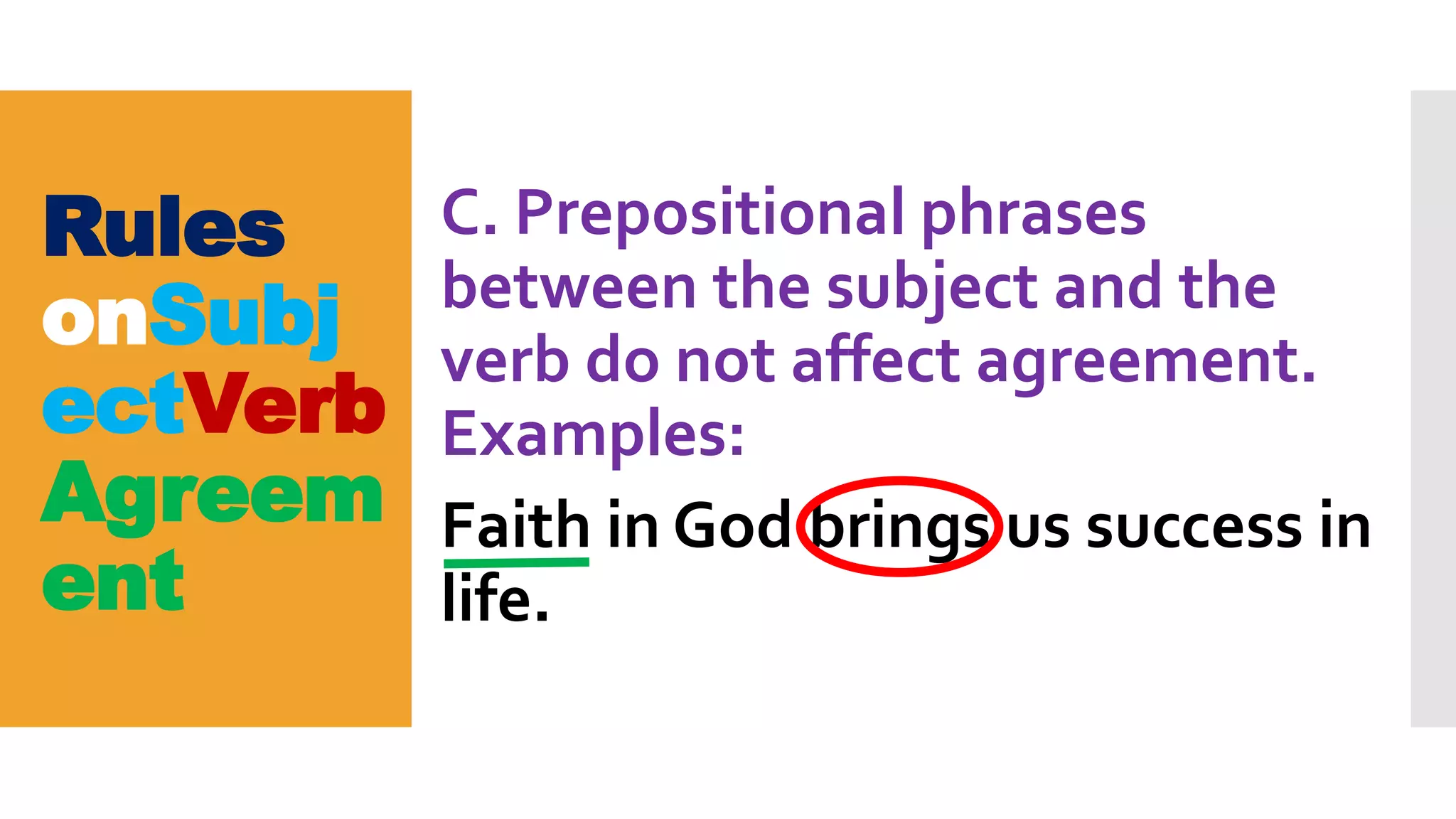
C. Prepositional phrases
between the subject and the
verb do not affect agreement.
Examples:
Faith in God brings us success in
life.
Subject-Verb
Agreement
Rules
onSubj
ectVerb
Agreem
ent
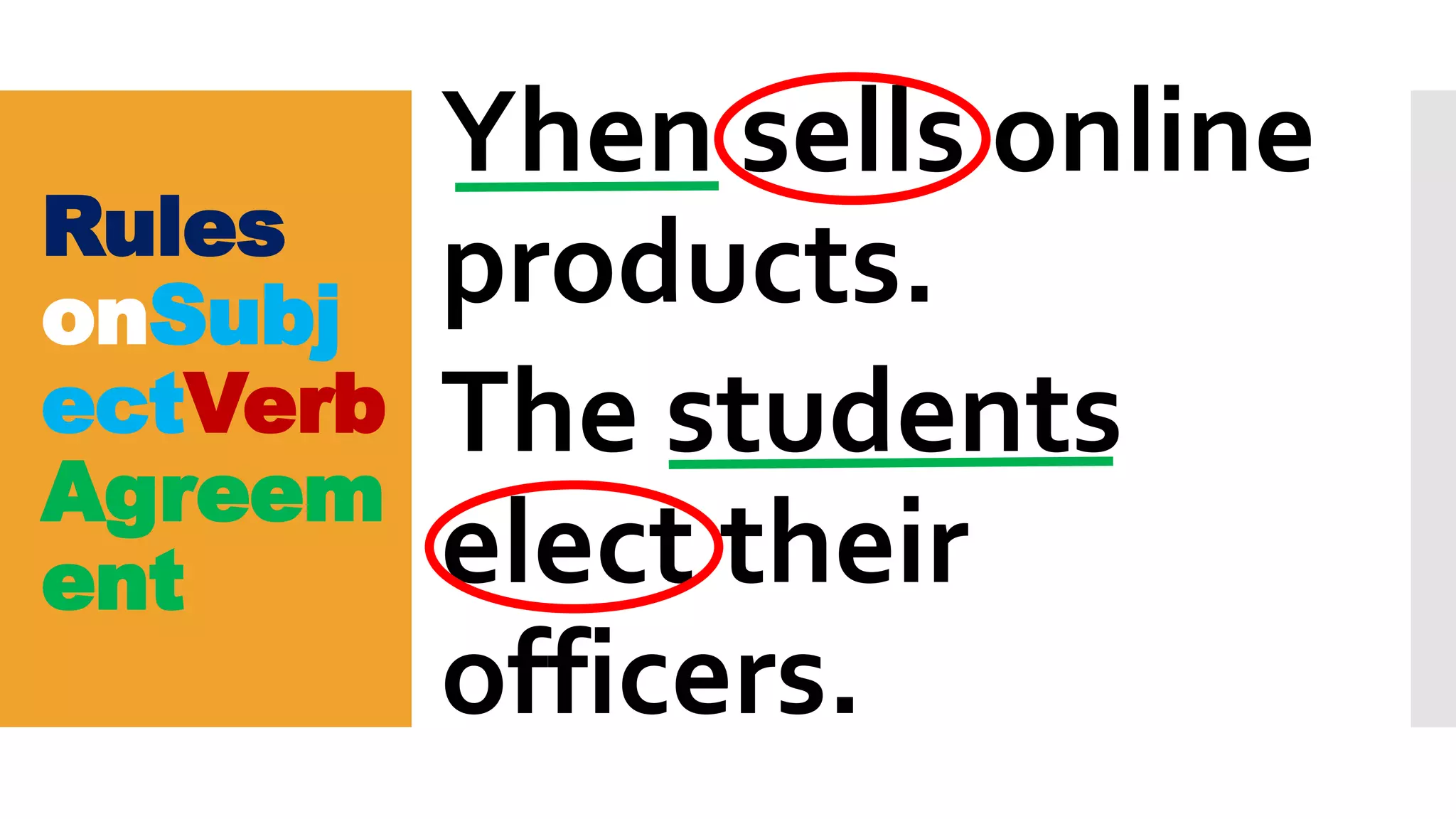
Yhen sells online
products.
The students
elect their
officers.
Rules
onSubj
ectVerb
Agreem
ent
Mary is a medical
student.
The senators are
expected to do
their duty.
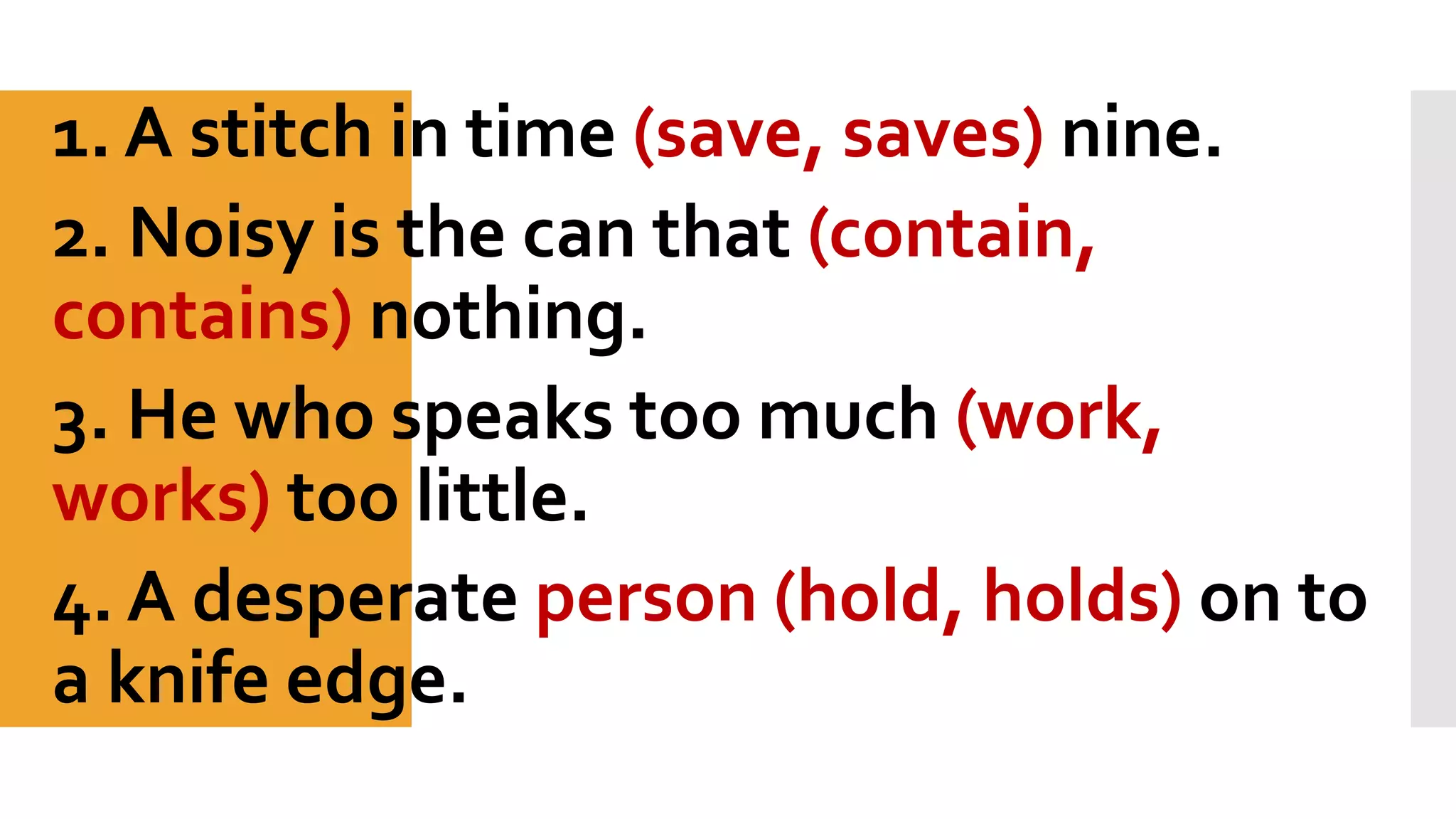
1. A stitch in time (save, saves) nine.
2. Noisy is the can that (contain,
contains) nothing.
3. He who speaks too much (work,
works) too little.
4. A desperate person (hold, holds) on to
a knife edge.
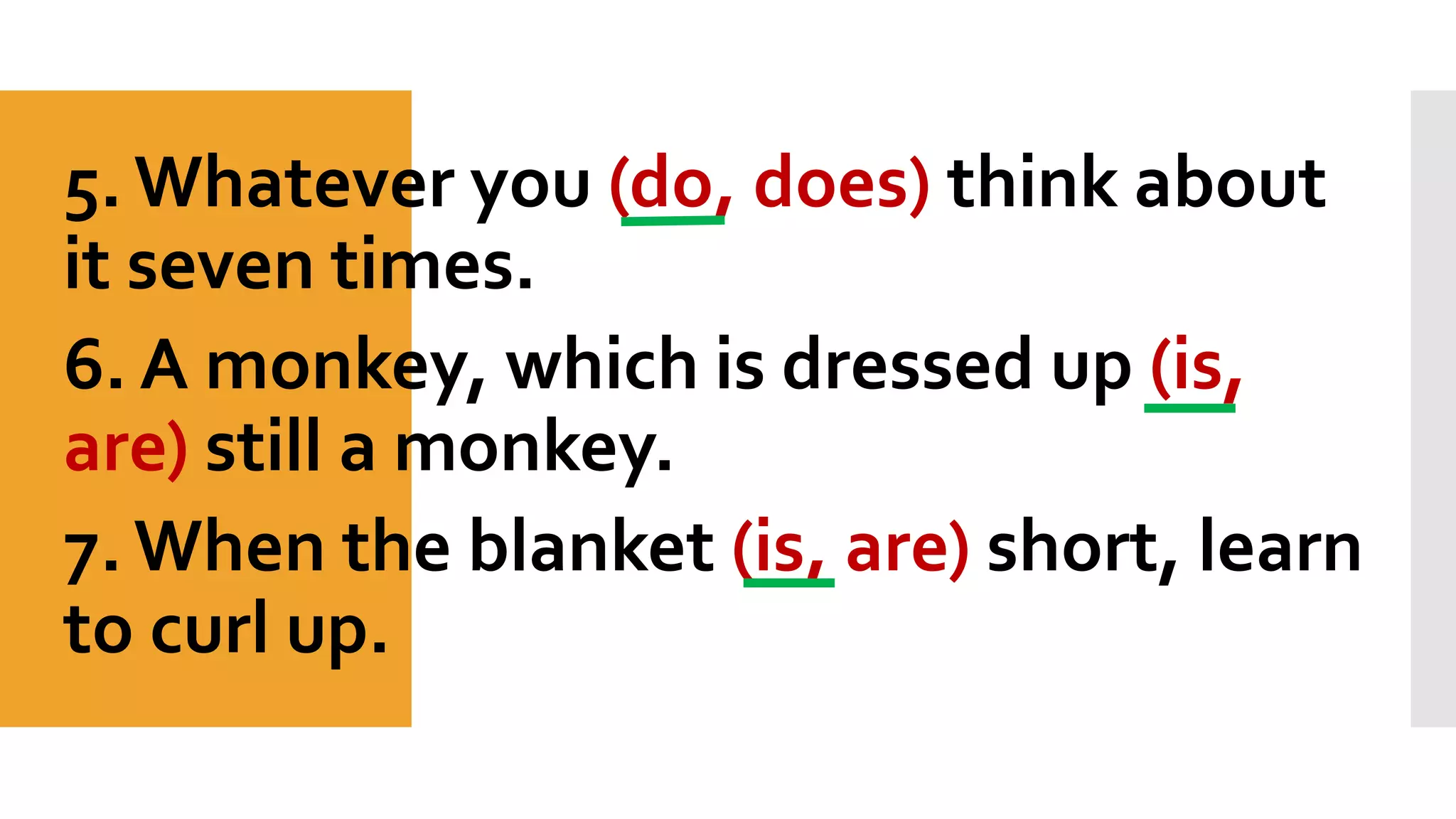
5. Whatever you (do, does) think about
it seven times.
6. A monkey, which is dressed up (is,
are) still a monkey.
7.When the blanket (is, are) short, learn
to curl up.
Let’s
Practice!
Task
13.2,
8. A person who is outwardly
calm (has, have) anger
raging inside his stomach.
9. He who does not love his
native language (is, are)
worse than a beast or rotten
fish.
Let’s
Practice!
Task
13.2,
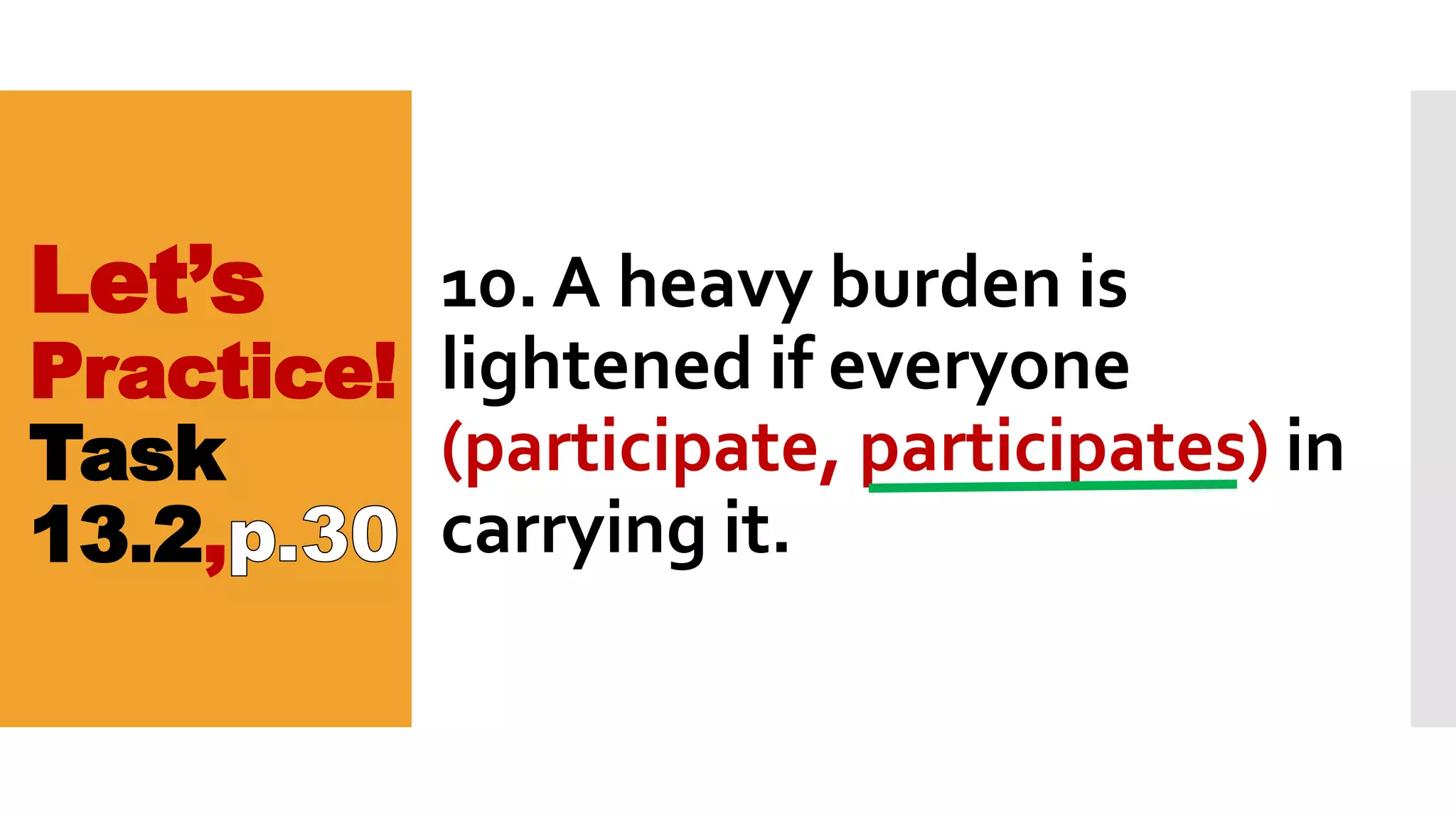
10. A heavy burden is
lightened if everyone
(participate, participates) in
carrying it.
1. A stitch in time (save, saves) nine.
2. Noisy is the can that (contain,
contains) nothing.
3. He who speaks too much (work,
works) too little.
4. A desperate person (hold, holds) on to
a knife edge.
5. Whatever you (do, does) think about
it seven times.
6. A monkey, which is dressed up (is,
are) still a monkey.
7.When the blanket (is, are) short, learn
to curl up.
Let’s
Practice!
Task
13.2,
8. A person who is outwardly
calm (has, have) anger
raging inside his stomach.
9. He who does not love his
native language (is, are)
worse than a beast or rotten
fish.
Let’s
Practice!
Task
13.2,
10. A heavy burden is
lightened if everyone
(participate, participates) in
carrying it.
On your
Own
Task
13.3,
output assignment
Read, copy, and
answer the paragraph
onTask 13.3, page 31
SHORT BOND PAPER
On your
Own
Task
13.3,
Barking Dogs Seldom Bite
We know that dogs (bark)
when they (see) strange people.
But dogs that (growl) rarely
(bite) strangers. So those who
(be) talkative (need) not be
always practical. They (be)
simply boasting. Containers…
bark
see
growl
bite
are need
are
On your
Own
Task
13.3,
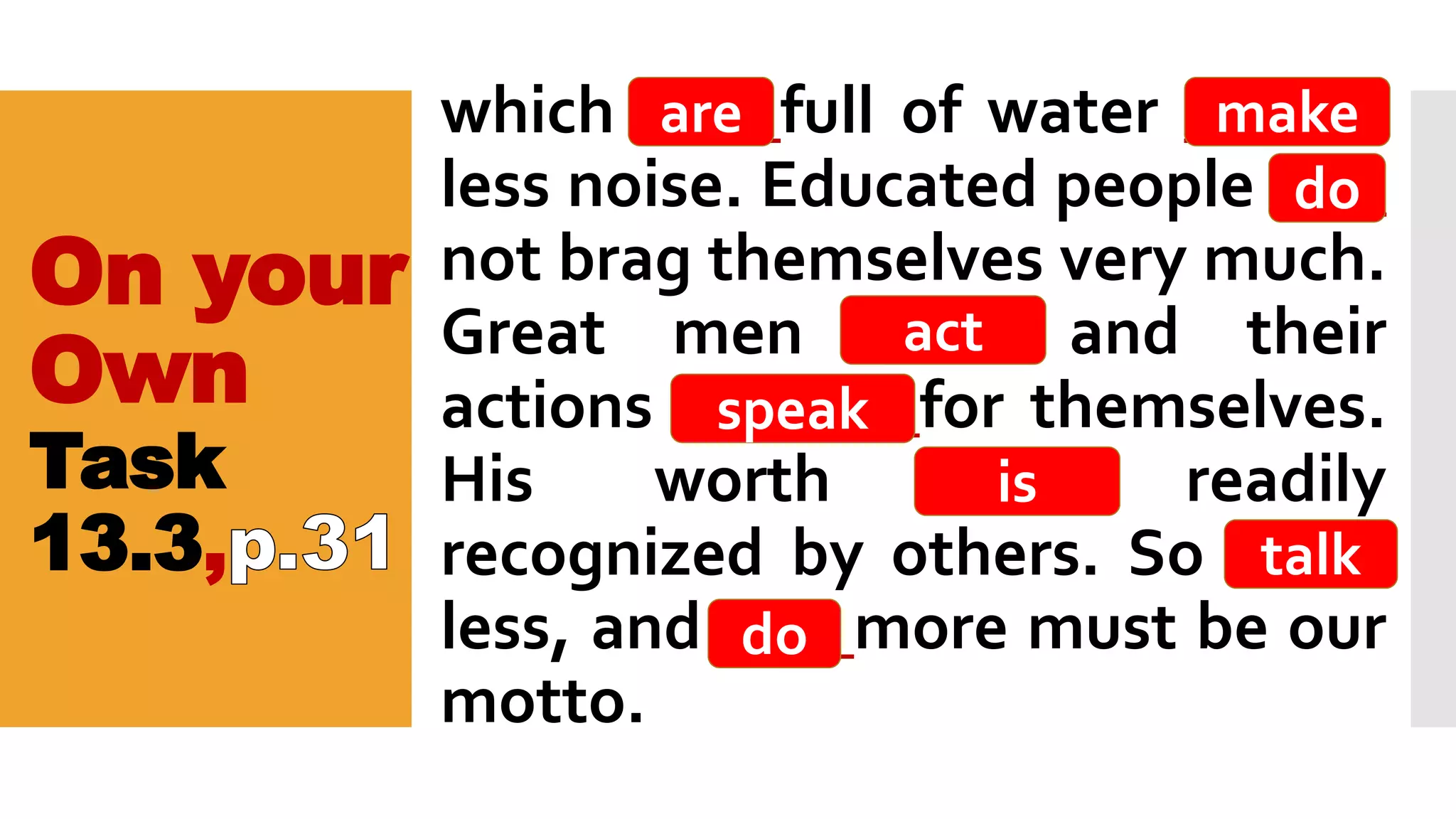
which (be) full of water (make)
less noise. Educated people (do)
not brag themselves very much.
Great men (act) and their
actions (speak) for themselves.
His worth (be) readily
recognized by others. So (talk)
less, and (do) more must be our
motto.
are make
do
act
speak
is
talk
do
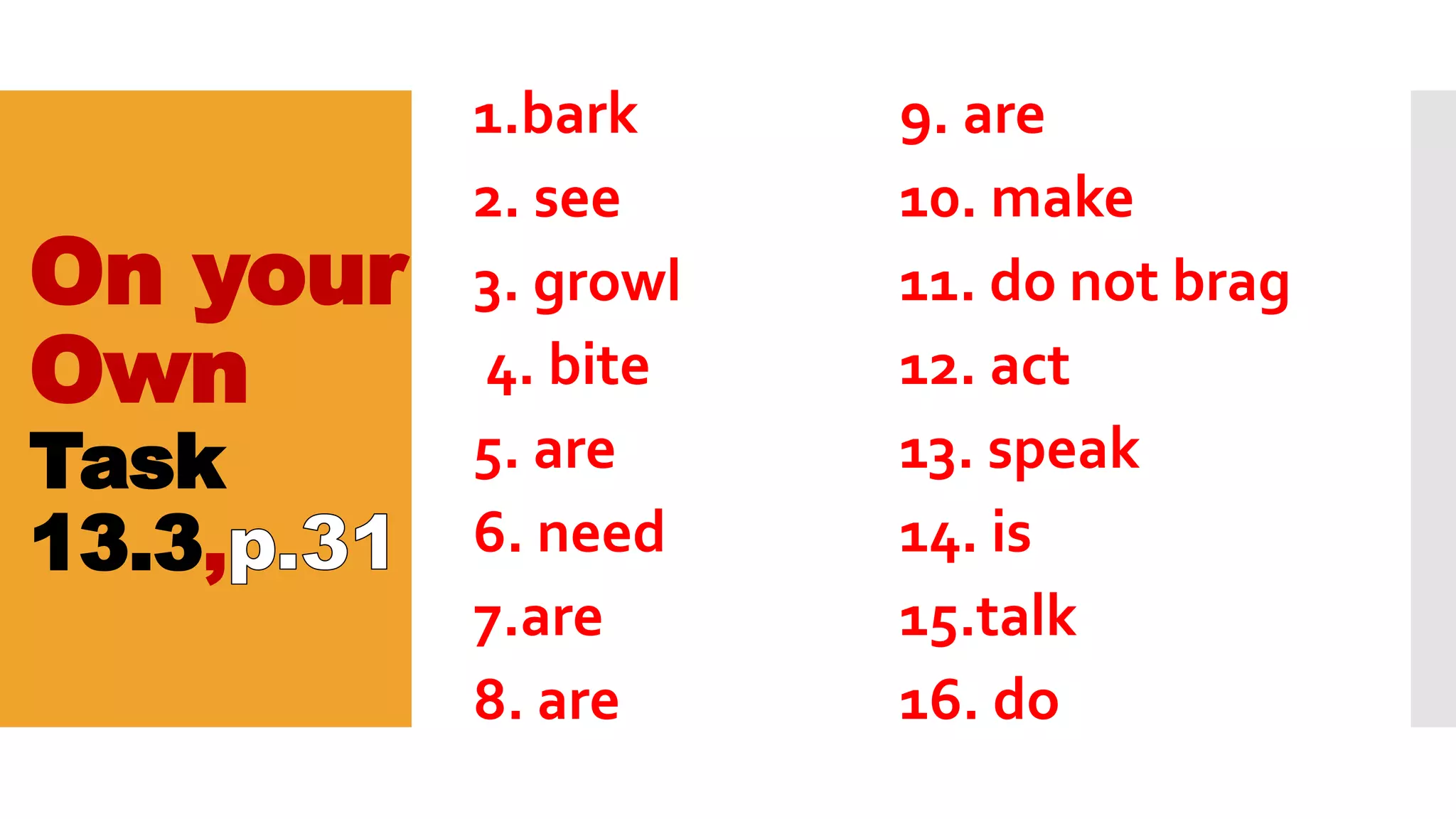
1.bark
2. see
3. growl
4. bite
5. are
6. need
7.are
8. are
9. are
10. make
11. do not brag
12. act
13. speak
14. is
15.talk
16. do
On your
Own
Task
13.3,
We’ve
reached
our
purpose!
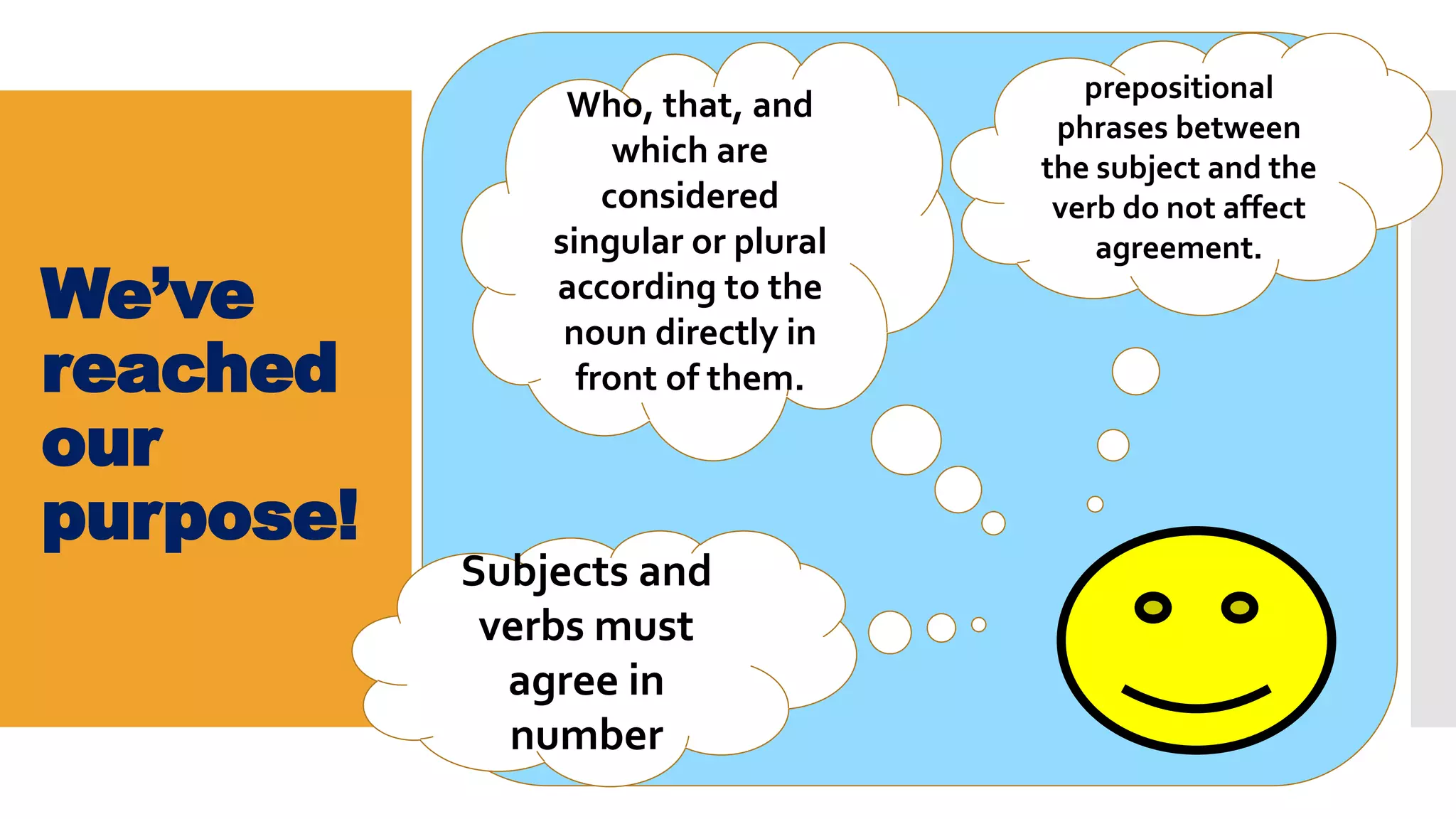
Subjects and
verbs must
agree in
number
prepositional
phrases between
the subject and the
verb do not affect
agreement.
Who, that, and
which are
considered
singular or plural
according to the
noun directly in
front of them.
Quiz #5
You can
make it!
Choose the
correct form of
verb to complete
the sentence.
Good
Luck!
1. Filipinos (is, are)
known to be
hospitable.
2. No debt (remain,
remains) unpaid.
3. He who (take,
takes) the last slice,
buys the next cake.
Try your
best!
4. Dedication to
work (is, are) one of
the components to
be successful.
5. In God there (is,
are) pity, the work
is with man.

Grade 7 Subject- Verb Agreement