BY: TORI KREUZ

Shifting Perspectives of Instructional Design
OLD MODEL
Evaluation determined before grading

Evaluation criteria clearly defined
Evaluation criteria matches objectives
IS THERE SUCH THING AS A GENERIC LEARNER? NO!

Top down, hierarchal model
Traditional thinking includes following an ordered linear process and
implementing a solution
This RARELY happens in real life learning.
PROVEN
The actual way that experts
problem solve is different
than this.
Research is all over the place.
Back and forth between
process and solution.
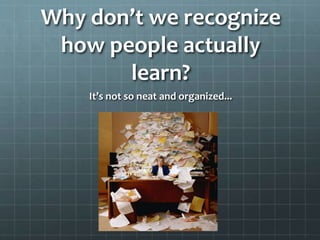
Why don’t we recognize
how people actually
learn?
It’s not so neat and organized...
Bransford
Research
Experts do not know
everything but they know
where they can find the
information they need.
They know how to learn about
a subject and solve a problem.
FLEXIBLE DESIGN MODEL
Designing for understanding  Open learning environments
Open Learning
Environment
Divergent thinking and
multiple perspectives
Not a food friend of
standardized tests
Personal inquiry,
experiences, hands on and
relevant problem solving

Externally imposed- poses
difficult problems and how
they pursue solutions are at
his or her discretion
Does NOT tell them how to
solve the problem, but
gives them the resources
and means
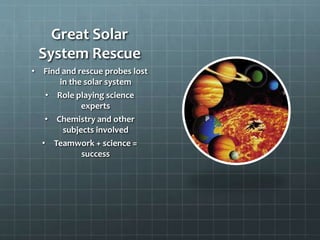
Great Solar
System Rescue
• Find and rescue probes lost
in the solar system
• Role playing science
experts
• Chemistry and other
subjects involved
• Teamwork + science =
success
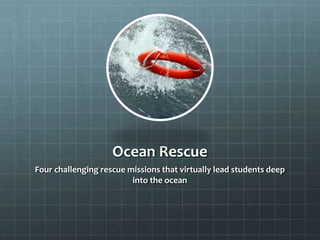
Ocean Rescue
Four challenging rescue missions that virtually lead students deep
into the ocean
More Open Learning
Environments
Externally induced – prompts generate problems to be solved

Jasper Woodbury problem solving series
Individually generated – personal interests establish unique learning needs
and strategies
Tools – elicit cognitive activities

Processing tools – seek, collect and organize data; search engines,
word processing, graphs
Manipulation tools – test validity of beliefs and theories;
simulations and spreadsheets
Communication tools – exchange of ideas among learners;
email, discussion groups
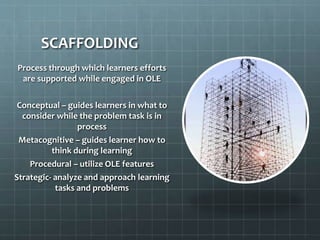
SCAFFOLDING
Process through which learners efforts
are supported while engaged in OLE
Conceptual – guides learners in what to
consider while the problem task is in
process
Metacognitive – guides learner how to
think during learning
Procedural – utilize OLE features
Strategic- analyze and approach learning
tasks and problems
Constructivist Learning Environment
Problem based learning
Learning defined by ill-defined problems
Goal to foster problem solving and conceptual development
Students learn domain TO tackle difficult problems
METHODS
1. Select appropriate
problem for learning
2. Ill-structured problem
– unstated goals,
multiple solutions,
and learners make
and defend
judgments about the
problem
3. Provide related cases
or worked examples

4. Provide learner with
selectable information

5. Provide conversation
and collaboration tools
6. Provide contextual
support  model, coach,
scaffold
HOW DO YOU LEARN
BEST IN LIFE?!
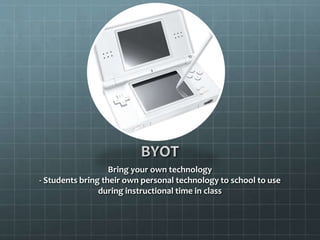
BYOT
Bring your own technology
- Students bring their own personal technology to school to use
during instructional time in class
Technology for
Instruction
Teachers encourage
students to take their
technology out in class that
they would usually try to
hide in their desks
Encourages participation
and interaction

Better communication with
the teacher

Increases responsibility of
devices
Points students in the right
direction, gives them the
tools they need, and they
can do so much more with
them

Parents were skeptical at
first but they have seen
positive results
RESOURCES
http://vimeo.com/51188559

http://dailynightly.nbcnews.com/_news/2012/05/06/115
67170-at-one-school-district-the-motto-is-byot-bringyour-own-technology?lite

Edp332 assignment 3.1

  • 1.
    BY: TORI KREUZ ShiftingPerspectives of Instructional Design
  • 2.
    OLD MODEL Evaluation determinedbefore grading Evaluation criteria clearly defined Evaluation criteria matches objectives IS THERE SUCH THING AS A GENERIC LEARNER? NO! Top down, hierarchal model Traditional thinking includes following an ordered linear process and implementing a solution This RARELY happens in real life learning.
  • 3.
    PROVEN The actual waythat experts problem solve is different than this. Research is all over the place. Back and forth between process and solution.
  • 4.
    Why don’t werecognize how people actually learn? It’s not so neat and organized...
  • 5.
    Bransford Research Experts do notknow everything but they know where they can find the information they need. They know how to learn about a subject and solve a problem.
  • 6.
    FLEXIBLE DESIGN MODEL Designingfor understanding  Open learning environments
  • 7.
    Open Learning Environment Divergent thinkingand multiple perspectives Not a food friend of standardized tests Personal inquiry, experiences, hands on and relevant problem solving Externally imposed- poses difficult problems and how they pursue solutions are at his or her discretion Does NOT tell them how to solve the problem, but gives them the resources and means
  • 8.
    Great Solar System Rescue •Find and rescue probes lost in the solar system • Role playing science experts • Chemistry and other subjects involved • Teamwork + science = success
  • 9.
    Ocean Rescue Four challengingrescue missions that virtually lead students deep into the ocean
  • 10.
    More Open Learning Environments Externallyinduced – prompts generate problems to be solved Jasper Woodbury problem solving series Individually generated – personal interests establish unique learning needs and strategies Tools – elicit cognitive activities Processing tools – seek, collect and organize data; search engines, word processing, graphs Manipulation tools – test validity of beliefs and theories; simulations and spreadsheets Communication tools – exchange of ideas among learners; email, discussion groups
  • 11.
    SCAFFOLDING Process through whichlearners efforts are supported while engaged in OLE Conceptual – guides learners in what to consider while the problem task is in process Metacognitive – guides learner how to think during learning Procedural – utilize OLE features Strategic- analyze and approach learning tasks and problems
  • 12.
    Constructivist Learning Environment Problembased learning Learning defined by ill-defined problems Goal to foster problem solving and conceptual development Students learn domain TO tackle difficult problems
  • 13.
    METHODS 1. Select appropriate problemfor learning 2. Ill-structured problem – unstated goals, multiple solutions, and learners make and defend judgments about the problem 3. Provide related cases or worked examples 4. Provide learner with selectable information 5. Provide conversation and collaboration tools 6. Provide contextual support  model, coach, scaffold
  • 14.
    HOW DO YOULEARN BEST IN LIFE?!
  • 15.
    BYOT Bring your owntechnology - Students bring their own personal technology to school to use during instructional time in class
  • 16.
    Technology for Instruction Teachers encourage studentsto take their technology out in class that they would usually try to hide in their desks Encourages participation and interaction Better communication with the teacher Increases responsibility of devices Points students in the right direction, gives them the tools they need, and they can do so much more with them Parents were skeptical at first but they have seen positive results
  • 17.