
Excellent Teaching: Action
Research
Jo Leaver-Cole
@joleavercole
What and why?
• Start to design your own action research in
‘effective pedagogy’ in a specific area
• Identify ways to use reflective practice to
inform your action research projects
• You will be able to lead and support action
research projects for yourself and as a group
• You develop your own reflective practice as
part of your everyday teaching and learning
What do you do?
• Choose a focus (sub-group & focus on either literacy or
differentiation)
• Decide what you want to focus on within that broader
area (e.g. improving students’ speaking/ listening/
vocabulary/engagement)
• Select how you will do this (e.g. observations, learning
walks, interviews etc.)
• Agree when you will do this (at least first observation
of each other)
• Identify what is effective for you
• Identify what is effective for your students
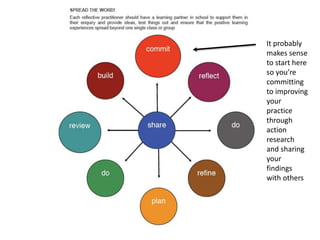
It probably
makes sense
to start here
so you’re
committing
to improving
your
practice
through
action
research
and sharing
your
findings
with others
How do you focus your ideas?
• What common themes can you identify?
• What impact do you want to see?
• How will you recognise this impact?
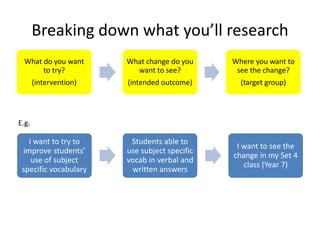
Breaking down what you’ll research
What do you want
to try?
(intervention)
What change do you
want to see?
(intended outcome)
Where you want to
see the change?
(target group)
I want to try to
improve students’
use of subject
specific vocabulary
Students able to
use subject specific
vocab in verbal and
written answers
I want to see the
change in my Set 4
class (Year 7)
E.g.
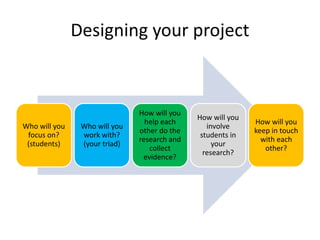
Designing your project
Who will you
focus on?
(students)
Who will you
work with?
(your triad)
How will you
help each
other do the
research and
collect
evidence?
How will you
involve
students in
your
research?
How will you
keep in touch
with each
other?
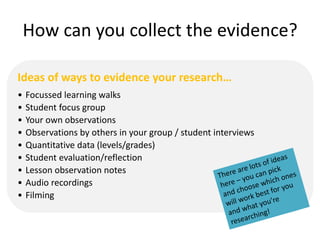
How can you collect the evidence?
Ideas of ways to evidence your research…
• Focussed learning walks
• Student focus group
• Your own observations
• Observations by others in your group / student interviews
• Quantitative data (levels/grades)
• Student evaluation/reflection
• Lesson observation notes
• Audio recordings
• Filming
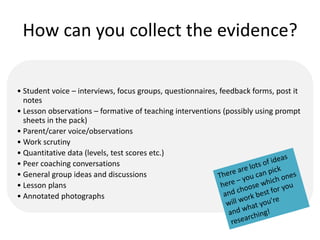
How can you collect the evidence?
• Student voice – interviews, focus groups, questionnaires, feedback forms, post it
notes
• Lesson observations – formative of teaching interventions (possibly using prompt
sheets in the pack)
• Parent/carer voice/observations
• Work scrutiny
• Quantitative data (levels, test scores etc.)
• Peer coaching conversations
• General group ideas and discussions
• Lesson plans
• Annotated photographs
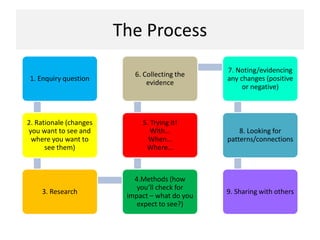
The Process
1. Enquiry question
2. Rationale (changes
you want to see and
where you want to
see them)
3. Research
4.Methods (how
you’ll check for
impact – what do you
expect to see?)
5. Trying it!
With…
When…
Where…
6. Collecting the
evidence
7. Noting/evidencing
any changes (positive
or negative)
8. Looking for
patterns/connections
9. Sharing with others
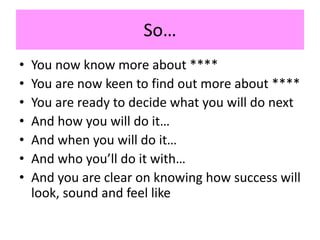
So…
• You now know more about ****
• You are now keen to find out more about ****
• You are ready to decide what you will do next
• And how you will do it…
• And when you will do it…
• And who you’ll do it with…
• And you are clear on knowing how success will
look, sound and feel like
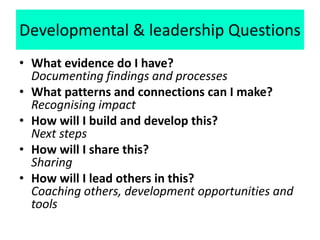
Developmental & leadership Questions
• What evidence do I have?
Documenting findings and processes
• What patterns and connections can I make?
Recognising impact
• How will I build and develop this?
Next steps
• How will I share this?
Sharing
• How will I lead others in this?
Coaching others, development opportunities and
tools
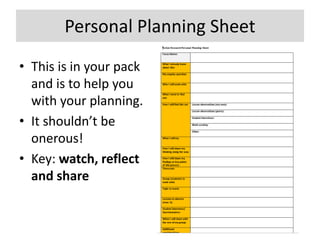
Personal Planning Sheet
• This is in your pack
and is to help you
with your planning.
• It shouldn’t be
onerous!
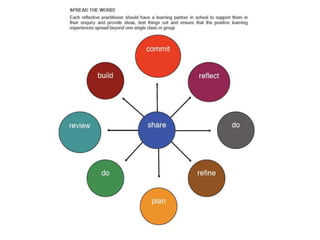
• Key: watch, reflect
and share
Excellent teaching through action research

Excellent teaching through action research

  • 1.
    Excellent Teaching: Action Research JoLeaver-Cole @joleavercole
  • 2.
    What and why? •Start to design your own action research in ‘effective pedagogy’ in a specific area • Identify ways to use reflective practice to inform your action research projects • You will be able to lead and support action research projects for yourself and as a group • You develop your own reflective practice as part of your everyday teaching and learning
  • 3.
    What do youdo? • Choose a focus (sub-group & focus on either literacy or differentiation) • Decide what you want to focus on within that broader area (e.g. improving students’ speaking/ listening/ vocabulary/engagement) • Select how you will do this (e.g. observations, learning walks, interviews etc.) • Agree when you will do this (at least first observation of each other) • Identify what is effective for you • Identify what is effective for your students
  • 4.
    It probably makes sense tostart here so you’re committing to improving your practice through action research and sharing your findings with others
  • 5.
    How do youfocus your ideas? • What common themes can you identify? • What impact do you want to see? • How will you recognise this impact?
  • 6.
    Breaking down whatyou’ll research What do you want to try? (intervention) What change do you want to see? (intended outcome) Where you want to see the change? (target group) I want to try to improve students’ use of subject specific vocabulary Students able to use subject specific vocab in verbal and written answers I want to see the change in my Set 4 class (Year 7) E.g.
  • 7.
    Designing your project Whowill you focus on? (students) Who will you work with? (your triad) How will you help each other do the research and collect evidence? How will you involve students in your research? How will you keep in touch with each other?
  • 8.
    How can youcollect the evidence? Ideas of ways to evidence your research… • Focussed learning walks • Student focus group • Your own observations • Observations by others in your group / student interviews • Quantitative data (levels/grades) • Student evaluation/reflection • Lesson observation notes • Audio recordings • Filming
  • 9.
    How can youcollect the evidence? • Student voice – interviews, focus groups, questionnaires, feedback forms, post it notes • Lesson observations – formative of teaching interventions (possibly using prompt sheets in the pack) • Parent/carer voice/observations • Work scrutiny • Quantitative data (levels, test scores etc.) • Peer coaching conversations • General group ideas and discussions • Lesson plans • Annotated photographs
  • 10.
    The Process 1. Enquiryquestion 2. Rationale (changes you want to see and where you want to see them) 3. Research 4.Methods (how you’ll check for impact – what do you expect to see?) 5. Trying it! With… When… Where… 6. Collecting the evidence 7. Noting/evidencing any changes (positive or negative) 8. Looking for patterns/connections 9. Sharing with others
  • 11.
    So… • You nowknow more about **** • You are now keen to find out more about **** • You are ready to decide what you will do next • And how you will do it… • And when you will do it… • And who you’ll do it with… • And you are clear on knowing how success will look, sound and feel like
  • 12.
    Developmental & leadershipQuestions • What evidence do I have? Documenting findings and processes • What patterns and connections can I make? Recognising impact • How will I build and develop this? Next steps • How will I share this? Sharing • How will I lead others in this? Coaching others, development opportunities and tools
  • 13.
    Personal Planning Sheet •This is in your pack and is to help you with your planning. • It shouldn’t be onerous! • Key: watch, reflect and share