ECOSYSTEMS Science Unit B Chapter 1
A system is a group of parts that work together as a unit. OPEN SYSTEMS Most systems are open systems.  They take in things from outside the system.  For example, a terrarium takes in energy from the sun. Why do plants need the sun’s energy? CLOSED SYSTEMS Very few systems are truly closed.  Most systems receive inputs and give off outputs. A diver in a submarine is in an almost completely closed system.
Explain if these systems are open or closed. An aquarium a forest a sports team your family an astronaunt on the Space Shuttle an automobile
Stability  Stability comes from the word stable. The suffix “ity” forms nouns from adjectives and means “the condition or quality of”. Stability in systems means that over time the changes in a system cancel each other out.  For example if something is added, it is later taken out. The system must remain in balance. How does the grass in your yard remain   stable?
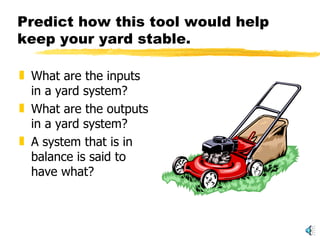
Predict how this tool would help keep your yard stable. What are the inputs in a yard system? What are the outputs in a yard system? A system that is in balance is said to have what?
Ecosystems Groups of living things and the environment they live in make up an ecosystem. Some ecosystems include forests, ponds, and streams. Explain how some organisms can live in different ecosystems.
TYPES OF ECOSYSTEMS POPULATIONS A group of the same species living in the same place at the same time is a population. Populations live in environments to which they are adapted. COMMUNITIES A community of an ecosystem is made up of all the populations that live in the same area. The plants and animals that live together depend on each other to survive.
ACTIVITY Organize charts that compare how your needs are met in your community to how plants’ and animals’ needs are met in their community.
ANALYZE THIS! Sometimes plants and animals are introduced into ecosystems that are not native to the ecosystem. Can you name a plant or animal that lives in an ecosystem that you are familiar with and is not native to that ecosystem? Predict what might happen if an animal from the jungle were introduced into a forest ecosystem.
NONLIVING PARTS OF AN ECOSYSTEM SUNLIGHT AIR TEMPERATURE SOIL WATER
LIVING THINGS IN ECOSYSTEMS HABITATS The environment that meets the needs of an organism is  called a habitat. Read the book “A House is a House for Me” and discuss the different habitats listed. NICHES A niche is an organism’s role or job in the environment. Name an organism from the forest environment and describe its niche in that environment.
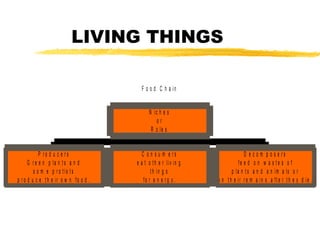
LIVING THINGS
SUMMARY An environment that meets the needs of an organism is called a habitat. An organism’s niche is its role within that habitat. As organisms carry out their roles, they can affect both living and nonliving parts of that ecosystem.

Ecosystems

  • 1.
  • 2.
    A system isa group of parts that work together as a unit. OPEN SYSTEMS Most systems are open systems. They take in things from outside the system. For example, a terrarium takes in energy from the sun. Why do plants need the sun’s energy? CLOSED SYSTEMS Very few systems are truly closed. Most systems receive inputs and give off outputs. A diver in a submarine is in an almost completely closed system.
  • 3.
    Explain if thesesystems are open or closed. An aquarium a forest a sports team your family an astronaunt on the Space Shuttle an automobile
  • 4.
    Stability Stabilitycomes from the word stable. The suffix “ity” forms nouns from adjectives and means “the condition or quality of”. Stability in systems means that over time the changes in a system cancel each other out. For example if something is added, it is later taken out. The system must remain in balance. How does the grass in your yard remain stable?
  • 5.
    Predict how thistool would help keep your yard stable. What are the inputs in a yard system? What are the outputs in a yard system? A system that is in balance is said to have what?
  • 6.
    Ecosystems Groups ofliving things and the environment they live in make up an ecosystem. Some ecosystems include forests, ponds, and streams. Explain how some organisms can live in different ecosystems.
  • 7.
    TYPES OF ECOSYSTEMSPOPULATIONS A group of the same species living in the same place at the same time is a population. Populations live in environments to which they are adapted. COMMUNITIES A community of an ecosystem is made up of all the populations that live in the same area. The plants and animals that live together depend on each other to survive.
  • 8.
    ACTIVITY Organize chartsthat compare how your needs are met in your community to how plants’ and animals’ needs are met in their community.
  • 9.
    ANALYZE THIS! Sometimesplants and animals are introduced into ecosystems that are not native to the ecosystem. Can you name a plant or animal that lives in an ecosystem that you are familiar with and is not native to that ecosystem? Predict what might happen if an animal from the jungle were introduced into a forest ecosystem.
  • 10.
    NONLIVING PARTS OFAN ECOSYSTEM SUNLIGHT AIR TEMPERATURE SOIL WATER
  • 11.
    LIVING THINGS INECOSYSTEMS HABITATS The environment that meets the needs of an organism is called a habitat. Read the book “A House is a House for Me” and discuss the different habitats listed. NICHES A niche is an organism’s role or job in the environment. Name an organism from the forest environment and describe its niche in that environment.
  • 12.
  • 13.
    SUMMARY An environmentthat meets the needs of an organism is called a habitat. An organism’s niche is its role within that habitat. As organisms carry out their roles, they can affect both living and nonliving parts of that ecosystem.