Download as PDF, PPTX

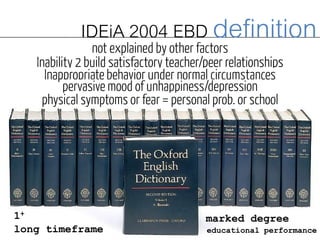


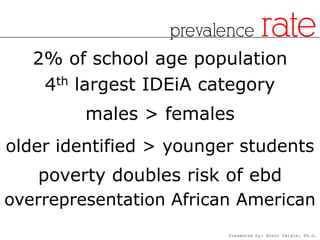
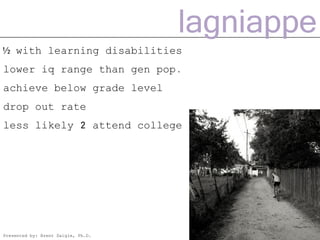
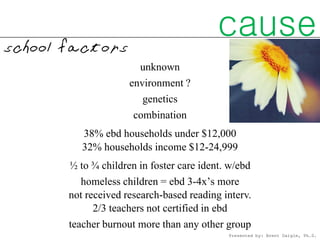

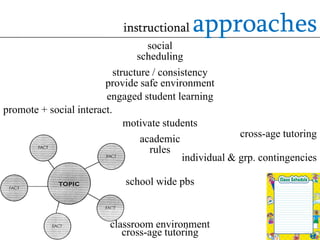


The document discusses emotional and behavioral disorders (EBD) in children as defined by IDEA 2004. It notes that EBD is identified by marked difficulties in educational performance over an extended period of time due to internalizing or externalizing behaviors. Around 2% of school-aged children have EBD, with males and older students more likely to be identified. Risk factors include poverty, learning disabilities, and unstable home environments. Effective identification and support of students with EBD requires multimodal assessment and the use of positive behavioral interventions and engaging instructional approaches.

![Intellectual disabilities 1[1]](https://cdn.slidesharecdn.com/ss_thumbnails/intellectualdisabilities-11-110214161652-phpapp01-thumbnail.jpg?width=640&height=640&fit=bounds)


