AKSHIMA AGARWAL 
ANSHUL GUPTA 
BHANUSHREE GOYAL 
CHINAY KHANDELWAL 
SHIVANI SRIVASTAVA 
SUKRITI NAMA 
VISHAL SINGH
• Travellers rarely travelled by air as the fare were much 
higher than those for road and rail travel. 
• Indian Airlines was the only player in the market before 
2002. 
• For the first time in history of airline industry ,efforts 
were made to make air travel affordable to large section 
of population, leading to unprecedented development in 
the commercial aviation industry in the country. 
•
Indian Scenario: 
Air Sahara and Jet Airways 
Jet Airways 
• Took off with four Boeing 737-300’s in April 1992 at Mumbai 
• 100% Subsidiary of Tailwinds Ltd, situated in Cayman island 
• Indian promoter, Naresh Goyal bought the entire stake, 
became sole owner 
Air Sahara 
• Started operation in 1993, between new Delhi and Mumbai 
sectors 
• By 2001, it expanded its flying routes to 12 sectors 
• Won many excellence award 
• Turnover of Rs. 3.5 billion in 2001
Indian Airlines 
• (Indian airlines limited from 1993 and Indian 
airlines corporations from 1953 to 1993) It 
was a major based in Delhi and focussed 
primarily on domestic routes along with 
several international services to neighbouring 
countries in Asia. 
• State owned and administered by Ministry of 
Civil Aviation
• June 2002: announced 3-15% cut 
in fares for all classes on the 
western sector. 
• Next day JA reduces its prices by Rs. 
635 for economy class on Mum- 
Nagpur & Mum-Goa route. 
Both Introduces APEX (Advance Purchase Excursion – book ticket in advance 
and get huge discount). IA- “U Can Fly”, JA- “Everyone Can Fly”. 
2 Disadvantages of APEX were: 
• Planning advance travel was not very convenient. 
• Cancellation charges were high (50% ticket price deducted if ticket 
cancelled less than 21 days). 
But still both Airlines were in profit.
March 2002: Launched ‘Wings & Wheels’ scheme in 4 metros: 
Scheme offered complementary A/C coach services for picking up passengers 
at designated points in the cities and dropping them at airport. They also 
offered add-ons like magazine, newspaper, soft drinks etc. 
July/August: Sahara went for a different approach – ‘Sixer’ Scheme (Limited 
Offer): 
Buy a six flight coupon ticket and fly any six sectors on the carrier’s network 
for Rs. 25,000 
August 2002: Most attracted scheme, ‘Steal a Seat’ – Online bid scheme. 
Base price was Re 1 (prior 25 days of flight). 
For unsuccessful bidders: Scheme ‘Steal Buys’, in which they could bid 24-15 
days in advance. Which worked out much cheaper than APEX fares. 
They also offered Delhi – Mumbai ticket @ Rs. 4000, bought between 15-19 
days in advance (prices of IA: 5,535 & JA: 5,404)
August 15th, 2002: IA launched ‘Wings of Freedom’ (valid from 
August 15 to March 31st, 2003) – 
Offered unlimited travel on the domestic network for 7 days, Rs. 
15,000 (economy class) & 20,000 (business class). 
IA increased the commission of its agent & offer incentives for most 
productive agents. 
They launched ‘Bharat Darshan’ from the passengers who bought 
tickets worth more than Rs. 80,000.
Price War 
• Price war is commercial competition characterized by the 
repeated cutting the prices below those of the competitors. 
One competitor will lower its price then other will lower their 
prices to match. 
• In short term price wars are good for buyers but not good for 
companies because the lower price is reduce the profit 
margin and threaten their survival. 
• In long term price wars can be good for the dominant form in 
the industry. 
• IA announced 3-15%cut in fares in June 2002 
• JA reduced prices by Rs.635 for economy class. 
• Sahara the smallest of the Big three was the most aggressive. 
Paid highest commission to its agents.
• The airline industry is very susceptible to changes in the political 
environment as it has a great bearing on the travel habits of its 
customers. 
• India’s recent political environment has been largely unstable 
due to international events & continued tension with Pakistan. 
• Another aspect is that in countries with high corruption levels 
like India, bribes have to be paid for every permit & license 
required.
Legal Factors affecting Aviation 
Industry in India 
• FDI Limits 
• Bilateral Treaties 
• Airlines acquisition and the leasing costs.
Economical factors affecting Aviation 
Industry in India 
• Contribution to the Indian Economy. 
• Rising cost of Fuel. 
• Investment in the sector of Aviation. 
• The growth of the middle income group family affects the 
Aviation sector.
Strategies to enhance 
market share and increase 
customer base in INDIAN 
AVIATION INDUSTRY
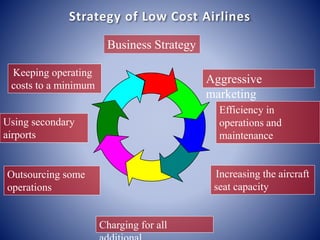
Strategy of Low Cost Airlines 
Business Strategy 
Aggressive 
marketing 
Efficiency in 
operations and 
maintenance 
Increasing the aircraft 
seat capacity 
Charging for all 
additional 
Keeping operating 
costs to a minimum 
Using secondary 
airports 
Outsourcing some 
operations
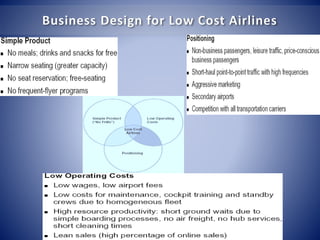
Business Design for Low Cost Airlines
Conclusion 
16 
• Remarkable growth in recent years in Indian aviation 
industry. 
• Bright future of Aviation industry in India. 
• Infrastructure Constraint. 
• Liberalise rules & regulations governing civil aviation. 
• Reduction in prices and lease rentals.

DOMESTIC AIRLINES IN INDIA-LEVERAGING PRICE

  • 1.
    AKSHIMA AGARWAL ANSHULGUPTA BHANUSHREE GOYAL CHINAY KHANDELWAL SHIVANI SRIVASTAVA SUKRITI NAMA VISHAL SINGH
  • 2.
    • Travellers rarelytravelled by air as the fare were much higher than those for road and rail travel. • Indian Airlines was the only player in the market before 2002. • For the first time in history of airline industry ,efforts were made to make air travel affordable to large section of population, leading to unprecedented development in the commercial aviation industry in the country. •
  • 3.
    Indian Scenario: AirSahara and Jet Airways Jet Airways • Took off with four Boeing 737-300’s in April 1992 at Mumbai • 100% Subsidiary of Tailwinds Ltd, situated in Cayman island • Indian promoter, Naresh Goyal bought the entire stake, became sole owner Air Sahara • Started operation in 1993, between new Delhi and Mumbai sectors • By 2001, it expanded its flying routes to 12 sectors • Won many excellence award • Turnover of Rs. 3.5 billion in 2001
  • 4.
    Indian Airlines •(Indian airlines limited from 1993 and Indian airlines corporations from 1953 to 1993) It was a major based in Delhi and focussed primarily on domestic routes along with several international services to neighbouring countries in Asia. • State owned and administered by Ministry of Civil Aviation
  • 5.
    • June 2002:announced 3-15% cut in fares for all classes on the western sector. • Next day JA reduces its prices by Rs. 635 for economy class on Mum- Nagpur & Mum-Goa route. Both Introduces APEX (Advance Purchase Excursion – book ticket in advance and get huge discount). IA- “U Can Fly”, JA- “Everyone Can Fly”. 2 Disadvantages of APEX were: • Planning advance travel was not very convenient. • Cancellation charges were high (50% ticket price deducted if ticket cancelled less than 21 days). But still both Airlines were in profit.
  • 6.
    March 2002: Launched‘Wings & Wheels’ scheme in 4 metros: Scheme offered complementary A/C coach services for picking up passengers at designated points in the cities and dropping them at airport. They also offered add-ons like magazine, newspaper, soft drinks etc. July/August: Sahara went for a different approach – ‘Sixer’ Scheme (Limited Offer): Buy a six flight coupon ticket and fly any six sectors on the carrier’s network for Rs. 25,000 August 2002: Most attracted scheme, ‘Steal a Seat’ – Online bid scheme. Base price was Re 1 (prior 25 days of flight). For unsuccessful bidders: Scheme ‘Steal Buys’, in which they could bid 24-15 days in advance. Which worked out much cheaper than APEX fares. They also offered Delhi – Mumbai ticket @ Rs. 4000, bought between 15-19 days in advance (prices of IA: 5,535 & JA: 5,404)
  • 7.
    August 15th, 2002:IA launched ‘Wings of Freedom’ (valid from August 15 to March 31st, 2003) – Offered unlimited travel on the domestic network for 7 days, Rs. 15,000 (economy class) & 20,000 (business class). IA increased the commission of its agent & offer incentives for most productive agents. They launched ‘Bharat Darshan’ from the passengers who bought tickets worth more than Rs. 80,000.
  • 8.
    Price War •Price war is commercial competition characterized by the repeated cutting the prices below those of the competitors. One competitor will lower its price then other will lower their prices to match. • In short term price wars are good for buyers but not good for companies because the lower price is reduce the profit margin and threaten their survival. • In long term price wars can be good for the dominant form in the industry. • IA announced 3-15%cut in fares in June 2002 • JA reduced prices by Rs.635 for economy class. • Sahara the smallest of the Big three was the most aggressive. Paid highest commission to its agents.
  • 10.
    • The airlineindustry is very susceptible to changes in the political environment as it has a great bearing on the travel habits of its customers. • India’s recent political environment has been largely unstable due to international events & continued tension with Pakistan. • Another aspect is that in countries with high corruption levels like India, bribes have to be paid for every permit & license required.
  • 11.
    Legal Factors affectingAviation Industry in India • FDI Limits • Bilateral Treaties • Airlines acquisition and the leasing costs.
  • 12.
    Economical factors affectingAviation Industry in India • Contribution to the Indian Economy. • Rising cost of Fuel. • Investment in the sector of Aviation. • The growth of the middle income group family affects the Aviation sector.
  • 13.
    Strategies to enhance market share and increase customer base in INDIAN AVIATION INDUSTRY
  • 14.
    Strategy of LowCost Airlines Business Strategy Aggressive marketing Efficiency in operations and maintenance Increasing the aircraft seat capacity Charging for all additional Keeping operating costs to a minimum Using secondary airports Outsourcing some operations
  • 15.
    Business Design forLow Cost Airlines
  • 16.
    Conclusion 16 •Remarkable growth in recent years in Indian aviation industry. • Bright future of Aviation industry in India. • Infrastructure Constraint. • Liberalise rules & regulations governing civil aviation. • Reduction in prices and lease rentals.