ECMO history ,indications ,
cannulation,complications
Dr.Khaled
Alhawri
Pediatric Cardiac
Surgeon
History of cardiopulmonary
support
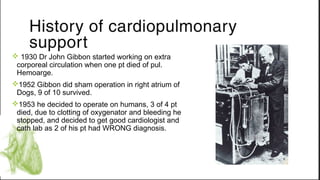
v 1930 Dr John Gibbon started working on extra
corporeal circulation when one pt died of pul.
Hemoarge.
v1952 Gibbon did sham operation in right atrium of
Dogs, 9 of 10 survived.
v1953 he decided to operate on humans, 3 of 4 pt
died, due to clotting of oxygenator and bleeding he
stopped, and decided to get good cardiologist and
cath lab as 2 of his pt had WRONG diagnosis.
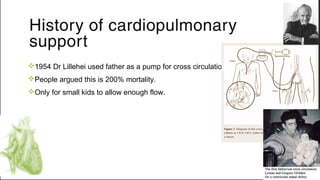
v1954 Dr Lillehei used father as a pump for cross circulation.
vPeople argued this is 200% mortality.
vOnly for small kids to allow enough flow.
History of cardiopulmonary
support
History of cardiopulmonary
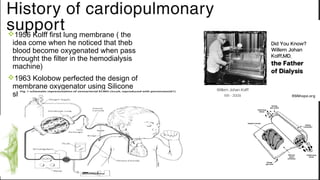
supportv1956 Kolff first lung membrane ( the
idea come when he noticed that theb
blood become oxygenated when pass
throught the filter in the hemodialysis
machine)
v1963 Kolobow perfected the design of
membrane oxygenator using Silicone
sheets
History of cardiopulmonary
support
v 1960s Trials studying ECMO started in USA for
ARDS but stopped as high mortality due to
uncontrolled bleeding, aggressive Pneumonia.
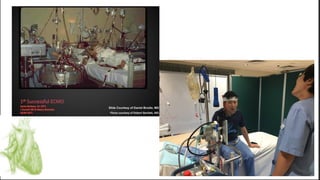
v1971 Hill ,first successful ECMO, pt post car
traffic accident with ruptured aorta. (not a good
candidate by today’s standards)
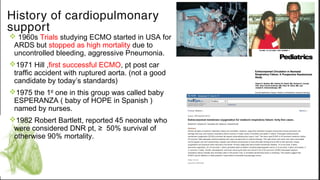
v1975 the 1st one in this group was called baby
ESPERANZA ( baby of HOPE in Spanish )
named by nurses.
v1982 Robert Bartlett, reported 45 neonate who
were considered DNR pt, ≥ 50% survival of
otherwise 90% mortality.
v1982 O’Rourke prospective randomized
controlled trial
v infants with severe persistent pulmonary
hypertension and respiratory failure who met
criteria for 85% likelihood of dying 
vThe trial was halted because:
v 4 of 10 babies in the CMT group died
v9 of 9 babies in the ECMO group survived
vThe next 20 pt 19 survived.
v
History of cardiopulmonary
support
v 1993 UK randomized controlled trial to
check the beneficial effect on survival to
1 year without severe disability
vTrial stopped because of the clear
advantage of ECMO
vTrial demonstrates the clinical
effectiveness of a well-staffed and
organised neonatal ECMO service
v1970 Baffes first reported ECMO for
cardiac surgery pt
v
History of cardiopulmonary
support
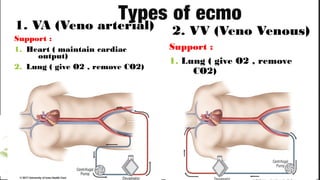
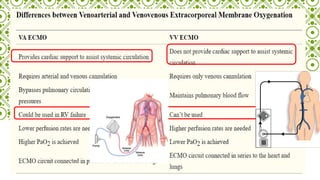
Types of ecmo1. VA (Veno arterial)
Support :
1. Heart ( maintain cardiac
output)
2. Lung ( give O2 , remove CO2)
2. VV (Veno Venous)
Support :
1. Lung ( give O2 , remove
CO2)
Indications of
ecmo
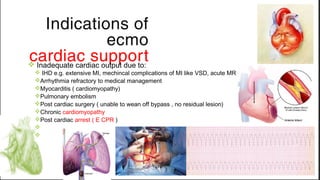
cardiac supportv Inadequate cardiac output due to:
v IHD e.g. extensive MI, mechincal complications of MI like VSD, acute MR
vArrhythmia refractory to medical management
vMyocarditis ( cardiomyopathy)
vPulmonary embolism
vPost cardiac surgery ( unable to wean off bypass , no residual lesion)
vChronic cardiomyopathy
vPost cardiac arrest ( E CPR )
v
v
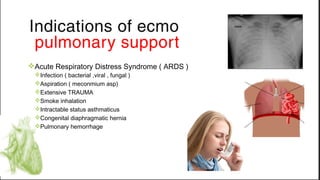
vAcute Respiratory Distress Syndrome ( ARDS )
vInfection ( bacterial ,viral , fungal )
vAspiration ( meconmium asp)
vExtensive TRAUMA
vSmoke inhalation
vIntractable status asthmaticus
vCongenital diaphragmatic hernia
vPulmonary hemorrhage
Indications of ecmo
pulmonary support
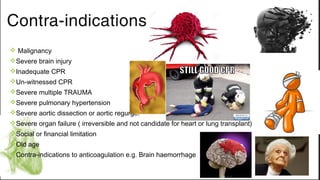
Contra-indications
v Malignancy
vSevere brain injury
vInadequate CPR
vUn-witnessed CPR
vSevere multiple TRAUMA
vSevere pulmonary hypertension
vSevere aortic dissection or aortic regurge.
vSevere organ failure ( irreversible and not candidate for heart or lung transplant)
vSocial or financial limitation
vOld age
vContra-indications to anticoagulation e.g. Brain haemorrhage
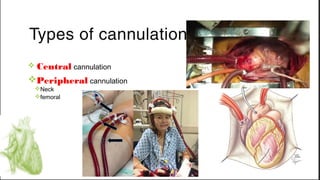
Types of cannulation
v Central cannulation
vPeripheral cannulation
vNeck
vfemoral
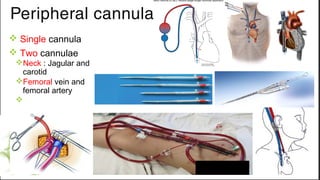
Peripheral cannulation
v Single cannula
v Two cannulae
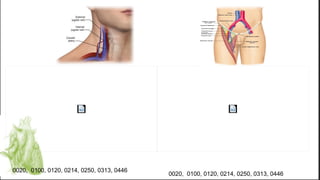
vNeck : Jagular and
carotid
vFemoral vein and
femoral artery
v
0020, 0100, 0120, 0214, 0250, 0313, 0446
0020, 0100, 0120, 0214, 0250, 0313, 0446
Ecmo history, indications, cannulation, complications

Ecmo history, indications, cannulation, complications

  • 1.
    ECMO history ,indications, cannulation,complications Dr.Khaled Alhawri Pediatric Cardiac Surgeon
  • 3.
    History of cardiopulmonary support v1930 Dr John Gibbon started working on extra corporeal circulation when one pt died of pul. Hemoarge. v1952 Gibbon did sham operation in right atrium of Dogs, 9 of 10 survived. v1953 he decided to operate on humans, 3 of 4 pt died, due to clotting of oxygenator and bleeding he stopped, and decided to get good cardiologist and cath lab as 2 of his pt had WRONG diagnosis.
  • 4.
    v1954 Dr Lilleheiused father as a pump for cross circulation. vPeople argued this is 200% mortality. vOnly for small kids to allow enough flow. History of cardiopulmonary support
  • 5.
    History of cardiopulmonary supportv1956Kolff first lung membrane ( the idea come when he noticed that theb blood become oxygenated when pass throught the filter in the hemodialysis machine) v1963 Kolobow perfected the design of membrane oxygenator using Silicone sheets
  • 7.
    History of cardiopulmonary support v1960s Trials studying ECMO started in USA for ARDS but stopped as high mortality due to uncontrolled bleeding, aggressive Pneumonia. v1971 Hill ,first successful ECMO, pt post car traffic accident with ruptured aorta. (not a good candidate by today’s standards) v1975 the 1st one in this group was called baby ESPERANZA ( baby of HOPE in Spanish ) named by nurses. v1982 Robert Bartlett, reported 45 neonate who were considered DNR pt, ≥ 50% survival of otherwise 90% mortality.
  • 8.
    v1982 O’Rourke prospectiverandomized controlled trial v infants with severe persistent pulmonary hypertension and respiratory failure who met criteria for 85% likelihood of dying  vThe trial was halted because: v 4 of 10 babies in the CMT group died v9 of 9 babies in the ECMO group survived vThe next 20 pt 19 survived. v History of cardiopulmonary support
  • 9.
    v 1993 UKrandomized controlled trial to check the beneficial effect on survival to 1 year without severe disability vTrial stopped because of the clear advantage of ECMO vTrial demonstrates the clinical effectiveness of a well-staffed and organised neonatal ECMO service v1970 Baffes first reported ECMO for cardiac surgery pt v History of cardiopulmonary support
  • 11.
    Types of ecmo1.VA (Veno arterial) Support : 1. Heart ( maintain cardiac output) 2. Lung ( give O2 , remove CO2) 2. VV (Veno Venous) Support : 1. Lung ( give O2 , remove CO2)
  • 13.
    Indications of ecmo cardiac supportvInadequate cardiac output due to: v IHD e.g. extensive MI, mechincal complications of MI like VSD, acute MR vArrhythmia refractory to medical management vMyocarditis ( cardiomyopathy) vPulmonary embolism vPost cardiac surgery ( unable to wean off bypass , no residual lesion) vChronic cardiomyopathy vPost cardiac arrest ( E CPR ) v v
  • 14.
    vAcute Respiratory DistressSyndrome ( ARDS ) vInfection ( bacterial ,viral , fungal ) vAspiration ( meconmium asp) vExtensive TRAUMA vSmoke inhalation vIntractable status asthmaticus vCongenital diaphragmatic hernia vPulmonary hemorrhage Indications of ecmo pulmonary support
  • 19.
    Contra-indications v Malignancy vSevere braininjury vInadequate CPR vUn-witnessed CPR vSevere multiple TRAUMA vSevere pulmonary hypertension vSevere aortic dissection or aortic regurge. vSevere organ failure ( irreversible and not candidate for heart or lung transplant) vSocial or financial limitation vOld age vContra-indications to anticoagulation e.g. Brain haemorrhage
  • 21.
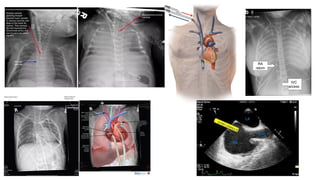
    Types of cannulation vCentral cannulation vPeripheral cannulation vNeck vfemoral
  • 22.
    Peripheral cannulation v Singlecannula v Two cannulae vNeck : Jagular and carotid vFemoral vein and femoral artery v
  • 23.
    0020, 0100, 0120,0214, 0250, 0313, 0446 0020, 0100, 0120, 0214, 0250, 0313, 0446