ECHO SOUNDING
RASHIK CHAND
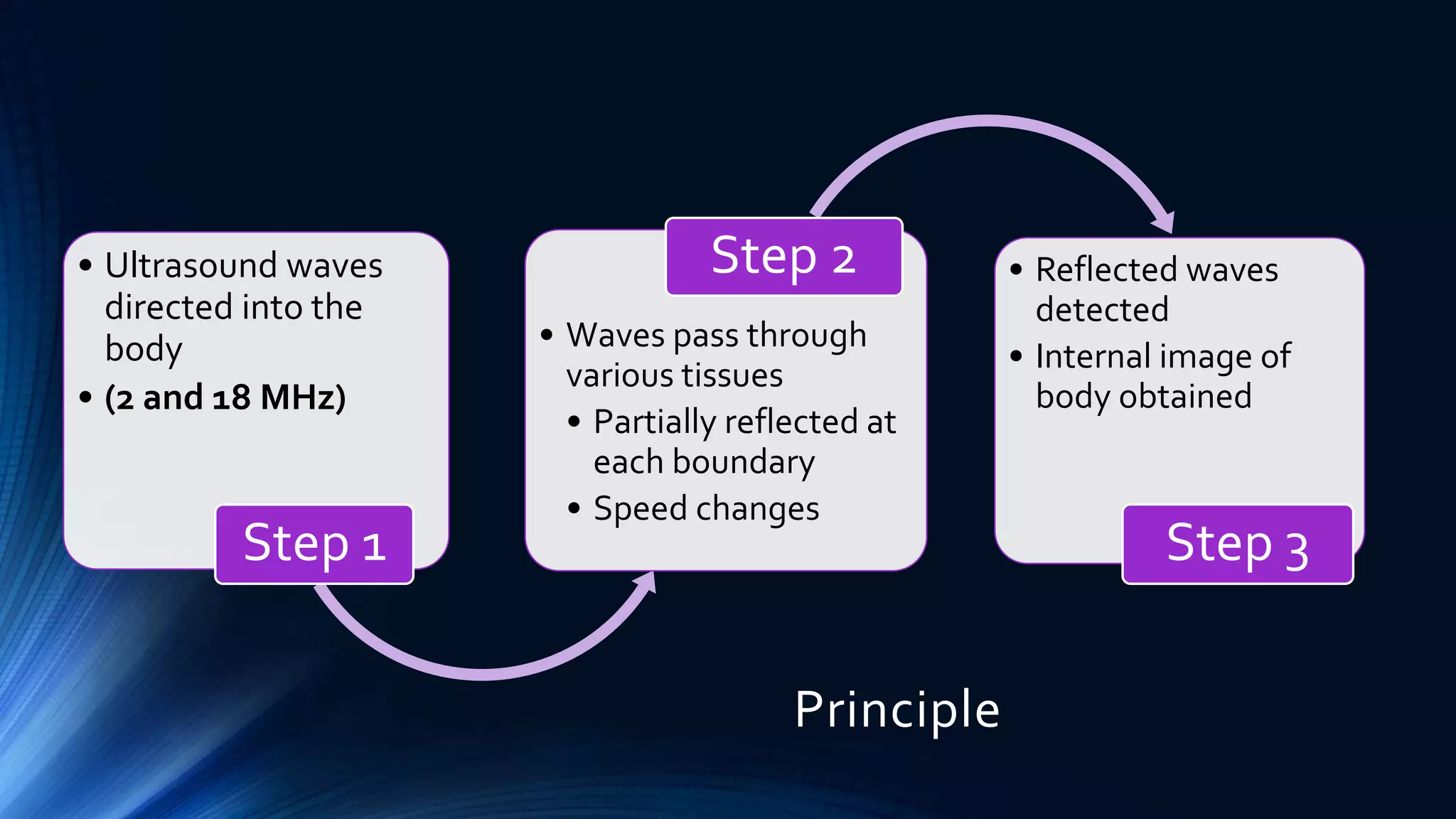
Principle
• Ultrasound waves
directed into the
body
• (2 and 18 MHz)
Step 1
• Waves pass through
various tissues
• Partially reflected at
each boundary
• Speed changes
Step 2 • Reflected waves
detected
• Internal image of
body obtained
Step 3
Frequency vs. Resolution
• The frequency also affects the QUALITY of the ultrasound
image
The HIGHER the frequency, the BETTER the
resolution
The LOWER the frequency, the LESS the resolution
• A 12 MHz transducer has very good resolution, but cannot
penetrate very deep into the body
• A 3 MHz transducer can penetrate deep into the body, but
the resolution is not as good as the 12 MHz
- Fraction of
incident intensity
that is reflected
- depends on
acoustic
impedance (Z)
Z = ρ*c
where, ρ is the density in kgm-3
c is speed of light in ms-1
ACOUSTIC IMPEDANCE
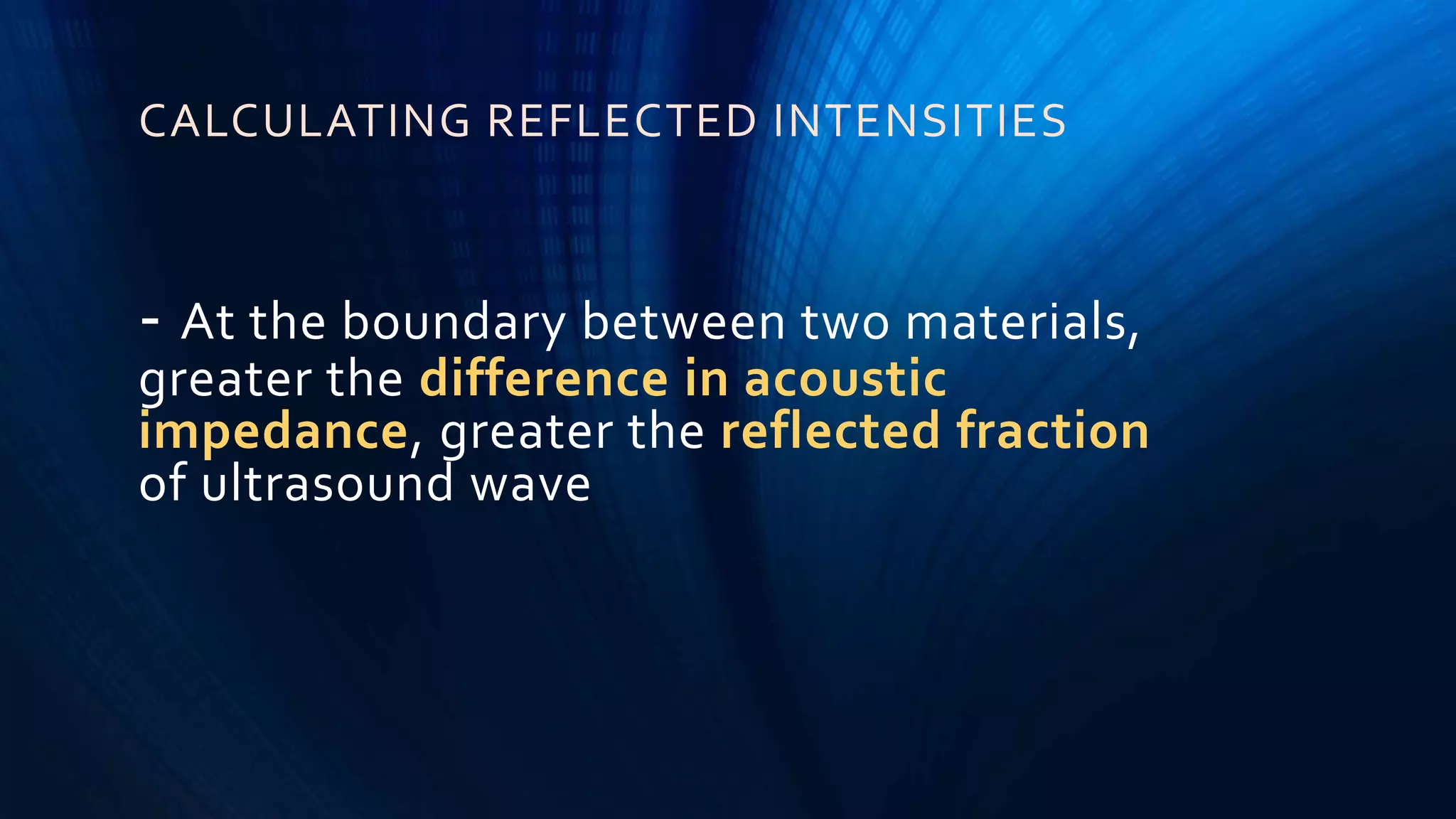
- At the boundary between two materials,
greater the difference in acoustic
impedance, greater the reflected fraction
of ultrasound wave
CALCULATING REFLECTED INTENSITIES
Intensity reflection coefficient (α)
FOR NORMAL INCIDENCE (I.E. ANGLE OF INCIDENCE = O⁰)
- A BIG CHANGE IN ACOUSTIC IMPEDANCE GIVES A LARGE
FRACTION OF REFLECTED INTENSITY
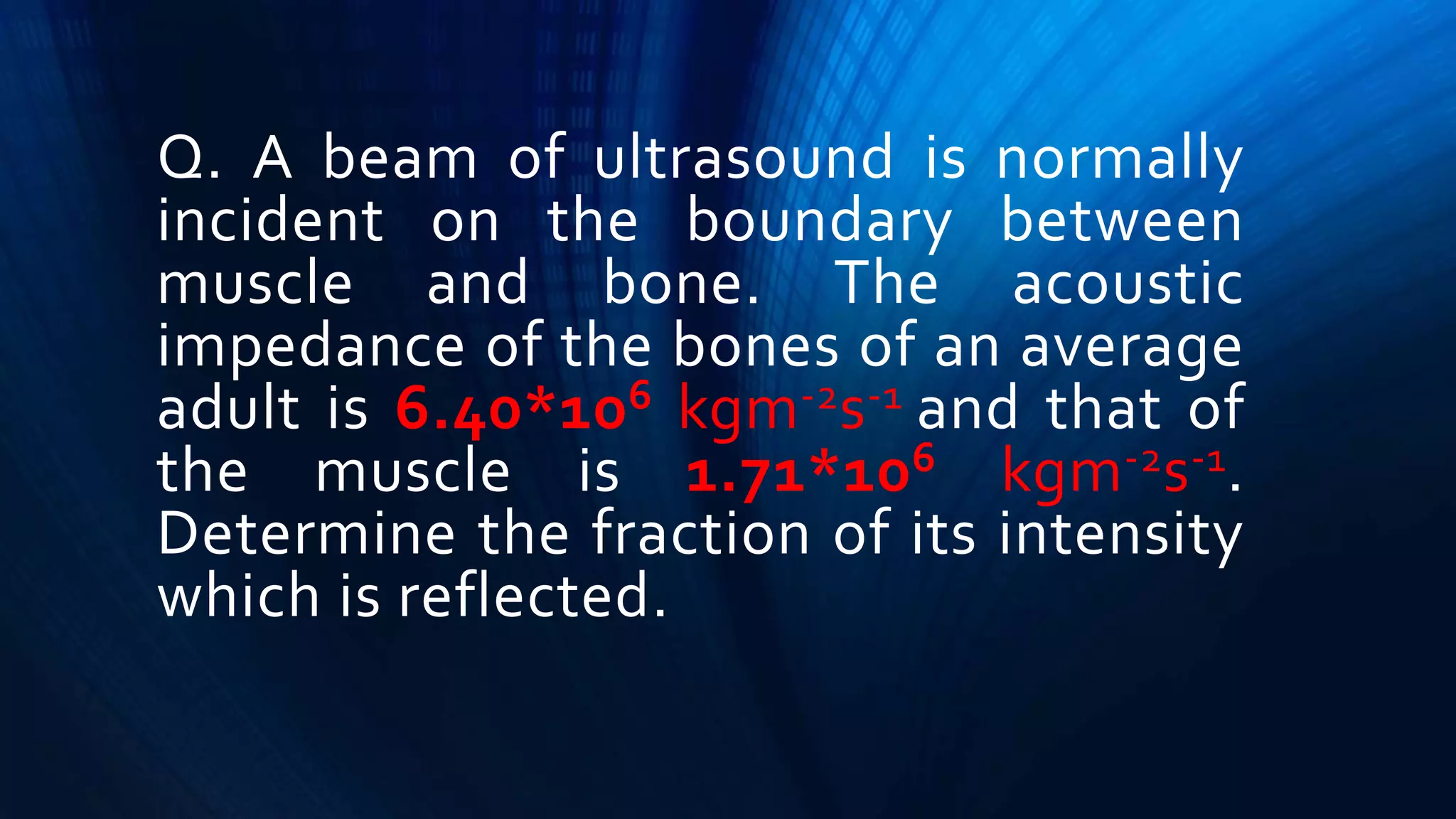
Q. A beam of ultrasound is normally
incident on the boundary between
muscle and bone. The acoustic
impedance of the bones of an average
adult is 6.40*106 kgm-2s-1 and that of
the muscle is 1.71*106 kgm-2s-1.
Determine the fraction of its intensity
which is reflected.

Echo sounding

  • 1.
  • 2.
    Principle • Ultrasound waves directedinto the body • (2 and 18 MHz) Step 1 • Waves pass through various tissues • Partially reflected at each boundary • Speed changes Step 2 • Reflected waves detected • Internal image of body obtained Step 3
  • 3.
    Frequency vs. Resolution •The frequency also affects the QUALITY of the ultrasound image The HIGHER the frequency, the BETTER the resolution The LOWER the frequency, the LESS the resolution • A 12 MHz transducer has very good resolution, but cannot penetrate very deep into the body • A 3 MHz transducer can penetrate deep into the body, but the resolution is not as good as the 12 MHz
  • 4.
    - Fraction of incidentintensity that is reflected - depends on acoustic impedance (Z)
  • 5.
    Z = ρ*c where,ρ is the density in kgm-3 c is speed of light in ms-1 ACOUSTIC IMPEDANCE
  • 6.
    - At theboundary between two materials, greater the difference in acoustic impedance, greater the reflected fraction of ultrasound wave CALCULATING REFLECTED INTENSITIES
  • 7.
    Intensity reflection coefficient(α) FOR NORMAL INCIDENCE (I.E. ANGLE OF INCIDENCE = O⁰) - A BIG CHANGE IN ACOUSTIC IMPEDANCE GIVES A LARGE FRACTION OF REFLECTED INTENSITY
  • 8.
    Q. A beamof ultrasound is normally incident on the boundary between muscle and bone. The acoustic impedance of the bones of an average adult is 6.40*106 kgm-2s-1 and that of the muscle is 1.71*106 kgm-2s-1. Determine the fraction of its intensity which is reflected.