






Psychiatry department
Beni Suef University
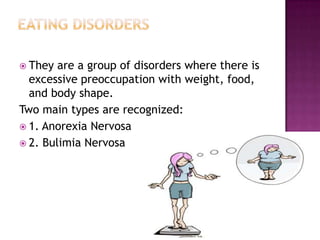
 They

are a group of disorders where there is
excessive preoccupation with weight, food,
and body shape.
Two main types are recognized:
 1. Anorexia Nervosa
 2. Bulimia Nervosa
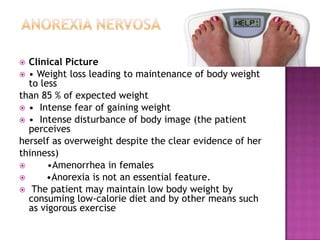
Clinical Picture
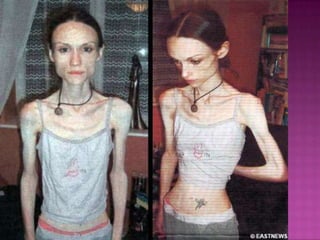
 • Weight loss leading to maintenance of body weight
to less
than 85 % of expected weight
 • Intense fear of gaining weight
 • Intense disturbance of body image (the patient
perceives
herself as overweight despite the clear evidence of her
thinness)

•Amenorrhea in females

•Anorexia is not an essential feature.
 The patient may maintain low body weight by
consuming low-calorie diet and by other means such
as vigorous exercise

•

Amenorrhea, sometimes early
 • Change in the quality of hair, nails and skin
 • Constipation or diarrhea
 • Dizziness or fainting
 • Decreased blood pressure, temperature or
pulse rate
•

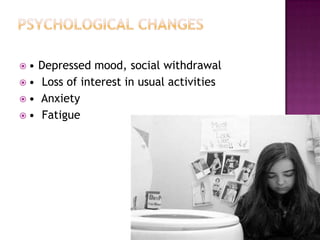
Depressed mood, social withdrawal
 • Loss of interest in usual activities
 • Anxiety
 • Fatigue
 They

are due to chronic severe malnutrition and
marked reduction in caloric intake.
They include the following:
 •Cardiological: loss of cardiac muscle,
arrhythmias,
 prolonged QT interval, bradycardia, sudden
death
 • Hepatic: fatty degeneration
•

Skeletal: osteoporosis
 • Hematological: anemia, leucopenia
 • Endocrine: low T3, LH and FSH
 • Electrolytes: hypokalemia, hypomagnesaemia
 • Nervous: neuropathies, cognitive impairment,
seizures
 Mortality
•

Females are 10-20 times more
frequently affected than males
• 0.5-1 % of female adolescents, 5 %
have subclinical forms
• Age at onset is in the early
adolescence, it may be delayed till
the early 20's
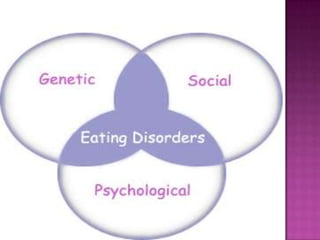
 1.

Biological Factors
 2. Social Factors
 3. Psychodynamic Factors
 Fears concerning acquisition of feminine shape
of body
 •Self-discipline over eating is an attempt to
gain autonomy due to inability to get separated
from the mother
 • An attempt to draw attention
•
•
•
•

•

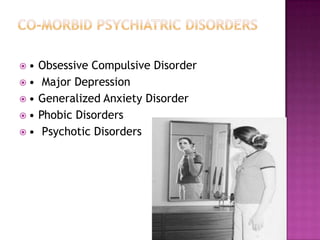
Obsessive Compulsive Disorder
Major Depression
Generalized Anxiety Disorder
Phobic Disorders
Psychotic Disorders
 Ten-year

outcome study in the United States:
 • 25 % complete recovery
 • 50 % improve, functioning well with
residual symptoms
 " 25 % functioning poorly, including 7 %
mortality rate
 It

is generally difficult.
 Hospitalization (marked weight loss
and with medical complications).
 Full medical assessment is essential.
 cognitive behavioral psychotherapy
 pharmacotherapy (antidepressants,
anxiolytics and antipsychotics)
Clinical Picture
 • Recurrent episodes of binge-eating + lack of
control over eating
 • At least twice a week for 3 months
 • Recurrent, inappropriate compensatory
behavior to prevent weight gain, such as the use
of purgatives, laxatives or self-induced
vomiting
 • Body shape and weight unduly influence selfevaluation and self-esteem
 • The patient is within normal weight

 Clinical

picture
 Behavioral changes
 Medical complications
 Social problems
 Behavioral

Changes
 • Secretive behavior (hiding food, spending
long periods in the bathroom)
 • Restrictive meal patterns or over-concern
with dieting and nutrition but with little
change in weight
 Physical

Changes
 • Loss of dental enamel as a result of
recurrent vomiting
 • Dehydration, fatigue, swollen salivary
glands
 • Esophageal or gastric tears
 • Side effects of emetics, diuretics or
purgatives
 Medical

Complications
 • Gastro-esophageal bleeding
 • Cardiac complications (e.g. arrhythmia)
 • Muscle cramping due to electrolyte
imbalance
 • Renal failure
 Social

Problems
 Social isolation
 Impairment in family relationships as a result
of concealment and lying
•

Much higher prevalence in females
 • The prevalence of bulimia nervosa is
between 3-5% of young women, four
times more common than anorexia
nervosa
 • 40 % of college-aged women have
bulimic symptoms
 • Usually starts in late adolescence or
early adulthood (later than anorexia
nervosa)
 1.

Biological Factors
 2. Social Factors
 3. Psychodynamic Factors
1. Biological Factors
 The beneficial effect of antidepressants points
the
 potential role of serotonin and norepinephrine
 2. Social Factors
 •Patients are high achievers and respond to
societal pressures to be slim
 • Families are less close, but more conflictual
than those of
 anorexia nervosa
 • Parents are neglectful and rejecting

 3.

Psychodynamic Factors
 • patients exert self-discipline over eating in an
attempt to gain autonomy from the mother, but
they are more out-going, angry and impulsive.
 This leads to bouts of binge-eating.
 • They have other behaviors characteristic of
weakened impulse control, such as substance
abuse, self-destructive sexual relationships, and
shoplifting.
 • Binge-eating is experienced as ego-dystonic
•

Depression (30-70% lifetime rate)
• Generalized Anxiety (30-70%
lifetime rate)
• High rates of other anxiety
disorders and panic disorder
• Deliberate self harm, e.g.,
reckless driving, self-injury, suicide,
etc...
• Alcohol and substance misuse
•

The long-term outcome of bulimia
nervosa is still under study.
 • Without treatment, the disorder
usually persists for at least several
years, with a waxing and waning
course.
 • Up to 70% benefit from ttt
 full recovery is achieved in 50 % of
cases.
 • Mortality is approximately 1% due to
medical complications and suicide.
•

Cognitive-Behavioral Therapy
 • Group Therapy
 • Family Therapy
 • Pharmacotherapy: antidepressants, in
particular SSRIs, are very useful
Eating disorder

Eating disorder

  • 1.
  • 2.
     They are agroup of disorders where there is excessive preoccupation with weight, food, and body shape. Two main types are recognized:  1. Anorexia Nervosa  2. Bulimia Nervosa
  • 4.
    Clinical Picture  •Weight loss leading to maintenance of body weight to less than 85 % of expected weight  • Intense fear of gaining weight  • Intense disturbance of body image (the patient perceives herself as overweight despite the clear evidence of her thinness)  •Amenorrhea in females  •Anorexia is not an essential feature.  The patient may maintain low body weight by consuming low-calorie diet and by other means such as vigorous exercise 
  • 5.
    • Amenorrhea, sometimes early • Change in the quality of hair, nails and skin  • Constipation or diarrhea  • Dizziness or fainting  • Decreased blood pressure, temperature or pulse rate
  • 7.
    • Depressed mood, socialwithdrawal  • Loss of interest in usual activities  • Anxiety  • Fatigue
  • 8.
     They are dueto chronic severe malnutrition and marked reduction in caloric intake. They include the following:  •Cardiological: loss of cardiac muscle, arrhythmias,  prolonged QT interval, bradycardia, sudden death  • Hepatic: fatty degeneration
  • 10.
    • Skeletal: osteoporosis  •Hematological: anemia, leucopenia  • Endocrine: low T3, LH and FSH  • Electrolytes: hypokalemia, hypomagnesaemia  • Nervous: neuropathies, cognitive impairment, seizures  Mortality
  • 12.
    • Females are 10-20times more frequently affected than males • 0.5-1 % of female adolescents, 5 % have subclinical forms • Age at onset is in the early adolescence, it may be delayed till the early 20's
  • 13.
     1. Biological Factors 2. Social Factors  3. Psychodynamic Factors  Fears concerning acquisition of feminine shape of body  •Self-discipline over eating is an attempt to gain autonomy due to inability to get separated from the mother  • An attempt to draw attention
  • 15.
    • • • • • Obsessive Compulsive Disorder MajorDepression Generalized Anxiety Disorder Phobic Disorders Psychotic Disorders
  • 16.
     Ten-year outcome studyin the United States:  • 25 % complete recovery  • 50 % improve, functioning well with residual symptoms  " 25 % functioning poorly, including 7 % mortality rate
  • 17.
     It is generallydifficult.  Hospitalization (marked weight loss and with medical complications).  Full medical assessment is essential.  cognitive behavioral psychotherapy  pharmacotherapy (antidepressants, anxiolytics and antipsychotics)
  • 18.
    Clinical Picture  •Recurrent episodes of binge-eating + lack of control over eating  • At least twice a week for 3 months  • Recurrent, inappropriate compensatory behavior to prevent weight gain, such as the use of purgatives, laxatives or self-induced vomiting  • Body shape and weight unduly influence selfevaluation and self-esteem  • The patient is within normal weight 
  • 19.
     Clinical picture  Behavioralchanges  Medical complications  Social problems
  • 20.
     Behavioral Changes  •Secretive behavior (hiding food, spending long periods in the bathroom)  • Restrictive meal patterns or over-concern with dieting and nutrition but with little change in weight
  • 21.
     Physical Changes  •Loss of dental enamel as a result of recurrent vomiting  • Dehydration, fatigue, swollen salivary glands  • Esophageal or gastric tears  • Side effects of emetics, diuretics or purgatives
  • 22.
     Medical Complications  •Gastro-esophageal bleeding  • Cardiac complications (e.g. arrhythmia)  • Muscle cramping due to electrolyte imbalance  • Renal failure  Social Problems  Social isolation  Impairment in family relationships as a result of concealment and lying
  • 23.
    • Much higher prevalencein females  • The prevalence of bulimia nervosa is between 3-5% of young women, four times more common than anorexia nervosa  • 40 % of college-aged women have bulimic symptoms  • Usually starts in late adolescence or early adulthood (later than anorexia nervosa)
  • 24.
     1. Biological Factors 2. Social Factors  3. Psychodynamic Factors
  • 25.
    1. Biological Factors The beneficial effect of antidepressants points the  potential role of serotonin and norepinephrine  2. Social Factors  •Patients are high achievers and respond to societal pressures to be slim  • Families are less close, but more conflictual than those of  anorexia nervosa  • Parents are neglectful and rejecting 
  • 26.
     3. Psychodynamic Factors • patients exert self-discipline over eating in an attempt to gain autonomy from the mother, but they are more out-going, angry and impulsive.  This leads to bouts of binge-eating.  • They have other behaviors characteristic of weakened impulse control, such as substance abuse, self-destructive sexual relationships, and shoplifting.  • Binge-eating is experienced as ego-dystonic
  • 27.
    • Depression (30-70% lifetimerate) • Generalized Anxiety (30-70% lifetime rate) • High rates of other anxiety disorders and panic disorder • Deliberate self harm, e.g., reckless driving, self-injury, suicide, etc... • Alcohol and substance misuse
  • 28.
    • The long-term outcomeof bulimia nervosa is still under study.  • Without treatment, the disorder usually persists for at least several years, with a waxing and waning course.  • Up to 70% benefit from ttt  full recovery is achieved in 50 % of cases.  • Mortality is approximately 1% due to medical complications and suicide.
  • 29.
    • Cognitive-Behavioral Therapy  •Group Therapy  • Family Therapy  • Pharmacotherapy: antidepressants, in particular SSRIs, are very useful