Eating disorders
The types of eating
disorders
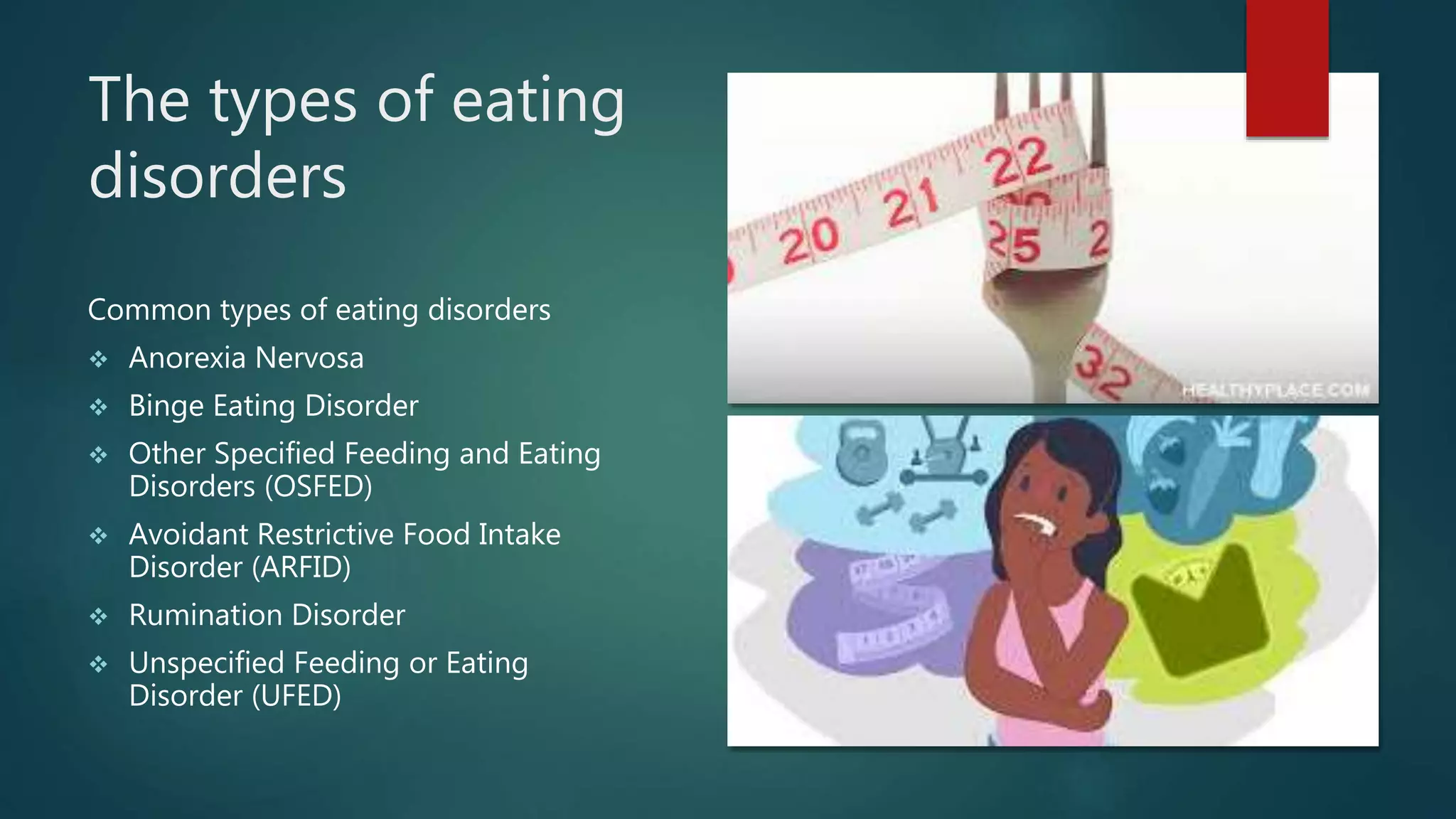
Common types of eating disorders
 Anorexia Nervosa
 Binge Eating Disorder
 Other Specified Feeding and Eating
Disorders (OSFED)
 Avoidant Restrictive Food Intake
Disorder (ARFID)
 Rumination Disorder
 Unspecified Feeding or Eating
Disorder (UFED)
WARNING!!
 eating disorders are complex and some
eating issues will not meet diagnostic
criteria. All eating concerns must be
taken seriously.
Anorexia nervosa
 Anorexia nervosa is an eating
disorder exhibited by weight loss (or lack of
appropriate weight gain in developing
children); difficulties sustaining an
appropriate body weight for height, age,
and natural height.
 In many individuals, distorted body image.
People with anorexia
generally limit the number of calories and
the types of food they eat. Some people
with the disorder also exercise obsessively,
purge via vomiting and laxatives, and/or
binge eat.
Common Signs & Symptoms
 Dramatic weight loss
 Dresses in layers to hide weight
loss or stay warm
 Preoccupation with weight, food,
calories, fat grams, and dieting.
Makes frequent comments about
feeling “fat.’
Common Signs & Symptoms
 Resists or is unable to maintain a body
weight appropriate for their age,
height, and build.
 Maintains an excessive, rigid
exercise system– despite
weather, fatigue, illness, or injury.
 Bulimia nervosa is a serious, potentially
life-threatening eating disorder
characterized by a cycle of bingeing
and compensatory behaviors such as
self-induced vomiting designed to
undo or compensate for the effects of
binge eating.
Common Signs & Symptoms
 Evidence of binge eating,
including vanishing of large
amounts of food in short periods
of time or lots of empty wrappers
and containers indicating
consumption of large amounts of
food.
 Evidence of purging behaviors,
including frequent trips to the
bathroom after meals, signs
and/or smells of vomiting,
presence of wrappers or
packages of laxatives or diuretics
Common Signs & Symptoms
 Drinks excessive amounts of water or non-
caloric beverages, and/or uses excessive
amounts of mouthwash, mints, and gum
 Has calluses on the back of the hands and
knuckles from self- induced vomiting
 Dental problems, such as enamel erosion,
cavities, discoloration of teeth from vomiting,
and tooth sensitivity
Binge Eating Disorder (BED)
 BED is one of the latest eating disorders
formally recognized in the DSM-5. Before the
most recent revision in 2013, BED was listed as
a subtype of EDNOS (now referred to as
OSFED). The change is important because
some insurance companies will not cover
eating disorder treatment without a DSM
diagnosis.
Binge Eating Disorder (BED)
 Binge eating disorder (BED) is a
severe, life-threatening, and treatable
eating disorder characterized by
recurrent episodes of eating large
quantities of food (often very quickly
and to the point of discomfort); a
feeling of a loss of control during the
binge; experiencing shame, distress or
guilt afterwards; and not regularly using
unhealthy compensatory measures
(e.g., purging) to counter the binge
eating. It is the most common eating
disorder in the United States.
Common Signs & Symptoms:
 Secret recurring episodes of binge eating
(eating in a discrete period of time an amount
of food that is much larger than most
individuals would eat under similar
circumstances); feels lack of control over
ability to stop eating
 Feelings of disgust, depression, or guilt after
overeating, and/or feelings of low self-esteem
Common Signs & Symptoms:
 Steals or hoards food in strange
places
 Creates lifestyle schedules or
rituals to make time for binge
sessions
 Evidence of binge eating,
including the disappearance of
large amounts of food in a short
time period or a lot of empty
wrappers and containers
indicating consumption of large
amounts of food.
Other Specified Feeding and Eating
Disorders (OSFED)
 Other Specified Feeding and
Eating Disorders (OSFED) was
previously known as Eating
Disorder Not Otherwise Specified
(EDNOS) in past editions of the
Diagnostic and Statistical Manual.
 Despite being considered a ‘catch-
all’ classification that was
sometimes denied insurance
coverage for treatment as it was
seen as less serious,
OSFED/EDNOS is a serious, life-
threatening, and treatable eating
disorder.
Other Specified Feeding
and Eating Disorders
(OSFED)
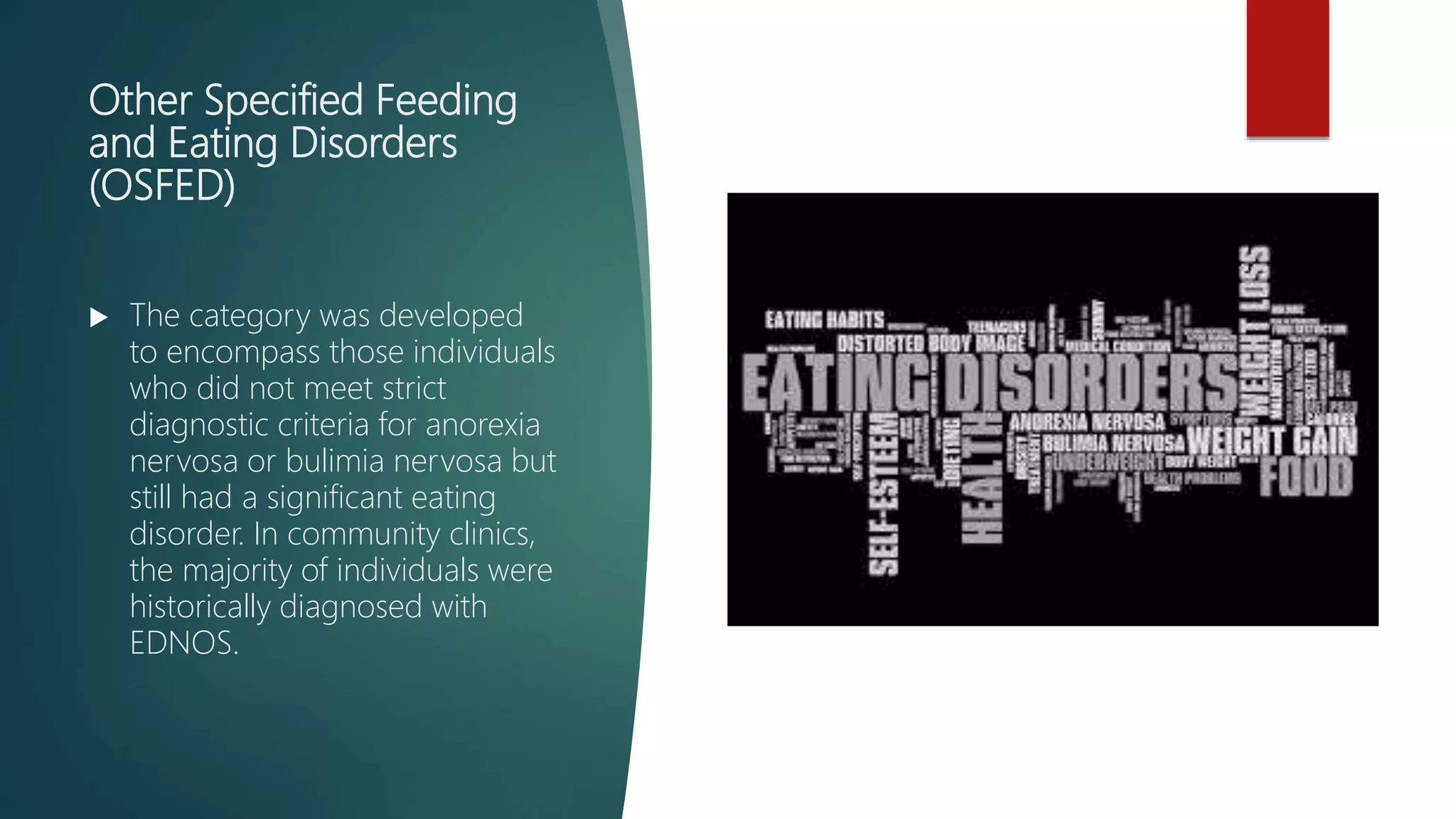
 The category was developed
to encompass those individuals
who did not meet strict
diagnostic criteria for anorexia
nervosa or bulimia nervosa but
still had a significant eating
disorder. In community clinics,
the majority of individuals were
historically diagnosed with
EDNOS.
Common Signs & Symptoms:
Because OSFED encompasses a wide variety
of eating disordered behaviors, any or all of
the following symptoms may be present in
people with OSFED.
 Frequent episodes of consuming very
large amount of food followed by
behaviors to prevent weight gain, such as
self-induced vomiting.
 Evidence of binge eating, including
disappearance of large amounts of food
in short periods of time or lots of empty
wrappers and containers indicating
consumption of large amounts of food.
 Self-esteem overly related to body image.
Common Signs
& Symptoms:
 Dieting behavior (reducing the
amount or types of foods
consumed).
 Expresses a need to “burn off”
calories taken in.
 Evidence of purging behaviors,
including frequent trips to the
bathroom after meals, signs
and/or smells of vomiting,
presence of wrappers
or packages of laxatives or
diuretics.
Avoidant Restrictive Food Intake Disorder
(ARFID)
 Avoidant Restrictive Food Intake
Disorder (ARFID) is a new diagnosis
in the DSM-5, and was previously
referred to as “Selective Eating
Disorder.” ARFID is similar to
anorexia in that both disorders
involve limitations in the amount
and/or types of food consumed,
but unlike anorexia, ARFID does not
involve any distress about body
shape or size, or fears of fatness.
Avoidant Restrictive Food Intake Disorder
(ARFID)
 Although many children go
through phases of picky or
selective eating, a person with
ARFID does not consume enough
calories to grow and develop
properly and, in adults, to maintain
basic body function. In children,
this results in stalled weight gain
and vertical growth; in adults, this
results in weight loss. ARFID can
also result in problems at school or
work, due to difficulties eating with
others and extended times needed
to eat.
Common Signs & Symptoms
 Dramatic weight loss
 Limited range of preferred foods
that becomes narrower over
time (i.e., picky eating that
progressively worsens)
 Fears of choking or vomiting
Common Signs & Symptoms
 No body image disturbance or
fear of weight gain
 Pica is an eating disorder that
involves eating items that are not
typically thought of as food and
that do not contain significant
nutritional value, such as hair,
dirt, and paint chips.
Common Signs
& Symptoms
 The persistent eating, over a
period of at least one month, of
substances that are not food
and do not provide nutritional
value
 Typical substances ingested
tend to vary with age and
availability. They may include
paper, soap, cloth, hair, string,
wool, soil, chalk, talcum
powder, paint, gum, metal,
pebbles, charcoal, ash, clay,
starch, or ice.
Rumination Disorder
 Rumination disorder involves the
regular regurgitation of food that
occurs for at least one month.
Regurgitated food may be re-
chewed, re-swallowed, or spit
out. Typically, when someone
regurgitates their food, they do
not appear to be making an
effort, nor do they appear to be
stressed, upset, or disgusted.
Unspecified Feeding or Eating Disorder
(UFED)
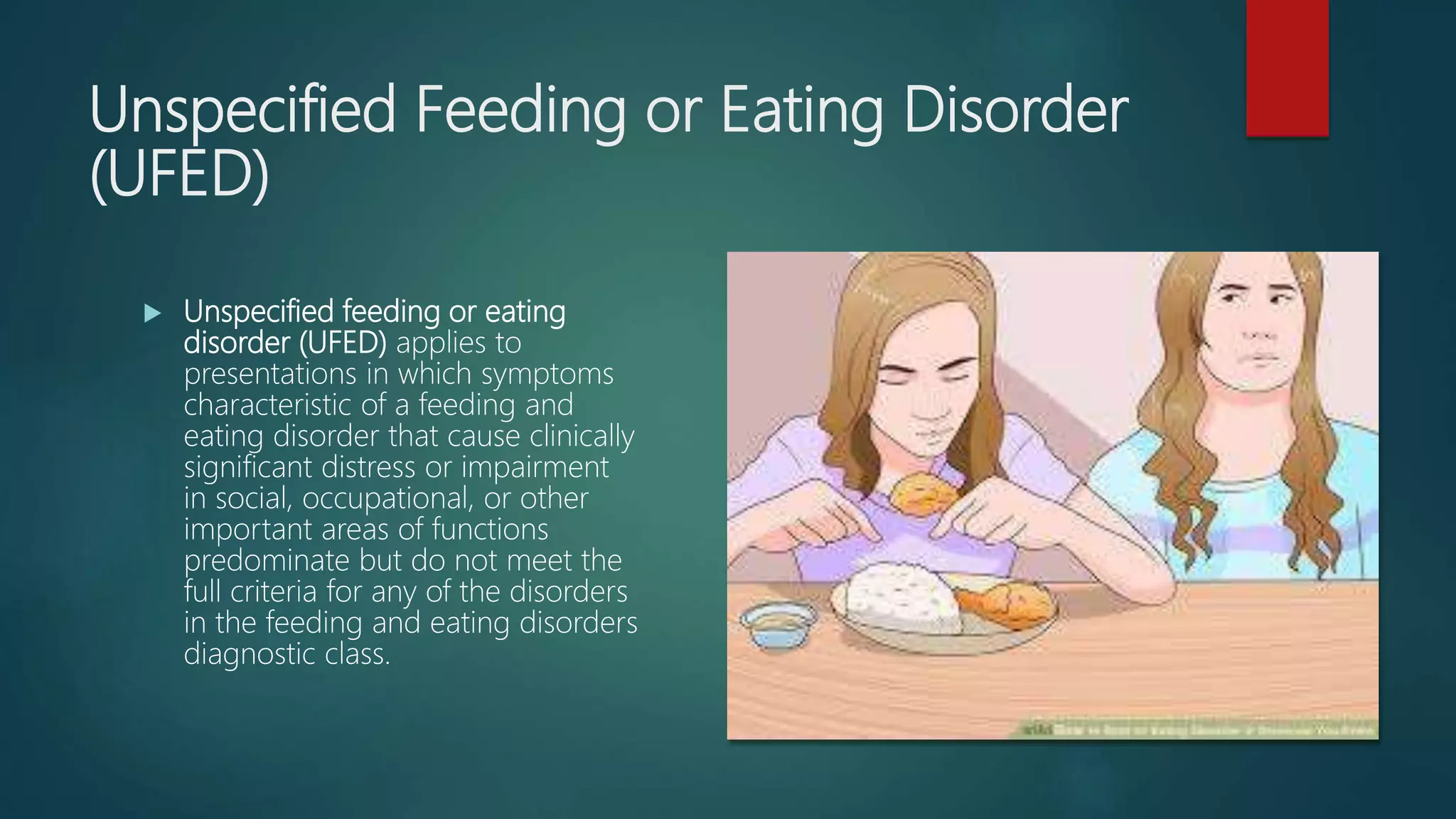
 Unspecified feeding or eating
disorder (UFED) applies to
presentations in which symptoms
characteristic of a feeding and
eating disorder that cause clinically
significant distress or impairment
in social, occupational, or other
important areas of functions
predominate but do not meet the
full criteria for any of the disorders
in the feeding and eating disorders
diagnostic class.
Unspecified
Feeding or Eating
Disorder (UFED)
 The unspecified feeding and
eating disorder category is
used in situations in which the
clinician chooses not to specify
the reason that the criteria are
not met for a specific feeding
and eating disorder, and
includes presentation in which
there is insufficient information
to make a more specific
diagnosis (e.g., in
emergency room settings).

eating disorders

  • 1.
  • 2.
    The types ofeating disorders Common types of eating disorders  Anorexia Nervosa  Binge Eating Disorder  Other Specified Feeding and Eating Disorders (OSFED)  Avoidant Restrictive Food Intake Disorder (ARFID)  Rumination Disorder  Unspecified Feeding or Eating Disorder (UFED)
  • 3.
    WARNING!!  eating disordersare complex and some eating issues will not meet diagnostic criteria. All eating concerns must be taken seriously.
  • 4.
    Anorexia nervosa  Anorexianervosa is an eating disorder exhibited by weight loss (or lack of appropriate weight gain in developing children); difficulties sustaining an appropriate body weight for height, age, and natural height.  In many individuals, distorted body image. People with anorexia generally limit the number of calories and the types of food they eat. Some people with the disorder also exercise obsessively, purge via vomiting and laxatives, and/or binge eat.
  • 5.
    Common Signs &Symptoms  Dramatic weight loss  Dresses in layers to hide weight loss or stay warm  Preoccupation with weight, food, calories, fat grams, and dieting. Makes frequent comments about feeling “fat.’
  • 6.
    Common Signs &Symptoms  Resists or is unable to maintain a body weight appropriate for their age, height, and build.  Maintains an excessive, rigid exercise system– despite weather, fatigue, illness, or injury.  Bulimia nervosa is a serious, potentially life-threatening eating disorder characterized by a cycle of bingeing and compensatory behaviors such as self-induced vomiting designed to undo or compensate for the effects of binge eating.
  • 7.
    Common Signs &Symptoms  Evidence of binge eating, including vanishing of large amounts of food in short periods of time or lots of empty wrappers and containers indicating consumption of large amounts of food.  Evidence of purging behaviors, including frequent trips to the bathroom after meals, signs and/or smells of vomiting, presence of wrappers or packages of laxatives or diuretics
  • 8.
    Common Signs &Symptoms  Drinks excessive amounts of water or non- caloric beverages, and/or uses excessive amounts of mouthwash, mints, and gum  Has calluses on the back of the hands and knuckles from self- induced vomiting  Dental problems, such as enamel erosion, cavities, discoloration of teeth from vomiting, and tooth sensitivity
  • 9.
    Binge Eating Disorder(BED)  BED is one of the latest eating disorders formally recognized in the DSM-5. Before the most recent revision in 2013, BED was listed as a subtype of EDNOS (now referred to as OSFED). The change is important because some insurance companies will not cover eating disorder treatment without a DSM diagnosis.
  • 10.
    Binge Eating Disorder(BED)  Binge eating disorder (BED) is a severe, life-threatening, and treatable eating disorder characterized by recurrent episodes of eating large quantities of food (often very quickly and to the point of discomfort); a feeling of a loss of control during the binge; experiencing shame, distress or guilt afterwards; and not regularly using unhealthy compensatory measures (e.g., purging) to counter the binge eating. It is the most common eating disorder in the United States.
  • 11.
    Common Signs &Symptoms:  Secret recurring episodes of binge eating (eating in a discrete period of time an amount of food that is much larger than most individuals would eat under similar circumstances); feels lack of control over ability to stop eating  Feelings of disgust, depression, or guilt after overeating, and/or feelings of low self-esteem
  • 12.
    Common Signs &Symptoms:  Steals or hoards food in strange places  Creates lifestyle schedules or rituals to make time for binge sessions  Evidence of binge eating, including the disappearance of large amounts of food in a short time period or a lot of empty wrappers and containers indicating consumption of large amounts of food.
  • 13.
    Other Specified Feedingand Eating Disorders (OSFED)  Other Specified Feeding and Eating Disorders (OSFED) was previously known as Eating Disorder Not Otherwise Specified (EDNOS) in past editions of the Diagnostic and Statistical Manual.  Despite being considered a ‘catch- all’ classification that was sometimes denied insurance coverage for treatment as it was seen as less serious, OSFED/EDNOS is a serious, life- threatening, and treatable eating disorder.
  • 14.
    Other Specified Feeding andEating Disorders (OSFED)  The category was developed to encompass those individuals who did not meet strict diagnostic criteria for anorexia nervosa or bulimia nervosa but still had a significant eating disorder. In community clinics, the majority of individuals were historically diagnosed with EDNOS.
  • 15.
    Common Signs &Symptoms: Because OSFED encompasses a wide variety of eating disordered behaviors, any or all of the following symptoms may be present in people with OSFED.  Frequent episodes of consuming very large amount of food followed by behaviors to prevent weight gain, such as self-induced vomiting.  Evidence of binge eating, including disappearance of large amounts of food in short periods of time or lots of empty wrappers and containers indicating consumption of large amounts of food.  Self-esteem overly related to body image.
  • 16.
    Common Signs & Symptoms: Dieting behavior (reducing the amount or types of foods consumed).  Expresses a need to “burn off” calories taken in.  Evidence of purging behaviors, including frequent trips to the bathroom after meals, signs and/or smells of vomiting, presence of wrappers or packages of laxatives or diuretics.
  • 17.
    Avoidant Restrictive FoodIntake Disorder (ARFID)  Avoidant Restrictive Food Intake Disorder (ARFID) is a new diagnosis in the DSM-5, and was previously referred to as “Selective Eating Disorder.” ARFID is similar to anorexia in that both disorders involve limitations in the amount and/or types of food consumed, but unlike anorexia, ARFID does not involve any distress about body shape or size, or fears of fatness.
  • 18.
    Avoidant Restrictive FoodIntake Disorder (ARFID)  Although many children go through phases of picky or selective eating, a person with ARFID does not consume enough calories to grow and develop properly and, in adults, to maintain basic body function. In children, this results in stalled weight gain and vertical growth; in adults, this results in weight loss. ARFID can also result in problems at school or work, due to difficulties eating with others and extended times needed to eat.
  • 19.
    Common Signs &Symptoms  Dramatic weight loss  Limited range of preferred foods that becomes narrower over time (i.e., picky eating that progressively worsens)  Fears of choking or vomiting
  • 20.
    Common Signs &Symptoms  No body image disturbance or fear of weight gain  Pica is an eating disorder that involves eating items that are not typically thought of as food and that do not contain significant nutritional value, such as hair, dirt, and paint chips.
  • 21.
    Common Signs & Symptoms The persistent eating, over a period of at least one month, of substances that are not food and do not provide nutritional value  Typical substances ingested tend to vary with age and availability. They may include paper, soap, cloth, hair, string, wool, soil, chalk, talcum powder, paint, gum, metal, pebbles, charcoal, ash, clay, starch, or ice.
  • 22.
    Rumination Disorder  Ruminationdisorder involves the regular regurgitation of food that occurs for at least one month. Regurgitated food may be re- chewed, re-swallowed, or spit out. Typically, when someone regurgitates their food, they do not appear to be making an effort, nor do they appear to be stressed, upset, or disgusted.
  • 23.
    Unspecified Feeding orEating Disorder (UFED)  Unspecified feeding or eating disorder (UFED) applies to presentations in which symptoms characteristic of a feeding and eating disorder that cause clinically significant distress or impairment in social, occupational, or other important areas of functions predominate but do not meet the full criteria for any of the disorders in the feeding and eating disorders diagnostic class.
  • 24.
    Unspecified Feeding or Eating Disorder(UFED)  The unspecified feeding and eating disorder category is used in situations in which the clinician chooses not to specify the reason that the criteria are not met for a specific feeding and eating disorder, and includes presentation in which there is insufficient information to make a more specific diagnosis (e.g., in emergency room settings).