5.12 ELECTROSTATICS SENSITIVE
           DEVICE


            www.part66.blogspot.com
ESD

• Electrostatic Sensitive Devices (ESD) are
  electronic components and other parts that are
  prone to damage from stray electric charge.

• Extensive (and permanent) damage to static
  sensitive devices can result from mishandling and
  inappropriate methods of storage and
  transportation.
STATIC ELECTRICITY

• When two dissimilar, initially uncharged non-
  conducting materials are rubbed together, the friction
  is responsible in transferring charge from one material
  to.

• The process of electron transfer known as
  'triboelectric charging'.

• The amount of charge depends on factors like the rate
  of separation, humidity etc.
POSITIVE TRIBOELECTRIC
The following materials give up electrons and become positive when charged when
   rubbed against other materials:

• Air (most positive)
• Dry human skin
• Leather
• Rabbit fur
• Glass
•Human hair
• Nylon
• Wool
•Lead
•Cat fur
• Silk
• Aluminium
• Paper (least positive).
NEGATIVE TRIBOELECTRIC
The following materials tend to attract electrons when rubbed against other materials
   and become negative when charged:

• Wood (least negative)
• Amber
• Hard rubber
• Nickel, copper, brass & silver
• Gold and platinum
• Polyester
• Polystyrene
• Saran
• Polyurethane
• Polyethylene
• Polypropylene
• Polyvinylchloride (PVC)
• Silicon • Teflon (most negative)
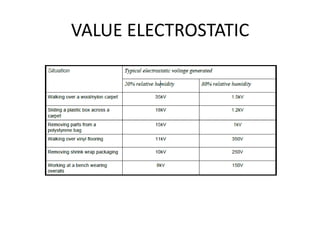
VALUE ELECTROSTATIC
CAUSES ESD

•   Electrostatic discharge from a human body
•   charged material to the ESDS device.
•   Electrostatic discharge from the device
•   Field induced discharges
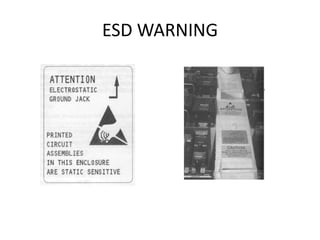
ESD WARNING
HANDLING ESD EQUIPMENT

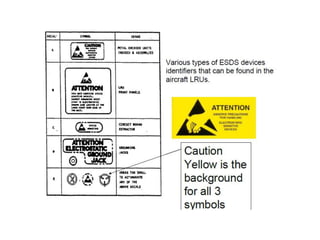
• Placards installed on the ESD LRU
• The ESD printed circuit boards are identified with a
  static sensitive placard.
• Contaminated or unwanted material should be kept
  clear of the sensitive devices.
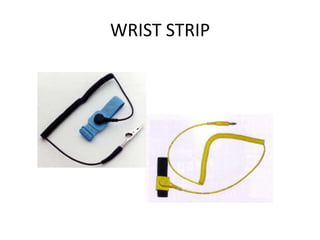
• Connect the wrist strap into the Electrostatic Ground
  Jack of the card file or recognised aircraft ESD ground
  point.
• LRU or circuit boards are to be placed in the correct
  conductive bag or container which must display an ESD
  label.
TRANSPORTING ESD EQUIPMENT
1. Use of wrist straps which must be worn when handling ESD
2. Use a heel strap
3. Use of static dissipative floor and bench mats.
4. Avoidance of very dry environments
5. Availability of ground jacks
6. Use of grounded test equipment
7. Use of low-voltage soldering equipment and anti-static
   soldering stations
8. Use of anti-static insertion and removal tools for integrated
   circuits.
9. Avoidance of nearby high-voltage sources
10.Use of anti-static packaging
WRIST STRIP

EASA PART-66 MODULE 5.12 : ELECTRONICS SENSITIVE DEVICES

  • 1.
    5.12 ELECTROSTATICS SENSITIVE DEVICE www.part66.blogspot.com
  • 2.
    ESD • Electrostatic SensitiveDevices (ESD) are electronic components and other parts that are prone to damage from stray electric charge. • Extensive (and permanent) damage to static sensitive devices can result from mishandling and inappropriate methods of storage and transportation.
  • 3.
    STATIC ELECTRICITY • Whentwo dissimilar, initially uncharged non- conducting materials are rubbed together, the friction is responsible in transferring charge from one material to. • The process of electron transfer known as 'triboelectric charging'. • The amount of charge depends on factors like the rate of separation, humidity etc.
  • 4.
    POSITIVE TRIBOELECTRIC The followingmaterials give up electrons and become positive when charged when rubbed against other materials: • Air (most positive) • Dry human skin • Leather • Rabbit fur • Glass •Human hair • Nylon • Wool •Lead •Cat fur • Silk • Aluminium • Paper (least positive).
  • 5.
    NEGATIVE TRIBOELECTRIC The followingmaterials tend to attract electrons when rubbed against other materials and become negative when charged: • Wood (least negative) • Amber • Hard rubber • Nickel, copper, brass & silver • Gold and platinum • Polyester • Polystyrene • Saran • Polyurethane • Polyethylene • Polypropylene • Polyvinylchloride (PVC) • Silicon • Teflon (most negative)
  • 6.
  • 7.
    CAUSES ESD • Electrostatic discharge from a human body • charged material to the ESDS device. • Electrostatic discharge from the device • Field induced discharges
  • 8.
  • 10.
    HANDLING ESD EQUIPMENT •Placards installed on the ESD LRU • The ESD printed circuit boards are identified with a static sensitive placard. • Contaminated or unwanted material should be kept clear of the sensitive devices. • Connect the wrist strap into the Electrostatic Ground Jack of the card file or recognised aircraft ESD ground point. • LRU or circuit boards are to be placed in the correct conductive bag or container which must display an ESD label.
  • 11.
    TRANSPORTING ESD EQUIPMENT 1.Use of wrist straps which must be worn when handling ESD 2. Use a heel strap 3. Use of static dissipative floor and bench mats. 4. Avoidance of very dry environments 5. Availability of ground jacks 6. Use of grounded test equipment 7. Use of low-voltage soldering equipment and anti-static soldering stations 8. Use of anti-static insertion and removal tools for integrated circuits. 9. Avoidance of nearby high-voltage sources 10.Use of anti-static packaging
  • 12.