
Energy
                   What is it?

By Moira Whitehouse PhD
Remember, energy is the
ability to move matter or
change matter.

Imagine what the world
would be like if nothing
moved or changed.
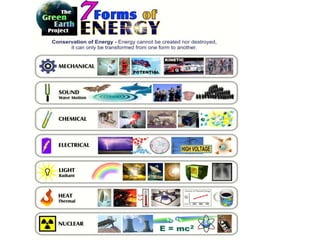
What are some of the
different forms of energy?
List as many as you can
remember from our previous
study of energy.
mechanical


light
electrical


sound
heat


chemical
Fossil fuels are used to produce two
kinds of energy that are very
important to us.
Let’s first look at mechanical
energy—the energy of moving
things. You and others depend on
many things that move.
What are some of these things?
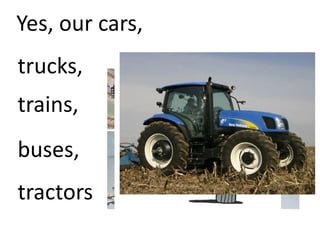
Yes, our cars,
trucks,
trains,
buses,
tractors
But in order to move, all
these vehicles must have a
fuel.

What fuels do these vehicles
burn?
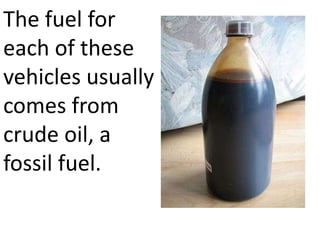
The fuel for
each of these
vehicles usually
comes from
crude oil, a
fossil fuel.
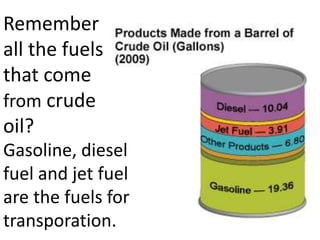
Remember
all the fuels
that come
from crude
oil?
Gasoline, diesel
fuel and jet fuel
are the fuels for
transporation.
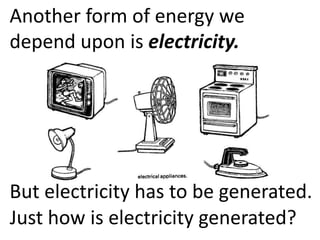
Another form of energy we
depend upon is electricity.


But electricity has to be generated.
Just how is electricity generated?
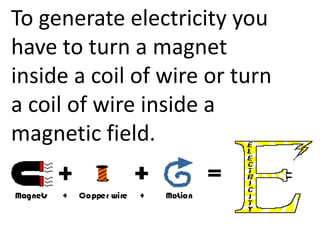
To generate electricity you
have to turn a magnet
inside a coil of wire or turn
a coil of wire inside a
magnetic field.
Open this website to see
how this is done.

http://new.wvic.com/index.php?option=com_content&task=view&id=9&Itemid=46
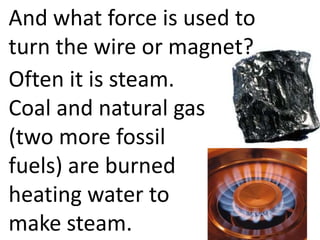
And what force is used to
turn the wire or magnet?
Often it is steam.
Coal and natural gas
(two more fossil
fuels) are burned
heating water to
make steam.
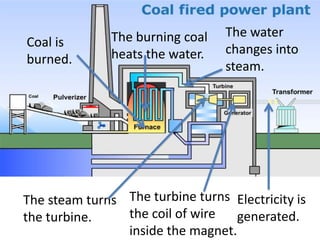
The burning coal    The water
Coal is                           changes into
burned.       heats the water.
                                  steam.


The steam turns The turbine turns Electricity is
the turbine.    the coil of wire   generated.
                inside the magnet.
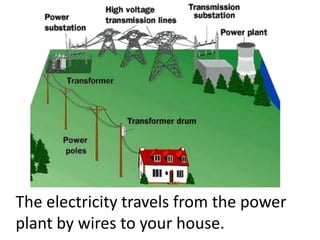
The electricity travels from the power
plant by wires to your house.
But there are many problems with
burning the three fossil fuels.
1. coal
2. natural gas
3. crude oil --gasoline and
diesel fuel

What are some of these problems?
• They are limited and very expensive.
 -Crude oil is becoming hard to find
 and even more expensive to obtain.
 • Burning these fuels puts:
    -pollutants into the air which are
  harmful to our health and
   -carbon dioxide into the air which
 leads to global warming.
• Accidental spills, as in the recent
  Gulf Oil spill, pollute our water.
So what are we to do?
Man can use other (alternative)
forms of energy to move our
vehicles and generate electricity
.
What are some of these
alternative forms of energy?
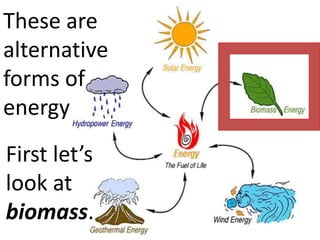
These are
alternative
forms of
energy
First let’s
look at
biomass.
Biomass is organic material made
from plants. Biomass contains
stored energy from the sun.
Some examples of biomass fuels
are wood, corn, sugar cane and
some types of garbage.
But where do these plant materials
get their energy?
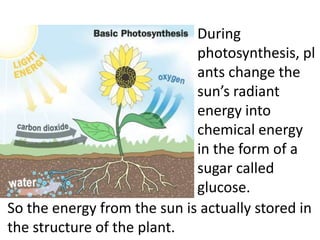
During
                             photosynthesis, pl
                             ants change the
                             sun’s radiant
                             energy into
                             chemical energy
                             in the form of a
                             sugar called
                             glucose.
So the energy from the sun is actually stored in
the structure of the plant.
When plant material is burned, the
stored chemical energy is released as
heat. If you have a fireplace, the wood
you burn in it is a biomass fuel.

Wood waste and certain garbage
(forms of biomass) can be burned to
produce steam for making electricity
and also to provide heat for homes
and industries.
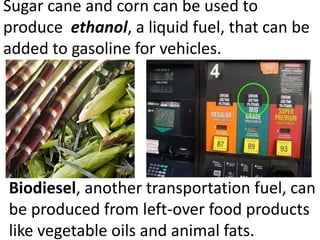
Sugar cane and corn can be used to
produce ethanol, a liquid fuel, that can be
added to gasoline for vehicles.


Biodiesel, another transportation fuel, can
be produced from left-over food products
like vegetable oils and animal fats.
Alternative
forms of
energy


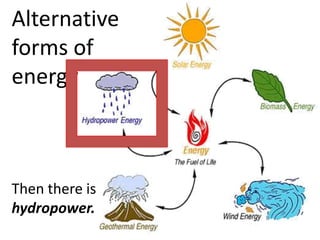
Then there is
hydropower.
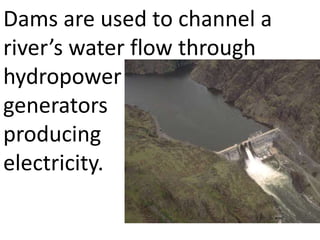
Dams are used to channel a
river’s water flow through
hydropower
generators
producing
electricity.
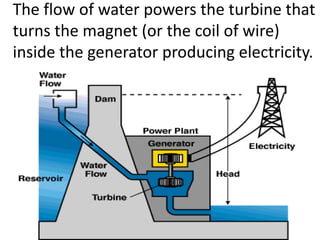
The flow of water powers the turbine that
turns the magnet (or the coil of wire)
inside the generator producing electricity.
Alternative
forms of
energy
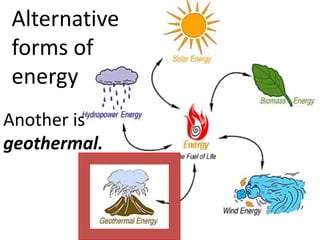
Another is
geothermal.
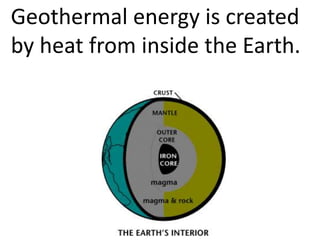
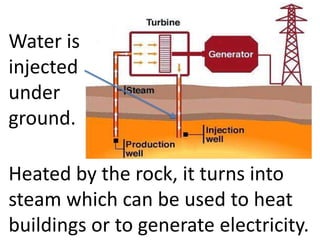
Geothermal energy is created
by heat from inside the Earth.
Water is
injected
under
ground.

Heated by the rock, it turns into
steam which can be used to heat
buildings or to generate electricity.
Alternative
forms of
energy

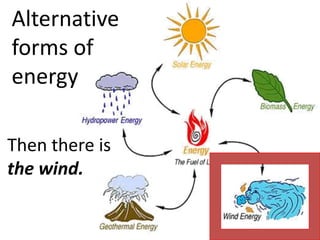
Then there is
the wind.
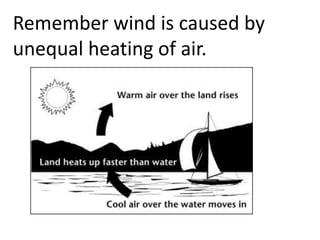
Remember wind is caused by
unequal heating of air.
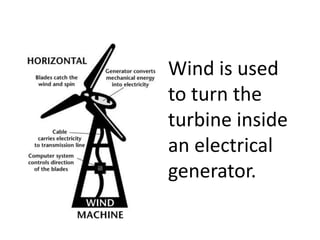
Wind is used
to turn the
turbine inside
an electrical
generator.
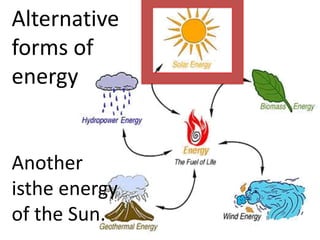
Alternative
forms of
energy


Another
isthe energy
of the Sun.
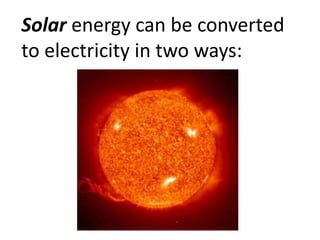
Solar energy can be converted
to electricity in two ways:
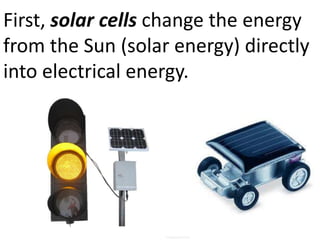
First, solar cells change the energy
from the Sun (solar energy) directly
into electrical energy.
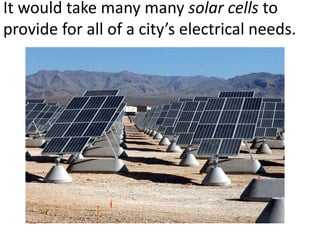
It would take many many solar cells to
provide for all of a city’s electrical needs.
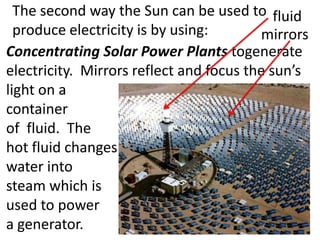
The second way the Sun can be used to fluid
  produce electricity is by using:       mirrors
Concentrating Solar Power Plants togenerate
electricity. Mirrors reflect and focus the sun’s
light on a
container
of fluid. The
hot fluid changes
water into
steam which is
used to power
a generator.
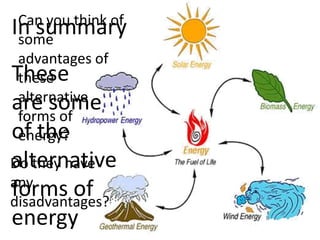
Can you think of
In summary
 some
 advantages of
These
 these
 alternative
are some
 forms of
of the
 energy?
alternative
Do they have
any
forms of
disadvantages?
energy
Below is a website that has good reading
material that you can print (in black and
white) alternative energy sources such as
wind, solar, biomass and geothermal.

Under the tab student choose Energy
Infobooks. Both the Complete Primary and
Elementary Energy Infobooks are excellent.
So are the individual printouts on each
energy source such as
coal, petroleum, natural
gas, wind, solar, etc.
             (http://www.need.org/)

Energy..alternative forms (teach)

  • 1.
    Energy What is it? By Moira Whitehouse PhD
  • 4.
    Remember, energy isthe ability to move matter or change matter. Imagine what the world would be like if nothing moved or changed.
  • 5.
    What are someof the different forms of energy? List as many as you can remember from our previous study of energy.
  • 6.
  • 7.
  • 8.
  • 10.
    Fossil fuels areused to produce two kinds of energy that are very important to us. Let’s first look at mechanical energy—the energy of moving things. You and others depend on many things that move. What are some of these things?
  • 11.
  • 12.
    But in orderto move, all these vehicles must have a fuel. What fuels do these vehicles burn?
  • 13.
    The fuel for eachof these vehicles usually comes from crude oil, a fossil fuel.
  • 14.
    Remember all the fuels thatcome from crude oil? Gasoline, diesel fuel and jet fuel are the fuels for transporation.
  • 15.
    Another form ofenergy we depend upon is electricity. But electricity has to be generated. Just how is electricity generated?
  • 16.
    To generate electricityyou have to turn a magnet inside a coil of wire or turn a coil of wire inside a magnetic field.
  • 17.
    Open this websiteto see how this is done. http://new.wvic.com/index.php?option=com_content&task=view&id=9&Itemid=46
  • 18.
    And what forceis used to turn the wire or magnet? Often it is steam. Coal and natural gas (two more fossil fuels) are burned heating water to make steam.
  • 19.
    The burning coal The water Coal is changes into burned. heats the water. steam. The steam turns The turbine turns Electricity is the turbine. the coil of wire generated. inside the magnet.
  • 20.
    The electricity travelsfrom the power plant by wires to your house.
  • 21.
    But there aremany problems with burning the three fossil fuels. 1. coal 2. natural gas 3. crude oil --gasoline and diesel fuel What are some of these problems?
  • 22.
    • They arelimited and very expensive. -Crude oil is becoming hard to find and even more expensive to obtain. • Burning these fuels puts: -pollutants into the air which are harmful to our health and -carbon dioxide into the air which leads to global warming. • Accidental spills, as in the recent Gulf Oil spill, pollute our water.
  • 23.
    So what arewe to do? Man can use other (alternative) forms of energy to move our vehicles and generate electricity . What are some of these alternative forms of energy?
  • 24.
  • 25.
    Biomass is organicmaterial made from plants. Biomass contains stored energy from the sun. Some examples of biomass fuels are wood, corn, sugar cane and some types of garbage. But where do these plant materials get their energy?
  • 26.
    During photosynthesis, pl ants change the sun’s radiant energy into chemical energy in the form of a sugar called glucose. So the energy from the sun is actually stored in the structure of the plant.
  • 27.
    When plant materialis burned, the stored chemical energy is released as heat. If you have a fireplace, the wood you burn in it is a biomass fuel. Wood waste and certain garbage (forms of biomass) can be burned to produce steam for making electricity and also to provide heat for homes and industries.
  • 28.
    Sugar cane andcorn can be used to produce ethanol, a liquid fuel, that can be added to gasoline for vehicles. Biodiesel, another transportation fuel, can be produced from left-over food products like vegetable oils and animal fats.
  • 29.
  • 30.
    Dams are usedto channel a river’s water flow through hydropower generators producing electricity.
  • 31.
    The flow ofwater powers the turbine that turns the magnet (or the coil of wire) inside the generator producing electricity.
  • 32.
  • 33.
    Geothermal energy iscreated by heat from inside the Earth.
  • 34.
    Water is injected under ground. Heated bythe rock, it turns into steam which can be used to heat buildings or to generate electricity.
  • 35.
  • 36.
    Remember wind iscaused by unequal heating of air.
  • 37.
    Wind is used toturn the turbine inside an electrical generator.
  • 38.
  • 39.
    Solar energy canbe converted to electricity in two ways:
  • 40.
    First, solar cellschange the energy from the Sun (solar energy) directly into electrical energy.
  • 41.
    It would takemany many solar cells to provide for all of a city’s electrical needs.
  • 42.
    The second waythe Sun can be used to fluid produce electricity is by using: mirrors Concentrating Solar Power Plants togenerate electricity. Mirrors reflect and focus the sun’s light on a container of fluid. The hot fluid changes water into steam which is used to power a generator.
  • 43.
    Can you thinkof In summary some advantages of These these alternative are some forms of of the energy? alternative Do they have any forms of disadvantages? energy
  • 44.
    Below is awebsite that has good reading material that you can print (in black and white) alternative energy sources such as wind, solar, biomass and geothermal. Under the tab student choose Energy Infobooks. Both the Complete Primary and Elementary Energy Infobooks are excellent. So are the individual printouts on each energy source such as coal, petroleum, natural gas, wind, solar, etc. (http://www.need.org/)