EARTHQUAKE
TIP NO.22
Which Columns are short?
 During past earthquakes, reinforced
concrete (RC)frame buildings that have
columns of different heights within one
storey, suffered more damage in the
shorter columns as compared to taller
columns in the same storey.
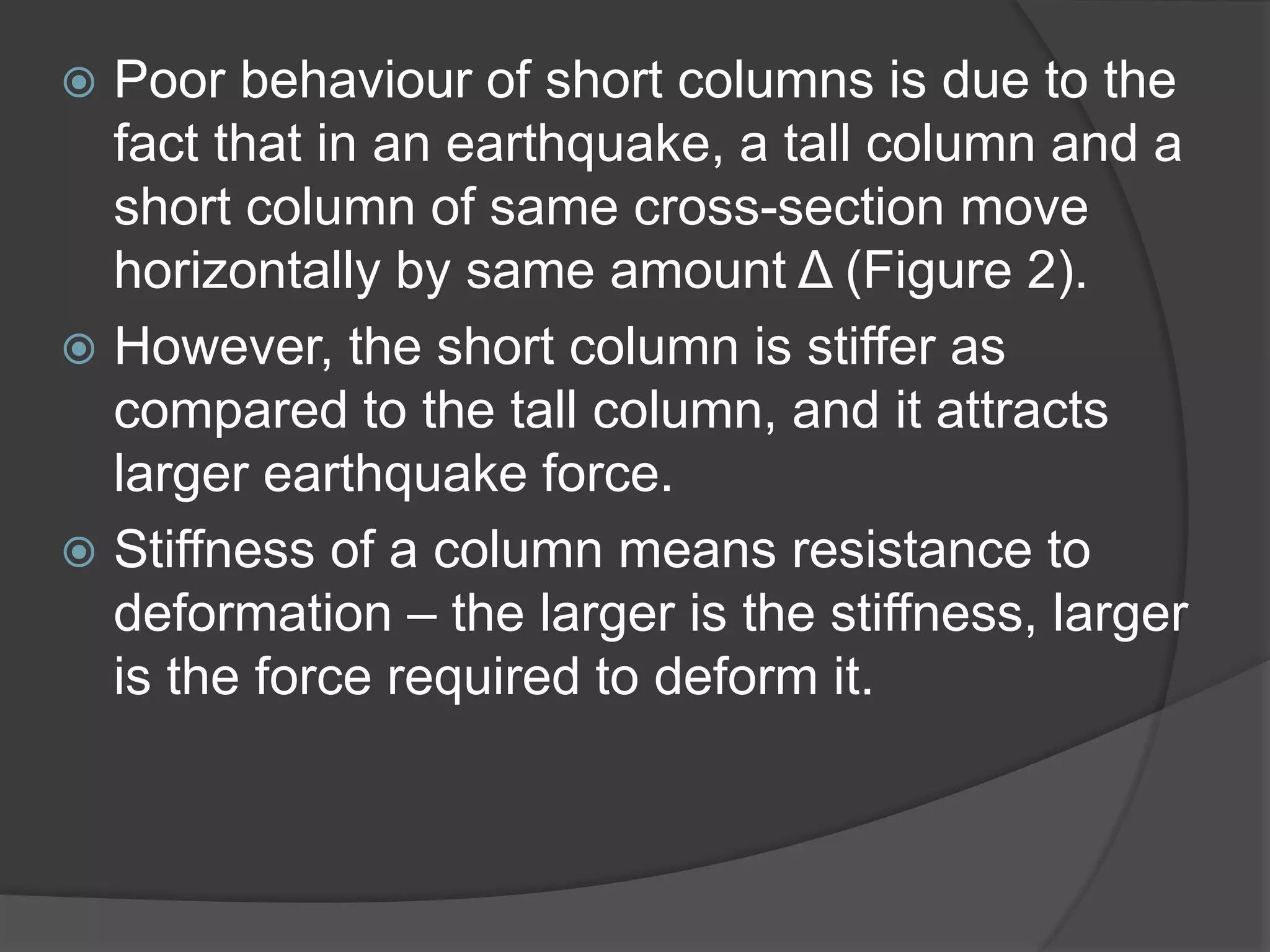
 Two examples of buildings with short
columns are shown in Figure 1 –
buildings on a sloping ground and
buildings with a mezzanine floor.
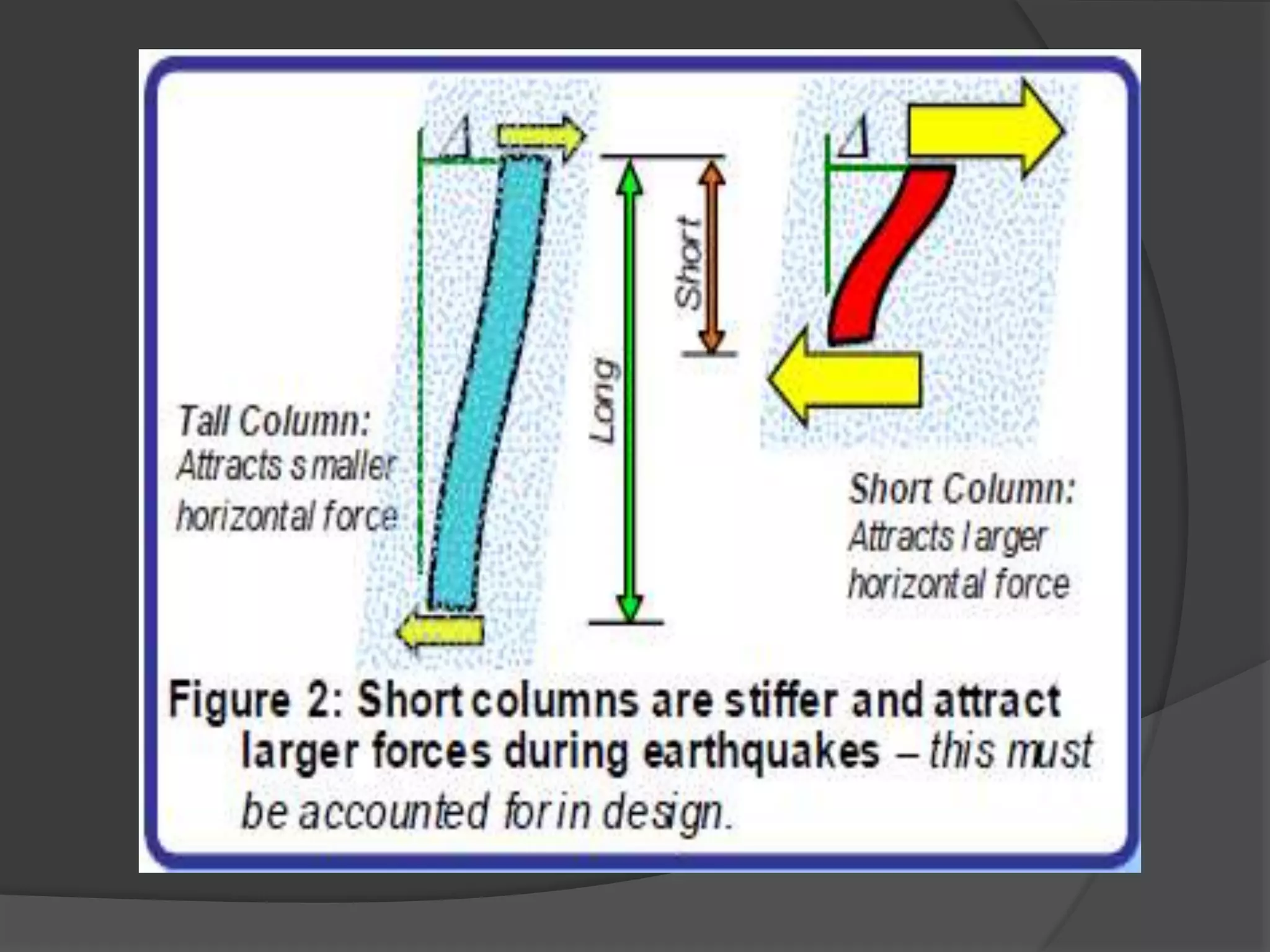
 Poor behaviour of short columns is due to the
fact that in an earthquake, a tall column and a
short column of same cross-section move
horizontally by same amount Δ (Figure 2).
 However, the short column is stiffer as
compared to the tall column, and it attracts
larger earthquake force.
 Stiffness of a column means resistance to
deformation – the larger is the stiffness, larger
is the force required to deform it.
 If a short column is not adequately designed for
such a largeforce, it can suffer significant
damage during an earthquake.
 This behaviour is called Short Column Effect.
 The damage in these short columns is often in
the form of X-shaped cracking
The Short Column
Behaviour
 Many situations with short column effect
arise in buildings.
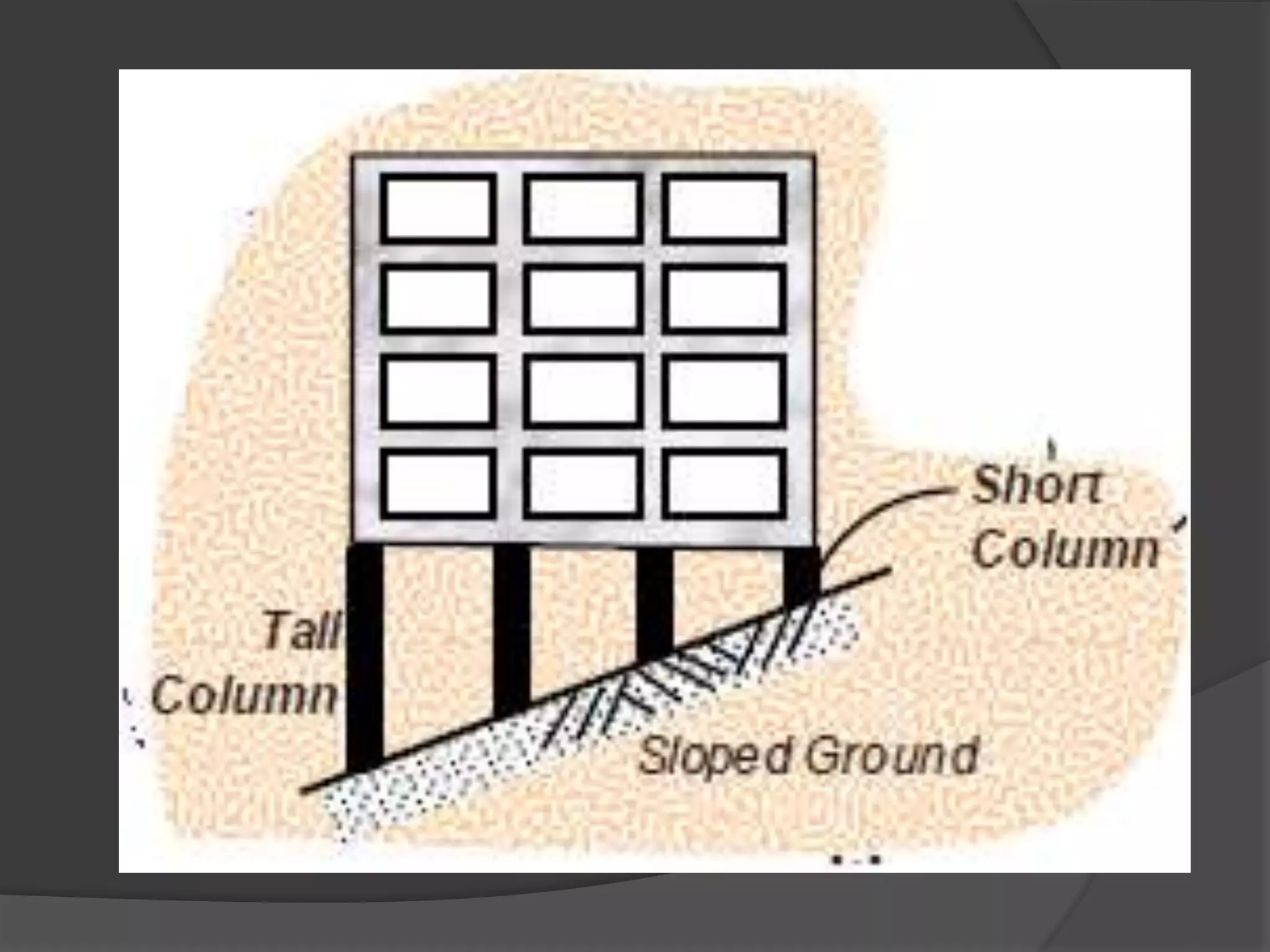
 When a building is rested on sloped
ground (Figure 1a), during earthquake
shaking all columns move horizontally
by the same amount along with the floor
slab at a particular level (this is called
rigid floor diaphragm action).
 If short and tall columns exist within the same
storey level, then the short columns attract
several times larger earthquake force and suffer
more damage as compared to taller ones.
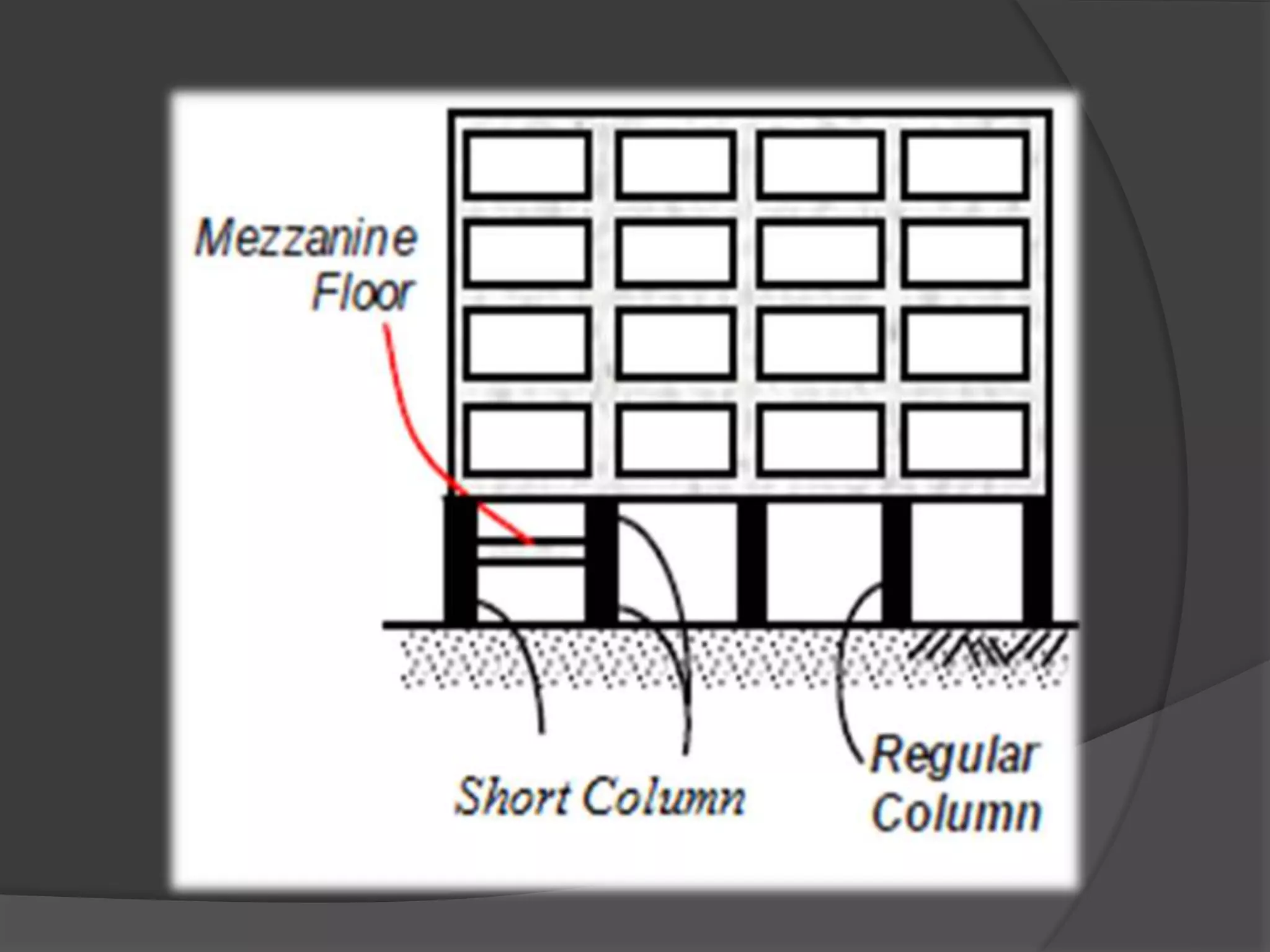
 The short column effect also occurs in columns
that support mezzanine floors or loft slabs that
are added in between two regular floors
(Figures 1b).
 There is another special situation in buildings
when short-column effect occurs.
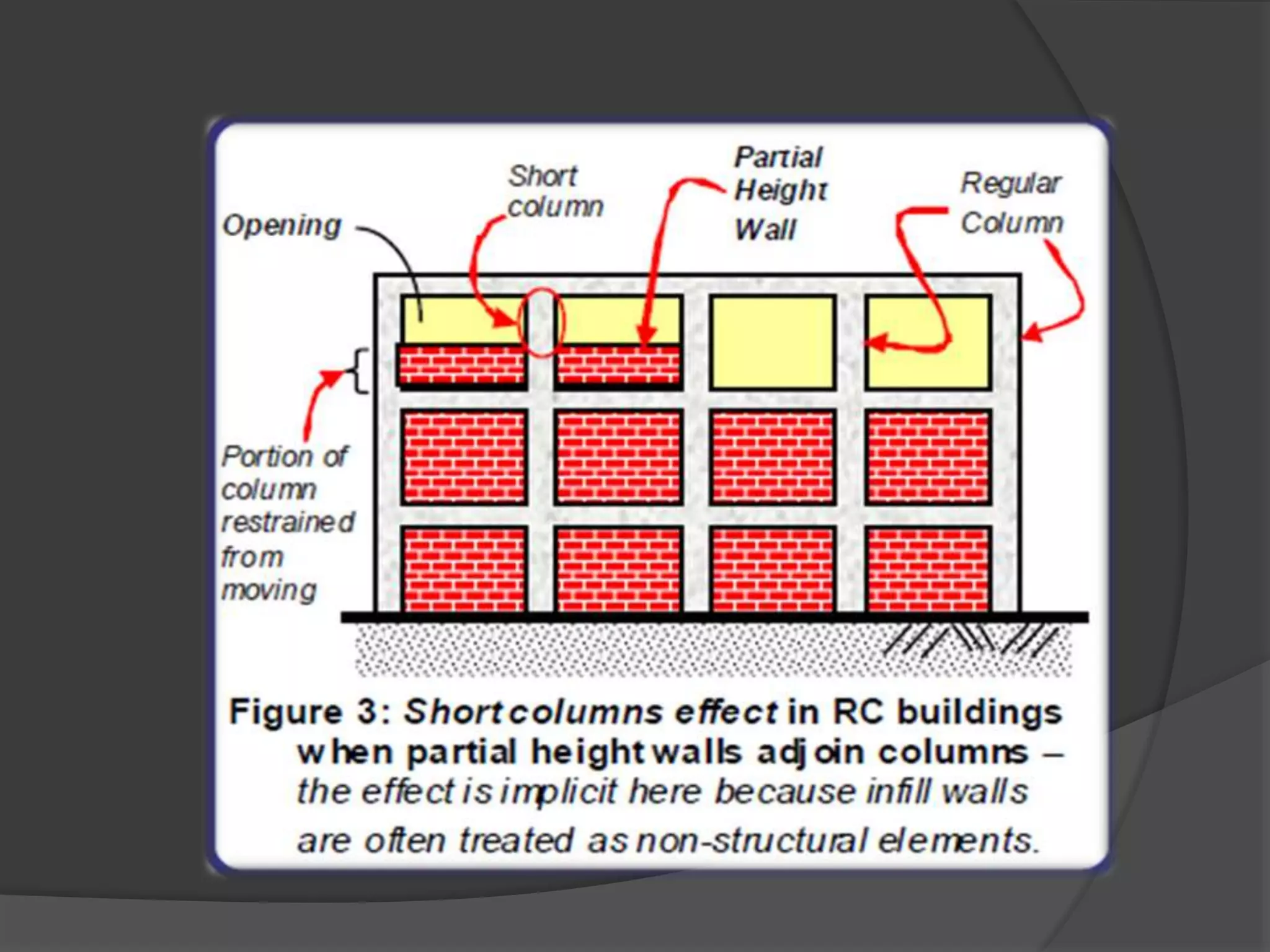
 Consider a wall (masonry or RC) of partial
height built to fit a window over the remaining
height.
 The adjacent columns behave as short columns
due to presence of these walls.
 In many cases, other columns in the same
storey are of regular height, as there are no
walls adjoining them.
 When the floor slab moves horizontally during
an earthquake, the upper ends of these
columns undergo the same displacement
(Figure 3).
 However, the stiff walls restrict horizontal
movement of the lower portion of a short column,
and it deforms by the full amount over the short
height adjacent to the window opening.
 On the other hand, regular columns deform over
the full height.
 Since the effective height over which a short
column can freely bend is small, it offers more
resistance to horizontal motion and thereby attracts
a larger force as compared to the regular column.
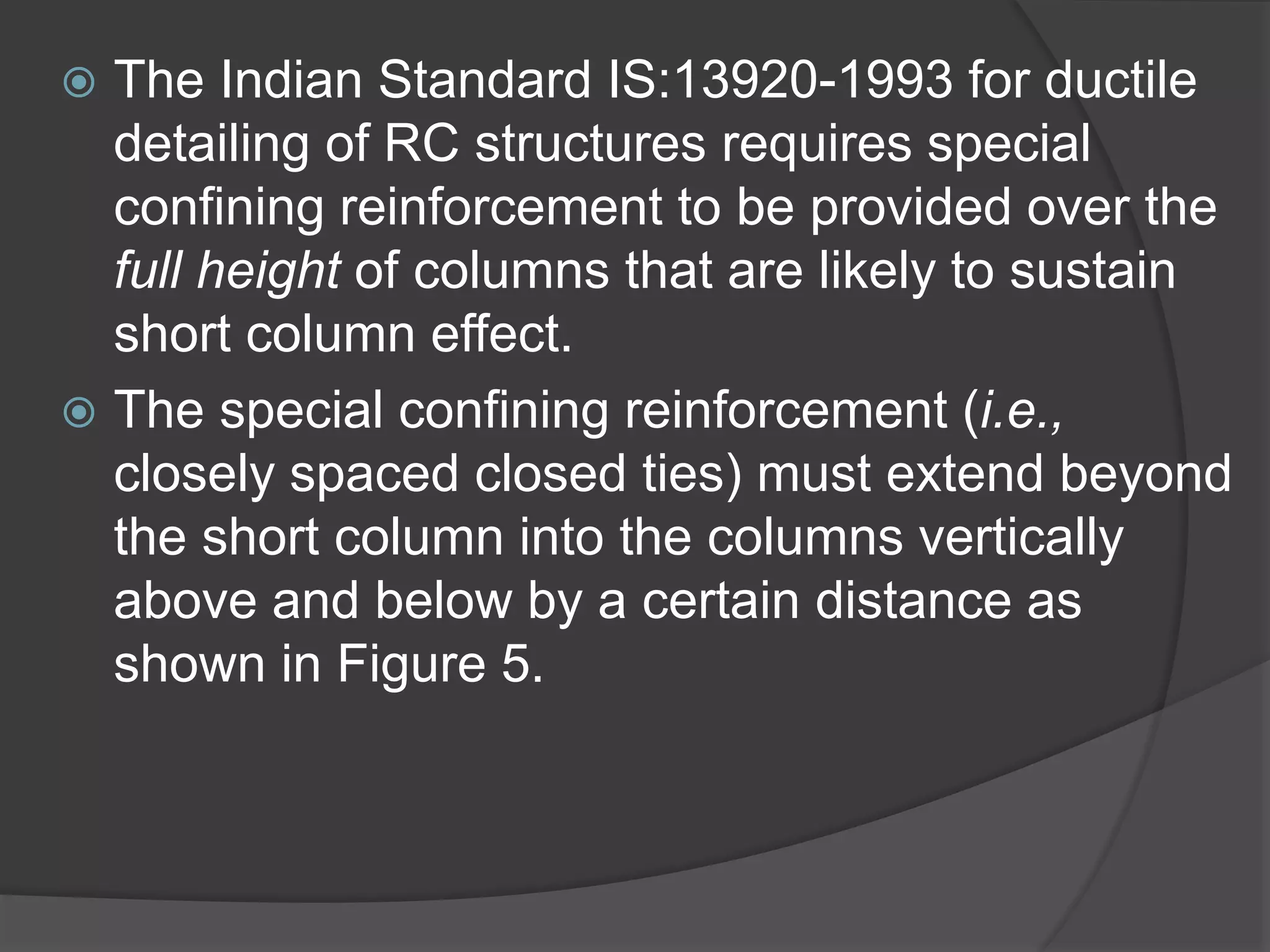
 As a result, short column sustains more damage.
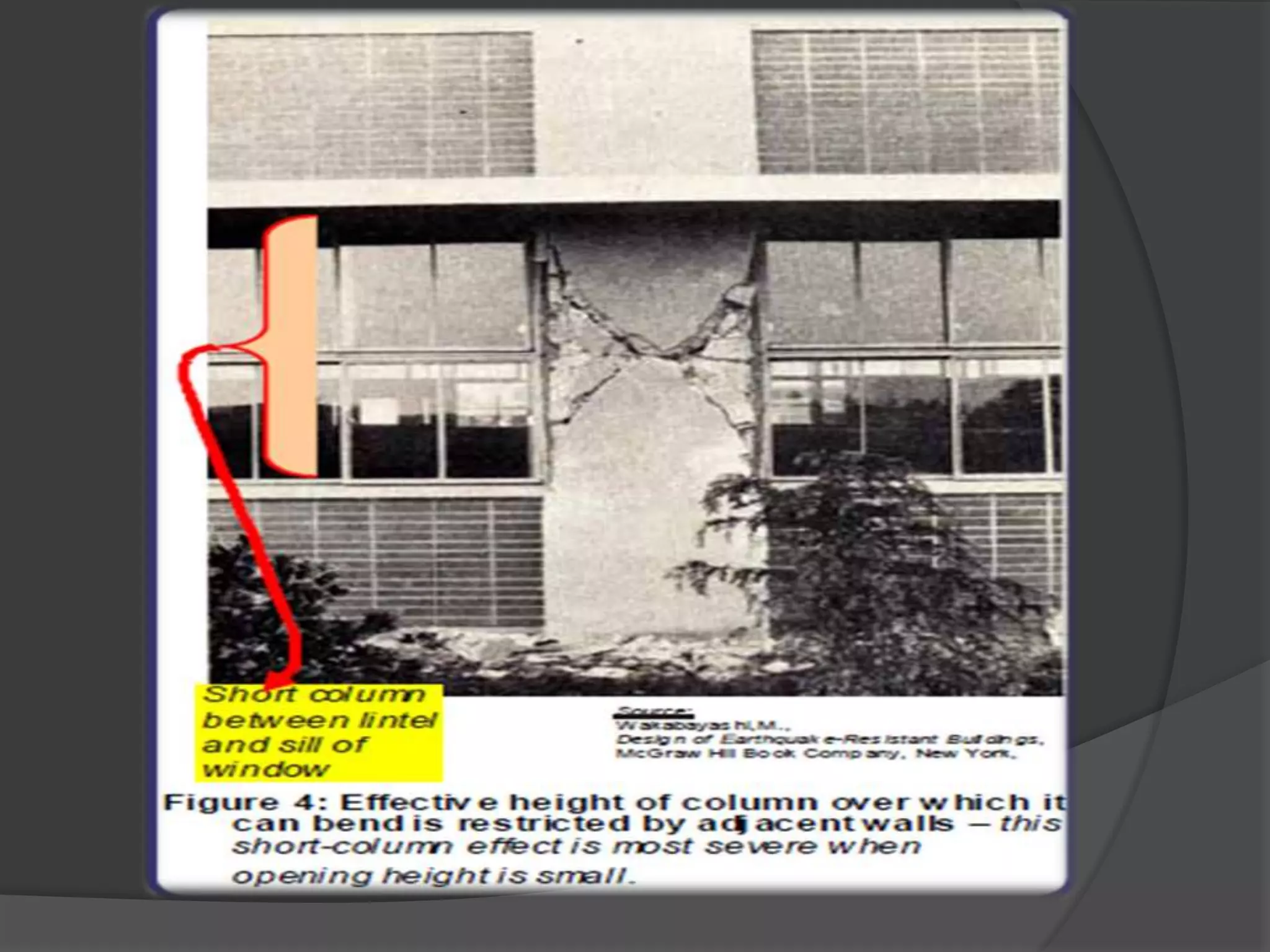
Figure 4 shows X-cracking in a column adjacent to
the walls of partial height.
SOLUTIONS
 In new buildings, short column effect
should be avoided to the extent possible
during architectural design stage itself.
 When it is not possible to avoid short
columns, this effect must be addressed
in structural design.
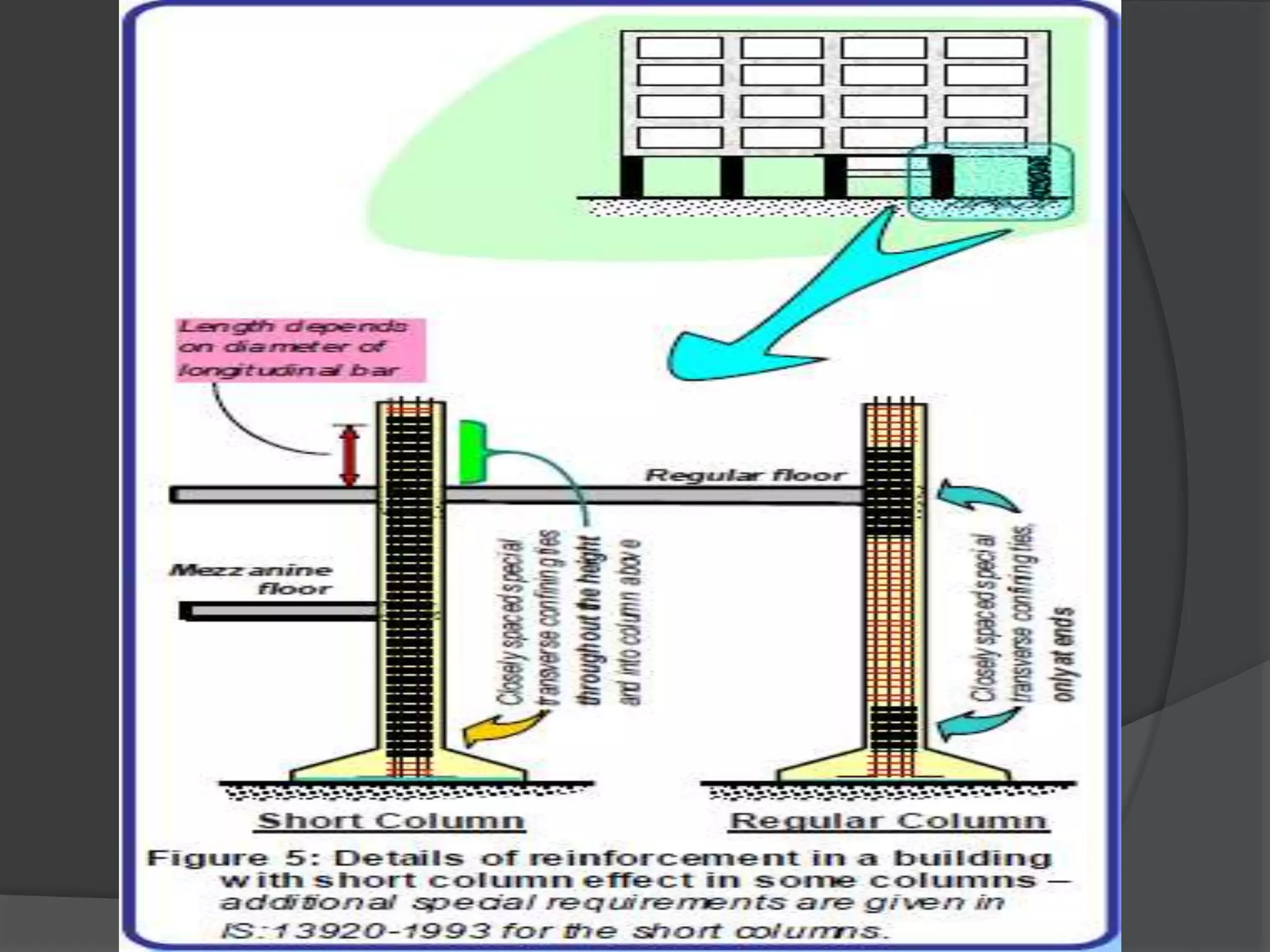
 The Indian Standard IS:13920-1993 for ductile
detailing of RC structures requires special
confining reinforcement to be provided over the
full height of columns that are likely to sustain
short column effect.
 The special confining reinforcement (i.e.,
closely spaced closed ties) must extend beyond
the short column into the columns vertically
above and below by a certain distance as
shown in Figure 5.
 Where walls of partial height are present, the
simplest solution is to close the openings by
building a wall of full height – this will eliminate
the short column effect.
 If that is not possible, short columns need to be
strengthened using one of the well established
retrofit techniques.
 The retrofit solution should be designed by a
qualified structural engineer.
THANK YOU
PREPARED BY:
HARSH MENDPARA
LAVISH PAMVANI

Earthquake tip 22

  • 1.
  • 2.
    Which Columns areshort?  During past earthquakes, reinforced concrete (RC)frame buildings that have columns of different heights within one storey, suffered more damage in the shorter columns as compared to taller columns in the same storey.  Two examples of buildings with short columns are shown in Figure 1 – buildings on a sloping ground and buildings with a mezzanine floor.
  • 4.
     Poor behaviourof short columns is due to the fact that in an earthquake, a tall column and a short column of same cross-section move horizontally by same amount Δ (Figure 2).  However, the short column is stiffer as compared to the tall column, and it attracts larger earthquake force.  Stiffness of a column means resistance to deformation – the larger is the stiffness, larger is the force required to deform it.
  • 6.
     If ashort column is not adequately designed for such a largeforce, it can suffer significant damage during an earthquake.  This behaviour is called Short Column Effect.  The damage in these short columns is often in the form of X-shaped cracking
  • 8.
    The Short Column Behaviour Many situations with short column effect arise in buildings.  When a building is rested on sloped ground (Figure 1a), during earthquake shaking all columns move horizontally by the same amount along with the floor slab at a particular level (this is called rigid floor diaphragm action).
  • 10.
     If shortand tall columns exist within the same storey level, then the short columns attract several times larger earthquake force and suffer more damage as compared to taller ones.  The short column effect also occurs in columns that support mezzanine floors or loft slabs that are added in between two regular floors (Figures 1b).  There is another special situation in buildings when short-column effect occurs.
  • 12.
     Consider awall (masonry or RC) of partial height built to fit a window over the remaining height.  The adjacent columns behave as short columns due to presence of these walls.  In many cases, other columns in the same storey are of regular height, as there are no walls adjoining them.  When the floor slab moves horizontally during an earthquake, the upper ends of these columns undergo the same displacement (Figure 3).
  • 14.
     However, thestiff walls restrict horizontal movement of the lower portion of a short column, and it deforms by the full amount over the short height adjacent to the window opening.  On the other hand, regular columns deform over the full height.  Since the effective height over which a short column can freely bend is small, it offers more resistance to horizontal motion and thereby attracts a larger force as compared to the regular column.  As a result, short column sustains more damage. Figure 4 shows X-cracking in a column adjacent to the walls of partial height.
  • 16.
    SOLUTIONS  In newbuildings, short column effect should be avoided to the extent possible during architectural design stage itself.  When it is not possible to avoid short columns, this effect must be addressed in structural design.
  • 17.
     The IndianStandard IS:13920-1993 for ductile detailing of RC structures requires special confining reinforcement to be provided over the full height of columns that are likely to sustain short column effect.  The special confining reinforcement (i.e., closely spaced closed ties) must extend beyond the short column into the columns vertically above and below by a certain distance as shown in Figure 5.
  • 19.
     Where wallsof partial height are present, the simplest solution is to close the openings by building a wall of full height – this will eliminate the short column effect.  If that is not possible, short columns need to be strengthened using one of the well established retrofit techniques.  The retrofit solution should be designed by a qualified structural engineer.
  • 20.
    THANK YOU PREPARED BY: HARSHMENDPARA LAVISH PAMVANI