Seasons, Phases, Eclipses,  and Tides
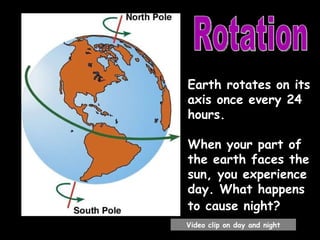
Earth rotates on its axis once every 24 hours.  When your part of the earth faces the sun, you experience day. What happens to cause night?   Video clip on day and night Rotation
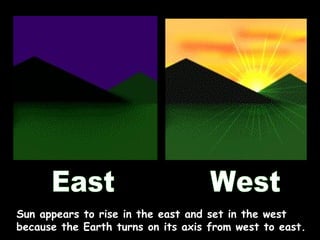
East  West Sun appears to rise in the east and set in the west because the Earth turns on its axis from west to east.
Revolution The time it takes to make one trip around the sun is a year.  That is one revolution. Click here for an animation of a year.
rotation revolution Hyperlinks to animations of rotation and revolution.
Leap year It takes 365.24 days for Earth to go around the sun one time.  This means we are not at the same place in our orbit as we began.  Because of the 0.24 equals about Œ of a day, we add a day to our calendar every 4 years. 2008 was a leap year so we had a February 29 th .  Our next February 29 th  will be in 2012.
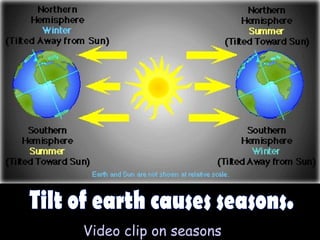
Tilt of earth causes seasons. Video clip on seasons
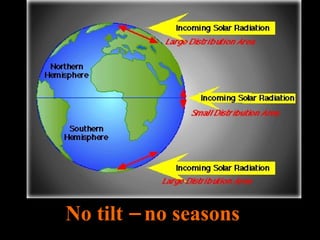
No tilt – no seasons
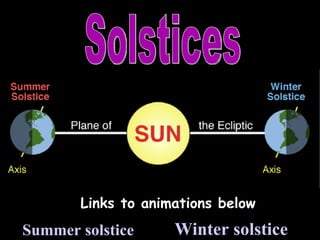
+ Summer solstice Winter solstice Links to animations below Solstices
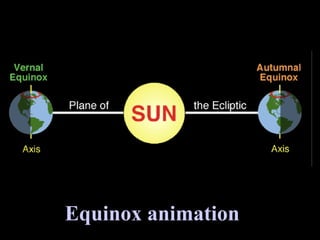
Equinox animation
 
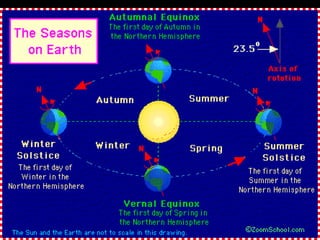
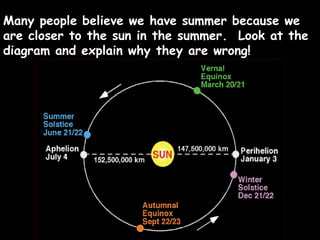
Many people believe we have summer because we are closer to the sun in the summer.  Look at the diagram and explain why they are wrong!
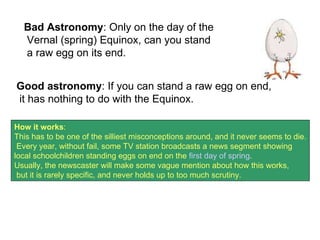
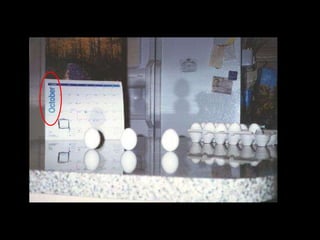
Bad Astronomy : Only on the day of the Vernal (spring) Equinox, can you stand a raw egg on its end.  Good astronomy : If you can stand a raw egg on end, it has nothing to do with the Equinox.  How it works :  This has to be one of the silliest misconceptions around, and it never seems to die. Every year, without fail, some TV station broadcasts a news segment showing  local schoolchildren standing eggs on end on the  first day of spring .  Usually, the newscaster will make some vague mention about how this works, but it is rarely specific, and never holds up to too much scrutiny.
 
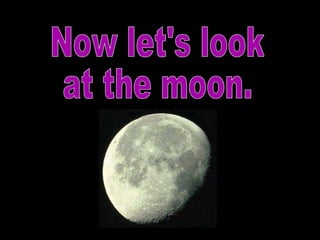
Now let's look  at the moon.
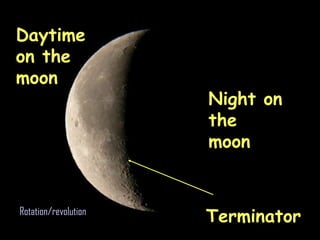
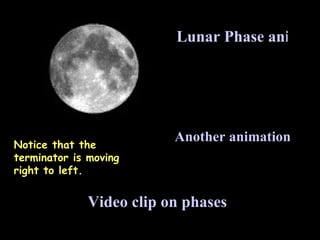
The terminator is the moving boundary between day and night. Notice that it moves right to left. The moon does not make its own light.  We see it because it reflects light from the sun.
Daytime on the moon Night on the moon Terminator Rotation/revolution
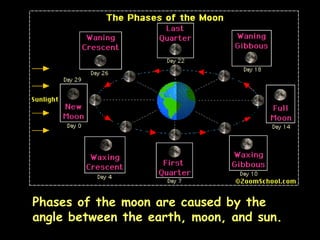
Phases of the moon are caused by the angle between the earth, moon, and sun.
Lunar Phase animation Another animation Video clip on phases Notice that the terminator is moving right to left.
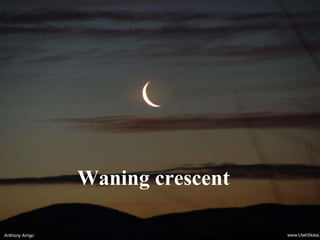
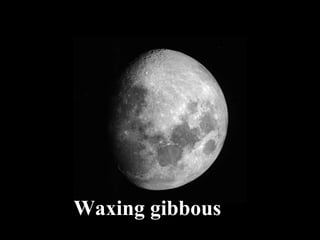
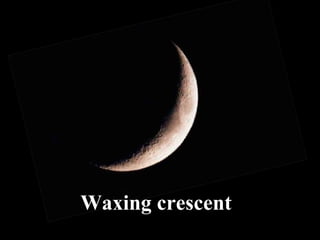
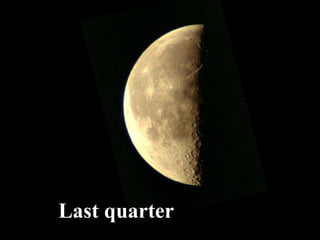
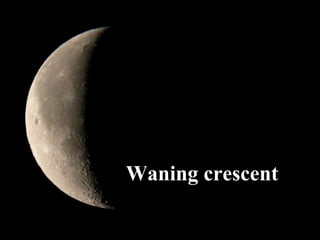
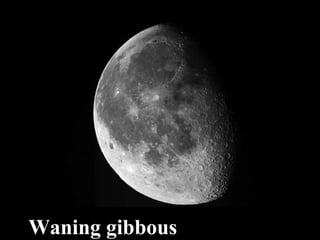
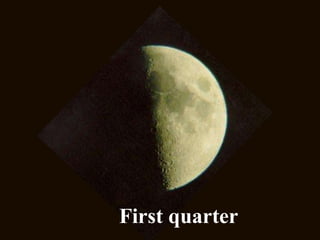
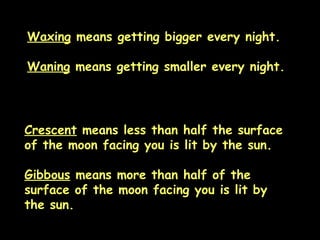
Waxing  means getting bigger every night. Waning  means getting smaller every night. Crescent  means less than half the surface of the moon facing you is lit by the sun. Gibbous  means more than half of the surface of the moon facing you is lit by the sun.
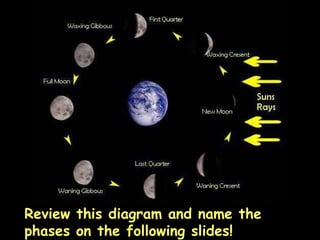
Review this diagram and name the phases on the following slides!
Waning crescent
Waxing gibbous
Waxing crescent
Last quarter
Waning crescent
Waning gibbous
First quarter
Two kinds: Lunar eclipses Solar eclipses Video clip on eclipses
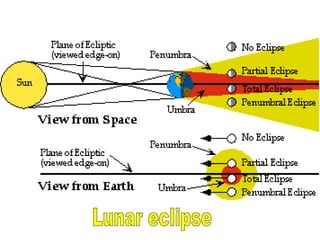
Lunar eclipse
Eclipse animation
Time lapse photography of a lunar eclipse
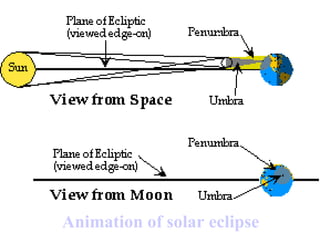
Animation of solar eclipse
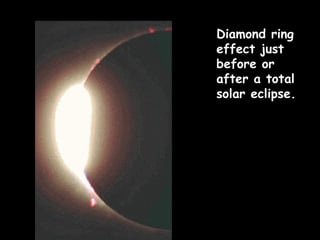
Diamond ring effect just before or after a total solar eclipse.
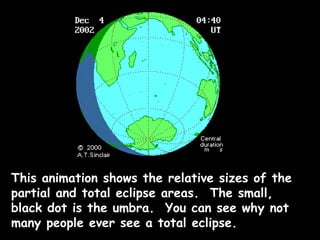
This animation shows the relative sizes of the partial and total eclipse areas.  The small, black dot is the umbra.  You can see why not many people ever see a total eclipse.
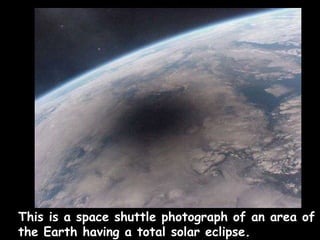
This is a space shuttle photograph of an area of the Earth having a total solar eclipse.
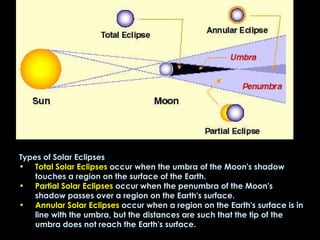
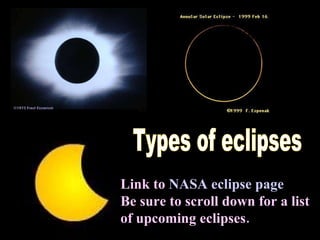
Types of Solar Eclipses Total Solar Eclipses  occur when the umbra of the Moon's shadow touches a region on the surface of the Earth.  Partial Solar Eclipses  occur when the penumbra of the Moon's shadow passes over a region on the Earth's surface.  Annular Solar Eclipses  occur when a region on the Earth's surface is in line with the umbra, but the distances are such that the tip of the umbra does not reach the Earth's surface.
Types of eclipses Link to  NASA eclipse page Be sure to scroll down for a list of upcoming eclipses.                                                                                                                   
Tides
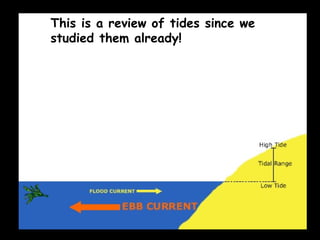
This is a review of tides since we studied them already!                                                                                                                                  
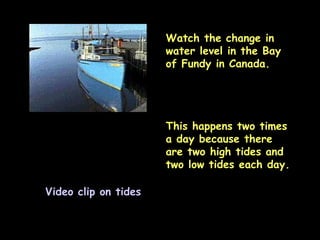
Video clip on tides Watch the change in water level in the Bay of Fundy in Canada. This happens two times a day because there are two high tides and two low tides each day.
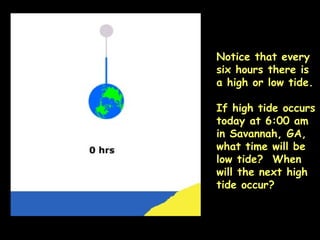
Notice that every six hours there is a high or low tide. If high tide occurs today at 6:00 am in Savannah, GA, what time will be low tide?  When will the next high tide occur?                                                              
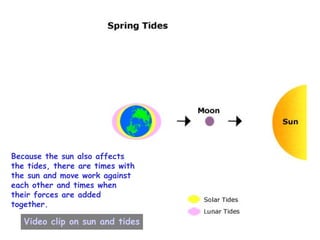
Because the sun also affects the tides, there are times with the sun and move work against each other and times when their forces are added together. Video clip on sun and tides                                                                                            
Questions?

Earth moon system andie

  • 1.
  • 2.
    Earth rotates onits axis once every 24 hours. When your part of the earth faces the sun, you experience day. What happens to cause night? Video clip on day and night Rotation
  • 3.
    East WestSun appears to rise in the east and set in the west because the Earth turns on its axis from west to east.
  • 4.
    Revolution The timeit takes to make one trip around the sun is a year. That is one revolution. Click here for an animation of a year.
  • 5.
    rotation revolution Hyperlinksto animations of rotation and revolution.
  • 6.
    Leap year Ittakes 365.24 days for Earth to go around the sun one time. This means we are not at the same place in our orbit as we began. Because of the 0.24 equals about Œ of a day, we add a day to our calendar every 4 years. 2008 was a leap year so we had a February 29 th . Our next February 29 th will be in 2012.
  • 7.
    Tilt of earthcauses seasons. Video clip on seasons
  • 8.
    No tilt –no seasons
  • 9.
    + Summer solsticeWinter solstice Links to animations below Solstices
  • 10.
  • 11.
  • 12.
    Many people believewe have summer because we are closer to the sun in the summer. Look at the diagram and explain why they are wrong!
  • 13.
    Bad Astronomy :Only on the day of the Vernal (spring) Equinox, can you stand a raw egg on its end. Good astronomy : If you can stand a raw egg on end, it has nothing to do with the Equinox. How it works : This has to be one of the silliest misconceptions around, and it never seems to die. Every year, without fail, some TV station broadcasts a news segment showing local schoolchildren standing eggs on end on the first day of spring . Usually, the newscaster will make some vague mention about how this works, but it is rarely specific, and never holds up to too much scrutiny.
  • 14.
  • 15.
    Now let's look at the moon.
  • 16.
    The terminator isthe moving boundary between day and night. Notice that it moves right to left. The moon does not make its own light. We see it because it reflects light from the sun.
  • 17.
    Daytime on themoon Night on the moon Terminator Rotation/revolution
  • 18.
    Phases of themoon are caused by the angle between the earth, moon, and sun.
  • 19.
    Lunar Phase animationAnother animation Video clip on phases Notice that the terminator is moving right to left.
  • 20.
    Waxing meansgetting bigger every night. Waning means getting smaller every night. Crescent means less than half the surface of the moon facing you is lit by the sun. Gibbous means more than half of the surface of the moon facing you is lit by the sun.
  • 21.
    Review this diagramand name the phases on the following slides!
  • 22.
  • 23.
  • 24.
  • 25.
  • 26.
  • 27.
  • 28.
  • 29.
    Two kinds: Lunareclipses Solar eclipses Video clip on eclipses
  • 30.
  • 31.
  • 32.
    Time lapse photographyof a lunar eclipse
  • 33.
  • 34.
    Diamond ring effectjust before or after a total solar eclipse.
  • 35.
    This animation showsthe relative sizes of the partial and total eclipse areas. The small, black dot is the umbra. You can see why not many people ever see a total eclipse.
  • 36.
    This is aspace shuttle photograph of an area of the Earth having a total solar eclipse.
  • 37.
    Types of SolarEclipses Total Solar Eclipses occur when the umbra of the Moon's shadow touches a region on the surface of the Earth. Partial Solar Eclipses occur when the penumbra of the Moon's shadow passes over a region on the Earth's surface. Annular Solar Eclipses occur when a region on the Earth's surface is in line with the umbra, but the distances are such that the tip of the umbra does not reach the Earth's surface.
  • 38.
    Types of eclipsesLink to NASA eclipse page Be sure to scroll down for a list of upcoming eclipses.                                                                                                                   
  • 39.
  • 40.
    This is areview of tides since we studied them already!                                                                                                                                  
  • 41.
    Video clip ontides Watch the change in water level in the Bay of Fundy in Canada. This happens two times a day because there are two high tides and two low tides each day.
  • 42.
    Notice that everysix hours there is a high or low tide. If high tide occurs today at 6:00 am in Savannah, GA, what time will be low tide? When will the next high tide occur?                                                              
  • 43.
    Because the sunalso affects the tides, there are times with the sun and move work against each other and times when their forces are added together. Video clip on sun and tides                                                                                            
  • 44.