Early Detection and Early
Intervention
By
DR SAIM ALI SOOMRO.
Challenges and Solution Strategies in
the Framework of CBR Programmes.
Early detection and intervention
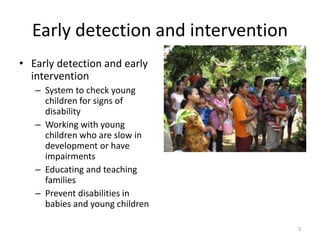
• Early detection and early
intervention
– System to check young
children for signs of
disability
– Working with young
children who are slow in
development or have
impairments
– Educating and teaching
families
– Prevent disabilities in
babies and young children
2
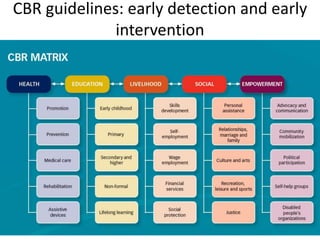
CBR guidelines: early detection and early
intervention
Early detection and intervention
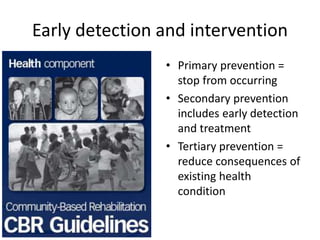
• Picture education • Primary prevention =
stop from occurring
• Secondary prevention
includes early detection
and treatment
• Tertiary prevention =
reduce consequences of
existing health
condition
Health care
CBR programs can assist with
early identification
• Establish mechanism
• Identify screening activities
(eg tb, leprosy, river
blindness, diabetes, cancer)
• Genetic or hereditary
conditions: Refer for
assessment and counseling
• Know about secondary
conditions
• Refer if people may benefit
from surgery
Health care
• Ensure access to early
treatment by promoting
and encouraging
collaboration with primary
health care
CBR programs can:
•Provide follow up after
screening
•Refer to other levels in health
care system
•Advocate for inclusion
•Identify barriers
•Identify gaps in service
provision
•Habilitation and rehabilitation
Early intervention
• Child development:
Physical, speech and
language, cognitive, social
and emotional
CBR workers can:
•Provide early intervention
activities, usually home
based.
•Encourage parents to meet
together
•Facilitate playgroups
Early childhood care and education
• Early childhood = birth
till primary education
• Focus in Education
component: 3 years and
older
Early childhood care and
education
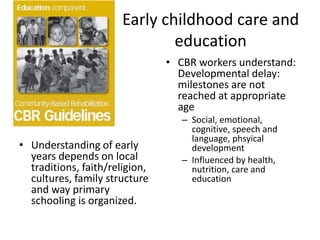
• Understanding of early
years depends on local
traditions, faith/religion,
cultures, family structure
and way primary
schooling is organized.
• CBR workers understand:
Developmental delay:
milestones are not
reached at appropriate
age
– Social, emotional,
cognitive, speech and
language, phsyical
development
– Influenced by health,
nutrition, care and
education
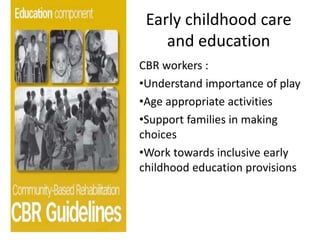
Early childhood care
and education
CBR workers :
•Understand importance of play
•Age appropriate activities
•Support families in making
choices
•Work towards inclusive early
childhood education provisions
Early childhood care and
education and CBR
1. Identify early childhood
needs
– Support early learning at
home
– Involve families
2. Promote home-based
activities
3. Support learning in the
community
4. Help develop inclusive
preschools
5. Ensure specialist services are
available and accessible
6. Involve adults and children
with disabilities
7. Carry out training and
awareness-raising
8. Address poverty
9. Lobby and advocate for
inclusion
10. Prepare for emergency,
conflict and refugee
situations
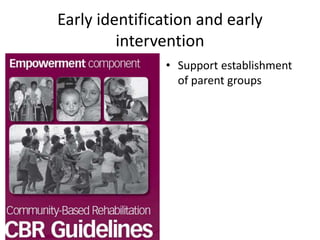
Early identification and early
intervention
• Support establishment
of parent groups

Earlydetectionandearlyintervention 140604141805-phpapp01

  • 1.
    Early Detection andEarly Intervention By DR SAIM ALI SOOMRO. Challenges and Solution Strategies in the Framework of CBR Programmes.
  • 2.
    Early detection andintervention • Early detection and early intervention – System to check young children for signs of disability – Working with young children who are slow in development or have impairments – Educating and teaching families – Prevent disabilities in babies and young children 2
  • 3.
    CBR guidelines: earlydetection and early intervention
  • 4.
    Early detection andintervention • Picture education • Primary prevention = stop from occurring • Secondary prevention includes early detection and treatment • Tertiary prevention = reduce consequences of existing health condition
  • 5.
    Health care CBR programscan assist with early identification • Establish mechanism • Identify screening activities (eg tb, leprosy, river blindness, diabetes, cancer) • Genetic or hereditary conditions: Refer for assessment and counseling • Know about secondary conditions • Refer if people may benefit from surgery
  • 6.
    Health care • Ensureaccess to early treatment by promoting and encouraging collaboration with primary health care CBR programs can: •Provide follow up after screening •Refer to other levels in health care system •Advocate for inclusion •Identify barriers •Identify gaps in service provision •Habilitation and rehabilitation
  • 7.
    Early intervention • Childdevelopment: Physical, speech and language, cognitive, social and emotional CBR workers can: •Provide early intervention activities, usually home based. •Encourage parents to meet together •Facilitate playgroups
  • 8.
    Early childhood careand education • Early childhood = birth till primary education • Focus in Education component: 3 years and older
  • 9.
    Early childhood careand education • Understanding of early years depends on local traditions, faith/religion, cultures, family structure and way primary schooling is organized. • CBR workers understand: Developmental delay: milestones are not reached at appropriate age – Social, emotional, cognitive, speech and language, phsyical development – Influenced by health, nutrition, care and education
  • 10.
    Early childhood care andeducation CBR workers : •Understand importance of play •Age appropriate activities •Support families in making choices •Work towards inclusive early childhood education provisions
  • 11.
    Early childhood careand education and CBR 1. Identify early childhood needs – Support early learning at home – Involve families 2. Promote home-based activities 3. Support learning in the community 4. Help develop inclusive preschools 5. Ensure specialist services are available and accessible 6. Involve adults and children with disabilities 7. Carry out training and awareness-raising 8. Address poverty 9. Lobby and advocate for inclusion 10. Prepare for emergency, conflict and refugee situations
  • 12.
    Early identification andearly intervention • Support establishment of parent groups